








The global beauty industry has a capital city — and for four days every spring, it is Bologna, Italy. Cosmoprof Worldwide Bologna has long been the definitive gathering point for brands, retailers, formulators, and packaging suppliers from every corner of the planet. But 2026 is different. The edition opening on March 26–28 at the Bologna Fair District is by every measurable indicator the most significant in the show’s history — completely sold out, more internationally diverse than ever, and arriving at a pivotal moment when the global beauty industry is navigating both extraordinary growth and profound structural change.
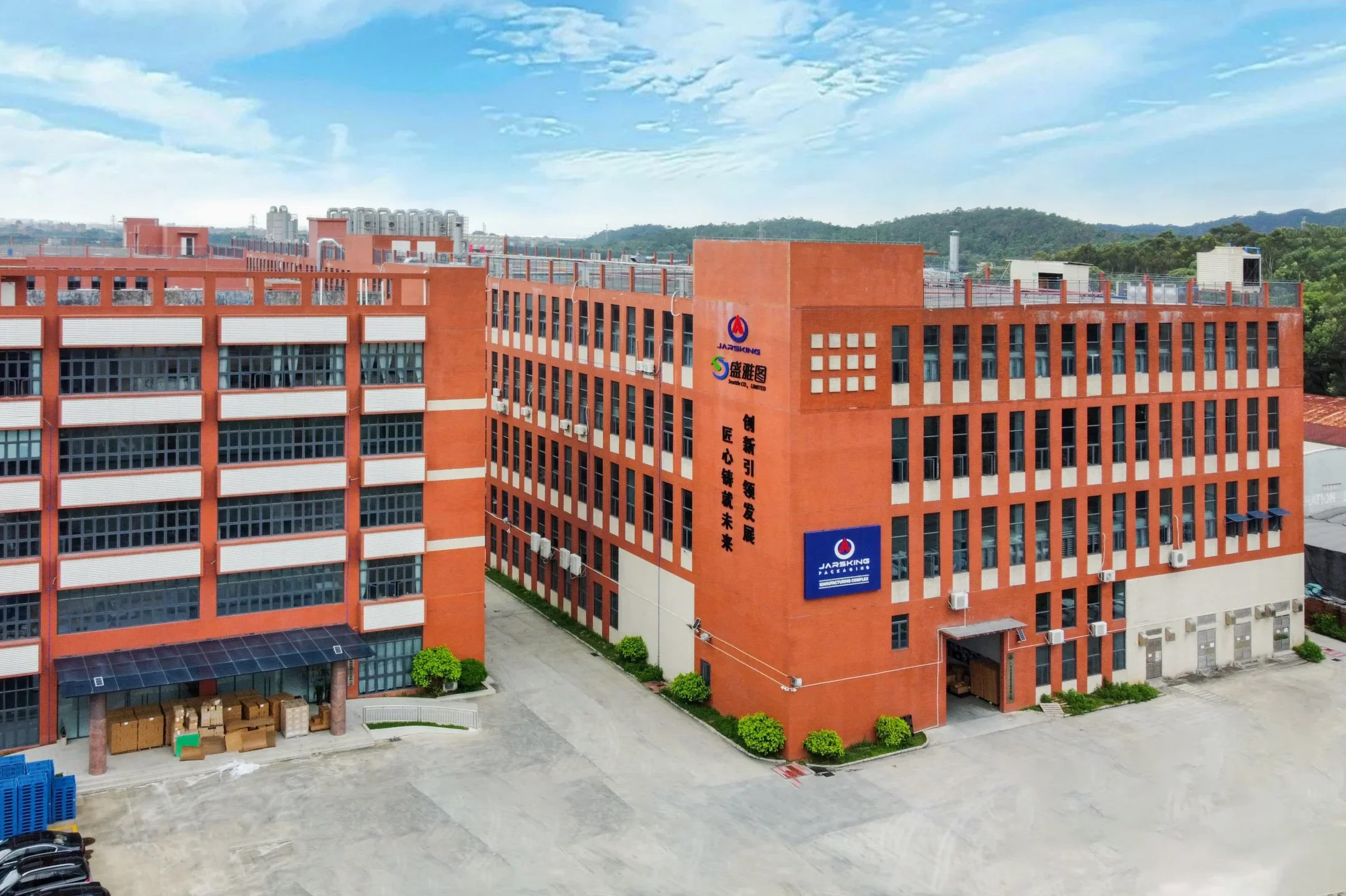
For buyers and brand managers heading to Bologna this March, one booth demands a place on your schedule: Jarsking Packaging at Hall 20-D5. Operated by Guangzhou Jiaxing Glass Products Co., Ltd, Jarsking is one of the world’s most capable one-stop cosmetic glass packaging manufacturers — and their 2026 showcase promises to align perfectly with where the global market is heading.
This article breaks down everything you need to know: what’s new at Cosmoprof 2026, where beauty growth is happening by region, the packaging innovations reshaping the industry, and exactly what Jarsking is bringing to Hall 20-D5.
Cosmoprof Worldwide Bologna 2026 — A Record-Breaking Edition
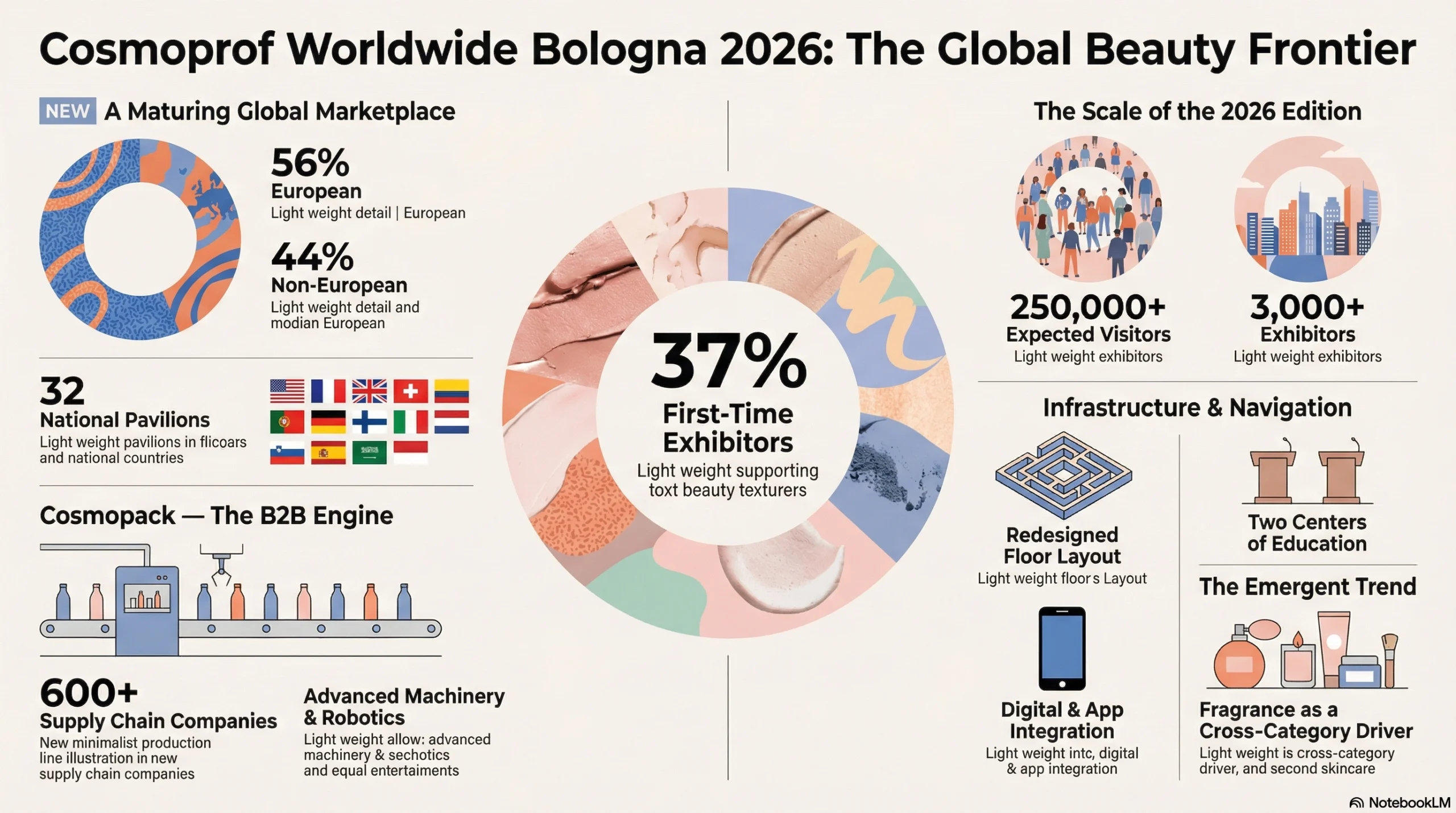
Cosmoprof Worldwide Bologna 2026 is on track to be its most globally balanced edition yet. Over 3,000 exhibitors from 64 countries, representing more than 10,000 brands, will fill the Bologna Fair District across four days, with 250,000+ visitors expected to walk the halls. The show is completely sold out — a remarkable signal of the industry’s confidence — with 37% of exhibitors appearing for the first time.
The geographic split reflects a maturing global industry: 56% European exhibitors and 44% non-European, with 32 national pavilions, including new arrivals from Saudi Arabia, Belgium, Portugal, and Hungary. This breadth means that in a single day on the show floor, a buyer can meet suppliers and brands representing the full spectrum of global beauty culture — from K-beauty innovators to Italian luxury houses to emerging Middle Eastern fragrance maisons.
Structurally, 2026 brings meaningful upgrades. A brand-new Cosmetics Stage in Hall 36 joins the established Cosmopack Stage, creating two centers of gravity for education and trend forecasting. The floor layout has been redesigned for improved spatial readability, and a deeper digital and app integration now helps visitors navigate the show intelligently.
Cosmopack — the B2B section of the event housed in Hall 19 — features 600+ packaging, ingredients, and contract manufacturing companies, with a notably strengthened machinery sector encompassing robotics, digital services, and logistics. For packaging buyers in particular, Cosmopack remains the most concentrated sourcing environment in the world.
One emergent theme the show’s organizers are highlighting: fragrance as a cross-category growth driver. From candles to hair mists to fine fragrance sets, scent is weaving itself into every segment of beauty — a trend that has direct implications for packaging format and design.
The $450 Billion Opportunity — Global Beauty in 2026
Before walking the show floor, it helps to understand the macro context. The global cosmetics and personal care market is on course to surpass $450 billion in 2026, growing at a compound annual rate of approximately 5–6.6% through 2030. By 2032, some forecasts project the market reaching $704 billion.
But headline numbers obscure the real story: growth in 2026 is geographically uneven in ways that should shape every packaging and product decision a brand makes. Mature markets like Western Europe and North America continue to grow, but the explosive momentum lives in Asia-Pacific, South Asia, the Middle East, and Latin America. At the same time, three macro forces are reshaping how consumers in every region engage with beauty: masstige positioning (premium quality at accessible prices), longevity beauty (products that address long-term skin and hair health rather than quick fixes), and AI-driven personalization at scale.
Understanding these regional and behavioral dynamics is arguably the most important preparation any brand can do before Cosmoprof 2026.
Asia-Pacific: The Innovation Engine
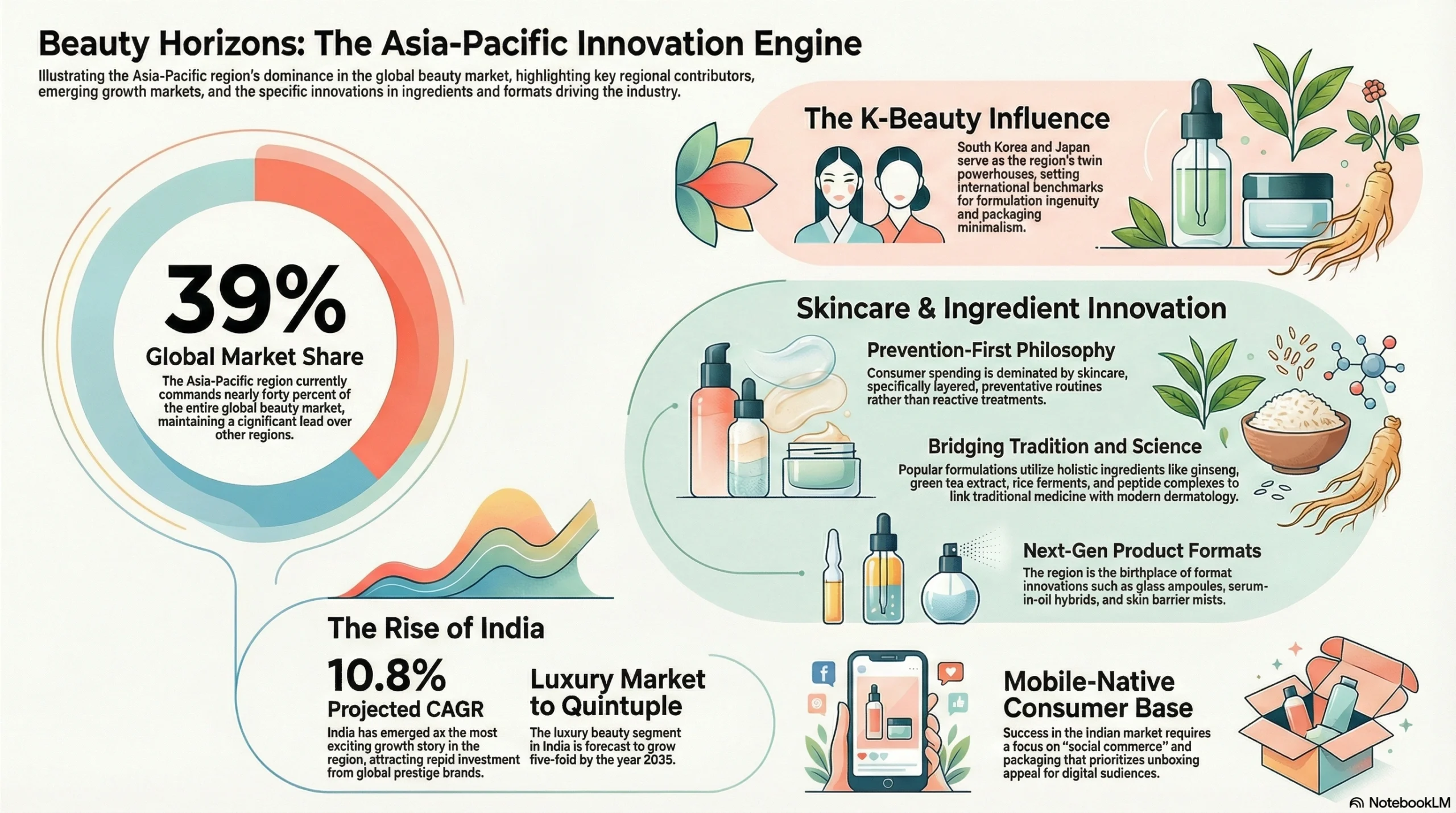
Asia-Pacific commands approximately 39% of the global beauty market and shows no signs of relinquishing that lead. The region’s twin powerhouses — South Korea and Japan — continue to set global benchmarks for formulation ingenuity and packaging minimalism, exporting their philosophies to every other region through the continued K-beauty phenomenon.
Skincare dominates Asia-Pacific spending, with consumers investing in layered, preventative routines anchored by holistic ingredients: ginseng, green tea extract, rice ferments, and peptide complexes that bridge traditional medicine and modern dermatology. Format innovation — glass ampoules, serum-in-oil hybrids, skin barrier mists — continues to originate here before reaching European and American shelves.
China’s trajectory has moderated compared to its post-pandemic boom, but India has emerged as the region’s most exciting growth story. With a projected CAGR of 10.8% and a luxury beauty segment forecast to quintuple by 2035, India is attracting investment from global prestige brands at an accelerating pace. Its digital-first, mobile-native consumer base means brands that succeed here must think about packaging through the lens of social commerce and unboxing appeal from day one.
Europe: Science, Compliance & Craftsmanship
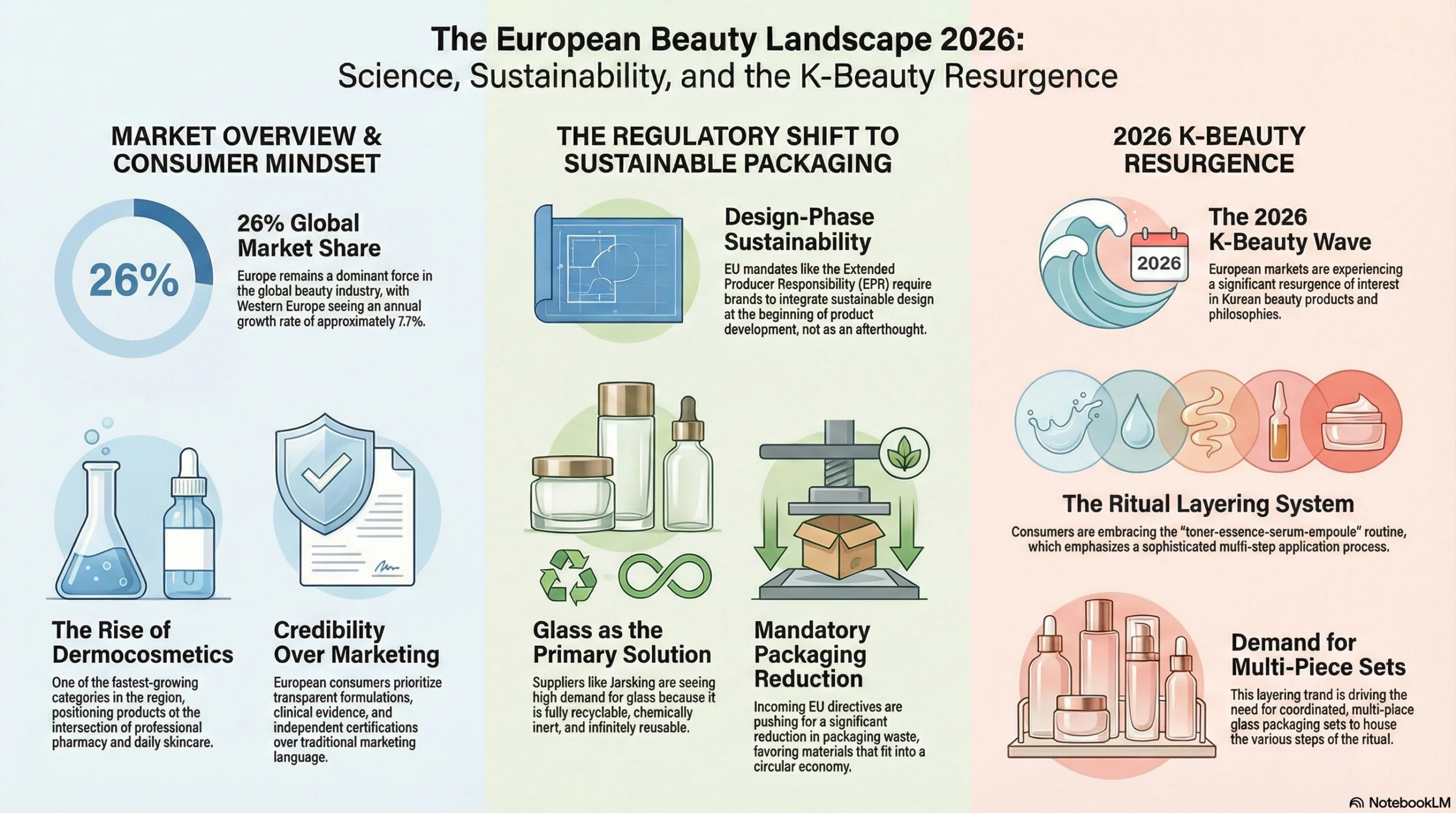
Europe represents approximately 26% of the global beauty market, growing at around 7.7% annually in Western Europe. The European beauty consumer is distinct: they prioritize clinical credibility, transparent formulation, and independent certification over marketing language. Dermocosmetics — products positioned at the intersection of skincare and pharmacy — is one of Europe’s fastest-growing categories.
Europe is also where regulatory forces are most aggressively reshaping the packaging landscape. The EU’s Extended Producer Responsibility (EPR) directives and incoming packaging reduction mandates are pushing brands to make sustainable design decisions not at the end of product development, but at the very beginning. This is creating significant demand for packaging suppliers — like Jarsking — who offer glass as a primary material, given its fully recyclable, chemically inert, and infinitely reusable properties.
One cultural twist worth noting: K-beauty is experiencing a remarkable resurgence in European markets in 2026. European consumers, already sophisticated about ingredients, are now embracing Korean ritual formats — the toner-essence-serum-ampoule layering system — creating new opportunities for multi-piece glass packaging sets.
North America: Clean Beauty & Digital Commerce
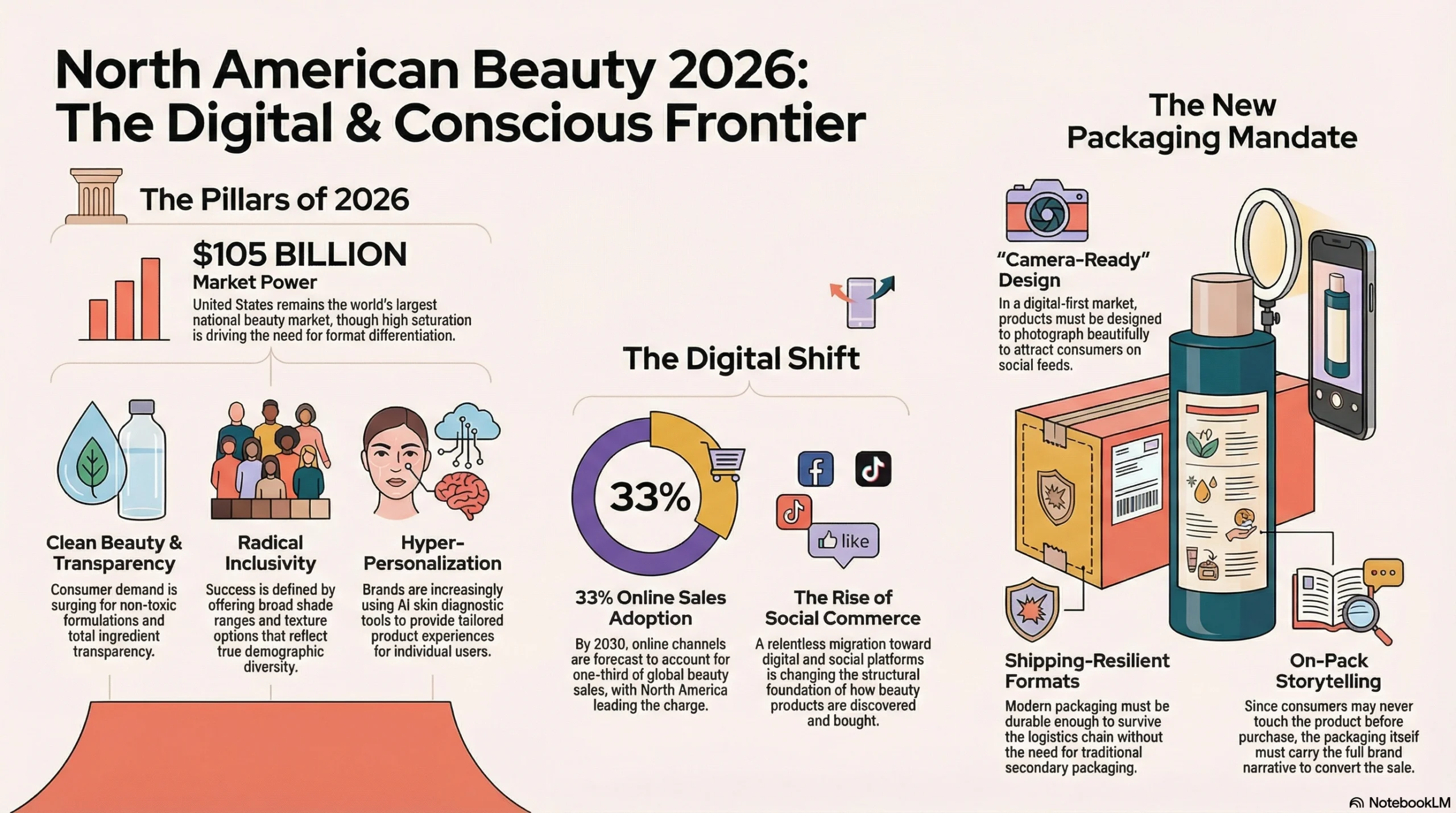
The United States remains a $105 billion beauty market and the world’s single largest national market. But it is also one of the most saturated, which is driving a wave of formulation and format differentiation. The three defining pillars of North American beauty in 2026 are clean beauty (consumer demand for ingredient transparency and non-toxic formulations), inclusivity (shade ranges, texture ranges, and marketing that reflects demographic diversity), and hyper-personalization powered by AI skin diagnostic tools.
Perhaps the biggest structural shift in North America is the relentless migration toward digital and social commerce. Online channels are forecast to account for 33% of global beauty sales by 2030, with North America leading adoption. This has profound packaging implications: products must photograph beautifully, survive shipping without secondary packaging, and carry enough on-pack storytelling to convert a consumer who may never touch the product before purchase.
Brands that are winning in North America in 2026 are those combining data-driven consumer intelligence with packaging investments that work as hard online as they do on shelf.
Latin America: The Fragrance Powerhouse
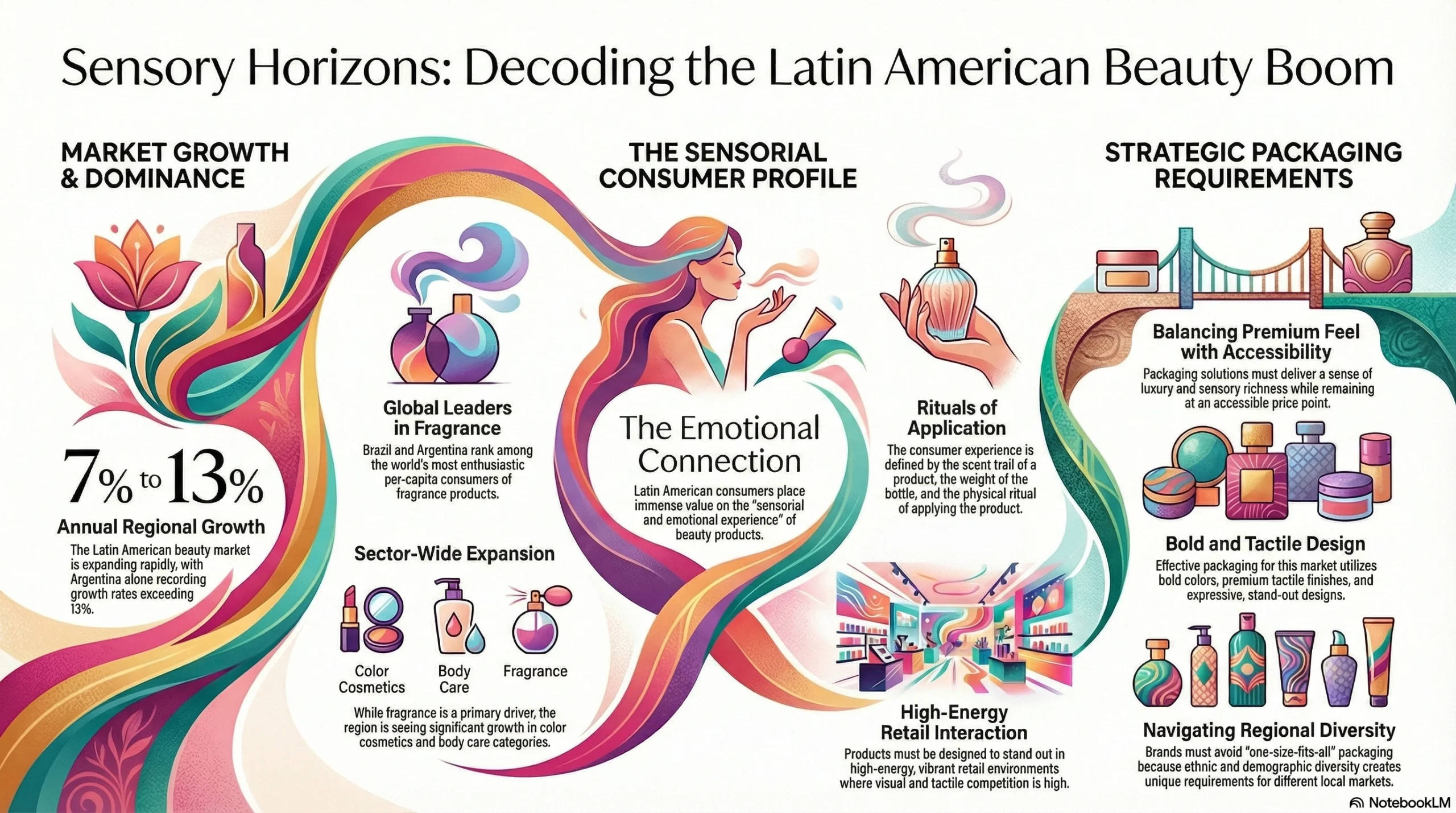
Latin America is one of beauty’s most underappreciated growth regions. With annual growth rates of 7–13% across the region — Argentina alone posting growth above 13% — LATAM is expanding rapidly across color cosmetics, body care, and especially fragrance, where Brazil and Argentina rank among the world’s most enthusiastic per-capita consumers.
The Latin American beauty consumer places enormous value on sensorial and emotional experience — the scent trail of a product, the weight of a bottle, the ritual of application. This creates a unique packaging brief: solutions must deliver sensory richness at accessible price points, with bold color, premium tactile finishes, and expressive design that stand out in high-energy retail environments.
Ethnic and demographic diversity across the region also means packaging and formula requirements vary significantly between markets — a nuance that brands sourcing standardized global packaging solutions must navigate carefully.
Middle East & Africa: The Next Frontier
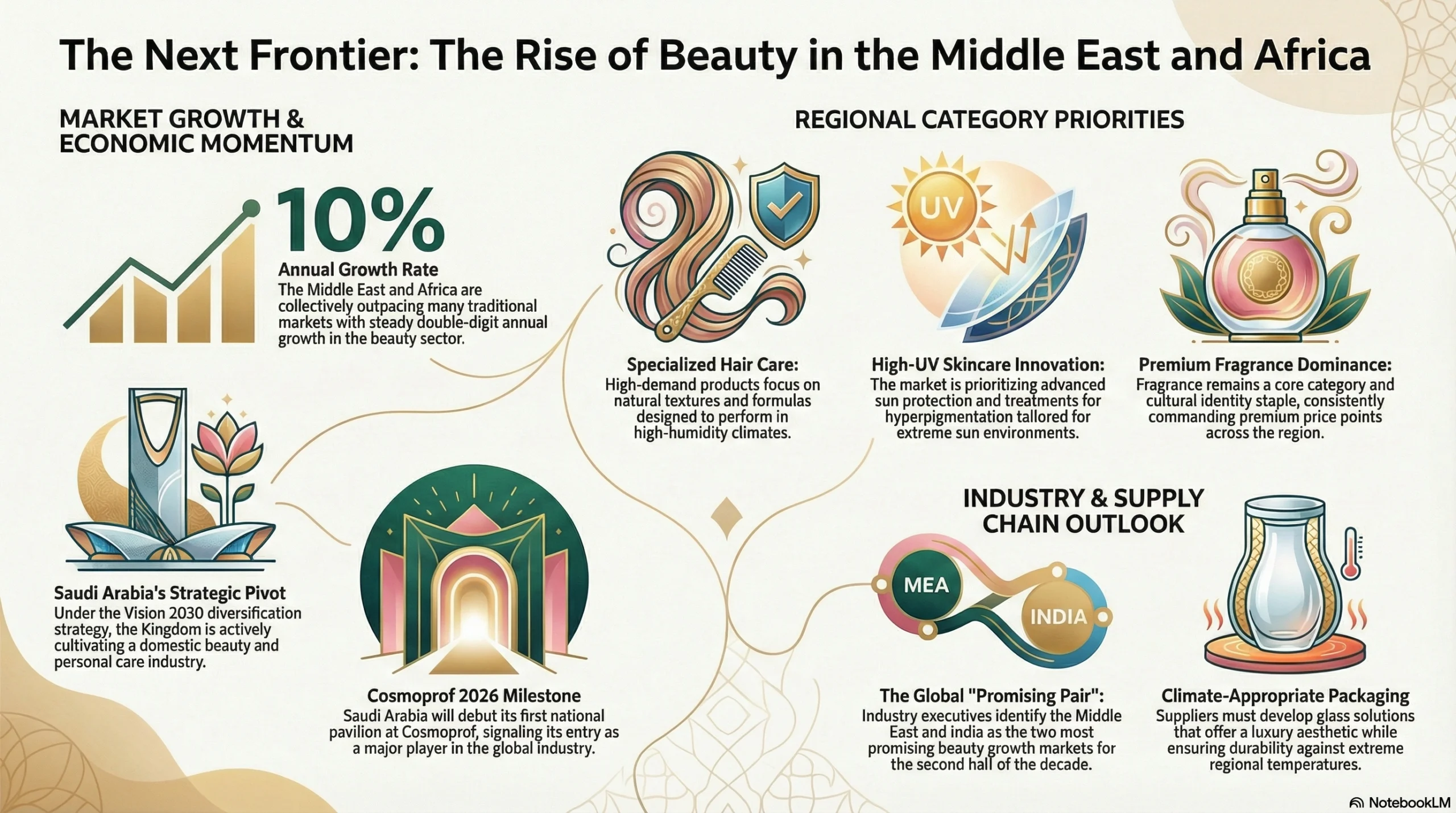
The Middle East and Africa are collectively posting beauty growth of approximately 10% annually — and the region’s profile is rising fast. Saudi Arabia’s debut of a national pavilion at Cosmoprof 2026 is a symbolic milestone: the Kingdom is actively cultivating a domestic beauty and personal care industry as part of its Vision 2030 economic diversification strategy.
Category priorities in the region are distinctive. Hair care — particularly products addressing the needs of natural textures and high-humidity climates — is growing rapidly. Skincare for high-UV environments, featuring advanced sun protection and hyperpigmentation treatment, is a major innovation frontier. Fragrance, deeply embedded in cultural identity across both the Middle East and North Africa, continues to command premium pricing.
Industry executives consistently name India and the Middle East as beauty’s most promising growth markets for the second half of the decade. For packaging suppliers, this means anticipating demand for glass solutions that balance luxurious aesthetics with climate-appropriate durability.
Packaging Trends Defining the Industry in 2026
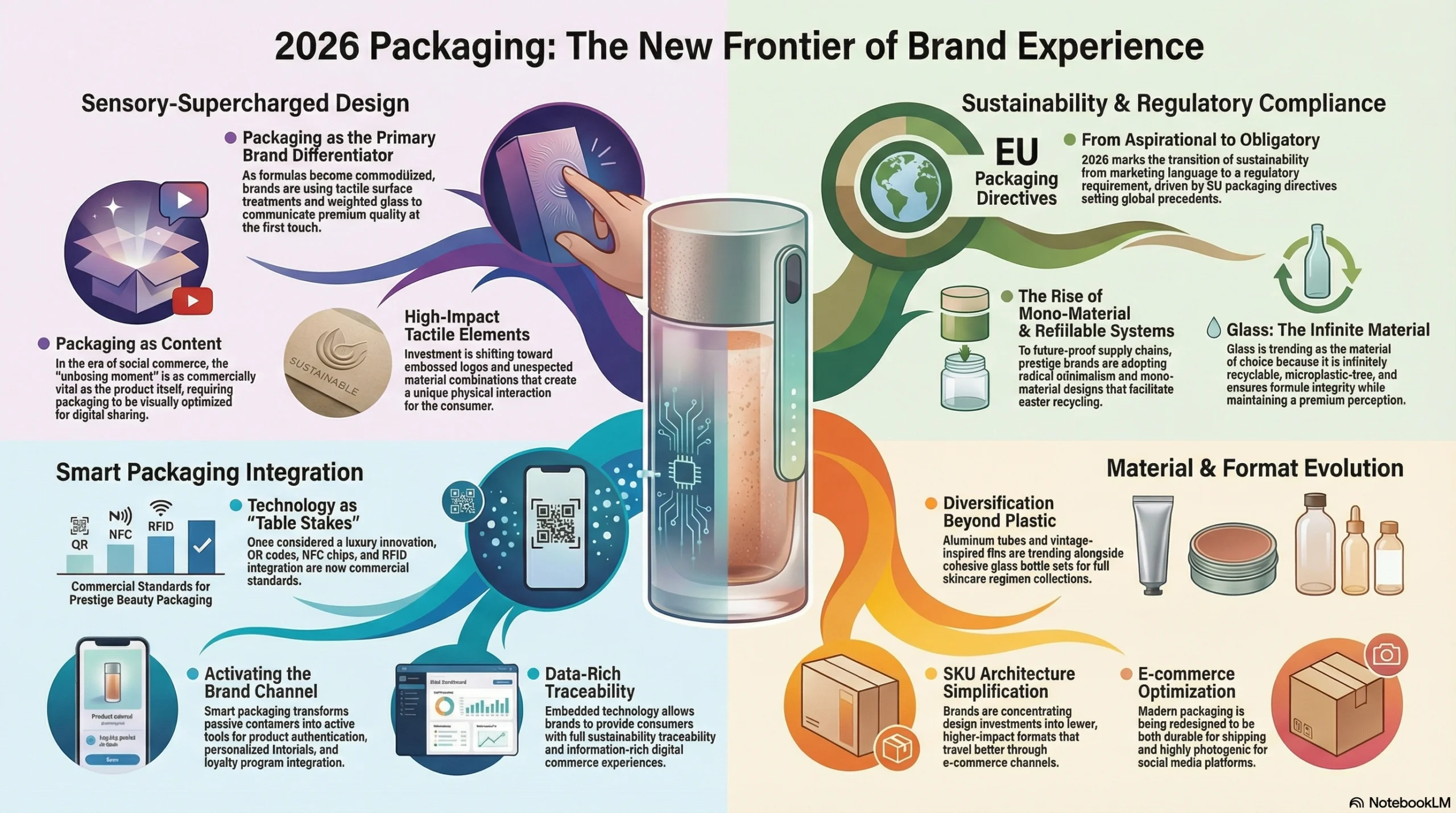
Sensory-Supercharged Design
In an era of formula commoditization — where consumers increasingly struggle to differentiate between competing serums or lip treatments — packaging has become the primary brand differentiator. Brands are investing heavily in tactile surface treatments, weighted glass, embossed logos, and unexpected material combinations that communicate premium quality at the moment of first touch. In live and social commerce environments, where the “unboxing moment” is as commercially important as the product itself, packaging must perform as content.
Sustainability — From Claim to Compliance
2026 is the year sustainability in packaging moved from aspirational language to regulatory obligation. Mono-material designs, refillable systems, and radical packaging minimalism are now mainstream across prestige beauty. The EU’s packaging directives are setting a global precedent, and brands operating across multiple regions are proactively designing to EU standards to future-proof their supply chains.
Glass continues to gain ground as the material of choice for premium and sustainable positioning simultaneously. It is infinitely recyclable without quality loss, free of microplastic risks, chemically inert (ensuring formula integrity), and carries an inherent premium perception that no plastic alternative can fully replicate.
Smart Packaging Integration
What was once an expensive innovation is now a commercial standard: QR codes, NFC chips, and RFID integration are increasingly embedded in prestige beauty packaging. These technologies transform a bottle or jar from a passive container into an active brand channel — enabling product authentication, personalized usage tutorials, loyalty program integration, and sustainability traceability. For brands competing in the information-rich digital commerce environment of 2026, smart packaging is rapidly becoming table stakes.
Material & Format Evolution
Beyond glass, the packaging material landscape is diversifying. Aluminum tubes, vintage-inspired tins, and glass bottle sets — particularly full skincare regimen collections in cohesive packaging systems — are trending strongly. Brands are simultaneously simplifying their SKU architecture, concentrating design investment into fewer, higher-impact formats that travel better through e-commerce channels and photograph more compellingly on social platforms.
Meet Jarsking at Hall 20-D5
Who Is Jarsking?
Jarsking — operated by Guangzhou Jiaxing Glass Products Co., Ltd — is one of China’s most established and capable one-stop cosmetic packaging manufacturers. With 20+ years of industry experience, 10+ owned factories, 6+ automated production lines, and a production capacity exceeding 40 tons of glass per day (approximately 15 million bottles per month), Jarsking delivers at a scale and quality level very few suppliers can match.
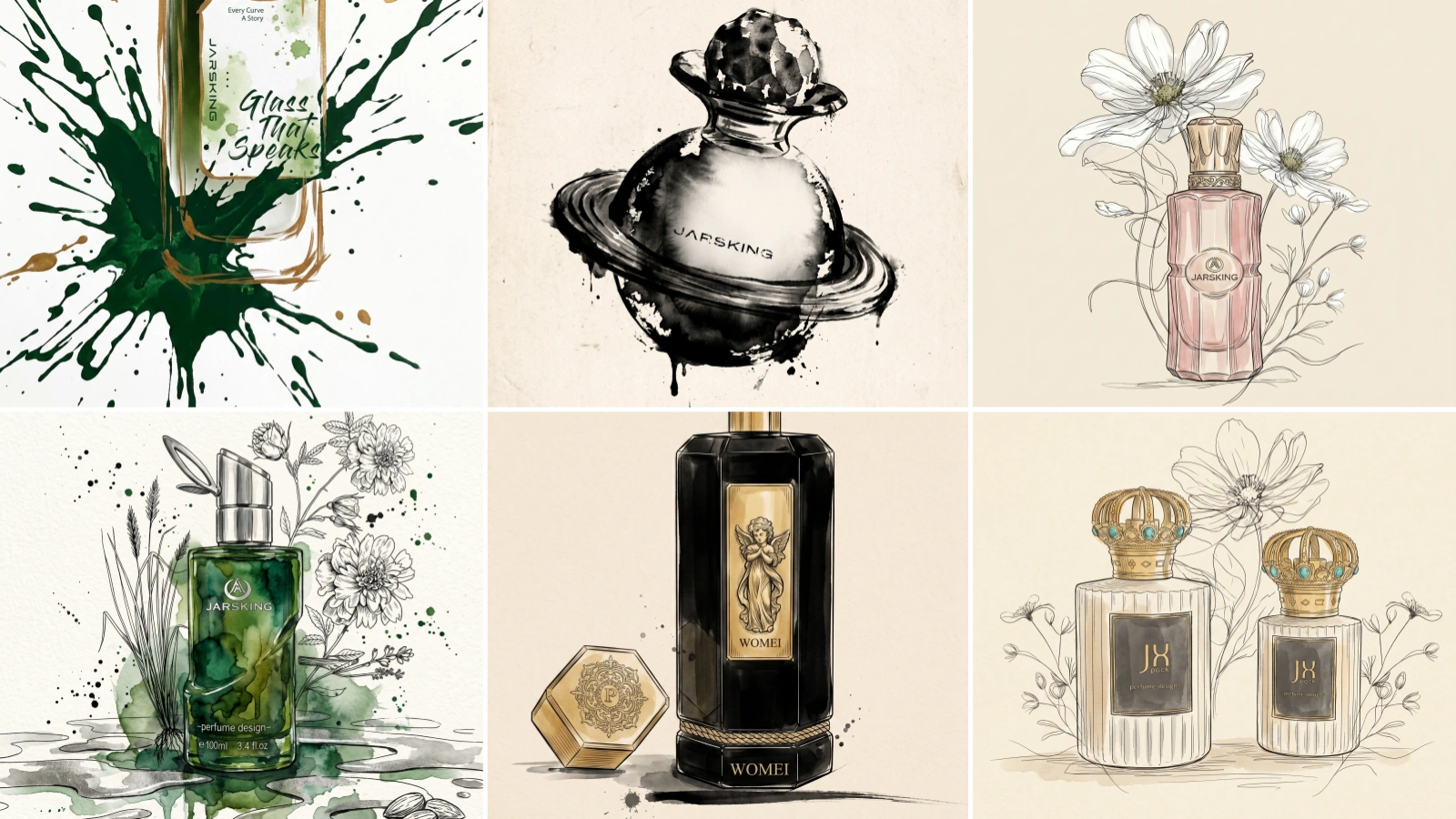
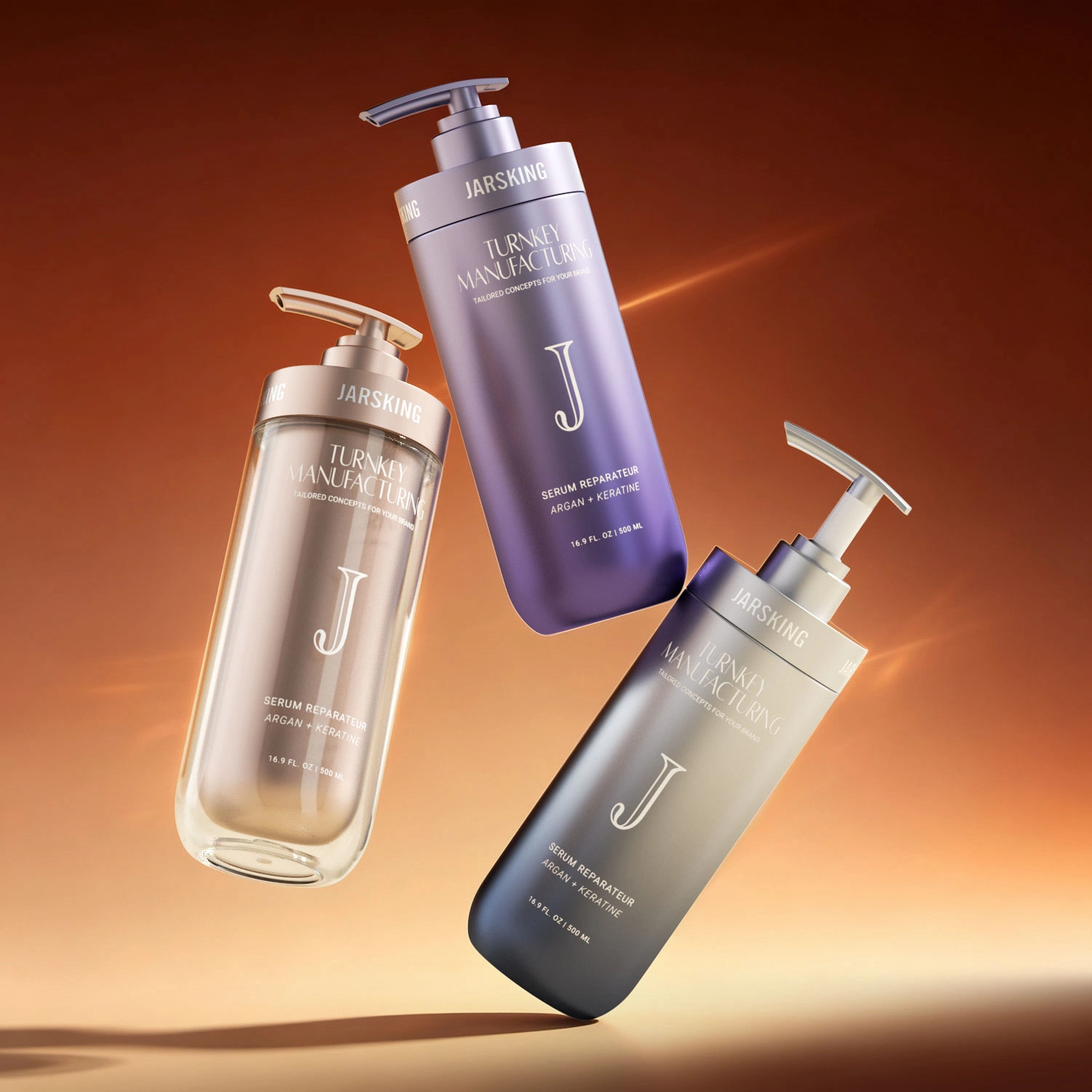
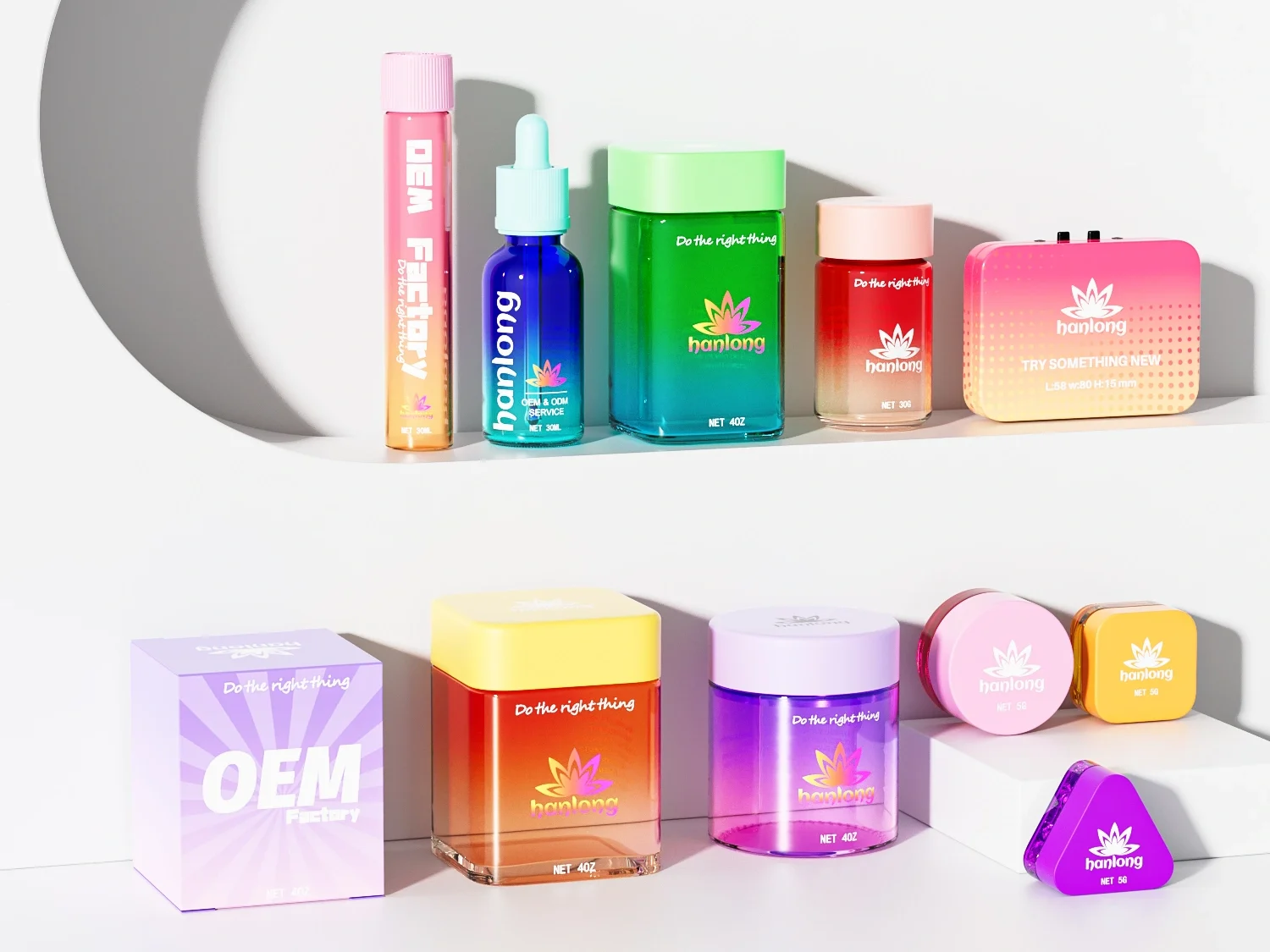
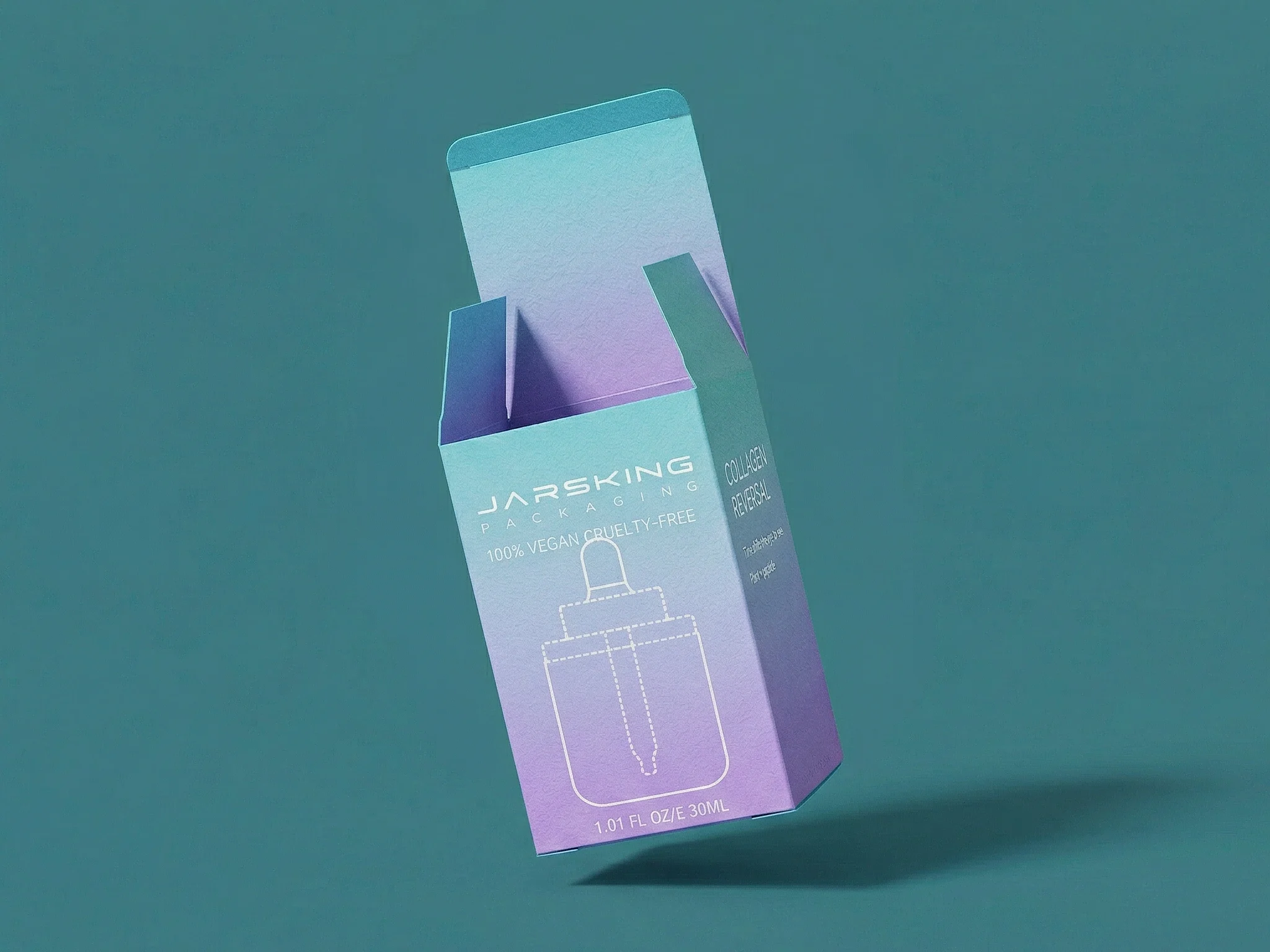
Their product range spans the full cosmetic packaging ecosystem: custom perfume bottles, skincare glass jars and bottles, pharmaceutical glass containers, dropper bottles, pump bottles, and complete multi-piece packaging sets for skincare and fragrance regimens. Every product is available with OEM, ODM, and OBM customization — whether you need components manufactured to your exact specifications (OEM), a fully developed packaging design brought to life under your brand (ODM), or a complete branded product built from the ground up with Jarsking’s in-house design and branding expertise (OBM). This three-tier model ensures that brands at every stage — from emerging indie labels to established global players — can develop truly distinctive packaging identities rather than selecting from a generic catalog.

What Jarsking Is Bringing to the Show
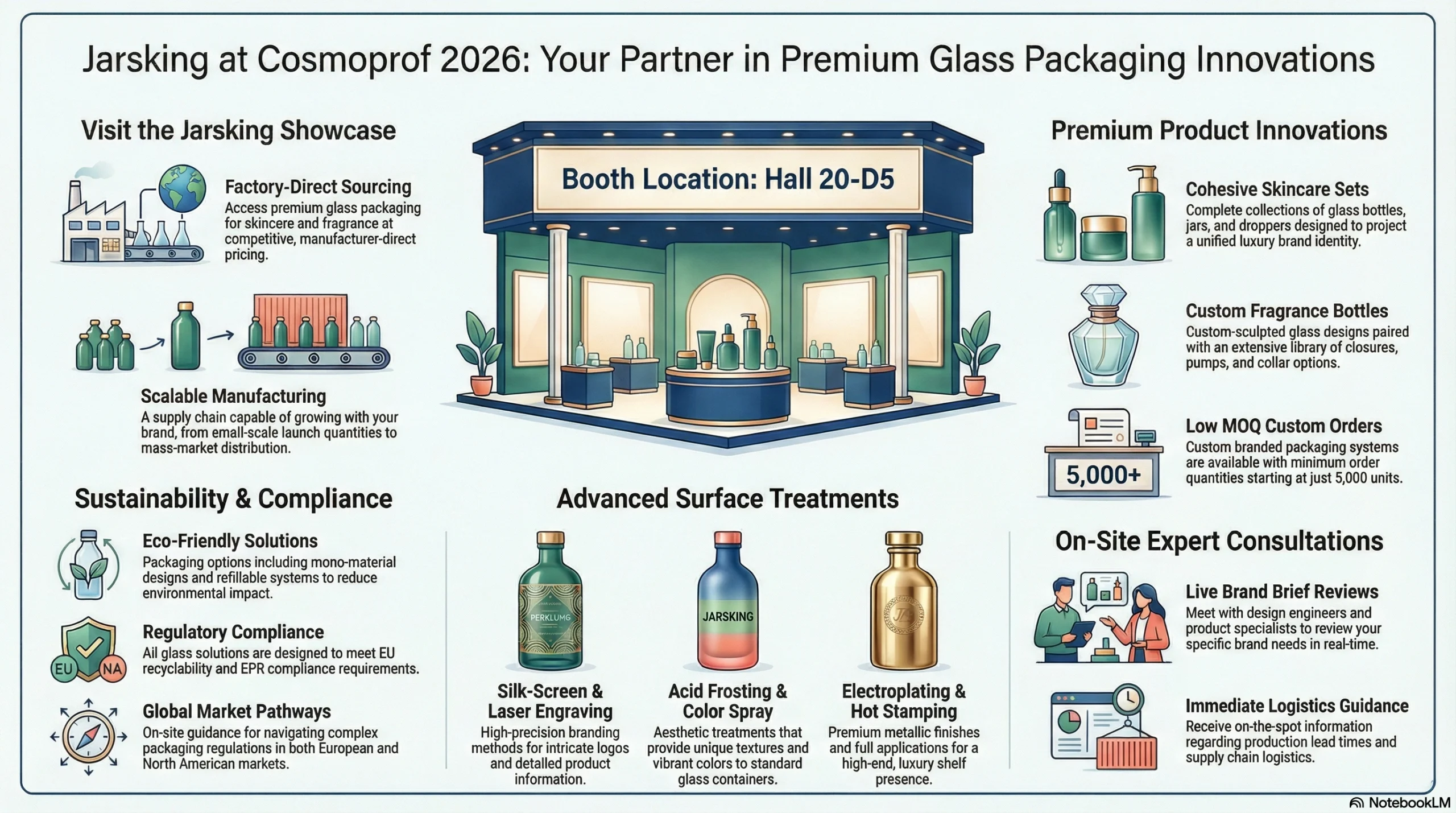
Jarsking’s Hall 20-D5 booth at Cosmoprof 2026 will showcase their full range of custom glass packaging solutions, with particular emphasis on products designed to meet 2026’s defining market demands.
Visitors can explore:
Complete skincare bottle sets — cohesive collections of glass bottles, jars, and droppers designed to project premium brand identity across an entire product line
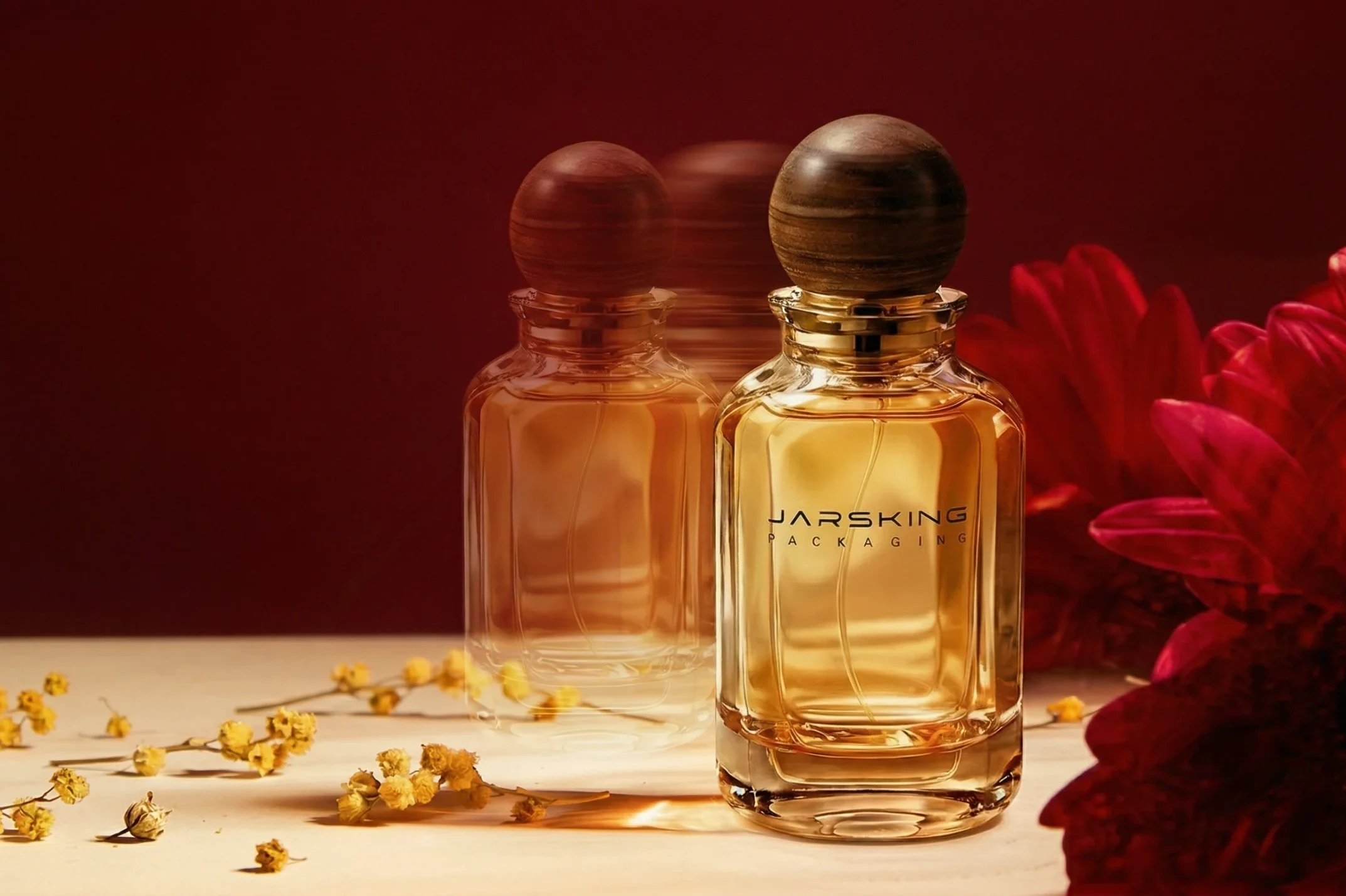
Luxury glass fragrance bottles — custom-sculpted, with an extensive library of closures, pumps, and collar options
Advanced surface treatment capabilities — including silk-screen printing, acid frosting, electroplating, hot stamping, color spray coating, and laser engraving
Sustainable glass packaging — meeting EU recyclability and EPR compliance requirements, with mono-material and refillable options available
The Jarsking team at Hall 20-D5 includes design engineers, product specialists, and account managers equipped to conduct live custom consultations, review brand briefs, and provide on-the-spot guidance on lead times, MOQs (starting from 5,000 units for custom orders), and compliance pathways for both EU and North American markets.
Why Booth Hall 20-D5 Belongs on Your Itinerary
Cosmoprof is, ultimately, about relationships and decisions. The brands that maximize the show are those who arrive with a clear sourcing brief and use their time to meet the specific suppliers capable of solving their most pressing packaging challenges.
If your brief in 2026 involves any of the following, Jarsking is a priority visit:
Sourcing premium glass packaging for skincare, fragrance, or personal care at competitive factory-direct pricing
Developing a custom branded packaging system that differentiates your product in crowded retail or e-commerce environments
Transitioning to sustainable, EU-compliant glass packaging ahead of regulatory deadlines
Building a scalable supply chain with a manufacturer capable of growing from launch quantities to mass-market volumes
Exploring complete packaging sets that present your skincare line as a cohesive, luxury collection
Key Takeaways for Beauty Brands at Cosmoprof 2026
As you plan your days at the Bologna Fair District this March, four principles stand out from this year’s market landscape:
Regional intelligence is non-negotiable. A packaging strategy built for North America will underperform in Southeast Asia and the Middle East. Build regional considerations into your brief from the start.
Packaging is a growth lever, not a cost line. In 2026’s social-commerce-driven market, packaging that photographs well, feels premium, and communicates sustainability credentials generates measurable commercial returns.
Glass is the answer to multiple briefs simultaneously. Premium perception, sustainability compliance, formula integrity, tactile differentiation — no material answers all four as convincingly as glass.
Supplier relationships made at Cosmoprof outperform cold sourcing. The conversations you have face-to-face in Bologna compress months of email chains into 30-minute meetings. Prioritize booths where you can meet engineers and decision-makers, not just sales representatives.
Conclusion — Bologna Awaits
Cosmoprof Worldwide Bologna 2026 arrives at a moment of genuine momentum for the global beauty industry. From India’s accelerating luxury wave to Europe’s sustainability-driven design revolution, from North America’s data-powered personalization push to the Middle East’s emergent ambition, the forces shaping beauty in this decade are diverse, dynamic, and full of opportunity for brands and suppliers who understand them.
The packaging decisions you make today will define how your brand is perceived in every market where you compete. Glass packaging — with its irreplaceable combination of premium aesthetics, sustainability credentials, and sensory impact — sits at the center of that decision for the world’s most ambitious beauty brands.
Visit Jarsking at Hall 20-D5, March 26–28, Bologna Fair District, and discover how their 20+ years of manufacturing expertise, 15-million-bottle monthly capacity, and full-spectrum customization capabilities can elevate your brand’s packaging to match your ambitions.
Can’t make it to Bologna? Contact the Jarsking team at www.jarsking.com to request a consultation, browse the 2026 product catalog, and arrange for sample sets to be delivered directly to your office. Your next signature packaging line starts with a single conversation.
FAQs
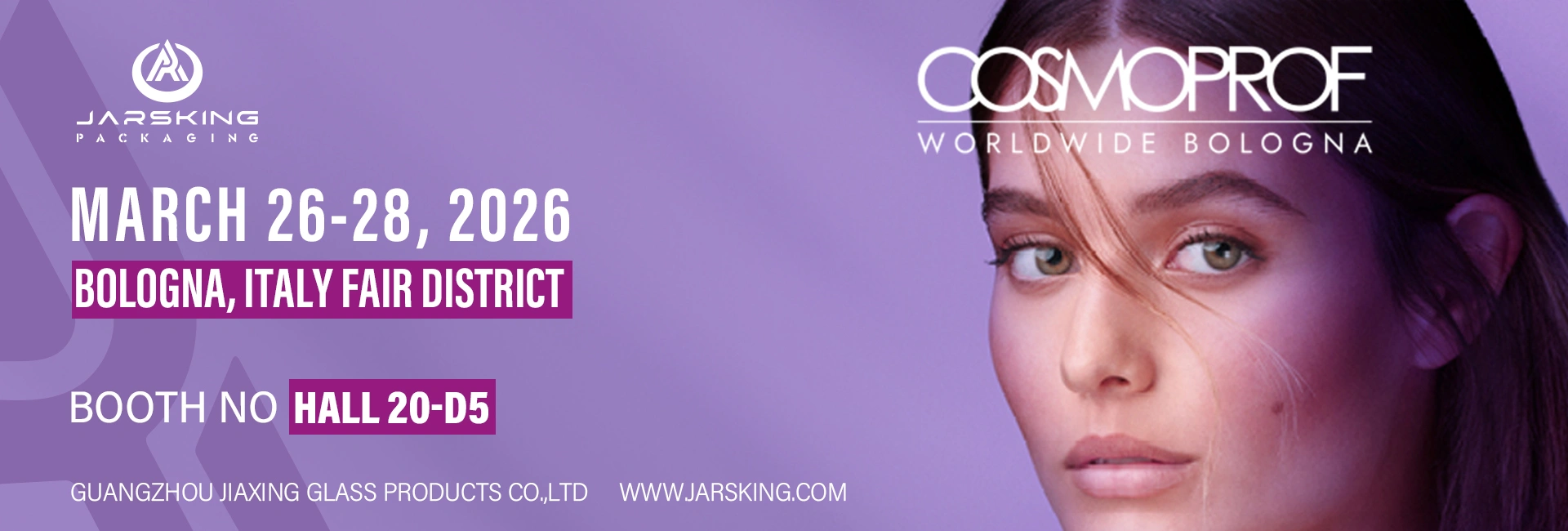
Cosmoprof Worldwide Bologna 2026 takes place from March 26–28, 2026, at the Bologna Fair District, Bologna, Italy. The event is the world’s largest professional beauty trade show, hosting over 3,000 exhibitors from 64 countries and welcoming an expected 250,000+ visitors across the four-day event.
Jarsking can be found at Booth Hall 20-D5 within the Cosmopack section (Hall 19–20), dedicated to packaging, ingredients, and contract manufacturing.
At Hall 20-D5, Jarsking will present its full range of custom cosmetic glass packaging solutions, including luxury perfume bottles, skincare glass bottle and jar sets, dropper bottles, pump bottles, and fragrance packaging with premium surface finishes such as acid frosting, electroplating, hot stamping, and silk-screen printing.
Visitors will also be able to explore sustainable, EU-compliant glass packaging options and discuss OEM, ODM, and OBM customization possibilities directly with Jarsking’s design and engineering team.
These three models represent different levels of manufacturer involvement in your product development:
OEM (Original Equipment Manufacturer): You provide the design specifications; Jarsking manufactures the packaging exactly to your brief.
ODM (Original Design Manufacturer): Jarsking develops the design based on your requirements, which you then brand as your own.
OBM (Original Brand Manufacturer): Jarsking handles the entire process — design, manufacturing, and branding — delivering a fully market-ready product under your brand identity.
Jarsking supports all three models, making it a flexible partner for brands at every stage of growth, from indie startups launching their first SKU to established global labels scaling production.
If you’re unable to visit Jarsking in person at Hall 20-D5, you can reach the team directly through their official website at www.jarsking.com. From there, you can submit a consultation request, browse the full 2026 product catalog, specify your customization requirements, and arrange for physical samples to be sent to your location.