








You have the formula. You have the brand name. But when it comes to packaging, most founders hit the same wall — they don’t know what questions to ask, what a realistic timeline looks like, or what separates a great packaging partner from a glorified catalog supplier.
That wall is entirely avoidable. And this guide exists to knock it down.
Your packaging is the first physical interaction a consumer has with your hair care brand. Before they’ve smelled the formula, before they’ve read the ingredient list, the bottle in their hand is already communicating quality, price point, and brand values. That first impression is manufactured — literally — and the decisions you make during the production process determine how powerful it is.
As a hair care packaging manufacturer operating as a Global Value Integrator, Jarsking offers end-to-end OEM, ODM, and OBM solutions under one roof. We don’t just make bottles — we think like a brand agency, engineer like a factory, and deliver like a strategic partner.
This guide walks you through the complete journey: from writing your packaging brief to receiving your finished bottles at your warehouse door. Explore our custom shampoo bottle range to see what’s possible before you dive in.
Before any design work begins, the most important decision you’ll make is choosing your service model. This choice determines your timeline, the level of creative input required from your team, and the depth of support you’ll receive from Jarsking.
Here’s how the three models compare:
| Model | What You Bring | What Jarsking Delivers | Best For | Timeline |
|---|---|---|---|---|
| OEM | Full specs, designs, technical drawings | Precise manufacturing to your exact brief | Established brands with in-house design teams | 33–65 days |
| ODM | Brand direction, logo, colorway | Customization of 30,000+ existing proven molds | Brands launching fast or testing new markets | 40–60 days |
| OBM | Brand brief & market ambition | Full co-development: design, structure, CMF, channel strategy, launch system | Premium lines, new category launches, strategic brand builds | 84–110 days |
OEM is ideal when you’re the architect and you need a master builder. You maintain full IP control; Jarsking executes with precision across materials, finishes, and assembly. You arrive with technical drawings, and we manufacture to spec.
ODM is the fastest route to market. Rather than building from scratch, you’re customizing from Jarsking’s library of 30,000 proven molds — applying your brand’s color, finish, and logo to structures that are already validated for fill compatibility and structural integrity. For brands testing a new category or hitting a trade show deadline, ODM is the pragmatic choice.
OBM is Jarsking’s headline differentiator, and it’s where the manufacturer-as-brand-agency model comes fully to life. Under OBM, Jarsking acts as a co-development partner. You bring a brand brief and market ambition. We return a complete launch system: Industrial Design, CMF (Colour, Material, Finish) specification, Design for Manufacturing (DfM), compliance roadmap, testing plan, channel strategy alignment, and a production playbook. It’s design-led, R&D-driven, and built around your brand’s positioning — not around what happens to be in stock.
The right model depends on your timeline, budget, and internal capabilities. Jarsking can also combine approaches across different SKUs in the same portfolio — OBM for your hero product, ODM for your supporting line.

Stage 1 — The Packaging Brief: Defining What You Actually Need
A clear brief is the single most important thing you can produce before engaging any hair care packaging manufacturer. The brands that see the cleanest, fastest launches are those who engage their manufacturer at the brief stage — not after a design is already finalized.
Your packaging brief should cover:
Product type and formula compatibility — Shampoo, conditioner, hair oil, scalp serum, or styling product? Flag any formula compatibility concerns upfront: high-pH formulas, oil-based actives, and keratin treatments can all interact with certain plastics
Fill volume and SKU count — Are you launching a single hero product, or a full three- to five-SKU product system?
Material preference — Glass, PET, HDPE, PCR, or aluminum?
Closure and dispenser functionality — Pump, disc-top, flip-cap, treatment spray, or dropper?
Aesthetic direction — Luxury and prestige? Clinical and science-forward? Natural and indie? Mass and e-commerce?
Channel strategy — Retail, DTC/e-commerce, salon professional, or gifting? This directly shapes structural and finish decisions
MOQ and budget range — Jarsking’s standard MOQ is 10,000 pieces per SKU for custom hair care packaging
Launch timeline — Is there a hard deadline tied to a seasonal campaign, trade show, or retailer window?
Most manufacturers, including Jarsking, provide a standard brief template to help brand founders answer these questions systematically. Arriving prepared saves weeks of back-and-forth and prevents the most common cause of timeline slippage: a brief that expands mid-project.
What a Strong Brief Looks Like in Practice
To make this concrete, here’s how a real-world brief scenario plays out.
A former salon owner launching her first retail hair care line — a scalp health brand targeting the $35–$55 price tier, selling through DTC e-commerce and a handful of specialty retailers in the US. She comes to Jarsking with a clear vision but no design files, no structural specs, and no manufacturing experience.
Here’s what her brief covers when she fills in Jarsking’s template:
Product type: Scalp serum, clarifying shampoo, and a leave-in treatment — three SKUs at launch
Formula concerns: The scalp serum contains salicylic acid and a high percentage of tea tree oil, both of which can degrade certain plastics over time — flagged for compatibility testing
Fill volumes: 30ml (serum dropper), 250ml (shampoo pump), 150ml (leave-in spray)
Materials: She wants glass for the serum to communicate clinical credibility; PET for the shampoo and leave-in for lightweight DTC shipping
Aesthetic direction: “Clinical-minimalist — white, frosted, clean. Ingredients-forward. Not spa. More like a dermatology brand that also has great design.”
Channel strategy: DTC-first, so bottles need to be shipping-durable; she’s also pitching to one specialty retailer, so shelf presence matters
MOQ: 10,000 pcs/SKU across all three products — 30,000 pieces at first production
Launch deadline: She has a hard target of Q1 of next year — tied to a press launch she’s already calendared
Based on this brief, Jarsking’s team recommends the ODM model across all three SKUs — selecting from Jarsking’s library of 30,000+ existing, production-proven molds for the serum dropper, shampoo pump, and leave-in spray. For a first packaging project, ODM is the strategically sound choice: the indie brand gets a fully custom brand aesthetic — her frosted finish, clinical color palette, aluminium collar detail, and screen-printed branding — applied to mold structures that are already validated for fill compatibility, dispenser performance, and shipping durability. There’s no tooling risk, no mold development cost, and no extended timeline tied to custom engineering.
This approach gives the client exactly the premium, clinical-minimalist look she briefed, while keeping her timeline tight and her budget predictable for a first production run.
The outcome of a well-written brief: Jarsking returns a service model recommendation, a preliminary CMF direction, and a project timeline — all within the first consultation. For this client, all three SKUs run on an ODM timeline: sampling within two to three weeks of moodboard approval, mass production completion in 40–55 days, with sea freight adding 35–40 days for US delivery. Her Q1 press launch is achievable — with room to spare.
Without a brief this complete, the first two to three weeks of a project are typically consumed by information-gathering. With one this detailed, the design phase begins immediately.
The brands that see the cleanest launches are those who treat the brief as a strategic document — not an inquiry form. The more you define upfront, the more precisely Jarsking can engineer the path to your shelf.
Stage 2 — Moodboards & Design Proposals: Translating Vision Into Direction
Once your brief is confirmed, the creative development process begins. For OBM and many ODM projects, the next step is the packaging moodboard — and it matters more than most founders expect.
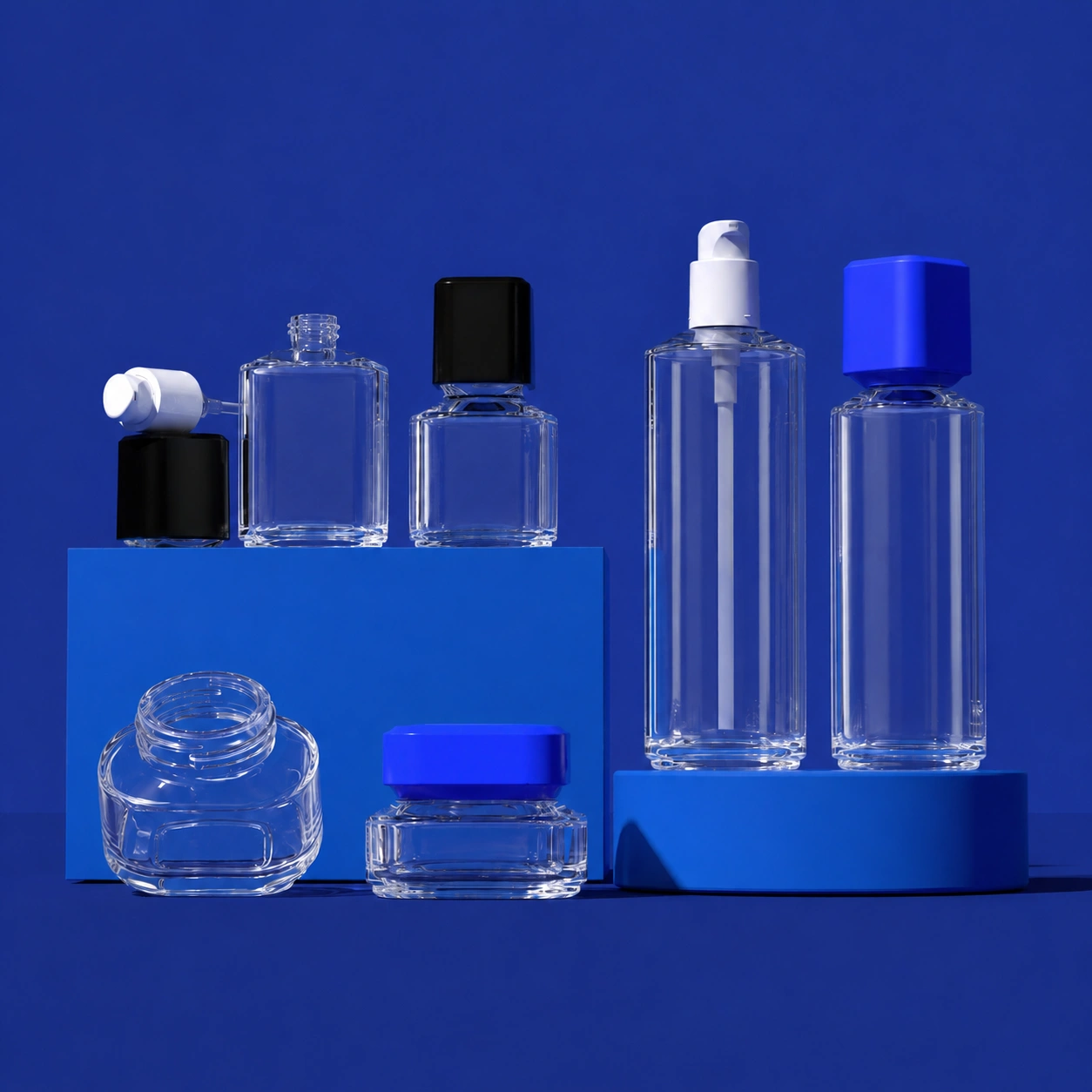
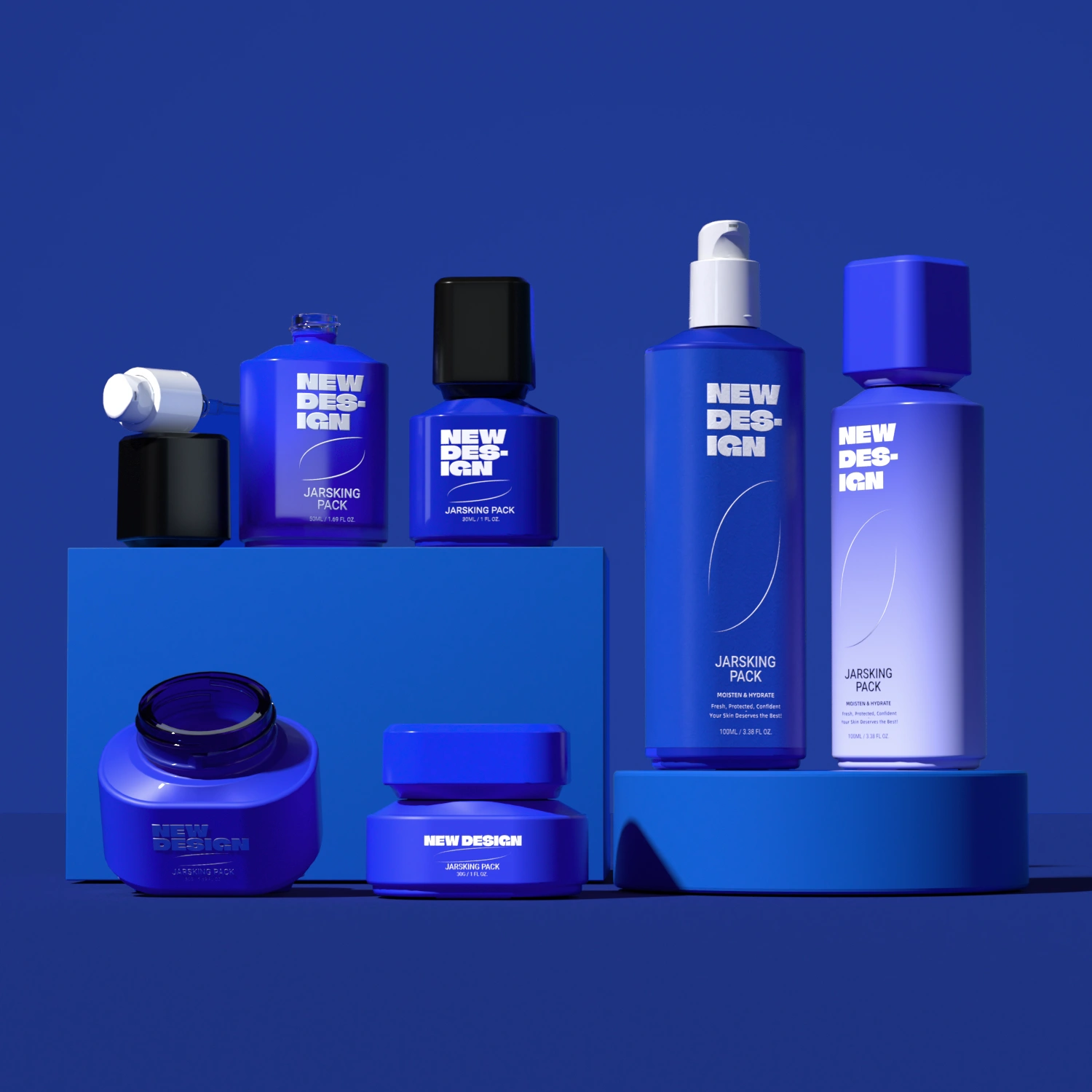
A packaging moodboard is a visual reference document that captures your colour palette, texture direction, material feel, competitor and aspiration references, surface treatment direction, and overall brand tone. Its function is alignment: establishing shared visual language between your team and the manufacturer before any physical or structural design work begins. Getting this right prevents the most expensive mistakes in the process — revision cycles at the sampling stage.
What Jarsking’s OBM design proposal typically delivers within 1–2 weeks of brief approval:
Visual mood direction (colour palette, texture, surface finish references)
Structural concept sketches and 3D renderings
CMF (Colour, Material, Finish) specification
Surface treatment recommendations: matte coating, hot stamping, frosted glass, screen printing, metallization
DfM (Design for Manufacturing) considerations — ensuring the concept is producible at your required MOQ and cost target
DfR (Design for Recycling) notes for eco-committed brands
To understand how a moodboard translates into a structured design direction, see how Jarsking approaches the moodboard and design proposal stage.
Two OBM Concept Case Studies Worth Knowing
To illustrate what this process produces, Jarsking developed two original concept case studies — not client projects, but internally created brand concepts that demonstrate what becomes possible when a packaging manufacturer thinks like a brand agency. Each concept started from a single brand brief and was developed end-to-end by Jarsking’s in-house design and strategy team: moodboard, structural system, CMF specification, product line architecture, and channel strategy. Both are fully launch-ready — not mood exercises, but complete packaging systems.
The brief for Mirroir was built around one of the most commercially powerful aesthetics in contemporary hair care: the Korean glass hair movement — the pursuit of mirror-smooth, ultra-glossy, light-reflecting hair that signals deep hydration and protein health. The packaging brief asked for a prestige system that embodies that aesthetic physically: a line where the bottle itself looks and feels like it belongs to the result it promises.
Moodboard direction: Glacier. Icy, luminous — cool silver and soft reflective surfaces. The visual language is clean and elevated rather than dark or editorial. Every finish decision references mirror — the way it catches on a metallic accent.
What the OBM process delivered:
A 7-SKU HDPE packaging system — spanning shampoo, conditioner, hair mask, treatment serum, scalp oil, and styling products — all structurally coherent as a product family
Material: HDPE bottle platform — chosen for its chemical compatibility with treatment-grade formulas, matte-soft surface quality, and lightweight shipping performance for DTC distribution
CMF specification: Glacier-toned base, frosted and cool metallic accents on bottle surface — each finish decision calibrated to reflect the glacial, luminous moodboard direction
Structural detail: Pump stroke calibrated for treatment-weight viscosities; cap-to-body proportion engineered to read as premium at retail shelf distance; consistent closure family logic across all 7 SKUs for visual coherence as a range
Channel strategy alignment: The glacier finish and structural proportion were specified to perform in both prestige retail — where the bottle needs to read as premium at arm’s length — and DTC unboxing, where the frosted tactility and cold-metallic details carry sensory weight in-hand
The result is a complete 7-SKU packaging system and visual identity that traces every structural, material, and finish decision back to a single aesthetic brief — demonstrating how “Korean glass hair” becomes a specific CMF specification, not just an inspirational reference.

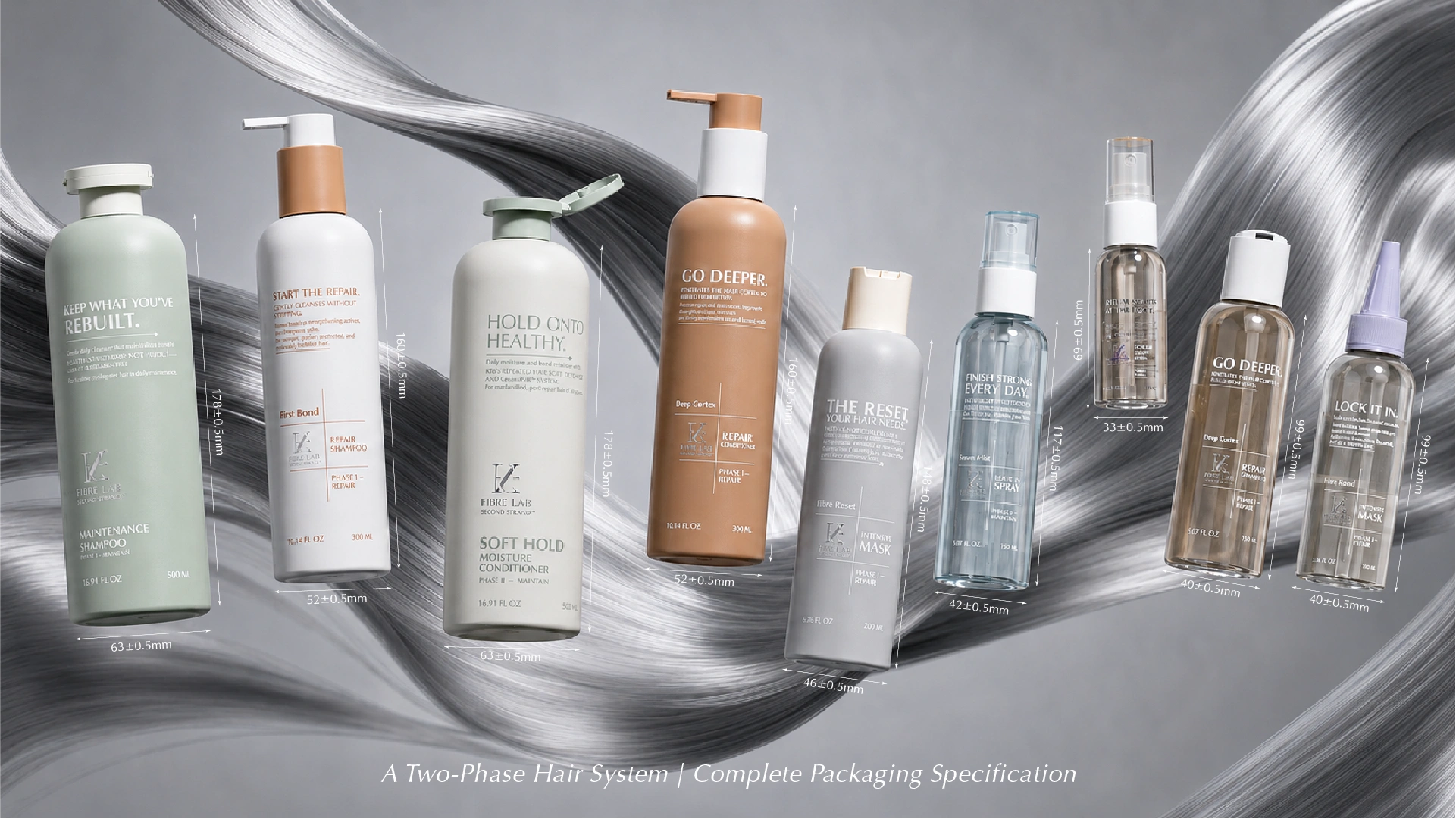
The brief for Second Strand was built around a different challenge: a luxury hair repair system positioned for both salon professional and DTC channels, where packaging must communicate ingredient authority and scientific credibility — without feeling cold, pharmaceutical, or inaccessible.
Moodboard direction: Clean, modern, clinical-yet-premium. The brief called for restraint — a visual language where every element earns its place, and the absence of decoration is itself a credibility signal.
What the OBM process delivered:
A two-phase, 8-SKU system built on a customisable HDPE bottle platform — structured as a repair programme with a clear phase logic: Phase 1 (repair and fortify) and Phase 2 (maintain and restore), giving the product line a clinical, results-oriented narrative that runs through the packaging architecture itself
Material: HDPE bottle platform across the range — chosen for its chemical resistance with repair-grade active formulas, its matte surface quality that communicates clinical precision, and its structural versatility across fill volumes from 50ml treatments to 300ml professional sizes
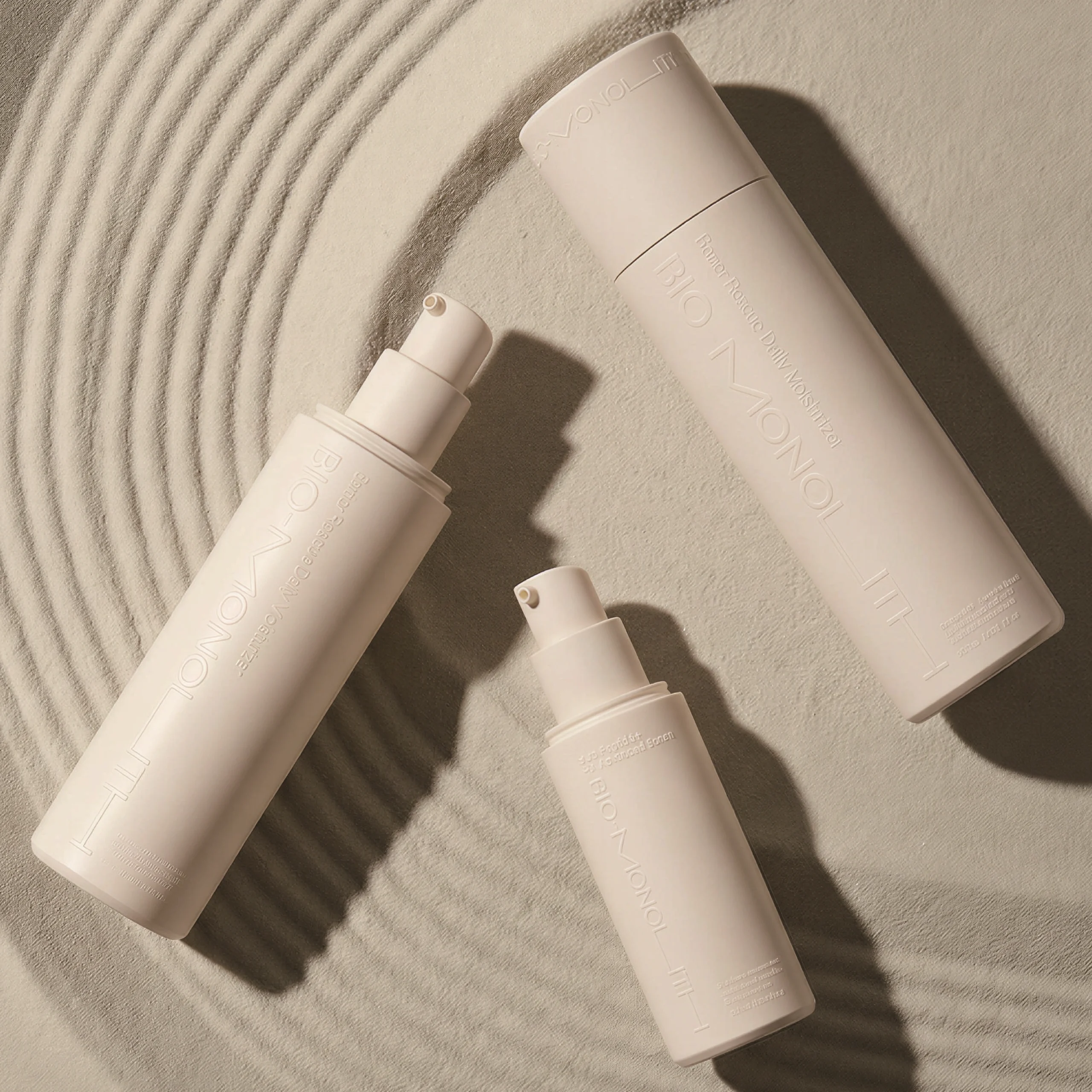
CMF specification: Off-white and warm neutral base palette, matte finish throughout, single-colour screen-printed text panels with deliberate information hierarchy — ingredient and phase labelling is structural, not decorative. No metallization, no gloss, no embossing — every finish choice is one of deliberate restraint
Structural detail: Pump stroke volumes calibrated for salon-use quantities on professional sizes; label panel geometry maximised for ingredient disclosure copy — because for this brand, the ingredient list is the brand story; consistent line logic across both phases so the full 8-SKU range reads as a unified system on a salon backbar
Channel strategy alignment: Two structural configurations specified — a professional-size range for salon backbar with high-volume dispensers, and a consumer-size DTC range with shipping-optimised closures and e-commerce-safe torque
Second Strand demonstrates a distinct but equally important design principle: that finish restraint is itself a design decision. Every element deliberately absent from the bottle — no gold, no gloss, no saturated visual decoration — communicates the brand’s scientific confidence as clearly as what is present.
Stage 3 — Sampling & Validation: Where Ideas Become Physical Reality
Sampling is where the process shifts from digital to physical. There are two distinct sample types you’ll encounter, and understanding both helps you set accurate expectations for your launch timeline.
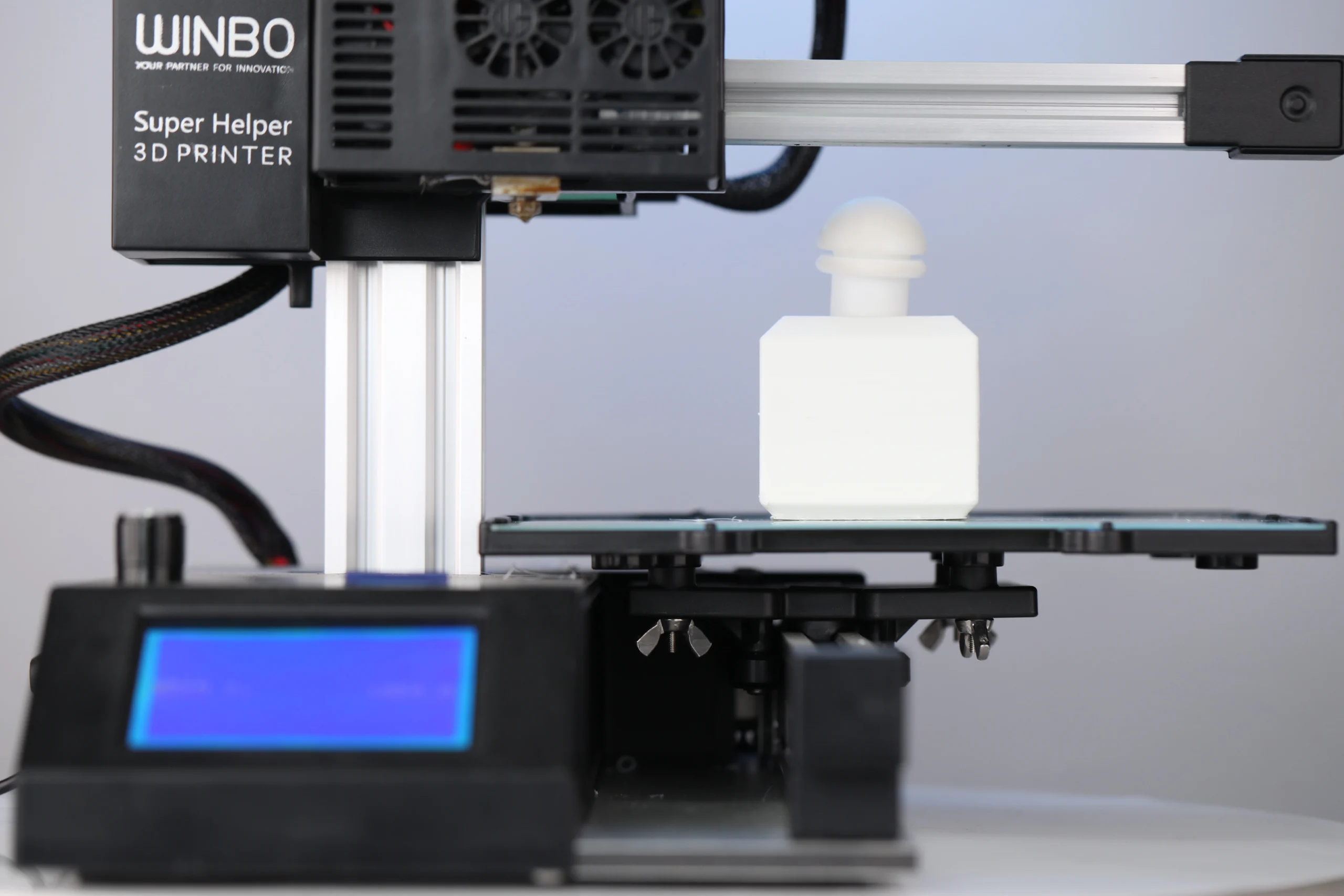
Stock or prototype samples are produced quickly (3–15 days depending on decoration) from existing molds or 3D printing. They’re used to confirm size, weight, ergonomics, and general form before structural commitment is made.
Pre-production samples (PPS) come later — produced after structural and surface design are fully approved. For OBM projects, PPS typically falls in days 44–67 of the overall timeline. These are the samples you approve before full production runs.
When you receive a pre-production sample, evaluate these points carefully:
Cap torque and seal integrity
Pump or dispenser output accuracy and consistency
Weight and hand-feel against your moodboard reference
Colour and finish accuracy — physical Pantone-matched colour chips are required; screen captures are not accepted as colour references
Label panel dimensions and surface printability
Formula compatibility — fill the sample and test it. Oil-based formulas, high-pH shampoos, and active-ingredient treatments can react with certain plastic grades in ways that only become visible over time
Industry best practice recommends testing the filled sample for a minimum of 30 days before final sign-off — particularly for formulas with active keratin treatments, high alkalinity, or essential oil content. The Sustainable Packaging Coalition provides useful guidance on material-to-formula compatibility standards and packaging sustainability considerations for beauty brands.
Stage 4 — Material & Finish Selection: The Details That Define Your Brand
Every material and finish choice you make is a brand communication decision. The weight of a glass bottle, the tactile drag of a matte soft-touch coating, the cold click of an aluminum cap — these micro-sensory details shape how a consumer perceives value before they’ve read a single word on the label.
Material options and their brand implications:
| Material | Best For | Consumer Feel | Sustainability | Relative Cost |
|---|---|---|---|---|
| Glass | Luxury, oils, serums, prestige retail | Premium, weighted | Infinitely recyclable | Higher |
| PET Plastic | Shampoo, conditioner, DTC | Lightweight, flexible | Recyclable | Lower |
| HDPE Plastic | Thick formulas, professional lines | Matte, clinical | Recyclable | Lower |
| PCR Plastic | Eco-forward, sustainability-committed brands | Similar to virgin PET | High (post-consumer recycled) | Mid |
| Aluminum | Premium styling, unboxing-focused | Cool metal tactility | Endlessly recyclable | Mid–High |
Surface treatments and what they signal:
Hot stamping → luxury, prestige, editorial authority
Matte soft-touch coating → premium, modern, tactile quality
Frosted glass → clinical, minimalist, science-forward credibility
Screen printing → playful, indie, expressive
Metallization (chrome, gold, rose gold) → aspirational, unboxing-worthy
Embossing / debossing → artisanal, tactile brand signature
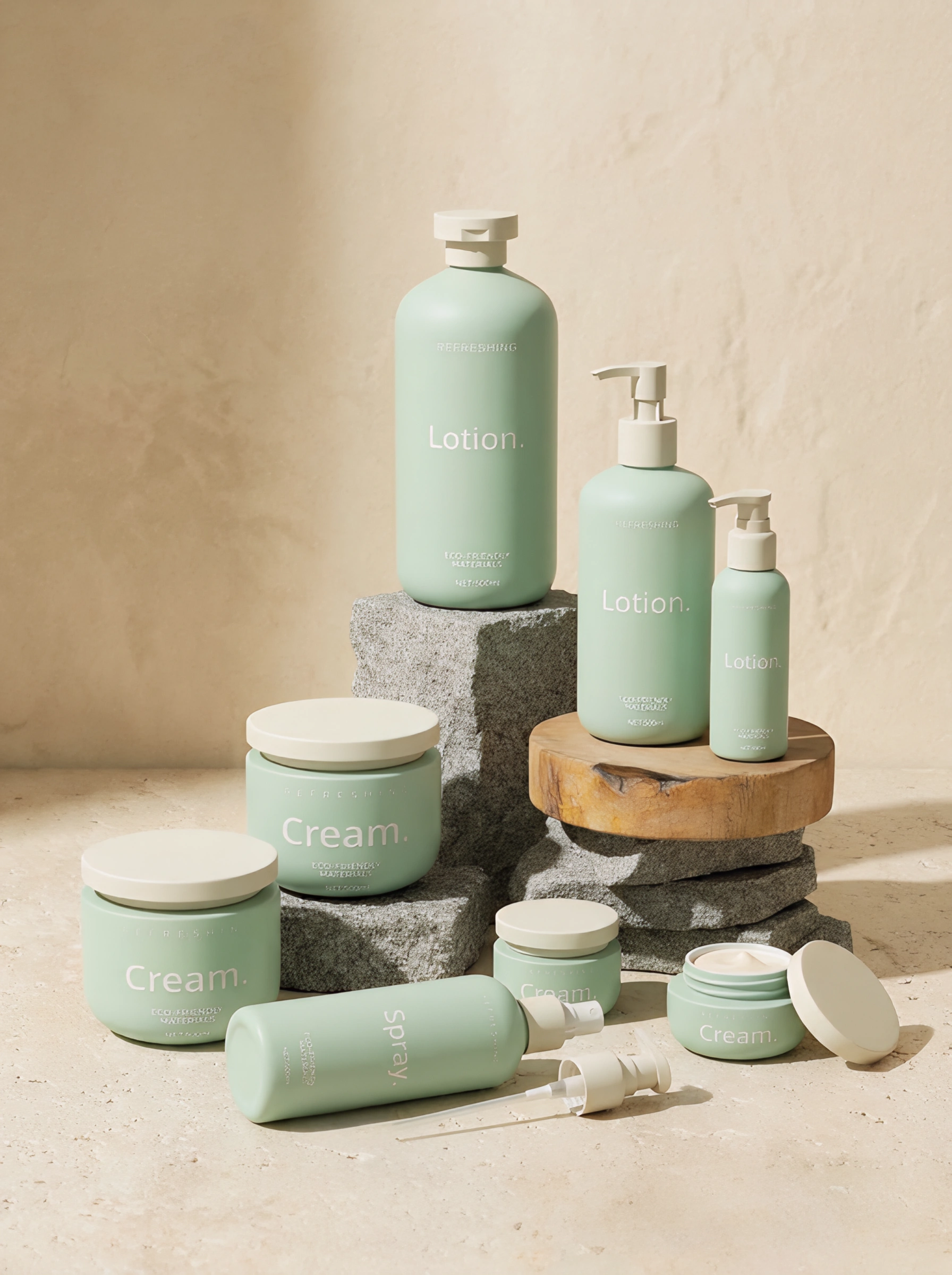
If you’re still exploring what’s possible before committing to a finish direction, Jarsking’s custom shampoo bottle range is a practical starting point. The range spans every major material and closure type used in hair care — from lightweight PET and chemical-resistant HDPE to premium glass and eco-forward PCR — each with a full suite of decoration options to match your brand’s positioning. Key highlights include:
Materials: PET, HDPE, LDPE, PP, PCR, PLA, aluminum, and glass — with detailed guidance on chemical compatibility, barrier properties, and sustainability credentials for each
Closure and dispenser formats: Lotion pumps, foam pumps, flip caps, disc-tops, airless systems, and sprayers — selectable by formula viscosity and channel context
Surface treatment options: Lacquering, silkscreen printing, metallization, digital printing, hot stamping, and embossing/debossing — covering the full spectrum from clinical-matte to prestige-metallic
Design turnaround: 3D mockup delivered in as fast as 4 hours; in-house molding with a 10,000-unit minimum per SKU for existing molds
Sustainability options: PCR plastics, refillable structures, monomaterial closures, and eco-friendly printing techniques including water-based inks and laser etching
Stage 5 — Production: Inside the Factory Floor
Once samples are approved, the production order is confirmed. Here’s exactly what happens at the Jarsking facility during a custom hair care packaging run:
Mold and tooling confirmation — For fully custom OBM shapes, steel mold production takes 35–40 days. ODM projects use existing validated molds, bypassing this stage entirely.
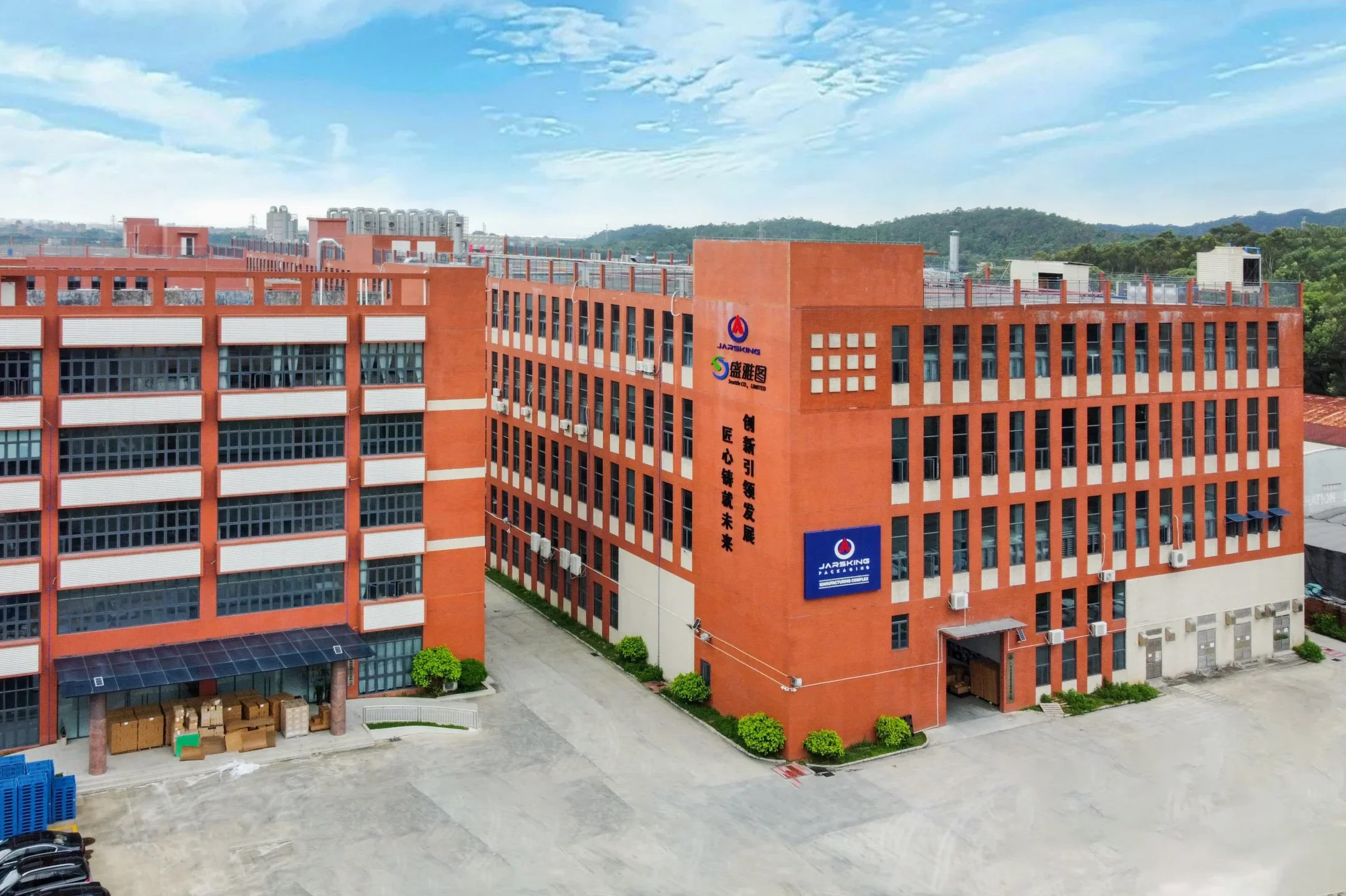
Material production — Glass production runs across 6 dedicated production lines with a daily melting capacity of 52 tons. Plastic components are produced across 10 injection molding machines and 8 blow molding machines.
Surface treatment application — 20 screen printing units, 10 hot stamping units, 3 spraying lines, and an in-house metallization facility handle decoration. All surface work is executed under the same roof — no outsourcing, no handoff risk.
Assembly — Pump fitment, cap assembly, collar fitting, and component integration are performed at the assembly stage.
Quality control — AQL (Acceptable Quality Limit) sampling is conducted per ISO 2859. Every batch undergoes dimensional inspection, functional testing of pumps and sprayers, and visual defect inspection against the approved PPS standard.
Pre-shipment inspection — A final batch review is completed before any shipment is released. Third-party pre-shipment inspection is available on request for brands who require it for import compliance.
Production timeline at a glance:
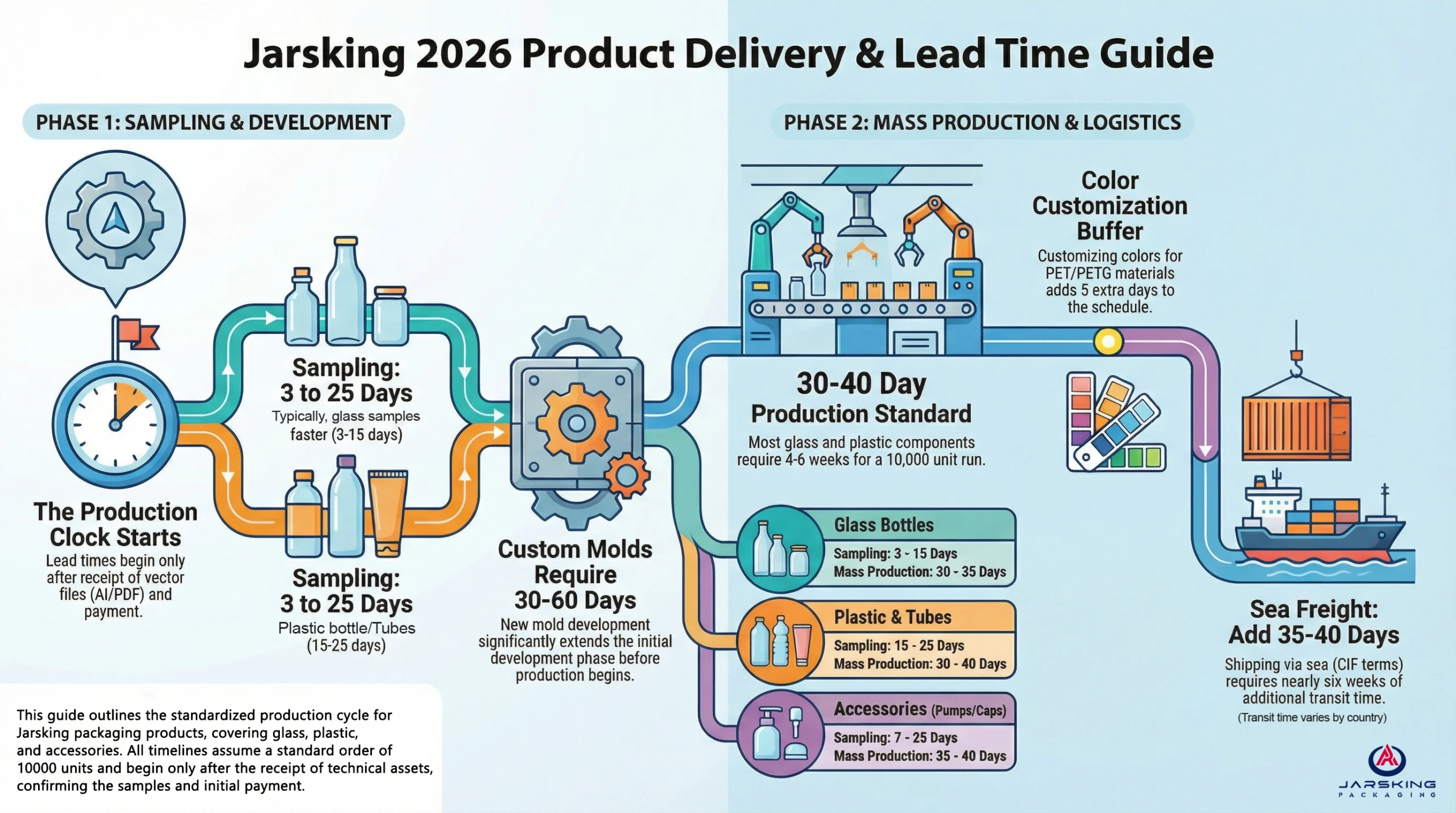
OEM (existing molds): 33–65 days from sampling to delivery (excluding shipping)
ODM (customize existing mold): 40–60 days from sampling to delivery (excluding shipping)
OBM (full custom, new mold): 84–110 days from concept to delivery (excluding shipping)
Sea freight to US: add 35–40 days
Plan accordingly — and if you have a hard launch deadline, share it at the brief stage. Jarsking’s project team can advise on the best model and timeline to hit your window.
Stage 6 — Delivery, Compliance & What Comes Next
Production cleared, QC signed off, and your order is export-packed and ready to move. From Jarsking’s facility in Guangzhou — one of the world’s highest-throughput port cities — established shipping lanes run directly to US West Coast and East Coast ports, with sea freight transit typically adding 35–40 days to your production timeline. Air freight is available for urgent launches where the cost premium is justified by a fixed campaign or retail window.
Incoterms offered:
FOB — Jarsking loads your order onto the vessel; your freight forwarder handles the final leg and import clearance
CIF — Jarsking covers cost, insurance, and freight to your destination port
DDP — Jarsking delivers directly to your warehouse, duties and taxes included — the lowest-friction option for brands new to importing
For a detailed breakdown of shipping fee structures, Incoterms implications, documentation requirements, and how to plan around seasonal demand, Jarsking’s full guide to international shipping for beauty brands covers every variable: Mastering International Shipping for the Beauty & Personal Care Industries.
On Delivery: What to Do First
When your shipment arrives, inspect a sample batch against your approved pre-production sample (PPS) before your fill line opens the cartons. Check closure torque, finish accuracy, and dispenser function on a representative pull from the batch. If anything deviates from the approved PPS standard, your Jarsking project manager is your first call — documentation, photos, and lot traceability are all on file from production.
Follow-Up Service: Your Project Doesn't End at Delivery
Once your first production run lands, the working relationship shifts from project management to account management. Your Jarsking project manager remains your single point of contact for:
Reorder processing — your mold is on file, your approved PPS is archived, and your CMF specification is standardised. Reorders on existing structures move significantly faster: typically 25–35 days for decorated plastic and 35–45 days for glass, excluding sea freight
Batch-to-batch consistency oversight — colour, finish, and dimensional standards from your original approved PPS carry forward to every subsequent production run
Formula or fill-volume adjustments — if your formula changes or you’re adding a new size to the range, Jarsking’s team can advise on whether existing molds accommodate the change or whether a new tool is needed
Quality issue resolution — in the rare event of a post-delivery quality concern, lot traceability means the root cause can be identified and addressed without a full-line investigation
Annual Order Planning: Building a Predictable Supply Chain
The brands that run the most efficient supply chains are those that plan production in cycles, not reactions. Working with your Jarsking account manager on an annual production calendar delivers three compounding advantages:
Priority scheduling — confirmed annual volume commitments secure dedicated production line slots, particularly important around peak seasons (Q3–Q4) when capacity is tightest
Cost stability — locking in material and production costs annually reduces exposure to resin price fluctuations and freight rate volatility, both of which are subject to significant seasonal and geopolitical swings
Launch readiness — if you’re planning a line extension, a limited edition, or a new SKU for a seasonal campaign, building that into your annual plan means tooling, sampling, and production are sequenced in advance — not compressed into a reactive timeline when the marketing calendar firms up
A typical annual planning conversation covers your projected SKU count, estimated volumes per SKU, hard launch dates, and any structural or finish changes planned for the year ahead. From that, Jarsking’s team builds a production and shipping schedule mapped to your sell-in windows — so your packaging arrives at your warehouse before your campaign goes live, not after. See Jarsking success stories about establishing a long-term cooperation.
Your Next Bottle Starts With a Brief
The distance between a packaging idea and a finished, shelf-ready bottle is shorter than most founders expect — when you’re working with a manufacturer who operates across the full value chain.
The journey is consistent: a clear brief triggers the right service model selection; the moodboard aligns creative vision before structural work begins; sampling validates both form and formula compatibility; material and finish decisions lock in brand positioning; production runs to ISO-standard quality control; and delivery lands to specification, on time.
What makes the difference — in timeline, in on-shelf impact, in brand coherence — is having a manufacturing partner who doesn’t just execute briefs, but helps you build better ones. That’s what OBM makes possible. That’s what Jarsking is built to deliver.
FAQs
OEM means you supply complete technical specifications and Jarsking manufactures to your exact brief — ideal for established brands with in-house design teams.
ODM means you select from Jarsking’s library of 30,000+ proven existing molds and apply your brand’s colour, finish, and branding — the fastest and most cost-efficient route to market.
OBM is Jarsking’s co-development model: you bring a brand brief, and Jarsking’s in-house design and strategy team builds the complete packaging system from scratch — structural design, CMF specification, DfM engineering, and channel strategy included.
Timeline depends on your service model. ODM projects — selecting from existing molds — typically take 40–60 days from sampling to production completion, plus 35–40 days sea freight to US ports.
OBM projects, which include full custom design and steel mold development, take 84–110 days from concept approval to production completion, plus sea freight.
All timelines begin after receipt of vector artwork files (AI/PDF) and initial payment confirmation.
Yes. For first-time packaging projects, the ODM model is typically recommended — it eliminates tooling risk and custom mold development costs while still delivering a fully branded, premium result. Jarsking provides a standard brief template to guide you through every decision, and a dedicated project manager is assigned from brief submission through to delivery. You don’t need to arrive with technical drawings or manufacturing knowledge.
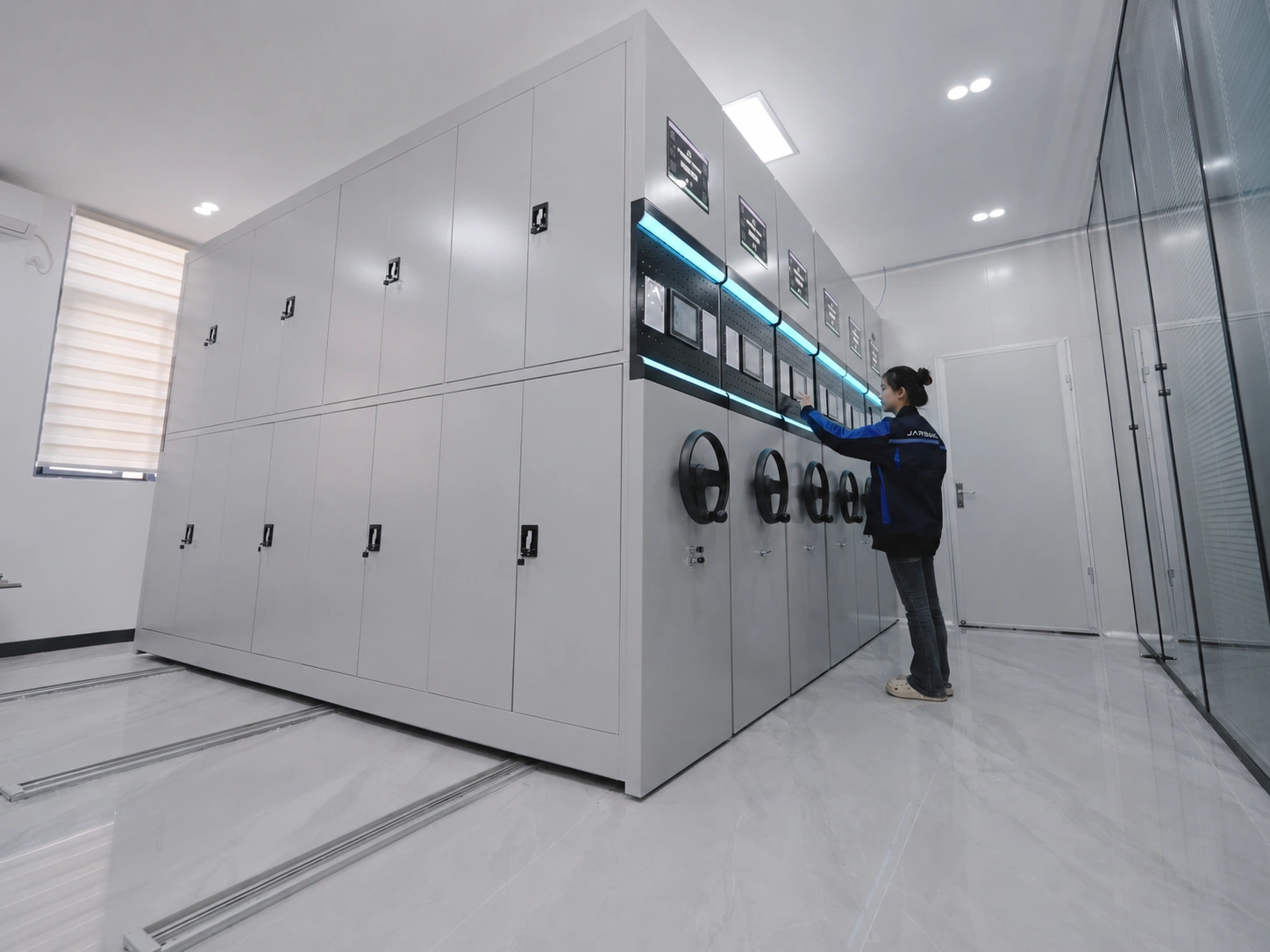
Jarsking maintains a dedicated physical archive room where each customer’s steel molds, approved pre-production samples, and CMF specifications are stored together as a named portfolio. Every reorder is produced and inspected against the original approved PPS standard, with Pantone-matched colour references and standardised production recipes — so your finish, colour, and dimensional accuracy are consistent from the first production run to the tenth.
Jarsking offers glass, PET, HDPE, LDPE, PCR plastic, and aluminum across its hair care packaging range. The right material depends on your formula type, channel strategy, price positioning, and sustainability goals.
HDPE is the standard choice for professional and clinical lines — chemically resistant and matte-finish-compatible.
PET suits lightweight DTC shampoo and conditioner.
Glass is reserved for prestige serums, oils, and treatment products where premium hand-feel and recyclability are priorities.
PCR plastic is available for brands with recycled content targets or those planning ahead for evolving regulations such as the EU’s Packaging and Packaging Waste Regulation (PPWR).