










- e.l.f. Cosmetics: The Viral Music Pioneer
- NYX Professional Makeup: The Challenge Maximizer
- Fenty Beauty: The Inclusivity Innovator
- Dior Beauty: The Luxury Adaptor
The New Digital Vanity: How Short-Form Video and AR Reshaped Beauty
To understand how these brands are succeeding, we must first analyze why these platforms have become the new frontier for beauty. The convergence of short-form video and AR has created a perfect storm, shifting the industry’s center of gravity from the department store counter to the smartphone screen.
The Shift from Aspiration to Participation
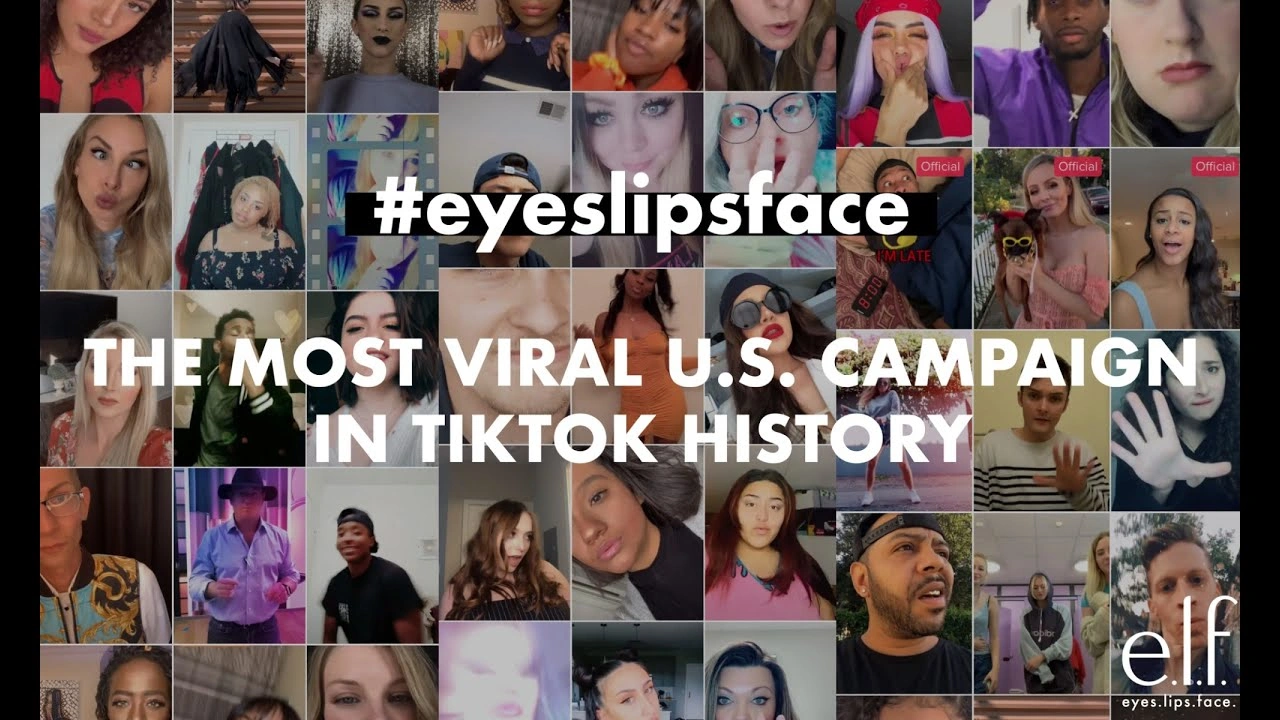
- TikTok as a Discovery Engine: Unlike other social platforms, TikTok’s algorithm prioritizes engagement and relevance over a user’s social graph. This creates a level playing field where a product can go viral organically based on merit and creativity, not just a brand’s follower count. Campaigns like e.l.f.’s
#EyesLipsFacechallenge generated over 7 billion views not just from paid promotion, but from an explosion of genuine user participation.
- UGC as the Ultimate Social Proof: User-Generated Content (UGC) is the new word-of-mouth, acting as a powerful, real-time testimonial. When millions of users participate in a branded hashtag challenge or use a filter, they are providing authentic social proof that is far more trustworthy and persuasive than any traditional advertisement.
“71% of TikTok users indicate that creator authenticity influences their purchase decisions.” This statistic underscores a monumental shift: influence now lies with the relatable creator, not the remote celebrity.
AR: The Virtual Try-Before-You-Buy
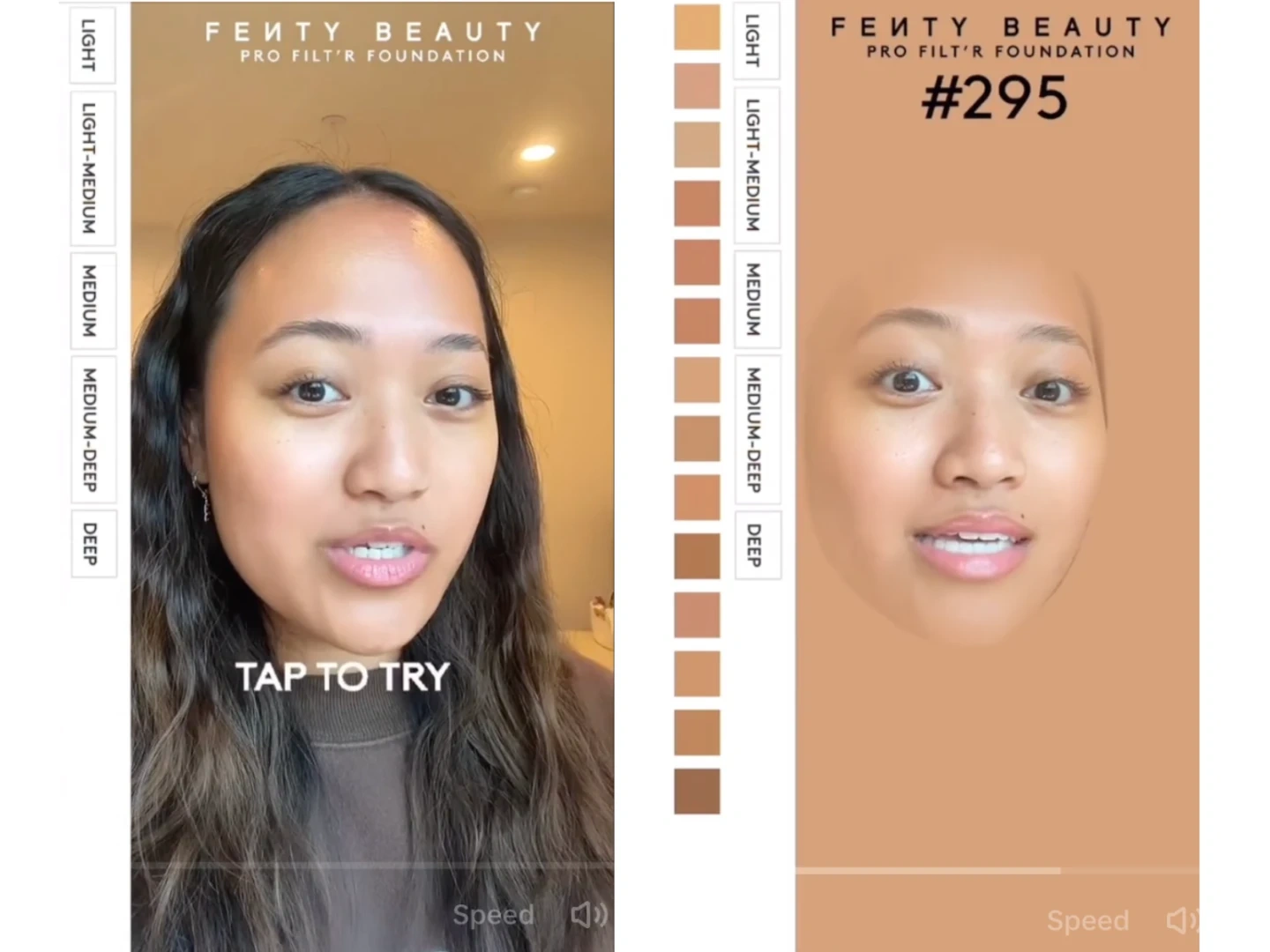
- De-risking the Purchase: Can I pull off that shade of red? Is this foundation a true match for my skin tone? AR answers these questions instantly. Brands like Fenty Beauty use AR filters on TikTok to help users find their exact foundation shade, significantly boosting purchase confidence and reducing the likelihood of returns. This utility transforms a passive viewing experience into an active, personalized consultation.
- Entertainment as Engagement: Crucially, AR filters are not just sterile utilities; they are forms of entertainment. A whimsical Dior filter that adds virtual sequins or a gamified Fenty filter that matches you with a “Rihanna look” is inherently shareable. By creating a fun, interactive experience, brands turn users into willing brand ambassadors. The filter itself becomes a product, and its distribution is powered by the users’ desire to create and share.
Case Studies in Social Commerce: Deconstructing the Masters
The theory is clear, but mastery lies in execution. By deconstructing the specific playbooks of four distinct brands—a viral disruptor, a mass-market maximizer, an inclusivity icon, and a luxury powerhouse—we can uncover the nuanced strategies that transform views into revenue. Each brand leverages the TikTok and AR combination differently, tailoring it to their unique identity, audience, and business goals.
e.l.f. Cosmetics: The Viral Music Pioneer
TikTok Strategy: Music as a Marketing Multiplier
- Original Audio: Their groundbreaking decision to commission an original song for the
#EyesLipsFacechallenge was a paradigm shift. The catchy track became a viral sensation in its own right, embedding the e.l.f. brand name into the platform’s zeitgeist.
- Challenge-First Mentality: Campaigns are designed from the ground up for mass participation. From
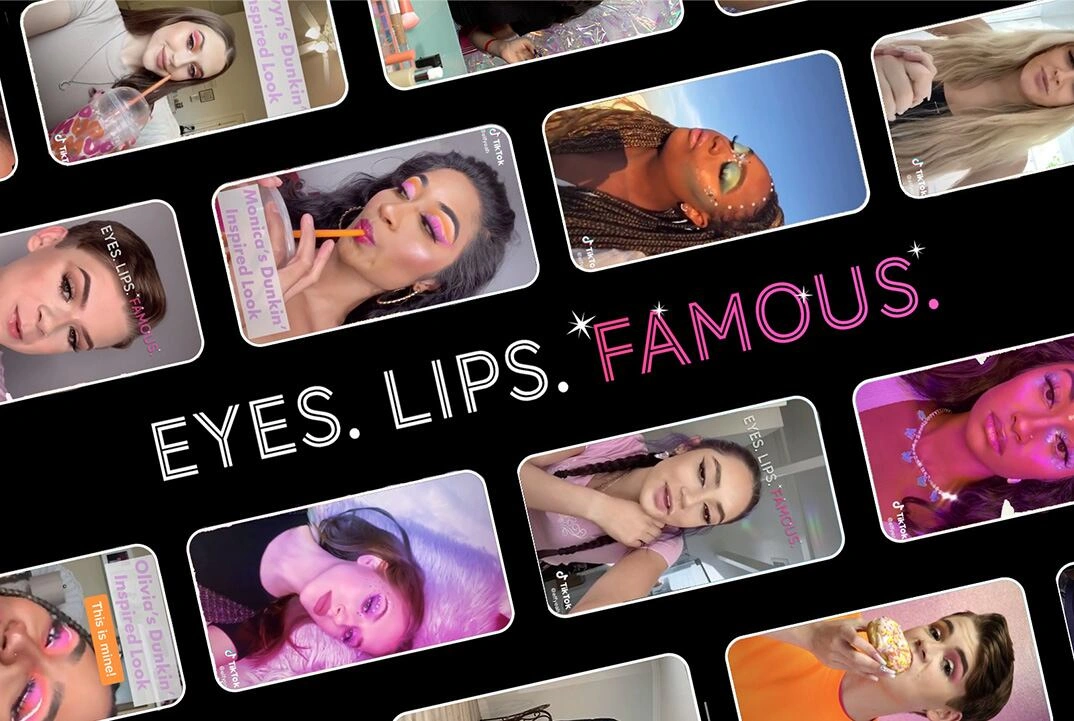
#elfMagicAct(promoting their Poreless Putty Primer) to creating the first-ever TikTok reality show, “Eyes. Lips. Famous.,” their content is an open invitation for users to co-create with the brand.
- Authentic Co-Creation: e.l.f. focuses on rising creators and micro-influencers who share the brand’s playful and value-driven ethos, ensuring that sponsored content feels organic and genuinely entertaining.
AR Integration: The Virtuous Cycle
- Website-Based VTO: e.l.f. directs its most engaged followers to its website, which features a robust Virtual Try-On experience powered by Perfect Corp. This serves as a high-intent conversion tool for serious shoppers.
- Closing the Loop: The strategy creates a powerful feedback loop. A user discovers e.l.f. through a viral song on TikTok, visits the website to use VTO to confirm their perfect shade, and then shares their AR-tested look back onto TikTok, generating fresh, authentic UGC that fuels the next wave of discovery.
| Campaign/Initiative | Strategy | Results & ROI |
|---|---|---|
#EyesLipsFace Challenge |
Original audio hashtag challenge | – 7+ billion views and 5 million UGC videos
– Became TikTok’s most viral campaign – 77% of e.l.f.’s TikTok followers were first-time buyers |
| TikTok Full-Funnel Ads | In-Feed & Dynamic Showcase Ads | – Reduced add-to-cart acquisition cost by 56% – Consistently delivered ROI above benchmarks |
| “Eyes. Lips. Famous.” Show | TikTok reality show format | – 40 million views and a 57% spike in channel followers – Drove deep community engagement and brand loyalty |
NYX Professional Makeup: The Challenge Maximizer
TikTok Strategy: Spectacle and Scale
- Massive Viral Challenges: Campaigns like
#ButterGlossPopand the Halloween-themed#DOLLHOUSECHALLENGEare executed on a massive scale, often with their own original audio, generating billions of views.
- Tiered Influencer Approach: NYX kickstarts challenges with mega-influencers like Avani Gregg and Brent Rivera to guarantee initial velocity, while simultaneously fostering a broad “influencer army” of UGC from creators of all sizes.
- Seasonal Dominance: The brand excels at “trend-jacking” seasonal events, particularly Halloween. These annual campaigns have become highly anticipated marketing moments, cementing NYX as the go-to brand for creative and expressive makeup.
AR Integration: Multi-Platform Utility
- In-App Social AR: NYX deploys AR filters directly on Instagram and Snapchat for seasonal campaigns, allowing users to try on elaborate Halloween looks instantly.
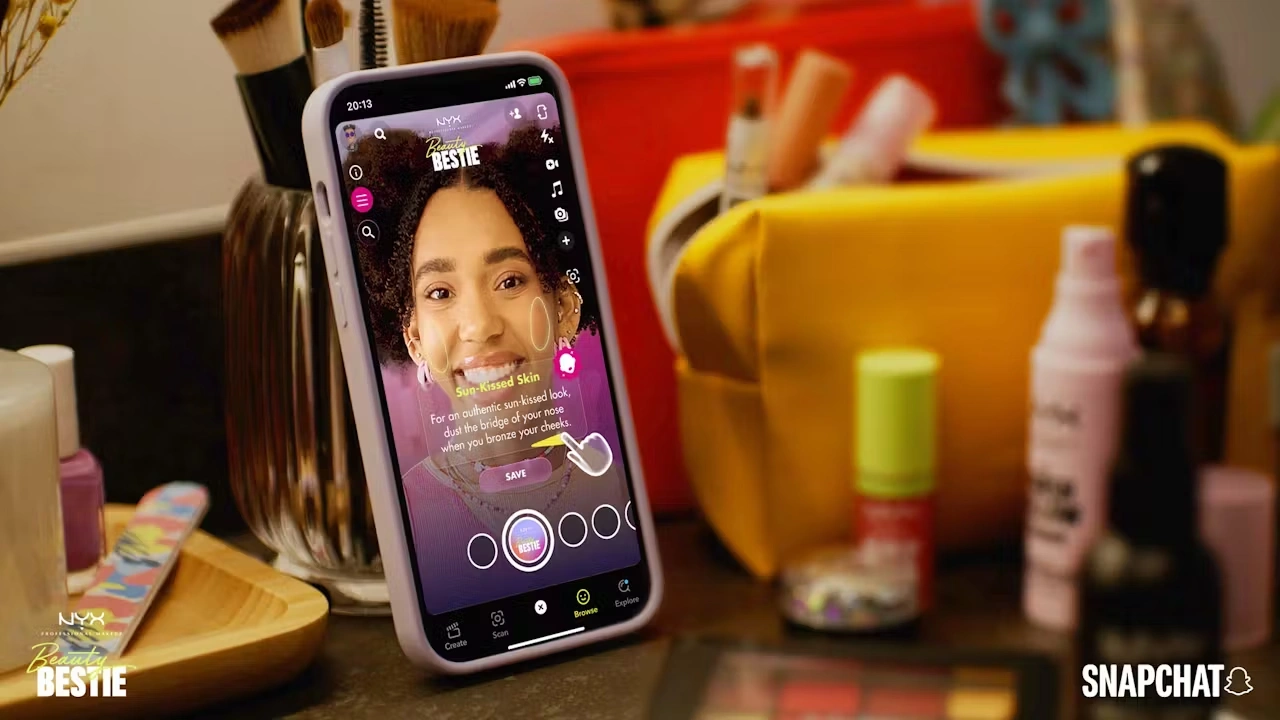
- Advanced AI/AR Tools: The “NYX Beauty Bestie” on Snapchat is more than a simple filter; it’s an AI-powered consultant offering personalized recommendations and real-time, shoppable try-ons.
- Omnichannel VTO: The brand utilizes Modiface-powered VTO on its website and has experimented with AR pop-up shops in partner apps like Triller, ensuring a consistent try-on experience wherever their customers are.
| Campaign/Initiative | Strategy | Results & ROI |
|---|---|---|
#ButterGlossPop Challenge |
Influencer-led hashtag challenge with original audio | – 10+ billion views – 42% increase in brand awareness and 79% lift in ad recall |
#DOLLHOUSECHALLENGE |
Seasonal Halloween campaign | – 1.5 billion global views – Made NYX the most-viewed makeup brand in the UK during the period |
| TikTok Shop Launch | Seamless in-app e-commerce | – Enabled a direct, frictionless path from discovery to purchase within the TikTok app, a key move for capturing Gen Z sales. |

Fenty Beauty: The Inclusivity Innovator
TikTok Strategy: Authenticity and Representation
- Purpose-Driven Content: Fenty’s content consistently focuses on showcasing product performance across a diverse spectrum of skin tones. This reinforces their core mission and builds profound trust with their community.
- Empowering UGC: Branded hashtags like
#FentyFaceencourage users to share their unique looks, transforming every customer into a potential model and ambassador for the brand’s philosophy.
- Experiential Marketing: The “Fenty Beauty House” initiative, where influencers lived together and created content, generated massive organic buzz and positioned Fenty as a cultural curator, not just a product company.
AR Integration: Functional and Fun
-
#ShadeMatching Filter: A masterstroke of utilitarian AR. This TikTok effect helps users find their perfect Pro Filt’r foundation shade, directly addressing a primary pain point for online makeup shoppers and de-risking the purchase.
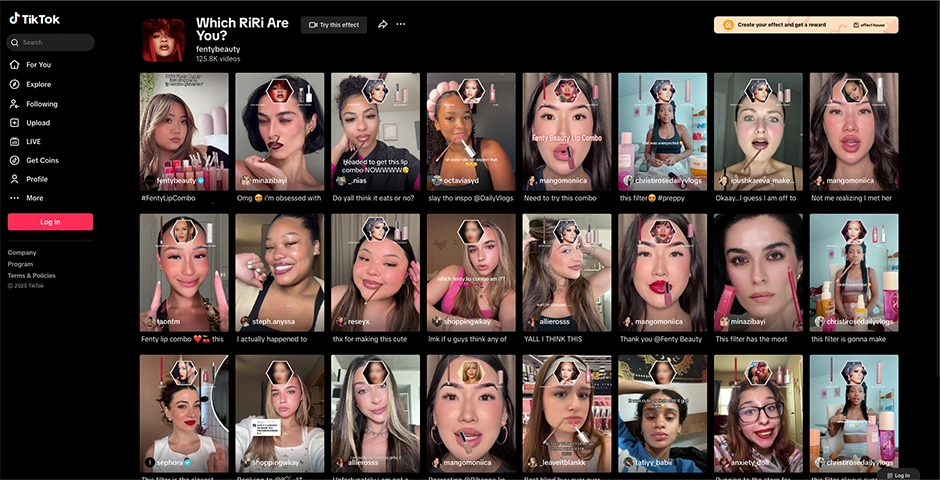
- Gamified Discovery: The “Which Riri Are You?” filter gamified the shopping experience by matching users with a signature Rihanna look and linking them directly to the shoppable Fenty products used to create it.
- Comprehensive On-Site VTO: The “Try Shade On” feature on
FentyBeauty.comprovides a virtual try-on for over 400 shades, offering a high-fidelity experience that boosts purchase confidence.
| Campaign/Initiative | Strategy | Results & ROI |
|---|---|---|
#ShadeMatching Filter |
Utilitarian AR filter on TikTok | – Generated over 47,000 UGC videos – Directly increased purchase confidence and conversion for foundation |
| “Which Riri Are You?” Filter | Gamified AR filter linking looks to products | – Garnered over 100 million impressions – Provided a direct, guided path to specific product pages |
| Overall Business Growth | Digital-first, community-centric strategy | – Became the top-earning celebrity beauty brand in 2023 with over $600 million in annual revenue, fueled by its digital ecosystem |
Dior Beauty: The Luxury Adaptor
TikTok Strategy: Aspiration Meets Modernity
- Brand Rejuvenation: Dior uses TikTok for visually stunning, high-production content like the
#DiorASMRseries. This engages a younger audience with the brand’s craftsmanship in a format native to the platform.
- Inclusive Storytelling: The “67 Shades of Dior” campaign mirrored the playbook of more accessible brands by featuring 67 influencers to match each foundation shade, promoting diversity within a luxury framework.
- High-Profile Partnerships: Collaborations with global ambassadors like Rosalía and Bella Hadid maintain the brand’s aspirational feel, bridging the gap between high fashion and social media culture.
AR Integration: An Omnichannel Luxury Experience
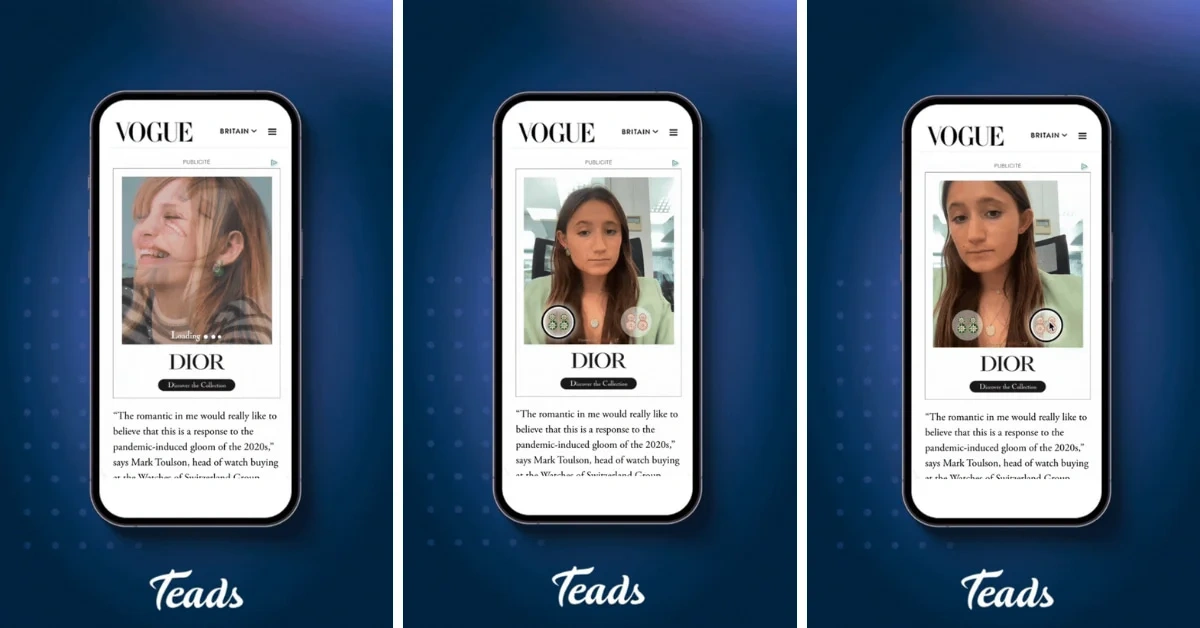
- Early Adopter Across Platforms: Dior was an early adopter of AR, deploying creative filters on Instagram (“3Dior Makeup”), VTO on YouTube (AR Beauty Try On), and even AR for accessories on Snapchat.
- High-Value VTO: Proving AR’s utility beyond cosmetics, Dior experimented with virtual try-on for its “Rose des Vents” earrings, with prices up to $15,000. This demonstrated AR’s power in the consideration phase for high-value luxury items.
- Deep E-commerce Integration: Dior leverages Perfect Corp. for a seamless VTO experience across its own site, retailer sites (e.g., Sephora), and even in-app programs like WeChat, creating a truly omnichannel AR ecosystem.
| Campaign/Initiative | Strategy | Results & ROI |
|---|---|---|
| Snapchat B27 Sneaker VTO | AR Try-On for a non-beauty luxury item | – Achieved an impressive 6.2x return on ad spend (ROAS) |
| “Rose des Vents” Earring VTO | AR Try-On for high-value jewelry | – Resulted in a 36% lift in purchase intent – Crucially, led to a 17% increase in perception of Dior as a premium brand |
| “67 Shades of Dior” Campaign | Influencer-led diversity campaign | – Boosted brand engagement by 120% – Reached over 2.6 million potential customers |
The Anatomy of a Viral Funnel: From View to Value
1. Discovery: Igniting Organic Demand
Authentic UGC & Creator-Led Campaigns: Brands are finding success by empowering creators or capitalizing on organic user-generated content. This builds foundational trust long before a purchase is considered.
- Example (The Ordinary & Maybelline): The Ordinary saw a 426% sales spike for its Peeling Solution after an unsolicited wave of authentic user reviews went viral. Maybelline amplified the organic virality of its Sky High Mascara by partnering with creators for “before & after” videos, helping generate over 570 million views and causing the product to sell out multiple times.
Engineered Virality Through Challenges: A well-designed hashtag challenge transforms users from passive viewers into active co-creators.
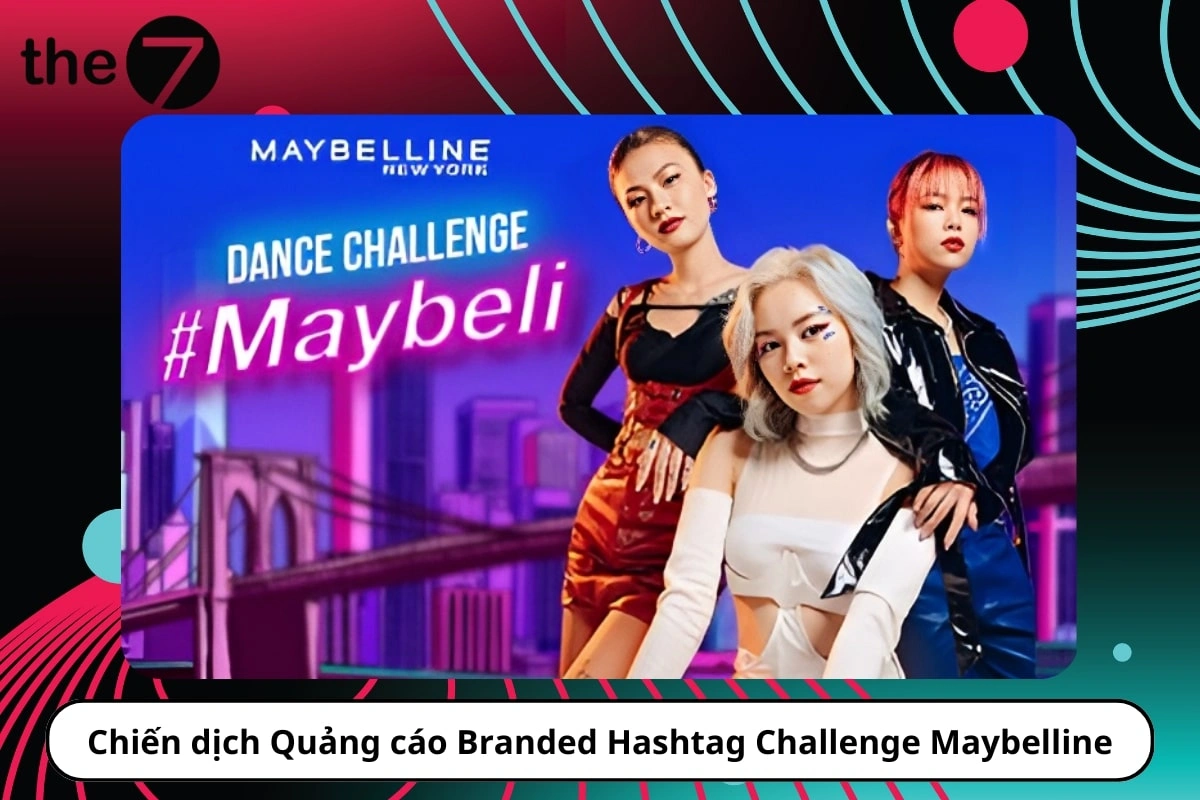
- Example (Maybelline Vietnam): The
#Maybelichallenge combined a custom music track with a Branded Effect filter. This strategy resulted in 75,000 user-submitted videos and 173 million views, leading to a staggering 790% increase in sales for the featured SuperStay products.
2. Engagement: From Passive to Playful
Gamified & Interactive AR Filters: These filters encourage sharing by being fun, novel, or challenging. They embed the product within a playful, user-generated narrative.
- Example (Persona Cosmetics): Indie brand Persona Cosmetics transformed engagement into a game with its AR filter challenge, tasking users with creating a makeup look in 60 seconds using randomly selected products. This gamification turned passive viewers into active participants, generating over 23,000 UGC videos and massively expanding brand awareness.
Affirmation & Identity-Based AR: Filters can also create a deeper emotional connection by linking the brand to positive affirmations or identity exploration.
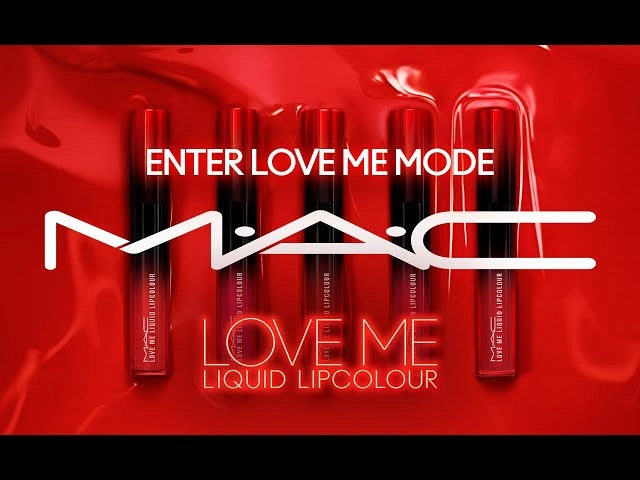
- Example (MAC Cosmetics): For its Love Me Liquid Lipcolour, MAC’s
#LoveMeModecampaign used an AR filter that not only allowed users to virtually try on shades but also displayed self-love affirmations. This tactic resulted in a 6.08% engagement rate and a 3.7% lift in purchase intent.
3. Consideration: The Virtual Counter
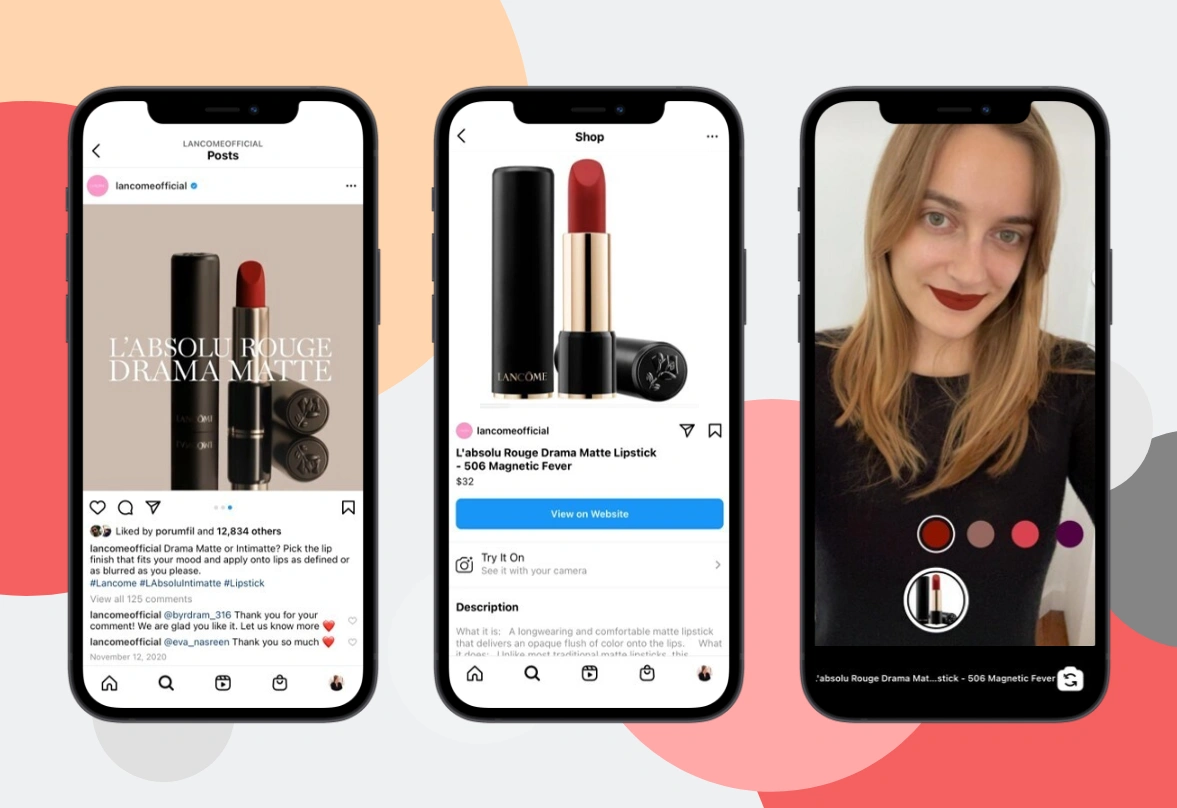
Utilitarian VTO for Problem-Solving: AR tools that solve a specific customer problem, like shade matching or product application, are incredibly powerful conversion drivers. They de-risk the purchase and provide immense value.
- Example (L’Oréal): Leveraging its ModiFace technology, L’Oréal has deployed a wide range of utilitarian AR. Its AR eyebrow tutorial filter provides users with a personalized template based on their face shape, transforming the filter into a digital makeup artist. This focus on utility is a key reason L’Oréal’s VTO tools have been shown to triple conversion rates.
High-Fidelity Omnichannel VTO: Providing a consistent and realistic try-on experience across all digital touchpoints—from social media to the brand’s website—is key to capturing high-intent shoppers wherever they are.
- Example (Maybelline & MAC Cosmetics): Both brands drive users from viral TikTok content to their respective websites, which feature robust VTO tools. This allows users who discover a product in an entertaining video to immediately and accurately test shades, bridging the gap between inspiration and purchase confidence.
4. Conversion: Frictionless Shoppability
Integrated Social Commerce: The ability to purchase without leaving the app is crucial for capturing impulse buys and a Gen Z audience with low tolerance for friction.
- Example (Maybelline & Sacheu Beauty): Maybelline’s Video Shopping Ads campaigns on TikTok Shop have achieved a 3.8x Return on Ad Spend (ROAS) by enabling a seamless path from video to checkout. For indie brand Sacheu Beauty, the impact is even more profound: after a viral video, its TikTok Shop now generates more revenue than all its other distributors combined.
Intent-Based Advertising: Brands can close the loop by capturing users who are actively searching for products on the platform.
- Example (MAC Cosmetics): MAC’s TikTok Search Ads campaign targets users with high purchase intent. By aligning creator-led video ads with specific searches (e.g., “best concealer”), the brand achieved nearly 40% higher click-through rates and four times stronger cost-per-click efficiency on non-branded searches, effectively converting active discovery into sales.

The Future of Interactive Beauty: What's Next?
Emerging Trends on the Horizon
| Trend | Description | Potential Impact on Beauty |
|---|---|---|
| The Metaverse & Digital Assets | Brands will build persistent virtual worlds and stores. Users will purchase virtual makeup and “skins” for their avatars, which can be linked to physical product ownership. | A new revenue stream from purely digital goods. Brand loyalty built through immersive, community-oriented virtual experiences. Think of a virtual “Fenty Beauty House” open 24/7. |
| Hyper-Personalization with AI | AI will move beyond shade matching to become a true virtual consultant. By analyzing skin texture, face shape, and even mood, it will recommend products, application techniques, and full routines. | The “NYX Beauty Bestie” evolves into a deeply personal AI stylist. Hyper-customized products and marketing messages that dramatically increase efficacy and conversion. |
| The Convergence of Gaming & Beauty | Beauty brands will integrate directly into major gaming platforms, offering branded avatar customizations, in-game challenges with real-world rewards, and collaborations with gaming influencers. | Unlocking a massive, highly engaged new audience. Beauty becomes a core part of digital self-expression in gaming, just as it is in the real world. |
| Next-Generation Social Commerce | Live shopping will merge with AR, allowing hosts to “place” products on viewers in real-time. Friends will be able to join shared virtual try-on sessions from different locations. | Commerce becomes a communal, interactive, and entertaining live event. The sales process is fully integrated into the social experience, driven by AI assistants and peer influence. |
Conclusion: From Product to Experience
The most successful brands of tomorrow will not see technology as a marketing channel. They will treat it as an intrinsic part of the product itself.
FAQs
TikTok’s viral content sparks mass discovery, while interactive AR filters drive engagement. AR then provides utility through Virtual Try-On, de-risking the purchase. Finally, seamless in-app social commerce converts viewers into buyers, condensing the traditional marketing funnel into moments.
e.l.f. Cosmetics prioritizes entertainment, using catchy music and viral challenges like #EyesLipsFace to drive mass discovery.
Fenty Beauty focuses on utility and inclusion, employing practical AR tools like shade matching to solve customer problems and reinforce its brand mission.
AR provides tangible value by de-risking purchases with Virtual Try-On, boosting consumer confidence. It also offers functional utility through personalized tutorials, a strategy proven to triple conversion rates by answering the critical question: “Will this work for me?”
Effectiveness is proven by hard metrics. Viral campaigns have generated billions of views and driven massive sales increases, such as Maybelline’s 790% lift. Strategies have also yielded a 6.2x return on ad spend and converted 77% of one brand’s followers.
UGC is more influential because modern consumers trust authentic peer content over polished ads. It provides powerful social proof at scale and leverages algorithms for organic discovery, turning real customers into the most credible and effective brand ambassadors.
Future trends include Metaverse brand worlds with digital assets, AI-driven hyper-personalization for routines, and deep integrations with gaming platforms. Social commerce will also evolve with shared, AR-powered live shopping, making technology an intrinsic part of the product experience.