








Jarsking covers all cosmetics,cannabis and perfume markets. Ask custom solutions here!
The world’s go-to cosmetic packaging factory for custom branding. Talk to Jarsking Team

Head of Market Insights
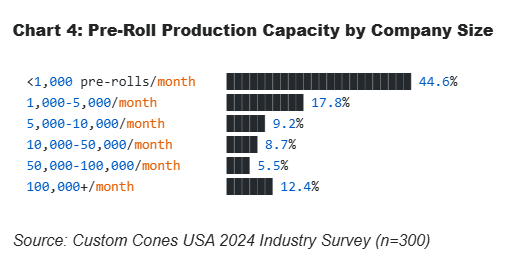
The explosive growth of infused pre-rolls—now commanding 44.4% of the pre-roll market—is built on a foundation of sophisticated extraction science and precision manufacturing technology. While consumers enjoy the elevated potency and enhanced terpene profiles, few understand the complex production processes that make these premium products possible.
This deep dive explores the extraction methods, concentrate types, production economics, and automation technologies that are transforming cannabis manufacturing. Whether you’re a brand manager evaluating production strategies or a packaging supplier serving this dynamic market, understanding these technical fundamentals is essential for staying competitive in 2024.
Before diving into manufacturing specifics, let’s establish the market context. The cannabis concentrate industry represents a massive and rapidly expanding segment of the legal cannabis market.
Table 1: Global Cannabis Concentrate Market Overview (2024-2035)
| Metric | 2024 Value | 2025 Projection | 2035 Projection | CAGR |
|---|---|---|---|---|
| Global Market Size | $10.3 billion | $50.36 billion | $294.01 billion | 21.66% |
| US Market (Concentrates) | $4.43 billion | $5.25 billion | — | 17.96% |
| Live Resin Cartridge Market | — | $2,500 million | — | — |
| Extraction Equipment Market | $2,002 million | — | — | 12.6% |
Sources: Custom Market Insights, Research and Markets, Future Market Insights, Global Market Statistics
The concentrate market’s 21.66% compound annual growth rate significantly outpaces the overall cannabis market, driven by consumer demand for potency, purity, and sophisticated consumption experiences, according to Custom Market Insights.
Cannabis concentrates are categorized by extraction method, which fundamentally determines their chemical profile, potency, flavor characteristics, and production costs.
Table 2: Major Concentrate Types Comparison
| Concentrate Type | THC Range | Extraction Method | Terpene Preservation | Average Price/Gram | Production Complexity | Market Share |
|---|---|---|---|---|---|---|
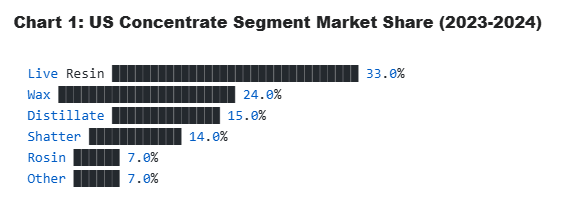
| Distillate | 90-99% | Solvent + distillation | Low (5-10%) | $8-15 | High | 15% |
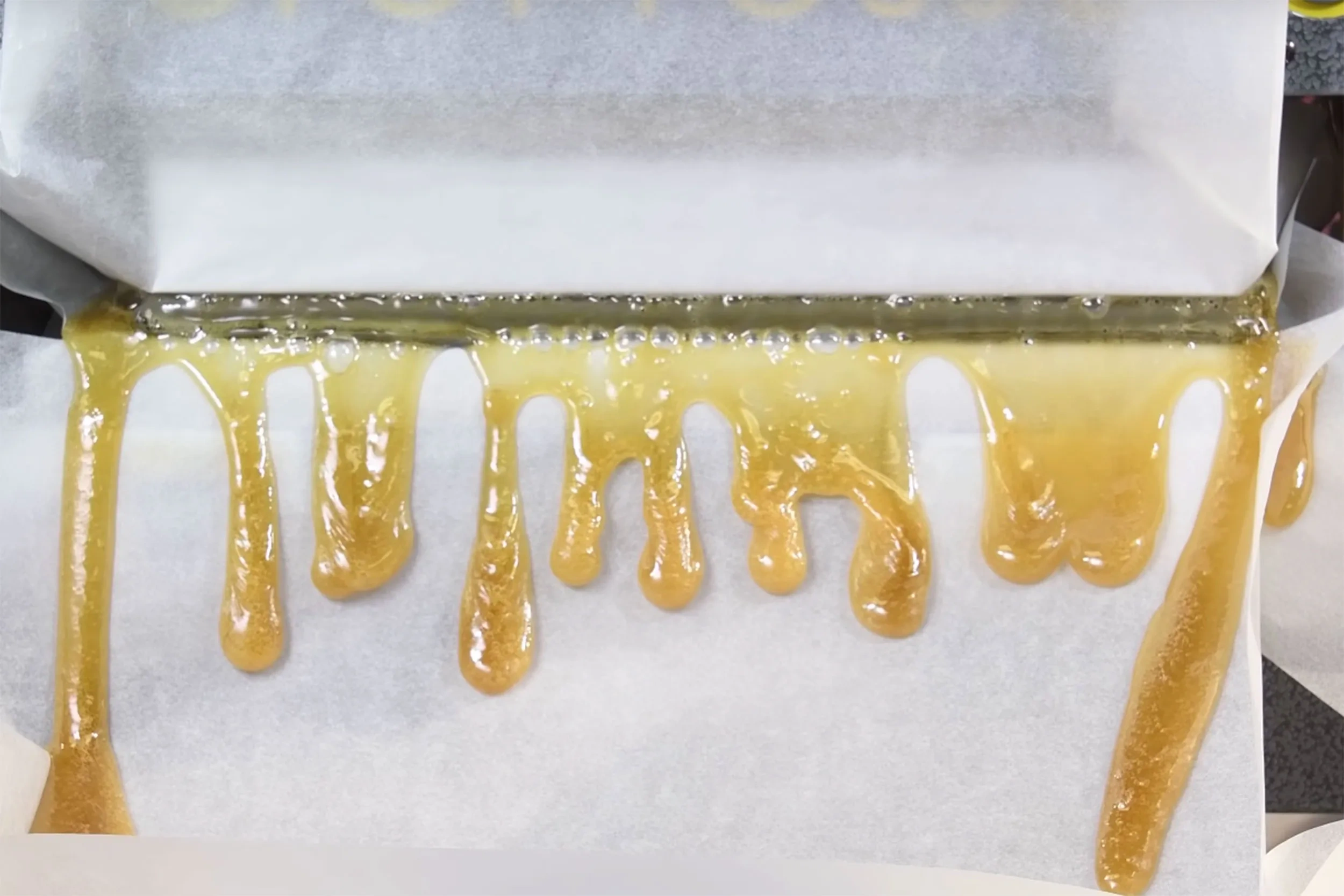
| Live Resin | 65-95% | Hydrocarbon (flash-frozen) | Very High (6-12%) | $25-45 | Very High | 33% |
| Cured Resin | 70-85% | Hydrocarbon (dried flower) | Medium (4-8%) | $18-30 | Medium | Included in Live Resin |
| Live Rosin | 70-85% | Solventless (heat/pressure) | Very High (6-12%) | $50-80 | Extreme | 7% |
| Cured Rosin | 65-80% | Solventless (heat/pressure) | High (5-10%) | $35-60 | High | Included in Rosin |
| Wax/Budder | 60-85% | Various solvents | Medium (4-7%) | $20-35 | Medium | 24% |
| Shatter | 70-85% | Hydrocarbon | Low-Medium (3-6%) | $18-30 | Medium | 14% |
Sources: Headset Analytics, Verilife, Cheef Botanicals
Understanding extraction chemistry is critical for manufacturers making concentrate sourcing decisions and packaging suppliers serving this market.
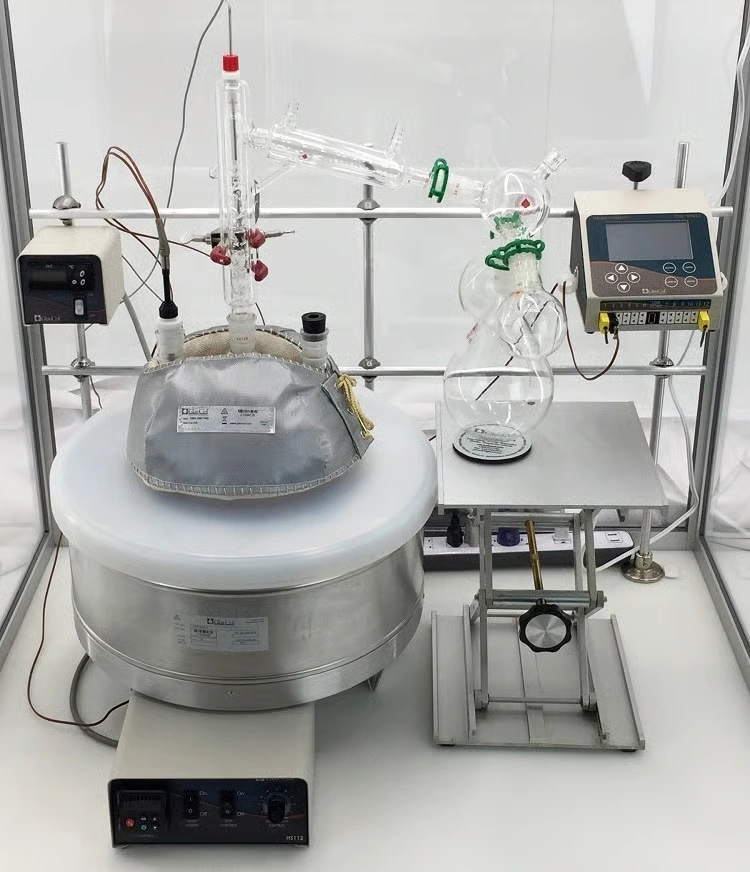
Table 3: Cannabis Extraction Methods Comparison
| Extraction Method | Solvents Used | Yield Rate | Purity Level | Equipment Cost | Production Speed | Terpene Retention | Best For |
|---|---|---|---|---|---|---|---|
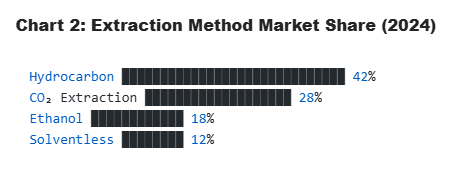
| Hydrocarbon (BHO/PHO) | Butane, Propane | 15-25% | 85-95% | $50K-$500K | Fast (2-4 hrs) | High (if flash-frozen) | Live resin, shatter, wax |
| CO₂ Extraction | Supercritical CO₂ | 12-20% | 90-95% | $100K-$500K | Medium (4-6 hrs) | Medium | Distillate, vape oils |
| Ethanol Extraction | Ethanol (food-grade) | 18-25% | 70-85% | $20K-$200K | Very Fast (1-2 hrs) | Low | Bulk distillate, edibles |
| Rosin Press | None (heat/pressure) | 10-20% | 75-90% | $5K-$100K | Slow (manual) | Very High | Solventless premium |
| Ice Water Hash | Water, ice only | 8-15% | 85-95% | $10K-$80K | Slow (labor-intensive) | Very High | Live rosin feedstock |
Sources: Cannabis Extraction Technologies Research, Luna Technologies, MJBizDaily
Step 1: Flash-Freezing (Critical First 30 Minutes)
Step 2: Cryogenic Extraction
Step 3: Purging and Refinement
Step 4: Quality Control
Understanding concentrate production costs is essential for pricing strategies and margin analysis.
Table 4: Live Resin vs. Distillate Production Cost Comparison
| Cost Factor | Live Resin (per gram) | Distillate (per gram) | Variance |
|---|---|---|---|
| Raw Material (flower) | $3.50-$5.00 | $1.50-$2.50 | +120% |
| Flash-Freezing | $0.40-$0.60 | $0 | — |
| Extraction Labor | $0.80-$1.20 | $0.50-$0.80 | +50% |
| Solvents & Materials | $0.30-$0.50 | $0.40-$0.60 | -17% |
| Equipment Depreciation | $0.60-$1.00 | $0.70-$1.20 | -14% |
| Testing & Compliance | $0.50-$0.75 | $0.40-$0.60 | +33% |
| Total Production Cost | $6.10-$9.05 | $3.50-$5.70 | +74% |
| Wholesale Price | $25-$45 | $8-$15 | +163% |
| Gross Margin | 73-80% | 57-63% | — |
Source: Cannabis Business Times, Custom Cones USA 2024 Report, Industry Analysis
Why Live Resin Commands Premium Pricing:
Distillate’s Volume Advantage:
Terpenes—aromatic compounds responsible for cannabis flavor and entourage effects—are notoriously volatile. Understanding terpene chemistry is critical for quality concentrate production.
Table 5: Major Cannabis Terpenes and Boiling Points
| Terpene | Boiling Point | Aroma Profile | Typical Concentration | Preservation Challenge |
|---|---|---|---|---|
| Myrcene | 167°F (75°C) | Earthy, musky, herbal | 20-50% of total | High (very volatile) |
| Limonene | 349°F (176°C) | Citrus, lemon | 10-25% | Medium |
| Caryophyllene | 266°F (130°C) | Spicy, peppery | 5-15% | Medium |
| Linalool | 388°F (198°C) | Floral, lavender | 5-15% | Low |
| Pinene | 311°F (155°C) | Pine, forest | 5-20% | Medium |
| Humulene | 222°F (106°C) | Woody, earthy | 5-12% | High |
Source: True Labs Cannabis, Terpene Belt Farms
1. Flash-Freezing Protocols
2. Low-Temperature Extraction
3. Terpene Reintroduction (for Distillate)
Manufacturing infused pre-rolls requires specialized equipment and techniques to evenly distribute concentrates throughout ground flower.
Table 6: Infusion Methods Comparison
| Infusion Method | Distribution Uniformity | Production Speed | Equipment Cost | THC Boost | Labor Requirements | Best For |
|---|---|---|---|---|---|---|
| Oil Coating (Tumble) | Good (75-85%) | Fast (500-800/hr) | $15K-$40K | +20-40% | Low | High-volume production |
| Kief Rolling | Excellent (90-95%) | Medium (300-500/hr) | $25K-$60K | +25-50% | Medium | Premium products |
| Diamond Infusion | Good (70-80%) | Slow (200-400/hr) | $30K-$70K | +40-80% | High | Ultra-premium |
| Manual Twaxing | Fair (60-70%) | Very Slow (<100/hr) | <$1K | +30-60% | Very High | Craft/artisan |
| Automated Spray | Excellent (85-95%) | Very Fast (1000-1500/hr) | $80K-$200K | +20-35% | Very Low | Industrial scale |
Source: Custom Cones USA Industry Report 2024, Accelerant Manufacturing
Modern infused production relies on specialized flower mixing machines that evenly distribute liquid concentrate:
Planetary Mixer Design:
Key Features:
Automation has transformed pre-roll production from a labor-intensive craft to a high-volume industrial process. Understanding available technologies is critical for manufacturers scaling operations.
Table 7: Automated Pre-Roll Machine Comparison (2024)
| Machine Model | Production Capacity | Channels | Price Range | Infusion Capability | Footprint | Operator Requirements | Best For |
|---|---|---|---|---|---|---|---|
| Accelerant PRO2 | 1,200-1,500/hr | 8-16 | $225K-$275K | Kief coating | Medium | 1-2 operators | Mid-to-large brands |
| Hefestus AuraX | 2,000+/hr | 16-32 | $230K-$280K | Oil infusion | Large | 1-2 operators | High-volume production |
| RollPros Blackbird | 900/hr | 6-12 | $220K-$240K | Manual add-on | Medium | 1 operator | Mid-sized operations |
| Canapa JuanaRoll | 1,000-4,000/hr | 2-8 (modular) | $120K-$280K | Oil/kief | Scalable | 1-2 operators | Growing brands |
| STM Canna RocketBox | 800-1,200/hr | 8 | $180K-$220K | Versatile | Compact | 1 operator | Space-constrained |
Sources: Accelerant Manufacturing, Hefestus Technologies, RollPros, Canapa Solutions, Cannabis & Tech Today
Example: Mid-Sized Brand Investing in Automation
Manual Production (Baseline):
Automated Production:
Savings per pre-roll: $0.21 (70% reduction) Payback period: 18-24 months at 100K units/month production 5-year savings: $1.2M+ in labor costs
Rigorous testing ensures concentrate safety, potency accuracy, and regulatory compliance.
Table 8: Required Testing Protocols
| Test Category | Analysis Method | Acceptable Limits | Testing Frequency | Cost per Test |
|---|---|---|---|---|
| Potency (THC/CBD) | HPLC | ±10% of labeled claim | Every batch | $60-$100 |
| Terpene Profile | GC-MS | Informational | Every batch | $80-$120 |
| Residual Solvents | GC-FID/GC-MS | <500 ppm total | Every batch | $100-$150 |
| Pesticides | LC-MS/MS | State-specific limits | Every batch | $120-$200 |
| Heavy Metals | ICP-MS | <0.5 ppm lead, etc. | Quarterly | $150-$250 |
| Microbials | qPCR/plating | <10,000 CFU/g total | Every batch | $80-$150 |
| Mycotoxins | LC-MS/MS | <20 μg/kg aflatoxins | Every batch | $150-$200 |
Source: Cannabis Laboratory Accreditation Standards 2024
Total testing cost per batch: $590-$1,170 Impact on per-gram cost: $0.60-$1.20 (assuming 1 kg batch)
Premium concentrates demand premium packaging solutions that preserve quality and communicate value.
1. Oxygen Barrier Properties
2. Light Protection
3. Moisture Control
4. Child-Resistant & Compliant
5. Premium Presentation
As a premier packaging manufacturer with 20+ years of experience and 10+ owned factories, Jarsking specializes in custom solutions for premium cannabis products:
✅ Custom Mold Development – 30,000+ molds in stock; 15-day prototype turnaround
✅ Child-Resistant Compliance – Pre-certified designs; ASTM testing coordination
✅ Oxygen & Moisture Barriers – Multi-layer films and specialized coatings
✅ Sustainable Materials – PCR plastic, PLA, biodegradable options, refillable systems
✅ Premium Finishes – Soft-touch coatings, metallic accents, embossing
✅ Speed to Market – 1-hour concept design, 2-hour 3D rendering, 30-day bulk production
The infused pre-roll market’s explosive growth—from 34.4% market share in 2019 to 44.4% in 2024—is built on sophisticated manufacturing capabilities that few brands fully master. Success requires understanding extraction chemistry, investing in proper equipment, implementing rigorous quality controls, and partnering with packaging suppliers who appreciate the technical demands of premium cannabis products.
As automation continues advancing and extraction methods evolve, the gap between professional manufacturers and amateur operations will only widen. Brands that invest now in production excellence, testing protocols, and premium packaging will capture disproportionate share of this $1.75 billion market as it continues its 23.8% annual growth trajectory through 2030.
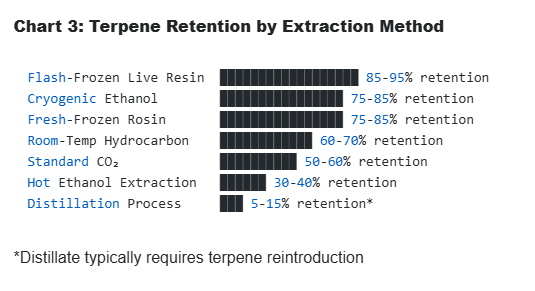
Live resin uses flash-frozen cannabis extracted via cryogenic hydrocarbon methods, preserving 85-95% of original terpenes with THC levels of 65-95%. Distillate undergoes multi-stage refinement producing 90-99% THC but loses most terpenes (5-15% retention), requiring reintroduction. Live resin costs 2-3x more to produce but commands 30-50% premium pricing due to superior flavor profiles and entourage effects consumers prefer.
Concentrate production adds $2-5 per unit in material costs (distillate $0.50-$1.50/dose, live resin $1.50-$3.00/dose). Additional expenses include specialized equipment ($15K-$200K for infusion systems), trained labor for consistent application, rigorous testing requirements ($0.60-$1.20/gram), and premium packaging (15-25% higher cost). Total production costs average $3.50-$6.00 vs. $1.20-$2.50 for standard pre-rolls, justifying 30-70% higher retail prices.
Timelines vary by method: Hydrocarbon extraction requires 2-4 hours extraction + 48-72 hours purging (3-4 days total). CO₂ extraction takes 4-6 hours extraction + 24-48 hours post-processing. Ethanol extraction is fastest at 1-2 hours + 12-24 hours purging. Rosin production is immediate (minutes) but labor-intensive. Including curing, testing, and quality control, commercial concentrate batches require 5-10 days from harvest to retail-ready product.
Entry-level closed-loop hydrocarbon systems start at $50K-$80K for small-batch production (5-10 lbs/day). Mid-scale operations ($200K-$500K) handle 50-100 lbs/day with automated controls and solvent recovery. Premium cryogenic systems ($400K-$800K) enable live resin production. Additional costs include safety equipment ($20K-$50K), testing ($10K-$30K/month), facility buildout ($100K-$500K), and licensing/compliance ($50K-$200K). Total startup capital typically ranges from $300K to $1.5M+.
Modern machines integrate infusion through three primary methods: (1) Oil tumbling systems apply liquid concentrate via rotating drum with controlled spray nozzles, achieving 85-95% distribution uniformity at 500-1,500 units/hour; (2) Kief coating stations roll filled pre-rolls through kief chambers with electrostatic attraction systems; (3) Manual integration points where operators add concentrates between automated filling and packaging stages. Top-tier machines ($200K-$500K) combine these approaches, producing 1,000-2,000 infused units hourly with single-operator supervision.
Primary challenges include: (1) Residual solvent management—achieving <500 ppm requires precise vacuum purging (48-72 hrs, -29.5″ Hg, 80-110°F); (2) Terpene preservation—volatile compounds evaporate at 70-100°F, demanding cryogenic processing and rapid workflows; (3) Potency consistency—±10% variance is acceptable but challenging with natural plant variation; (4) Microbial contamination—flash-freezing doesn’t sterilize, requiring clean-room protocols; (5) Color stability—oxidation causes darkening, mitigated by nitrogen purging and UV-protective packaging. Professional operations invest heavily in environmental controls and testing infrastructure.
With over 10 years in global packaging, David analyzes market shifts and emerging trends, offering insights to help brands navigate the complexities of the international beauty and wellness industries.
17th Floor, East Tower, Building 2,
Yiyun Tech Innovation Center,
No. 33-13, Jinshi Third Road, Dayuan Street,
Baiyun District, Guangzhou City,
Guangdong Province, China
Office 10, 24th Floor,
The One Tower,
943 Sheikh Zayed Road,
Barsha Heights (Al Thanyah First),
Dubai, United Arab Emirates
© Copyright 2026 Jarsking Packaging All Rights Reserved.