











When a skincare brand sells through fast-moving ecommerce platforms and social-commerce channels, packaging failure is not just an aesthetic problem — it is a supply chain crisis. Products run out. Labels don’t fit. Counterfeit versions flood the same marketplaces. Distributors go unserved. For a mass-market beauty brand growing rapidly in Southeast Asia, these are not hypothetical risks. They are the real operational pressures that define whether a brand can scale or stall.
This is why the right packaging partner matters more than most brand-builders initially expect. For affordable skincare brands, packaging success is measured not by dramatic structural innovation, but by speed, consistency, scalability, and risk control. The customer at the center of this story did not need extravagant packaging architecture. It needed dependable plastic bottles and jars, predictable supply, commercially viable pricing, and enough customization to protect its growing brand identity as visibility increased.
That makes this story especially relevant for B2B decision-makers searching for a packaging supplier that can support mass-market cosmetic production at scale — not one-off luxury showpieces, but a repeatable, high-volume packaging system that grows with demand.
This is the story of how a regional beauty brand and Jarsking grew together: from first orders in standard packaging to a mature, multi-year partnership built on annual planning, repeat orders, and practical problem-solving.
Client Overview: A Fast-Growing, Mass-Market Beauty Brand in Southeast Asia
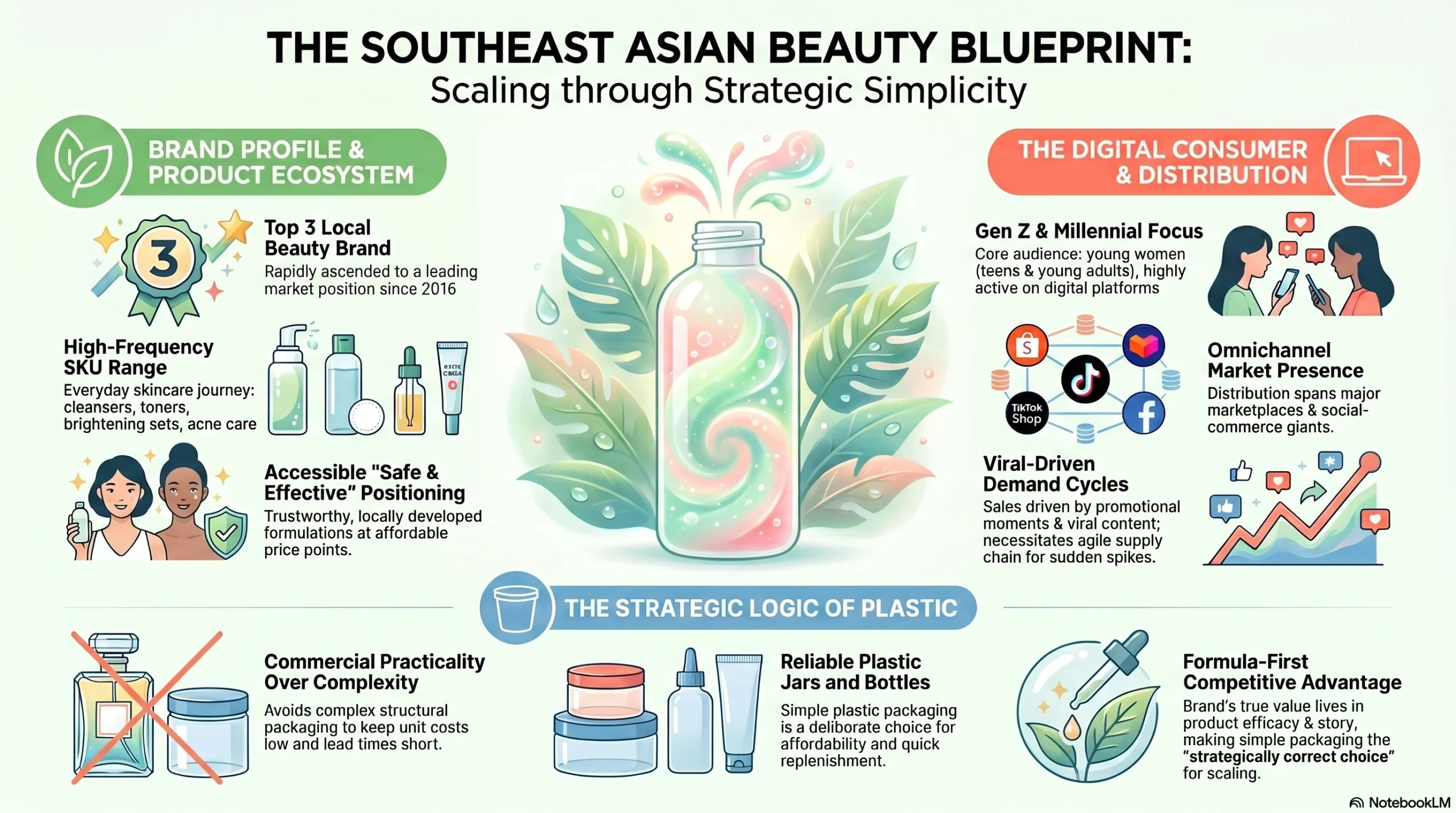
Founded in 2016, this brand quickly established itself as one of the top three local beauty and personal care names in its home market. Positioned firmly in the affordable and mainstream skincare segment, its product line covers the everyday skincare journey: cleansers, toners, brightening and whitening sets, sunscreen, acne care, and body care — a broad SKU range designed to serve a high-frequency, repeat-purchase consumer base.
Its core audience is young women, particularly teenagers and young adults, who are active across both ecommerce and social-commerce platforms. The brand built its distribution engine across major Southeast Asian marketplaces including Shopee and Lazada, as well as Amazon, TikTok Shop, and Facebook Shop. That multi-channel presence is important context: it means orders are not placed in neat seasonal cycles but driven by promotional moments, viral content, and fast-replenishment demand that can spike without much advance warning.
The brand’s market positioning emphasized “safe and effective” and locally developed formulations — a message that resonated strongly with consumers looking for accessible, trustworthy skincare. But because it served a high-volume, price-sensitive audience, packaging had to remain commercially practical at every stage. There was no room for complex structural experiments that would inflate unit costs or extend lead times.
That commercial reality shaped everything about the packaging requirements — and it is exactly why simple, reliable plastic jars and bottles were not a compromise. They were the strategically correct choice for a brand whose real competitive advantage lived in the product, the formula, and the brand story, not the packaging architecture.
2018: The First Orders and the Start of the Relationship
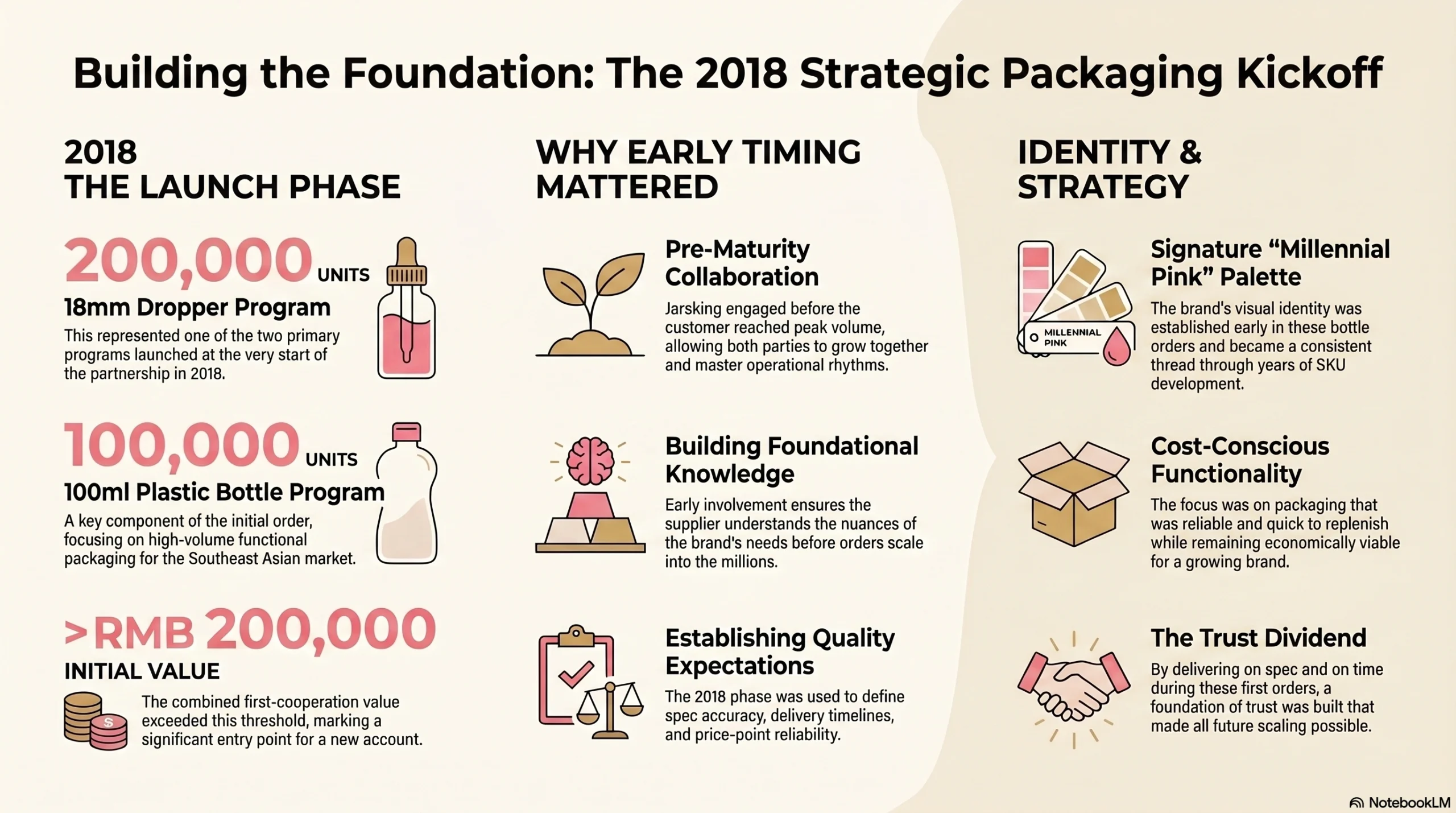
The partnership between Jarsking and this Southeast Asian brand began in 2018, at a stage when the brand was already growing but had not yet entered its highest-volume phase. The first orders were meaningful by any new-account standard: an 18mm dropper program at 200,000 units and a 100ml plastic bottle program at 100,000 units, with a combined first-cooperation value exceeding RMB 200,000.
What made this early stage strategically important was not the order size — it was the timing. Jarsking entered the relationship before the customer had fully matured into a high-volume account. That gave both parties the opportunity to build operational familiarity, establish quality expectations, and develop the communication rhythms that matter enormously when orders start scaling into the millions. A packaging supplier who only shows up for large-volume accounts never gets the foundational knowledge that makes large-volume execution smooth.
From Jarsking’s side, supporting the brand at this early stage meant understanding what the customer really needed: cost-conscious, functional packaging that could be replenished quickly and reliably, in formats that matched both the product categories and the visual identity the brand was already building. The millennial pink color palette — already present in those first bottle orders — would go on to become a signature visual thread running through years of SKU development.
The early orders established a foundation of trust. The customer learned that Jarsking could deliver on spec, on time, and at the right price point. That trust, built order by order in 2018, made everything that followed possible.
2019–2022: From Standard Orders to Multi-Million-Unit Scale
If the 2018 orders were the foundation, the 2019–2022 period was the structure built upon it — and the scale of that growth is striking.
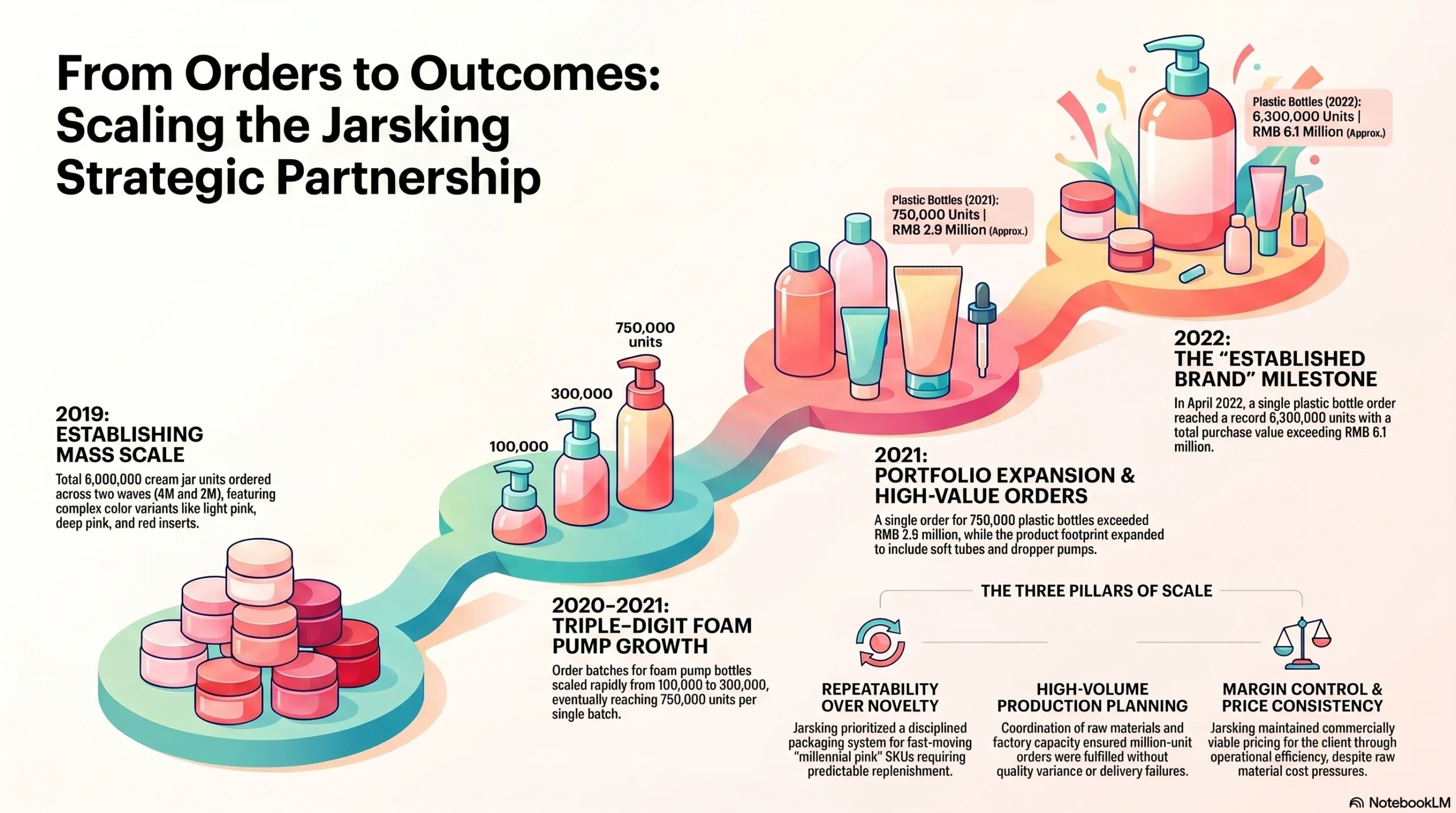
In early 2019, the customer placed a 10g cream jar order for 4,000,000 units across multiple color variants, followed later in the year by a second wave of 2,000,000 units of the same format. In total, cream jar orders in 2019 alone reached 6,000,000 units. For context, these were not simple blanket orders — each wave included specific color specifications (light pink, deep pink, red inserts), indicating that the brand was already managing a differentiated, multi-SKU product line at mass scale.
The pattern continued and deepened through 2020 and 2021. Foam pump bottle orders grew from 100,000 units to 300,000 to 750,000 units in single batches. A single 100ml plastic bottle order placed in 2021 reached 750,000 units with a value exceeding RMB 2.9 million. Cream jars returned in 2021 at 1,000,000 units per order. Soft tubes, dropper pumps, and foam pump bottles were ordered in parallel, expanding the packaging footprint across more of the brand’s SKU portfolio.
Then came the single most powerful data point in the entire order history: in April 2022, a plastic bottle order for 6,300,000 units was placed — totaling over RMB 6.1 million in one purchase order alone. That number, by itself, tells the story of a brand that had moved from emerging to established, and a supplier partnership that had proven it could handle the volume.
Three dynamics were at work during this period that made the relationship work at scale:
Repeatability over novelty. The customer’s strongest recurring needs clustered around fast-moving SKUs — the same millennial pink foam pump bottles, the same 10g cream jars, the same 100ml bottles. This was not random purchasing; it was a disciplined packaging system built around bestselling products that needed constant replenishment.
Production planning at volume. When single orders reach into the millions, lead-time management, raw material scheduling, and production capacity coordination become critical. Jarsking’s factory infrastructure and production planning capabilities made it possible to handle these order sizes without the quality variance or delivery failures that often emerge when suppliers are pushed beyond their operational ceiling.
Price consistency under pressure. Mass-market brands live and die by margin control. As order volumes grew, the customer needed Jarsking to maintain commercially viable pricing despite raw material cost pressures — a challenge that required both negotiation discipline and operational efficiency on Jarsking’s side.
What began as a straightforward packaging supply relationship had matured into something more strategic: an ongoing supply partnership built around volume confidence, operational repeatability, and mutual commercial commitment.
What the Customer Really Needed from Jarsking
When a brand reaches the scale described above, it is reasonable to ask: why not switch suppliers? Why not run competitive tenders every cycle and chase the lowest price? The answer lies in what this customer actually needed — and why Jarsking was positioned to provide it.
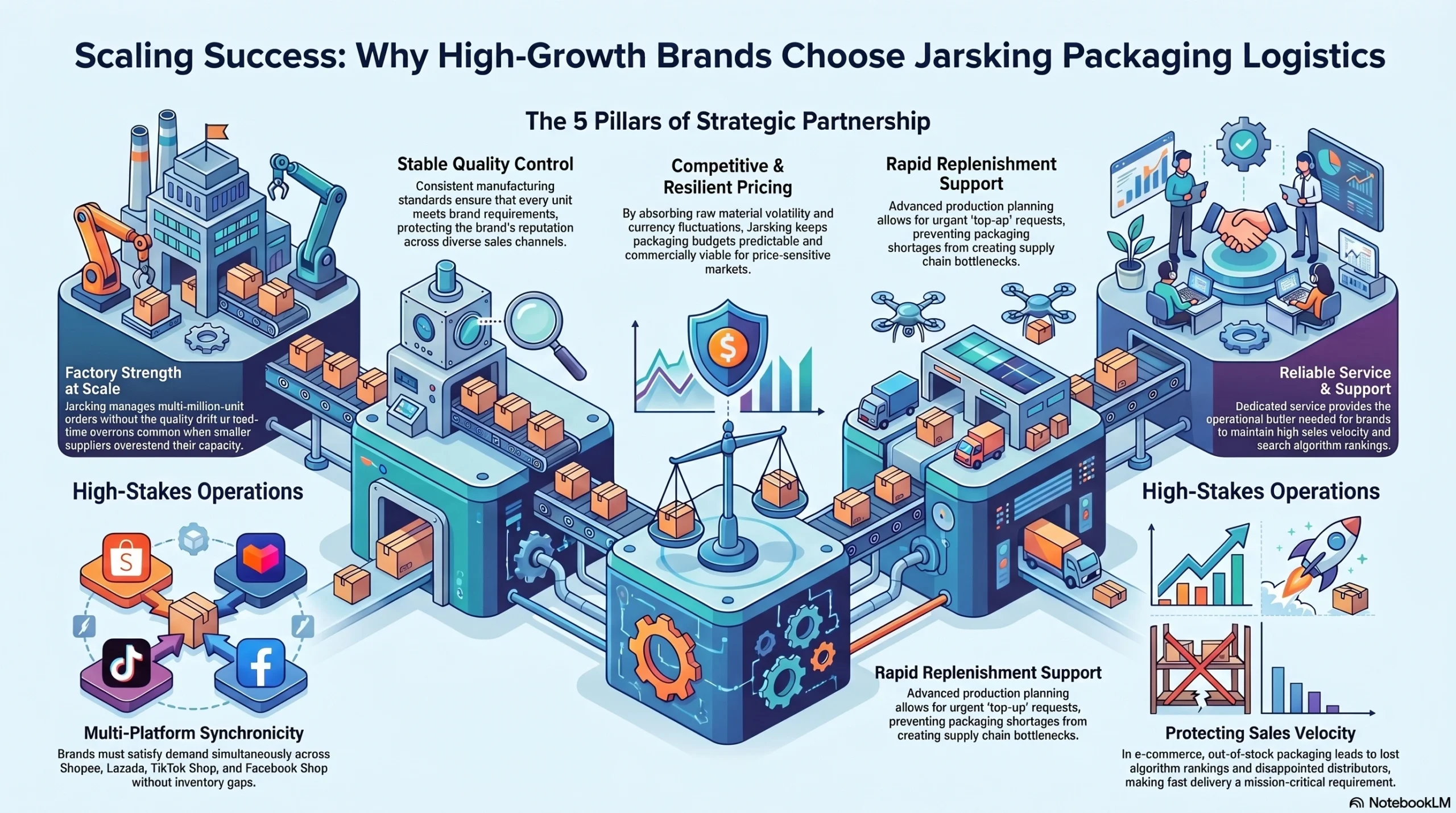
According to the customer background file, the reasons for choosing and retaining Jarsking were factory strength, competitive pricing, fast delivery support, reliable service, and stable quality. That list reads simply, but each element carries real operational weight.
Factory strength means the ability to execute multi-million-unit orders without the quality drift and lead-time overruns that occur when a supplier overextends. For a brand selling across Shopee, Lazada, TikTok Shop, and Facebook Shop simultaneously, a packaging delay during a promotional period is not a minor inconvenience — it can mean missed sales velocity, lost algorithm ranking, and disappointed distributors.
Competitive pricing mattered because the brand served a price-sensitive audience. The packaging budget had to leave room for the formula, the marketing, the logistics, and the margin. Jarsking’s ability to offer price support at volume — while absorbing some of the volatility from raw material costs and currency fluctuations — kept the relationship commercially viable across multiple years and market cycles.
Fast replenishment was perhaps the most operationally urgent requirement. The brand’s products sold quickly, and its sales channels rewarded brands that stayed in stock. Running out of packaging — not product, but packaging — could create a bottleneck that rippled backward through the entire supply chain. Jarsking’s ability to plan production in advance and respond to urgent top-up requests gave the customer the operational buffer it needed to keep bestselling SKUs flowing consistently.
Packaging Requirements: Simple Structures, Strong Commercial Logic
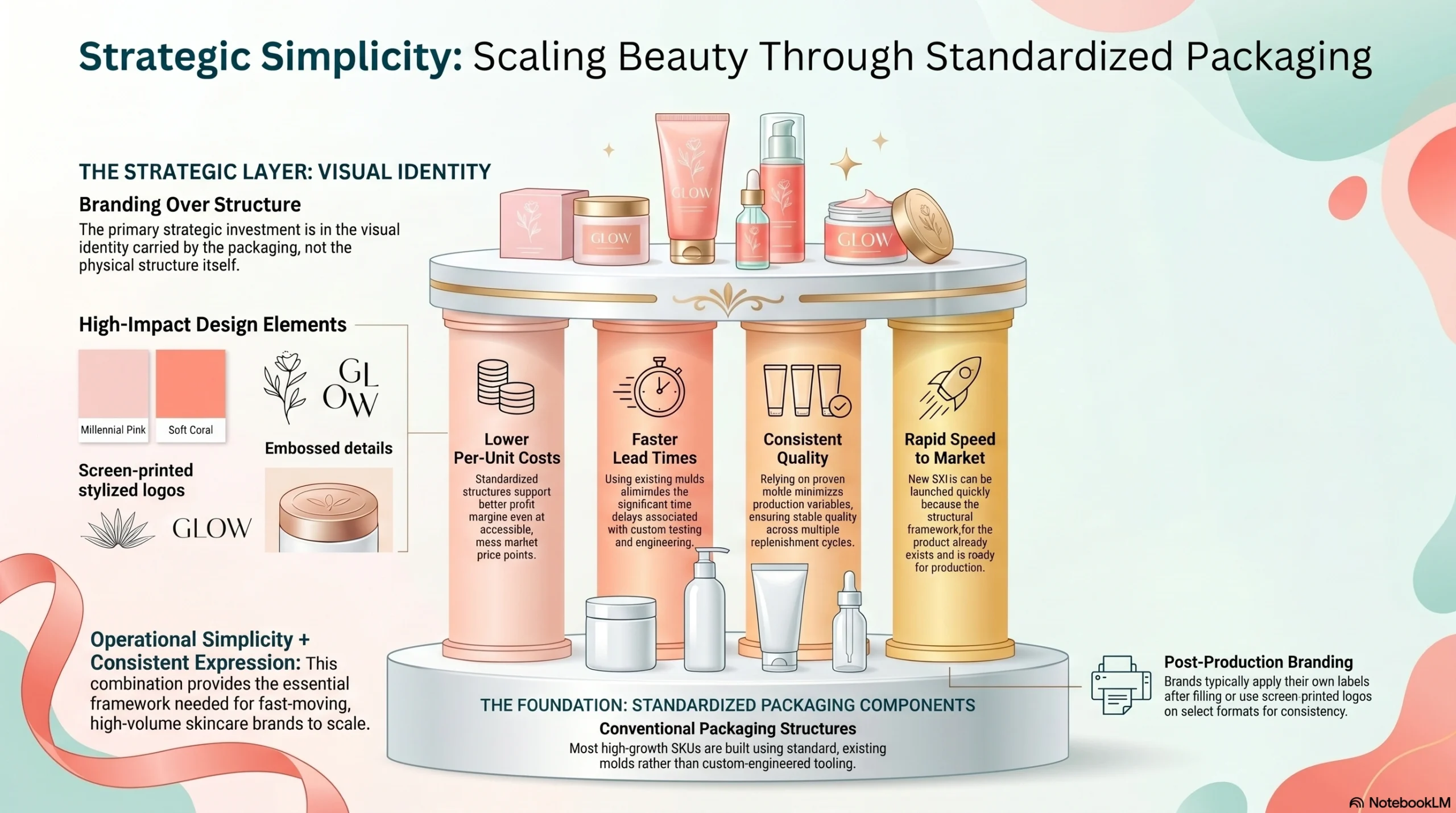
One of the most important realities of this case study is that the packaging was not complex. Most of the SKUs were built on standard, conventional structures using existing molds — plastic jars, plastic bottles, foam pump assemblies, soft tubes, and dropper pumps. The brand applied its own labels after filling in most cases, while Jarsking provided screen-printed logos on selected formats where branding consistency was especially important.
This simplicity was not a limitation. It was a strategic choice — and an important one to understand for any beauty brand evaluating its own packaging approach.
For mass-market skincare brands, “simple” does not mean low-value. Simple, well-executed packaging built on reliable molds delivers several concrete commercial advantages:
Lower per-unit cost, which supports better margin at accessible price points
Faster lead times, because existing molds eliminate tooling delays
Consistent quality across replenishment cycles, because production variables are minimized
Faster speed to market for new SKUs, because the structural framework already exists
The real strategic investment was not in the packaging structure — it was in the brand visual identity that the packaging carried. The millennial pink color palette, the screen-printed logo placements, the embossed cap details: these were the brand-building elements layered onto functional, scalable packaging bases. That combination — operational simplicity plus consistent brand expression — is exactly what a fast-moving, high-volume skincare brand needs.
The Real Challenge: Logistics, Deformation Risk, and Brand Pressure
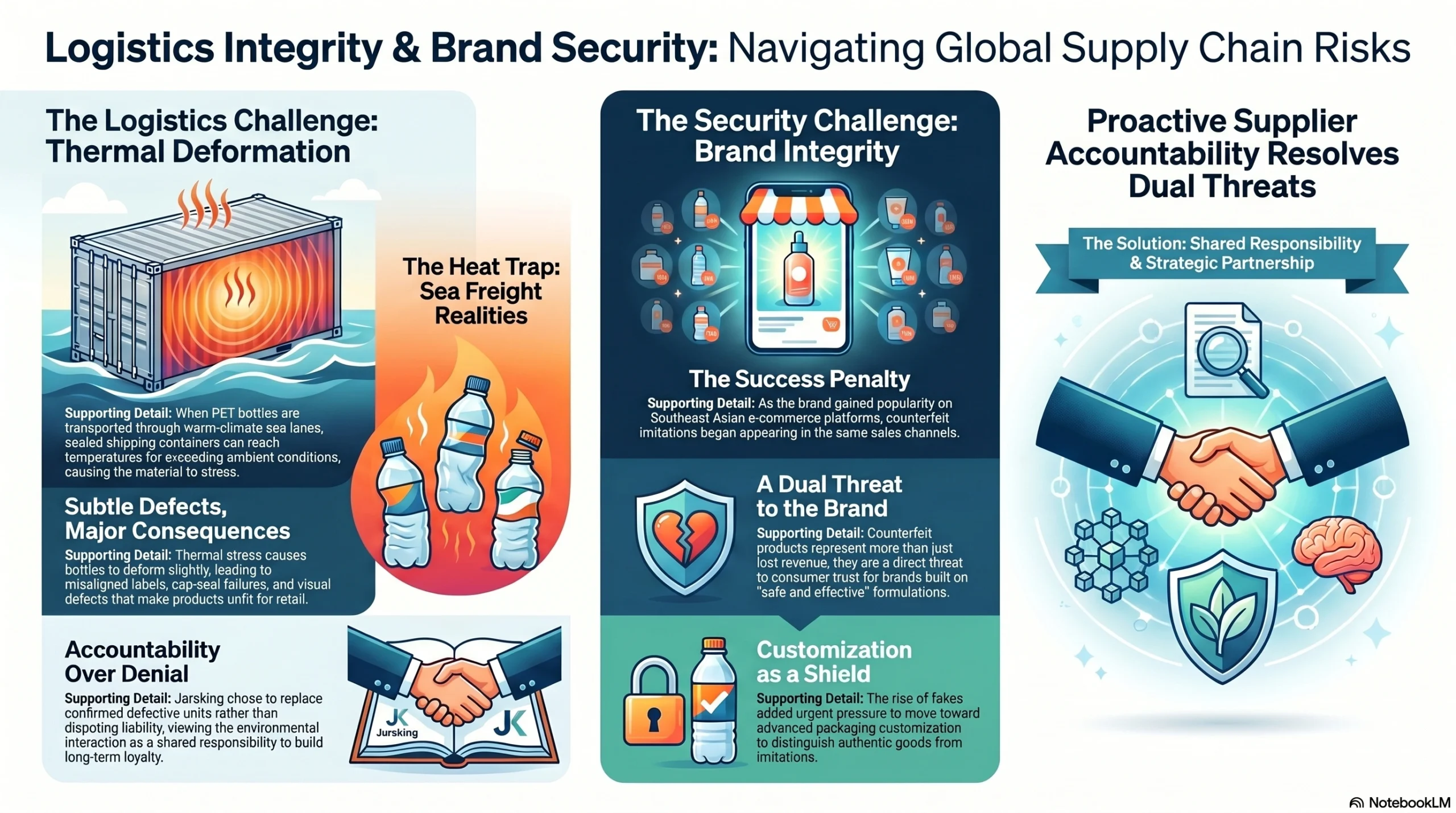
No long-term partnership is without tension. For this customer and Jarsking, the most significant operational challenge was a problem that many cross-border brands encounter but few packaging articles address directly: plastic bottle deformation caused by high temperatures during sea freight.
When PET plastic bottles are packed into sealed shipping containers and transported across ocean freight routes — particularly through warm-climate sea lanes — the heat buildup inside containers can reach temperatures well above standard ambient conditions. In some cases, this thermal stress causes bottles to deform subtly but enough to create label-fit inconsistencies, cap-seal issues, and visual defects that are unacceptable for retail-ready packaging.
This was not a manufacturing defect in the traditional sense — the bottles were produced correctly. The problem emerged from the interaction between the packaging material, the shipping environment, and the logistics chain. That distinction matters enormously in how it should be handled. A supplier that simply denies responsibility creates distrust and customer attrition. A supplier that understands the root cause, communicates transparently, and supports the customer with solutions builds lasting loyalty.
Jarsking’s response was to commit to supporting the replacement of confirmed defective units. That decision — to accept accountability and provide after-sales support rather than disputing liability — was a defining moment in the partnership. It demonstrated that Jarsking viewed this relationship as a long-term commercial commitment, not a transactional exchange.
Simultaneously, the brand was facing a second layer of pressure: as its products became more widely recognized and popular across Southeast Asian ecommerce platforms, counterfeit imitations began to appear in the same channels. For a brand built on the promise of “safe and effective” formulations, fake products carrying its packaging were not only a revenue threat — they were a consumer trust threat. This added urgency to the customization conversation.
Jarsking's Response: Price Support, Delivery Support, After-Sales Support
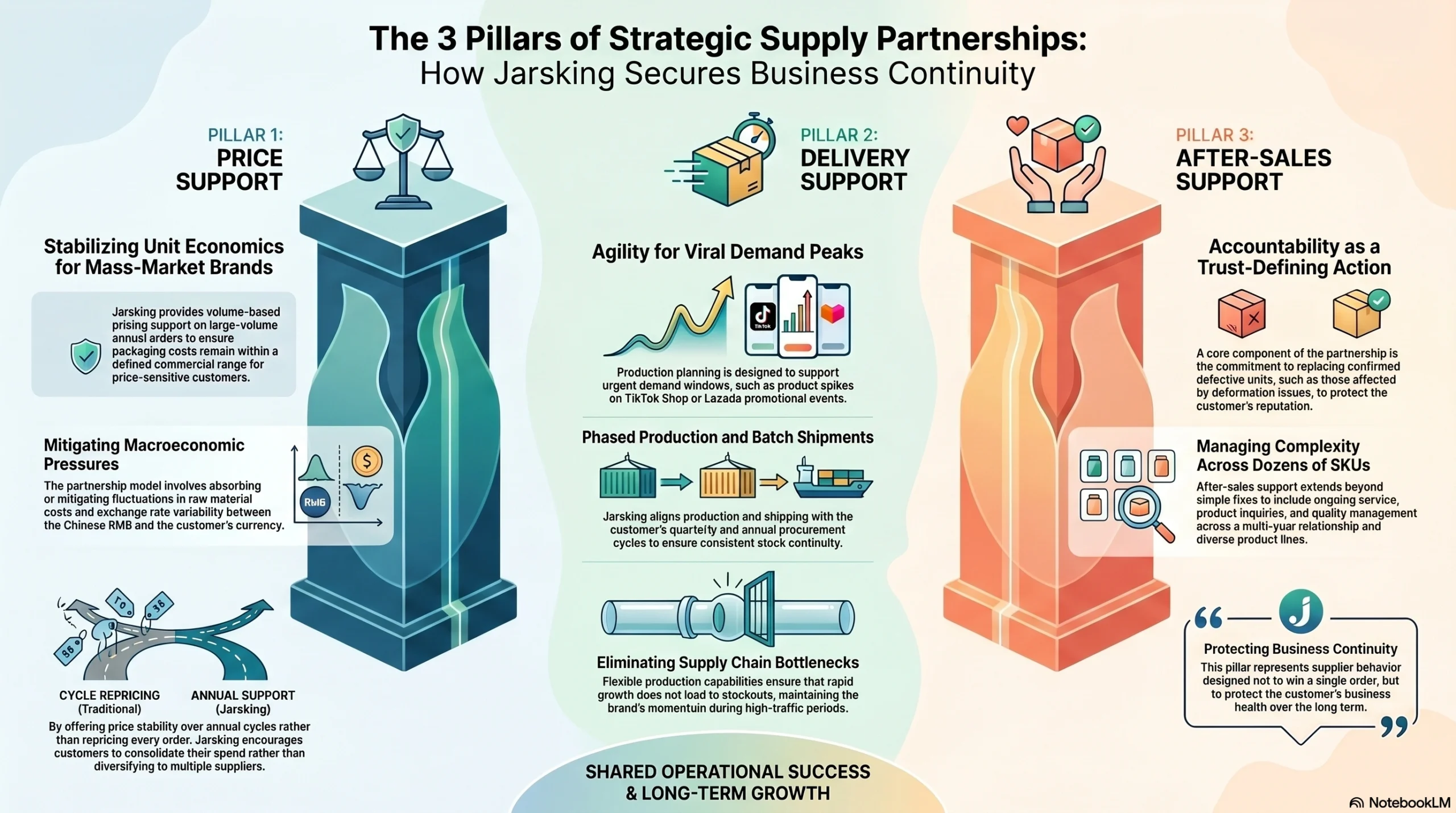
Jarsking’s response to the customer’s operational challenges was structured around three practical pillars that, together, made the partnership durable across multiple years and market cycles.
Price Support. The customer served a price-sensitive mass-market audience, which meant packaging costs had to stay within a defined commercial range regardless of external pressure. Raw material costs fluctuate. Exchange rates between the Chinese RMB and the customer’s operating currencies create margin variability. Jarsking worked to absorb or mitigate these pressures where possible, offering volume-based pricing support and maintaining commercially viable unit economics across the relationship’s highest-volume phases. The willingness to provide price support on large-volume annual orders — rather than repricing every cycle — was a significant factor in why the customer continued to consolidate more of its packaging spend with Jarsking rather than diversifying to multiple suppliers.
Delivery Support. For a brand whose bestselling products could trend on TikTok Shop or spike on Lazada during a promotional event, the ability to accelerate production when needed was not optional — it was essential. Jarsking’s production planning capabilities allowed for phased production and batch shipments aligned with the customer’s quarterly and annual procurement cycles, while maintaining the flexibility to support urgent demand windows. The result was a supply chain that supported stock continuity rather than creating bottlenecks during demand peaks.
After-Sales Support. As described above, Jarsking’s commitment to replacing confirmed defective units from the deformation issue was a trust-defining action. More broadly, the after-sales support mindset extended to how Jarsking handled quality questions, product inquiries, and ongoing service across a relationship that now spanned multiple years and dozens of distinct SKUs. This is supplier behavior designed not to win a single order, but to protect the customer’s business continuity — and that distinction is visible to procurement teams who have experienced both approaches.
Together, these three pillars transformed a packaging supplier relationship into a supply partnership: one where both sides had a stake in the other’s operational success.
Customization for Growth: Logo Molds and Anti-Counterfeiting
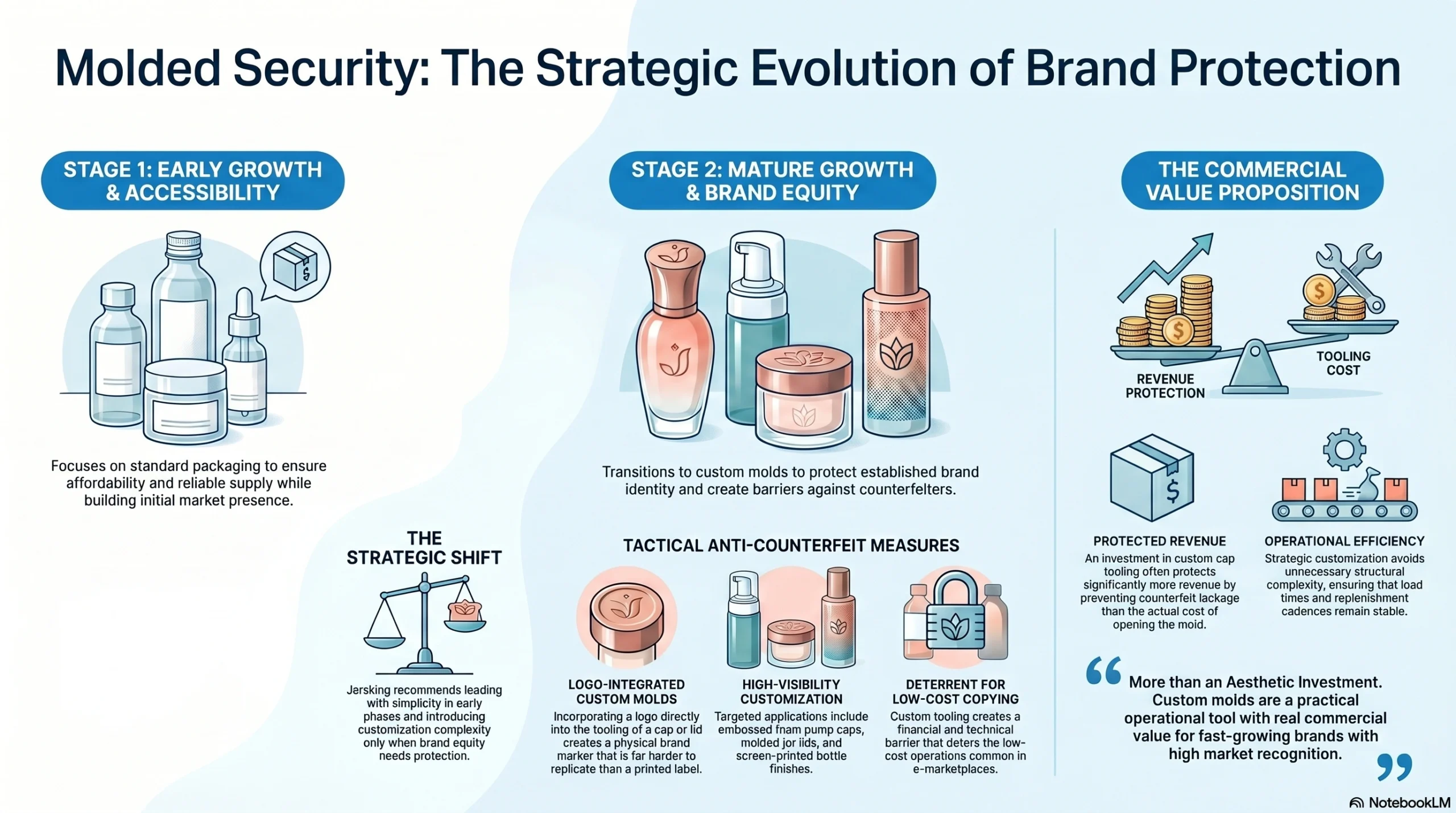
As the brand’s popularity grew and counterfeit products began appearing in its key sales channels, the packaging strategy needed to evolve. Jarsking supported this by opening custom molds for cap lids that incorporated the brand’s logo directly into the tooling. This is a meaningful anti-counterfeit measure: a logo embedded in the mold is far harder and more expensive to replicate than a printed label, creating a physical barrier that deters the low-cost copying operations that flood ecommerce marketplaces.
This customization was applied strategically — not to every SKU, but to the formats most visible to consumers and most likely to be targeted. The foam pump cap with embossed logo, the jar cap with molded branding, the bottle finish with screen-printed identity: these details added brand protection without adding the kind of structural complexity that would have undermined the pricing logic or extended lead times beyond what the replenishment cadence could absorb.
This progression — from standard packaging in early years to logo-integrated custom molds in later years — tells a coherent brand story. Early growth was about affordability and reliable supply. Later growth required protecting the brand equity that had been built. Jarsking supported both stages with the right solution for each stage, rather than leading with customization complexity that the customer did not need in its early phase.
For other beauty brands, this case offers a practical insight: custom molds are not only an aesthetic investment. For fast-growing brands with strong market recognition, they are an operational anti-counterfeit tool with real commercial value. An investment in custom cap tooling can protect far more revenue than it costs to open.
Procurement Rhythm: Why Annual and Quarterly Planning Mattered
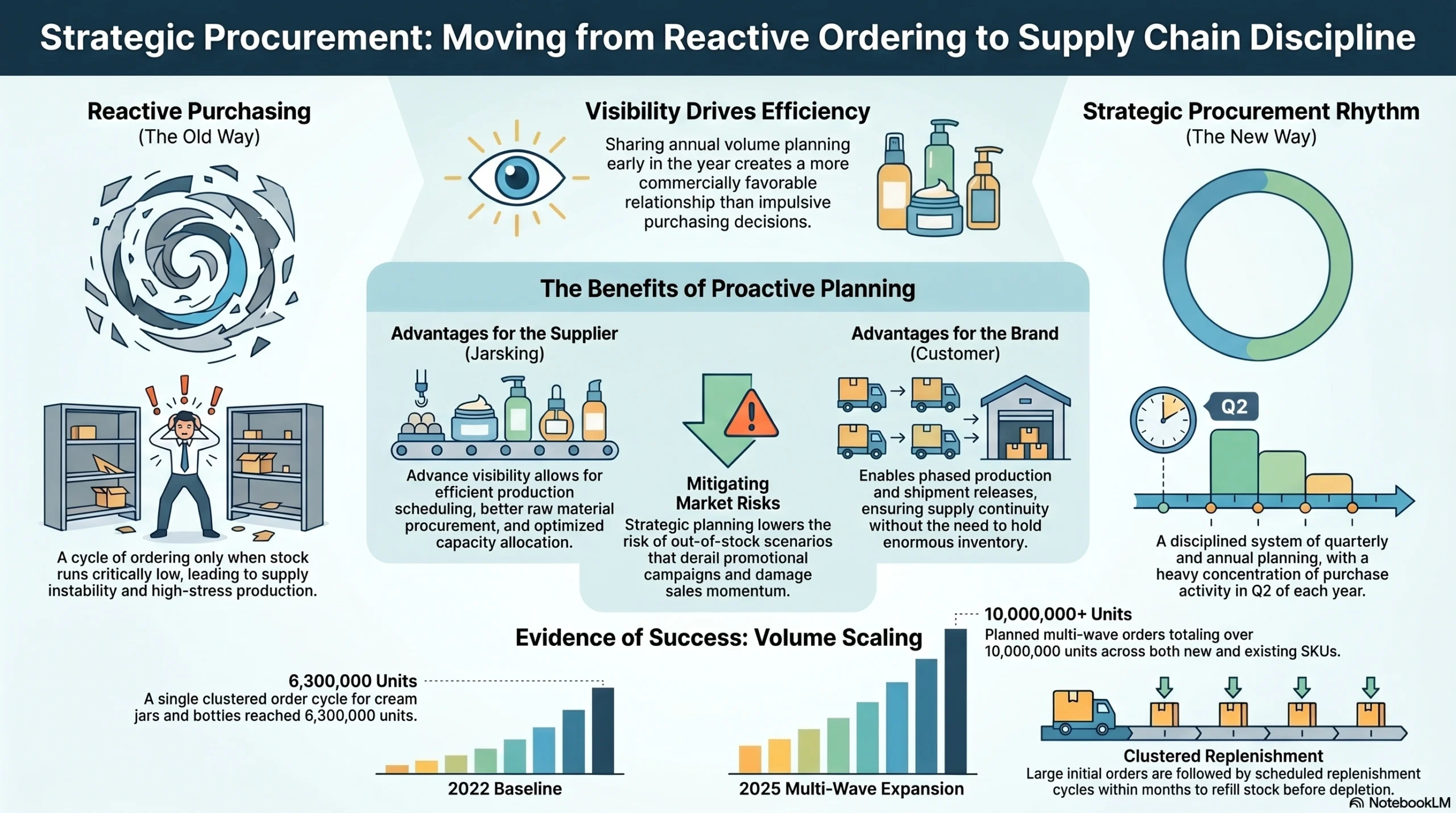
One of the structural factors that made this partnership work at high volume was the customer’s approach to procurement planning. Rather than purchasing reactively — ordering only when stock ran critically low — the brand established a quarterly and annual procurement rhythm, with purchase concentration in Q2 of each year.
This planning cadence created meaningful advantages for both parties. For Jarsking, advance visibility into annual volume allowed for more efficient production scheduling, raw material procurement, and capacity allocation. For the customer, it enabled phased production and shipment releases — avoiding the need to hold enormous finished-goods inventory while still ensuring supply continuity across the demand calendar.
The order history confirms this pattern clearly. Large cream jar and bottle orders appear in clustered cycles, with follow-up replenishment orders placed within months to refill depleted stock. The 2022 6,300,000-unit bottle order is one example; the multi-wave 2025 orders totaling 10,000,000+ units across new and existing SKUs is another. These are not impulsive purchasing decisions — they are the output of a procurement system that plans ahead and operates with supply-chain discipline.
For beauty brands considering how to structure their packaging procurement, this case makes a clear argument: annual volume planning, shared with the supplier early in the year, creates a more stable and commercially favorable supply relationship than reactive purchasing. It enables better pricing, better production scheduling, and a lower risk of the out-of-stock scenarios that can derail promotional campaigns and damage sales momentum.
Renewed Momentum: How the Partnership Stayed Alive and Grew Again
Long-term partnerships are not linear. They have phases of intense activity, quieter periods, and moments of renewal. This story includes all three.
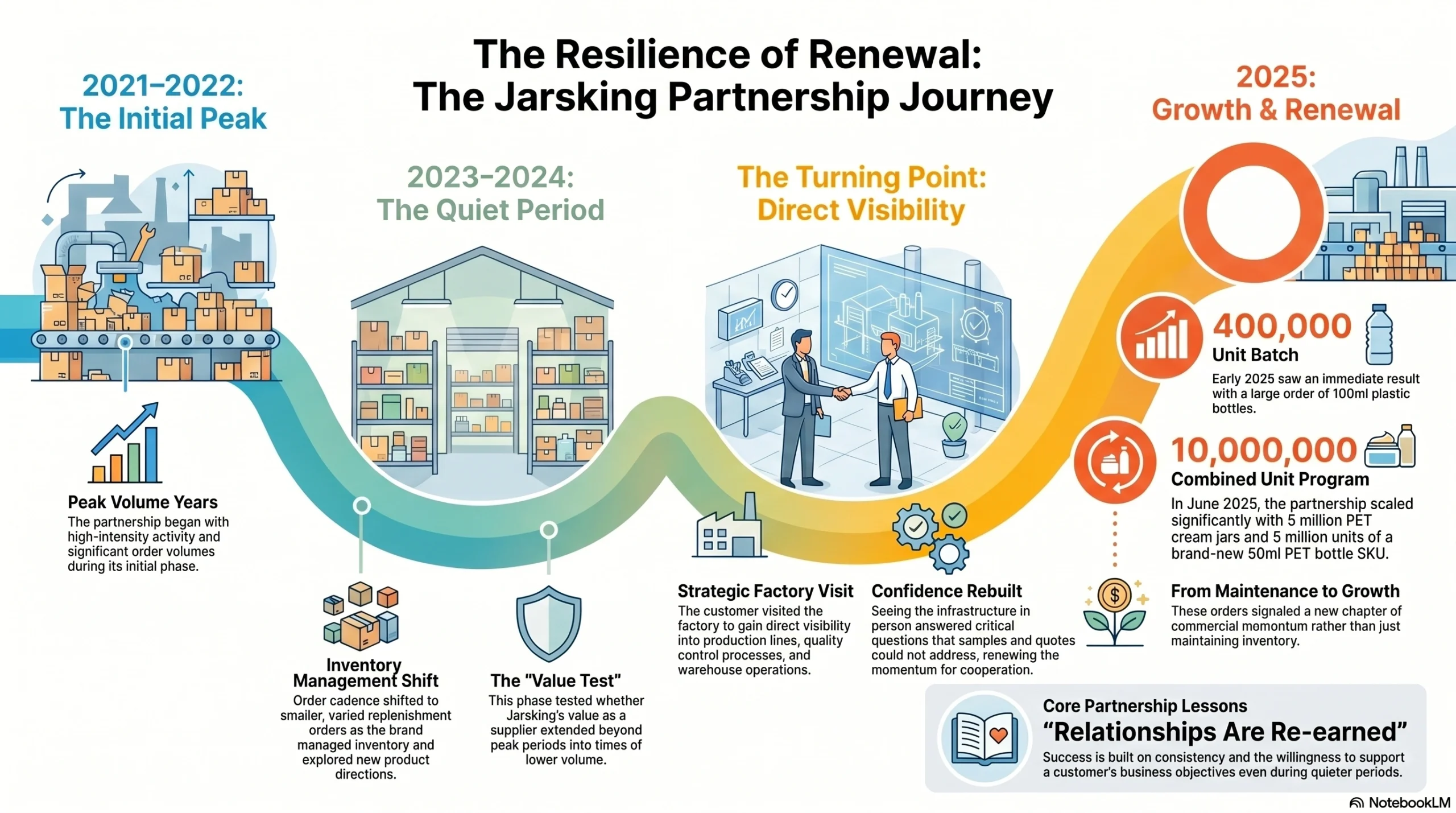
After the peak volume years of 2021–2022, the order cadence shifted into a phase of smaller, more varied replenishment orders through 2023 and 2024, as the brand managed its inventory positions and explored new product directions. This is a normal pattern for mature brand-supplier relationships — and it tested whether Jarsking’s value extended beyond peak order periods.
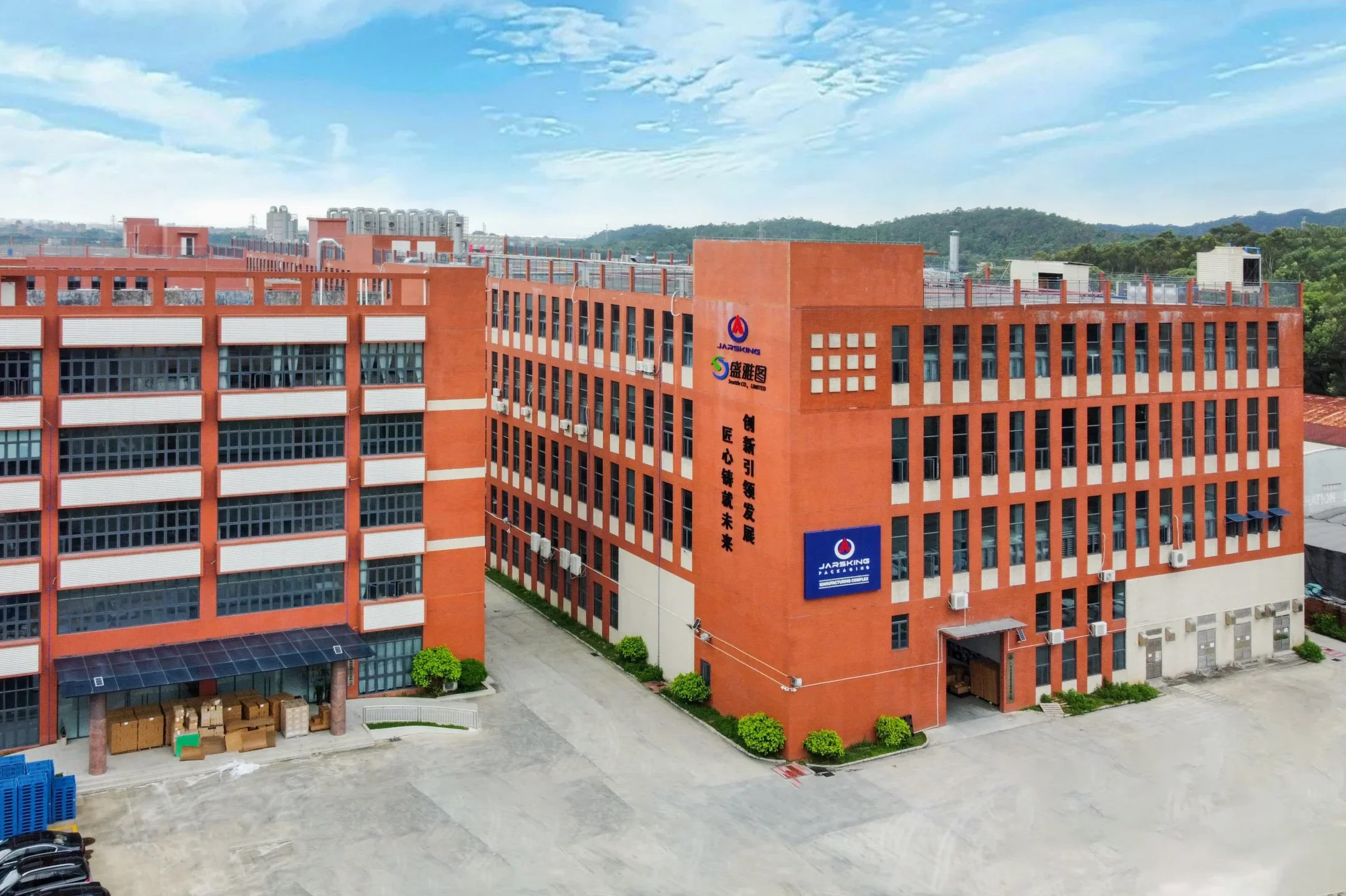
The renewal came with renewed engagement and a factory visit that gave the customer direct visibility into Jarsking’s manufacturing capabilities and operational infrastructure. Factory visits matter in this industry. Seeing production lines, quality control processes, and warehouse operations in person answers questions that samples and quotations cannot fully address. That visit rebuilt confidence and opened the door to a new phase of cooperation.
The results were immediate and significant. In early 2025, a 400,000-unit batch of 100ml plastic bottles was placed, followed in June 2025 by a combined program that included 5,000,000 units of 10g PET cream jars and a brand-new 50ml PET bottle SKU at 5,000,000 units — a new product expansion that marked the customer’s continued investment in its packaging portfolio. These were not maintenance orders. They were growth orders, signaling that the partnership had entered a new chapter with renewed commercial momentum.
The lesson is clear: the best supplier relationships are not won once. They are re-earned through consistency, accountability, and continued willingness to support the customer’s business objectives — even during quieter periods.
Results: What This Partnership Achieved
Across seven years of active cooperation, the partnership between Jarsking and this Southeast Asian beauty brand produced measurable, concrete outcomes:
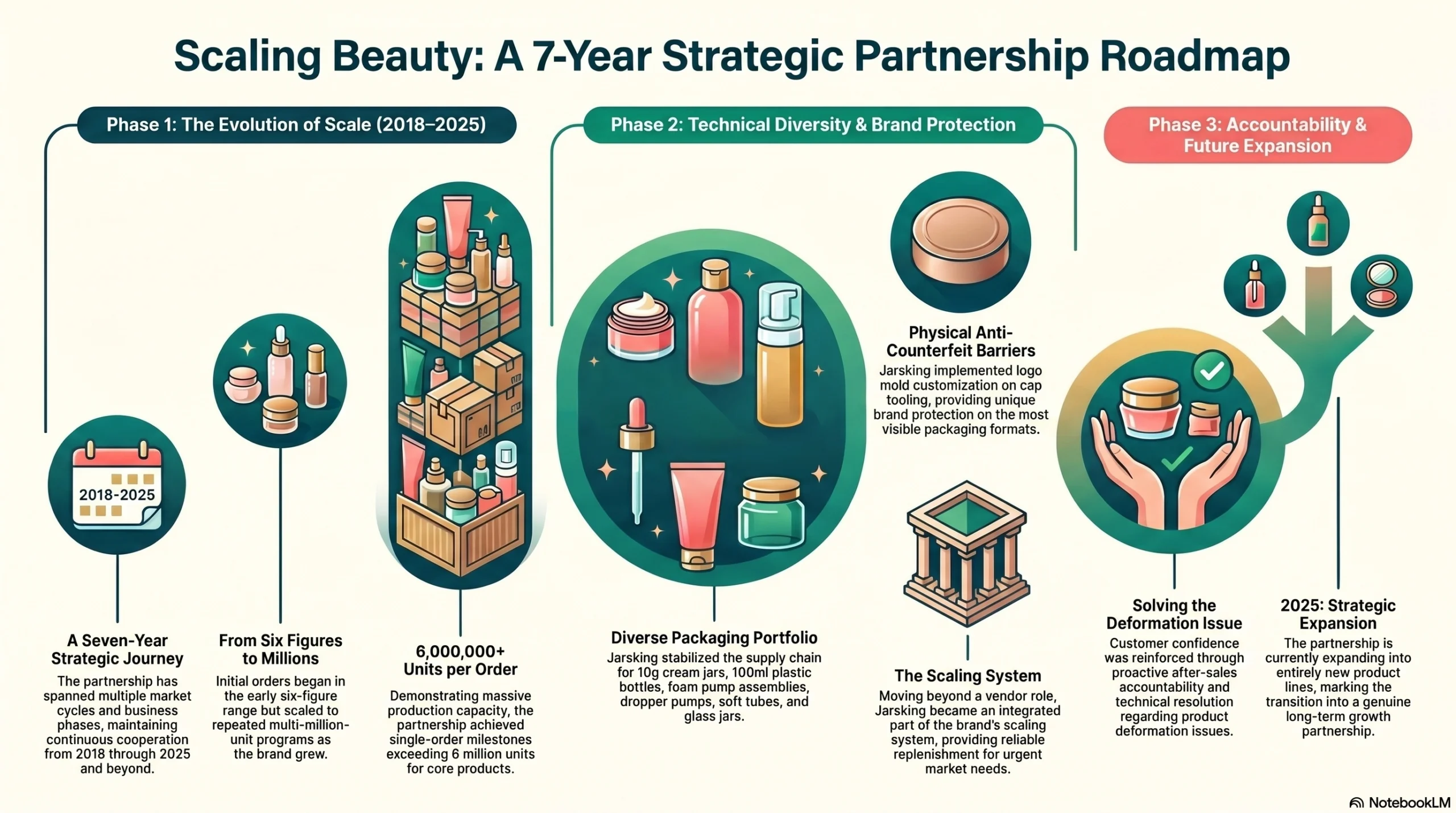
Sustained multi-year cooperation from 2018 through to 2025 and beyond, spanning multiple market cycles and business phases
Growth from early six-figure unit orders to repeated multi-million-unit packaging programs, including single orders exceeding 6,000,000 units
Stable supply of high-volume formats including 10g cream jars, 100ml plastic bottles, foam pump assemblies, dropper pumps, soft tubes, and glass jars across a broad and evolving SKU portfolio
Stronger brand protection through logo mold customization on cap tooling, creating a physical anti-counterfeit barrier for the brand’s most visible packaging formats
Customer confidence reinforced through after-sales accountability on the deformation issue and consistent delivery support for urgently needed replenishment orders
Continued partnership expansion into new product lines in 2025, demonstrating that the relationship had moved beyond transactional supply into genuine growth partnership
For this customer, Jarsking became more than a packaging vendor — it became part of the brand’s scaling system.
What Other Beauty Brands Can Learn from This Case
Every supply partnership is unique, but the patterns in this story are widely applicable. Here are the key takeaways for beauty brands navigating high-volume cosmetic packaging decisions:
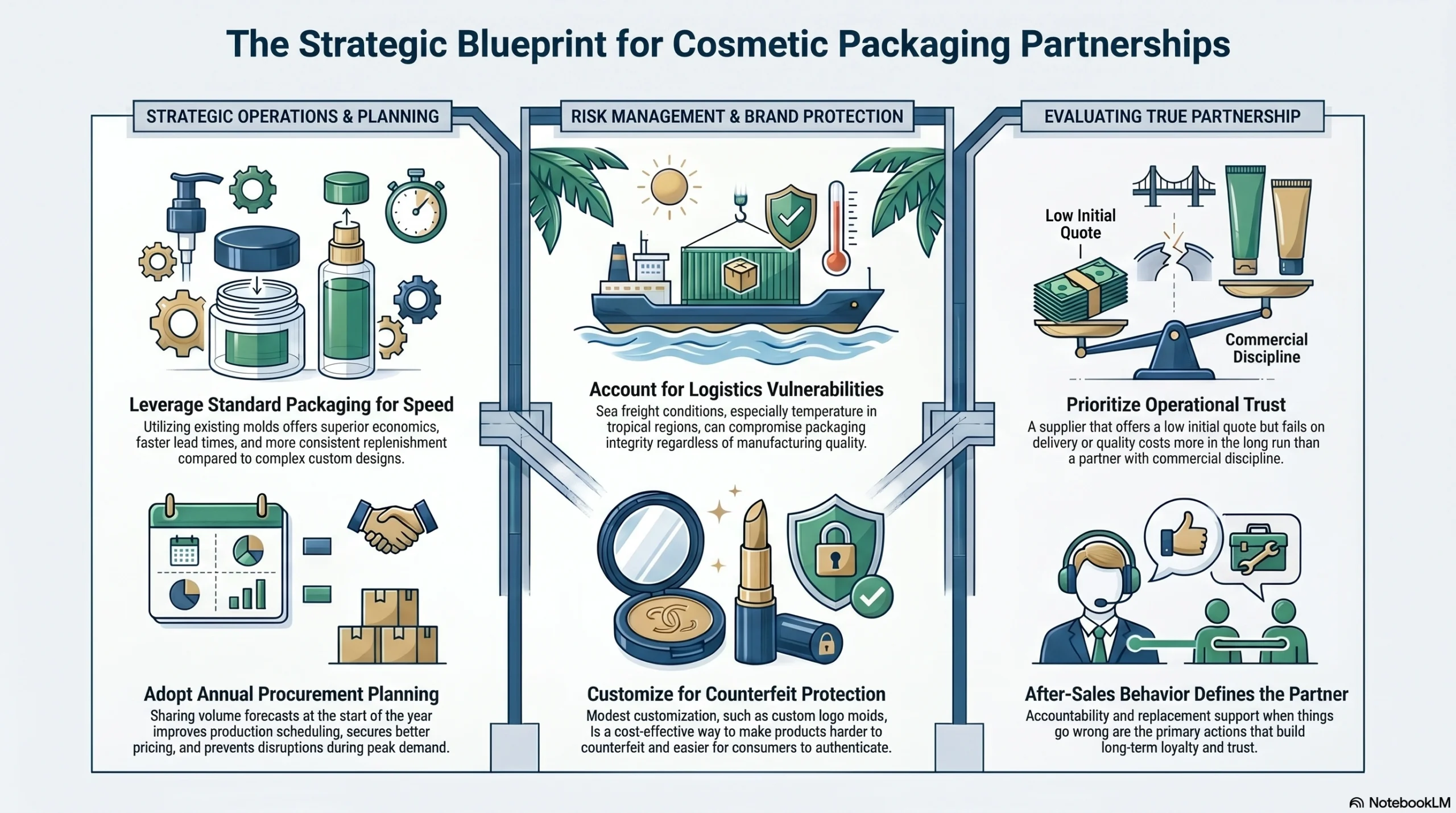
Standard packaging can be strategically powerful. Simple, functional structures built on existing molds offer better economics, faster lead times, and more consistent replenishment than complex custom designs. For mass-market brands, operational efficiency is a competitive advantage.
Annual procurement planning improves supply stability. Sharing volume forecasts with your packaging supplier at the start of each year enables better production scheduling, more favorable pricing, and a lower risk of supply disruptions during demand peaks.
Logistics risk is part of packaging performance. Sea freight conditions — particularly temperature — can affect packaging integrity independent of manufacturing quality. Brands shipping to or from tropical regions should discuss this risk explicitly with their supplier and agree on handling protocols before problems arise.
After-sales behavior matters as much as pre-order quoting. Any supplier can offer a competitive price at the quotation stage. What differentiates a true manufacturing partner is how it responds when something goes wrong. Accountability and replacement support are trust-building actions that create long-term loyalty.
Modest customization can yield significant brand protection. Custom logo molds are not a luxury reserved for premium brands. For any brand with meaningful market visibility, they are a cost-effective way to make packaging harder to counterfeit and easier to authenticate.
The best supplier relationships are built on operational trust, not only initial price. Price is a factor in every packaging decision. But the supplier that saves you money on the quotation while failing on delivery, quality, or after-sales support costs more in the long run than a partner who maintains commercial discipline across all three dimensions.
Why Jarsking
Jarsking is a cosmetic packaging manufacturer built for the real operational demands of fast-growing beauty brands — not just the sample-stage impressions. The case above reflects a set of capabilities that Jarsking brings to every major client relationship: manufacturing scale for multi-million-unit programs, price support logic for mass-market commercial realities, lead-time flexibility for replenishment-driven demand, and after-sales accountability for the problems that inevitably arise in cross-border supply chains.
Customization at Jarsking is not limited to aesthetic upgrades. Whether it is logo mold tooling for anti-counterfeiting, screen-printing for brand consistency, or new SKU development for product expansion, Jarsking supports brands at every stage of their packaging evolution — from first order to long-term partnership. Learn more about Jarsking’s cosmetic packaging solutions for beauty brands at every stage of growth.
If your beauty brand needs cosmetic bottles, jars, pumps, or packaging components that can scale with demand — not just look good in samples — Jarsking can help you build the right packaging system. Contact Jarsking today to discuss your volume requirements, lead-time needs, and customization goals with a packaging specialist who understands what mass-market beauty brands actually need to grow.
FAQs
A mass-market skincare brand should prioritize four non-negotiable criteria: manufacturing scale capable of handling multi-million-unit orders without quality drift, competitive pricing that supports affordable retail price points, fast and reliable lead times that match the replenishment demands of ecommerce and social-commerce channels, and after-sales accountability for any quality or logistics issues that arise post-shipment. Design capability matters, but for high-volume, fast-moving SKUs, operational reliability consistently outweighs design novelty as a supplier selection factor.
Yes. PET plastic bottles are susceptible to heat-induced deformation when packed in sealed shipping containers traveling through warm-climate ocean freight routes. The temperature inside a sealed container can exceed standard ambient conditions significantly, causing subtle structural changes that affect label fit, cap sealing, and retail appearance. Brands should discuss this risk explicitly with their packaging supplier before placing large sea-freight orders, agree on material specifications suited to the shipping environment, and confirm whether the supplier will support replacement of confirmed defective units — as Jarsking did for its Southeast Asian partner.
For fast-growing beauty brands with meaningful market recognition, custom logo molds are a practical anti-counterfeit investment, not just an aesthetic upgrade. When a brand logo is embedded directly into the cap mold tooling, the packaging becomes significantly harder and more expensive for low-cost counterfeit operations to replicate accurately. This is especially important for brands selling through open ecommerce marketplaces where imitation products can appear alongside genuine listings. The cost of opening a custom mold is typically far lower than the revenue and brand-trust damage caused by convincing fake packaging in the market.
Annual and quarterly procurement planning allows both the brand and the supplier to coordinate production scheduling, raw material procurement, and shipment batching in advance — rather than reacting to urgent stock shortfalls. For the brand, this means more stable pricing, fewer emergency lead-time premiums, and a lower risk of out-of-stock situations during promotional windows or peak sales seasons. For the supplier, advance volume visibility enables more efficient capacity allocation. Brands that consolidate their annual packaging volume into planned cycles with a trusted supplier consistently achieve better pricing and more reliable delivery performance than those purchasing reactively.
Minimum order quantities vary depending on the packaging format, material, and customization level. For standard plastic bottles and jars using existing molds, orders can begin in the range of tens of thousands of units, as seen in early-stage orders for this Southeast Asian brand. As cooperation matures and volume grows, single-order quantities can scale into the millions — including programs exceeding 5,000,000 units for a single SKU. Jarsking supports brands at multiple stages of growth, from first packaging orders to high-volume annual supply programs, making it practical to begin a partnership early and scale without switching suppliers. Contact Jarsking directly to discuss the right minimum order structure for your specific product category and timeline.
A reliable cosmetic packaging partnership typically takes two to three order cycles to fully establish — enough time for both sides to validate quality consistency, test lead-time performance under real demand conditions, and develop the communication rhythms that prevent small issues from becoming large disruptions. What makes a partnership last is not a single successful order, but a pattern of behavior: the supplier maintaining pricing discipline across market cycles, supporting the brand during logistics challenges, adapting to new SKU requirements as the product line evolves, and treating after-sales accountability as a standard of service rather than an exception. The seven-year partnership described in this case study is a direct result of those behaviors, sustained consistently across changing market conditions.