logo

Turnkey Cosmetic Packaging Manufacturing

One partner

One purchase order

One accountable team

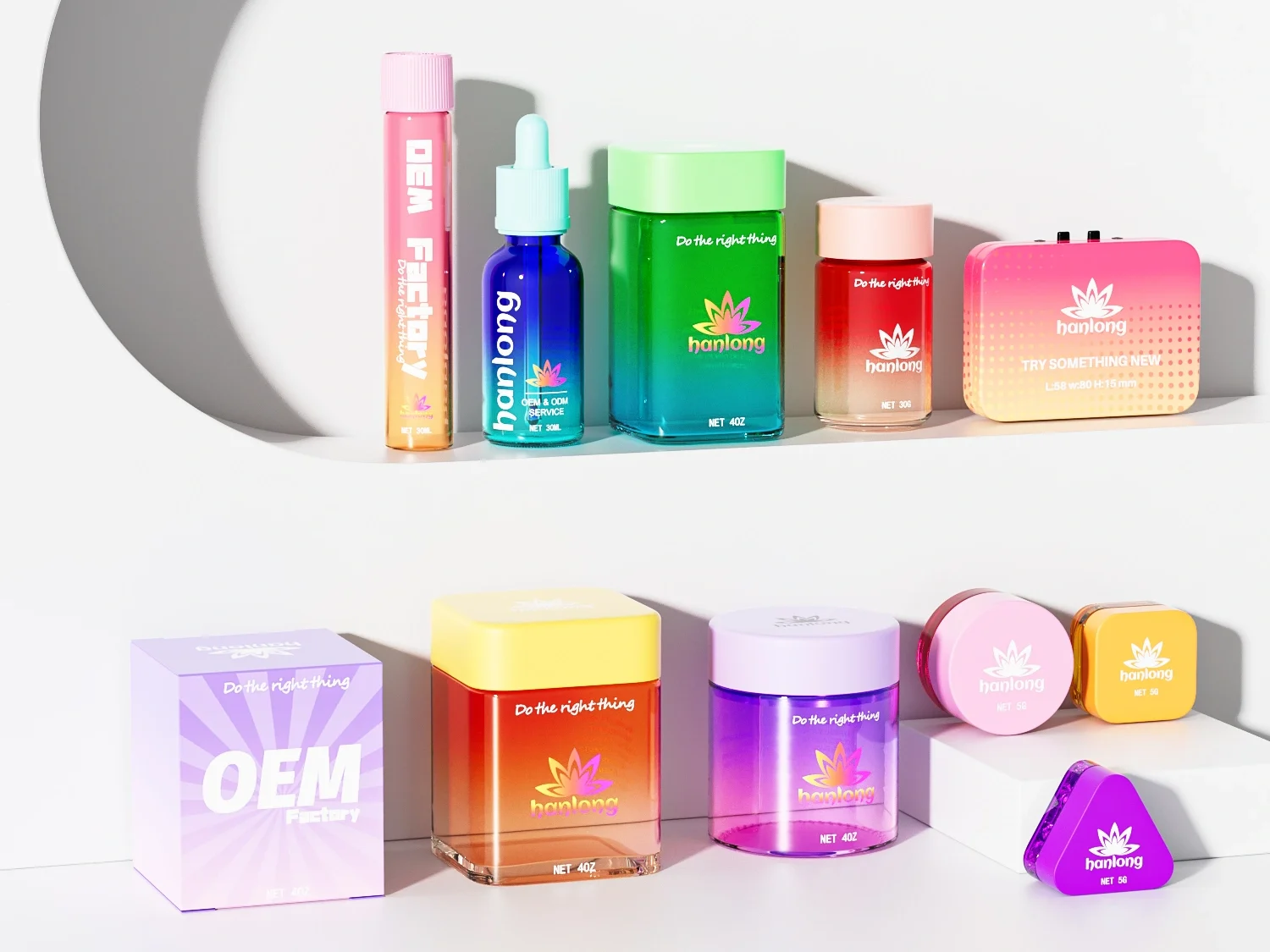
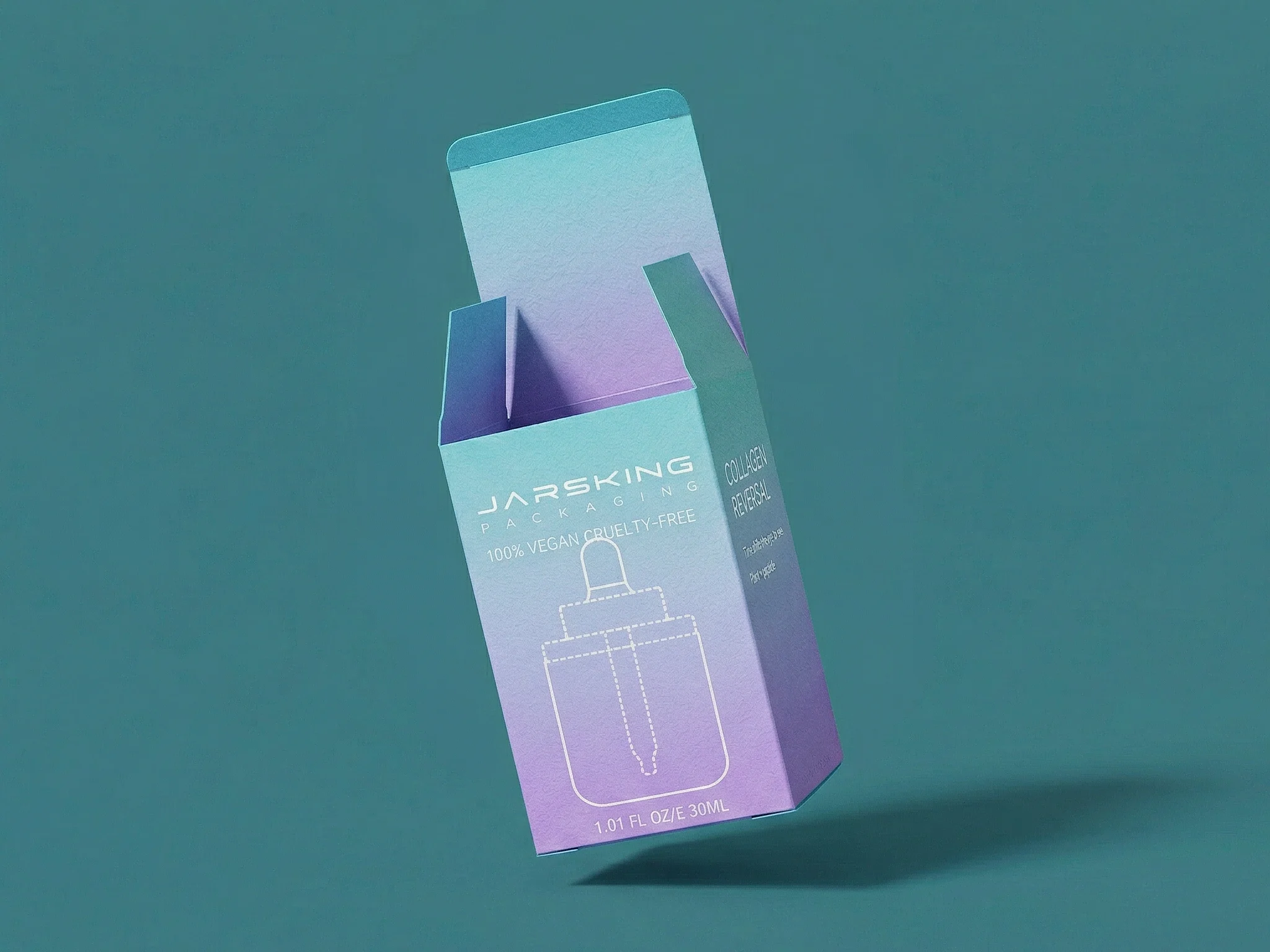
Turnkey manufacturing means you approve one design and receive a complete, assembled, inspected empty package — bottle, pump, cap, dropper, decoration and carton — produced and coordinated inside Jarsking’s own facilities. Not a spreadsheet of components sourced from nine different vendors that you’re left to reconcile, match and hope will fit together. One brief in. One finished package out.

Why Brands Are Consolidating to a Single Packaging Partner

The old model was to shop each part separately — bottle here, pump there, cap somewhere else — chasing the lowest unit price per line item. That model is breaking down, because the cost of coordinating a fragmented supplier base has caught up with the pennies it saved.

Every vendor is another failure point

Another lead time to track, another quality standard to police, another chance a part arrives late, off-spec, or incompatible with the parts around it.

Nobody owns the problem

When something goes wrong across suppliers, each one points at the others. Your launch date slips while they argue.

Fragmentation costs more than it saves

Failed compatibility, reworked batches, air-freight rescues, missed launch windows, and the management hours spent holding a fragile chain together.

Consolidation is measurably faster

Brands consolidating packaging, decoration and logistics under one coordinated partner are seeing total lead times fall roughly 15–25% — with on-time delivery improving, not slipping.

The right question isn’t “what’s the cheapest bottle?” It’s “what’s the total cost of ownership?” Turnkey manufacturing is our answer.

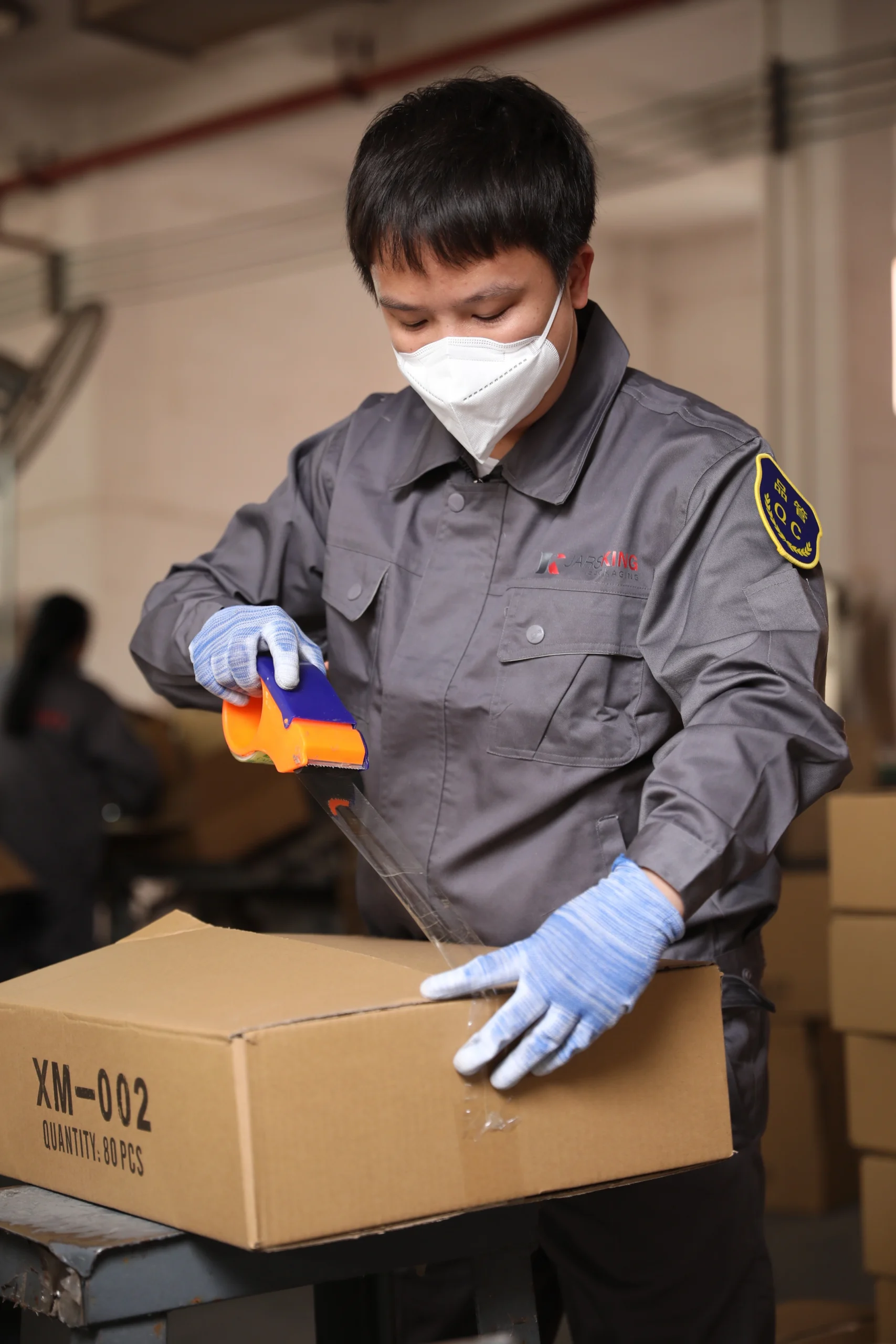
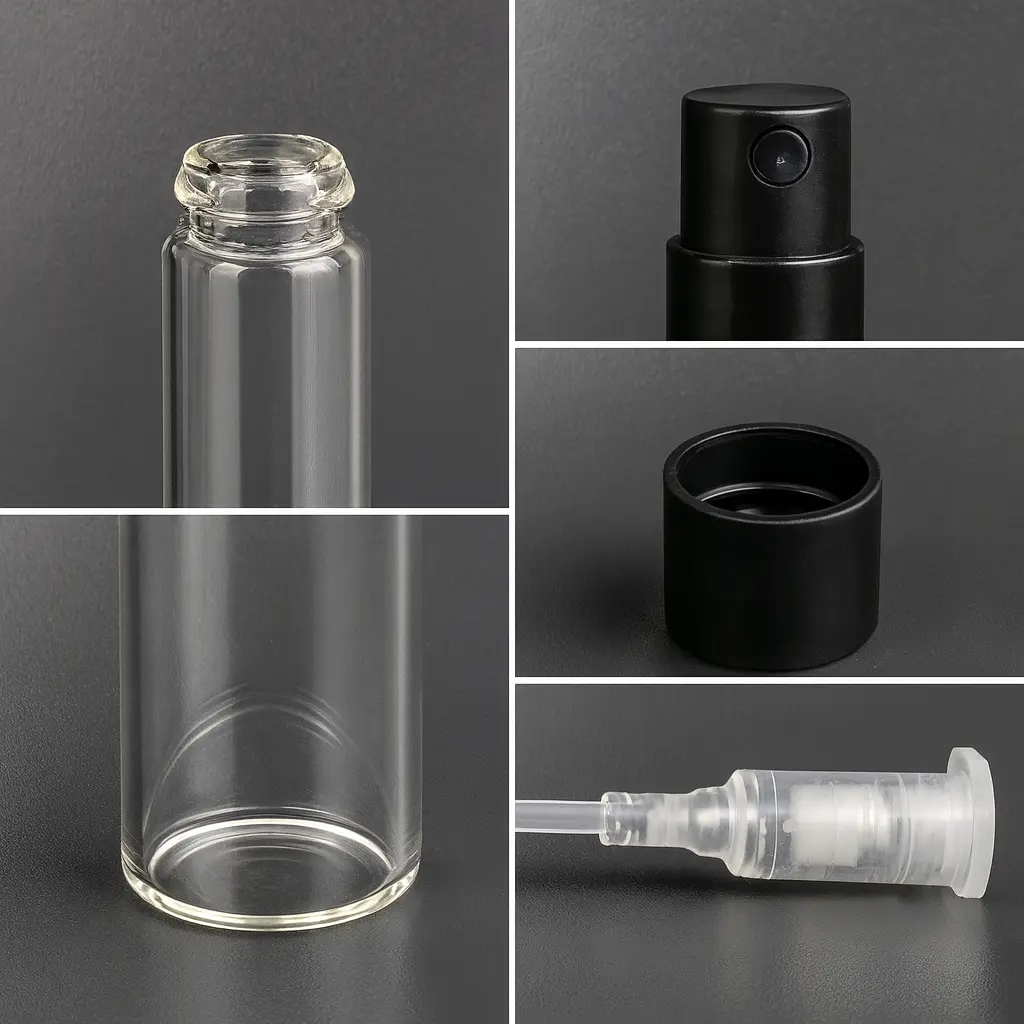
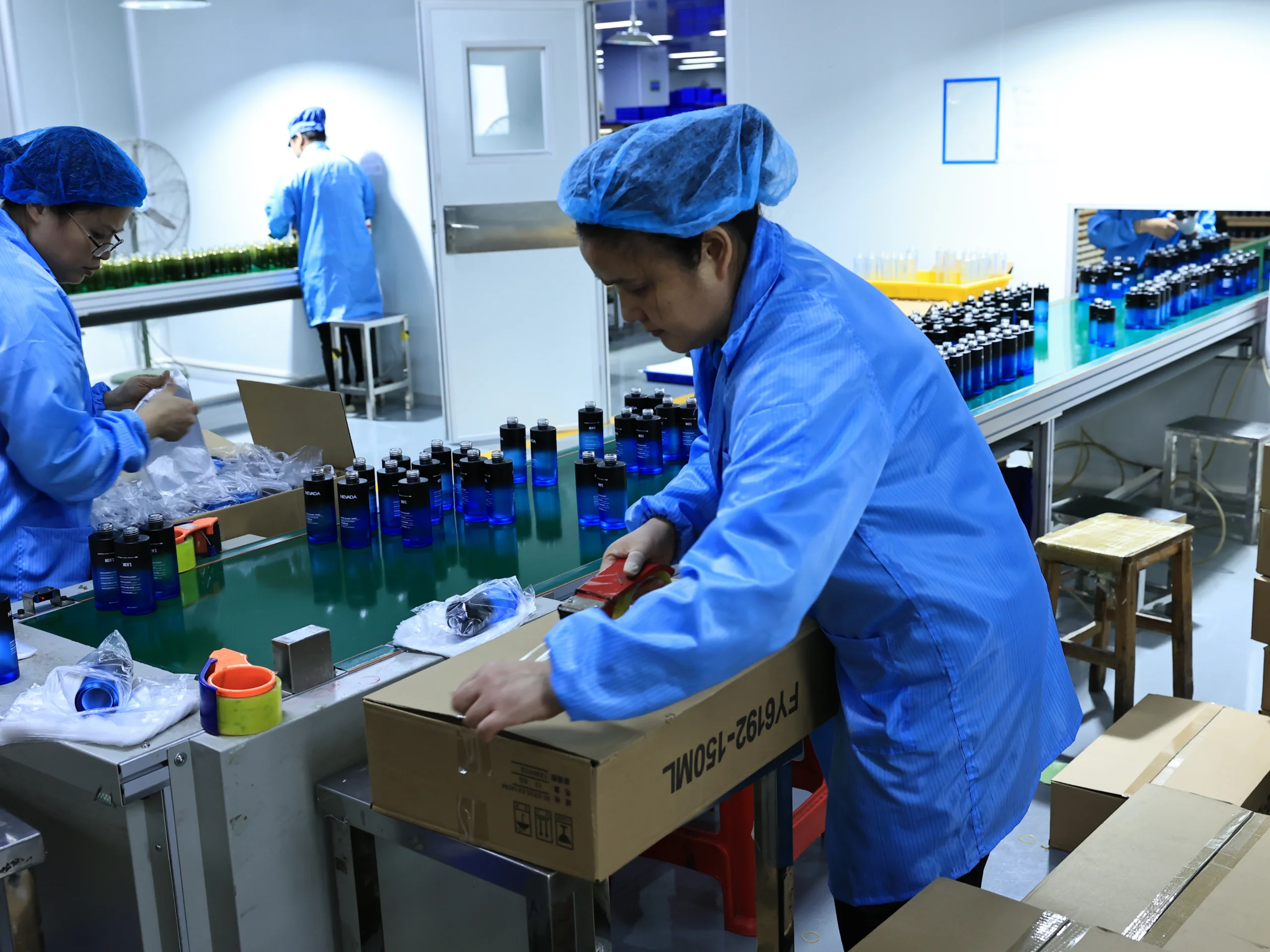
packing

One BOM. Every Component.

A single bill of materials, produced and assembled under one roof. One purchase order covers the entire package.

LayerWhat it includes
Primary containerGlass and plastic bottles, jars, vials, airless systems, tubes (5–500 ml)
Dispensing systemLotion and spray pumps, foamers, serum pumps, droppers, atomizers
ClosureScrew caps, overcaps, disc and flip tops, child-resistant closures, collars
Applicator & accessoriesPipettes, spatulas, liners, seals, inner plugs
DecorationScreen printing, hot stamping, spraying, metallization, labeling, tinting, embossing, debossing
Secondary & tertiaryFolding cartons, rigid gift boxes, inserts, sleeves, shippers

You receive it as one finished, assembled, quality-checked unit — bottle and pump already validated to fit, decoration already applied, carton already sized.

The Two Compatibility Disciplines That Decide Whether Your Package Works

Most packaging failures aren’t caused by a bad bottle or a bad pump. They’re caused by parts that were each fine alone but never engineered to work together. Owning both compatibility problems is a turnkey manufacturer’s real job.

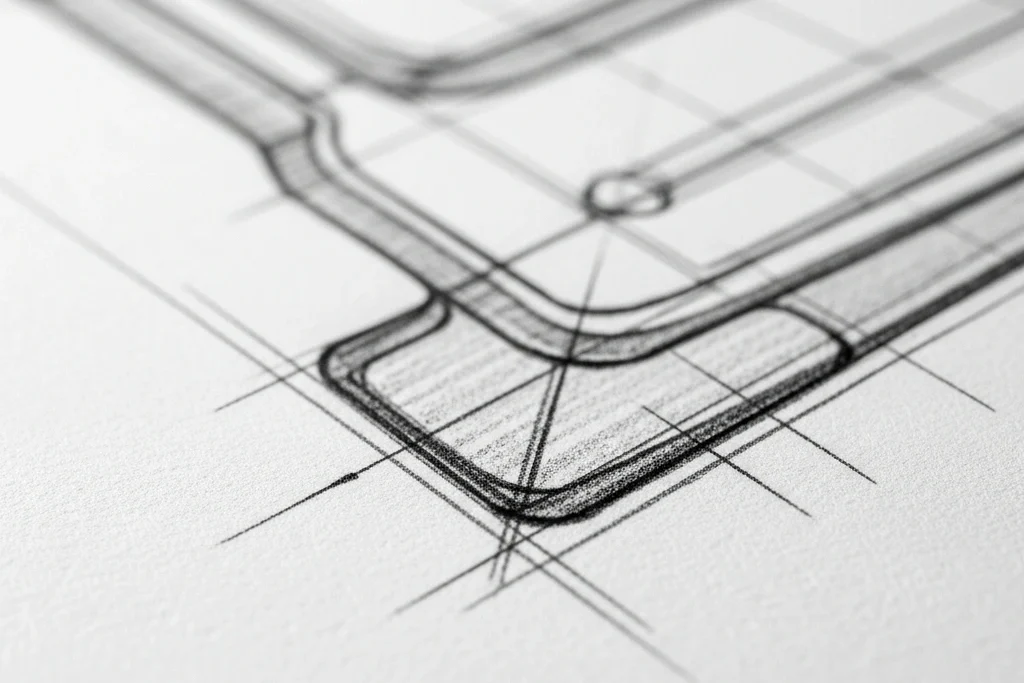
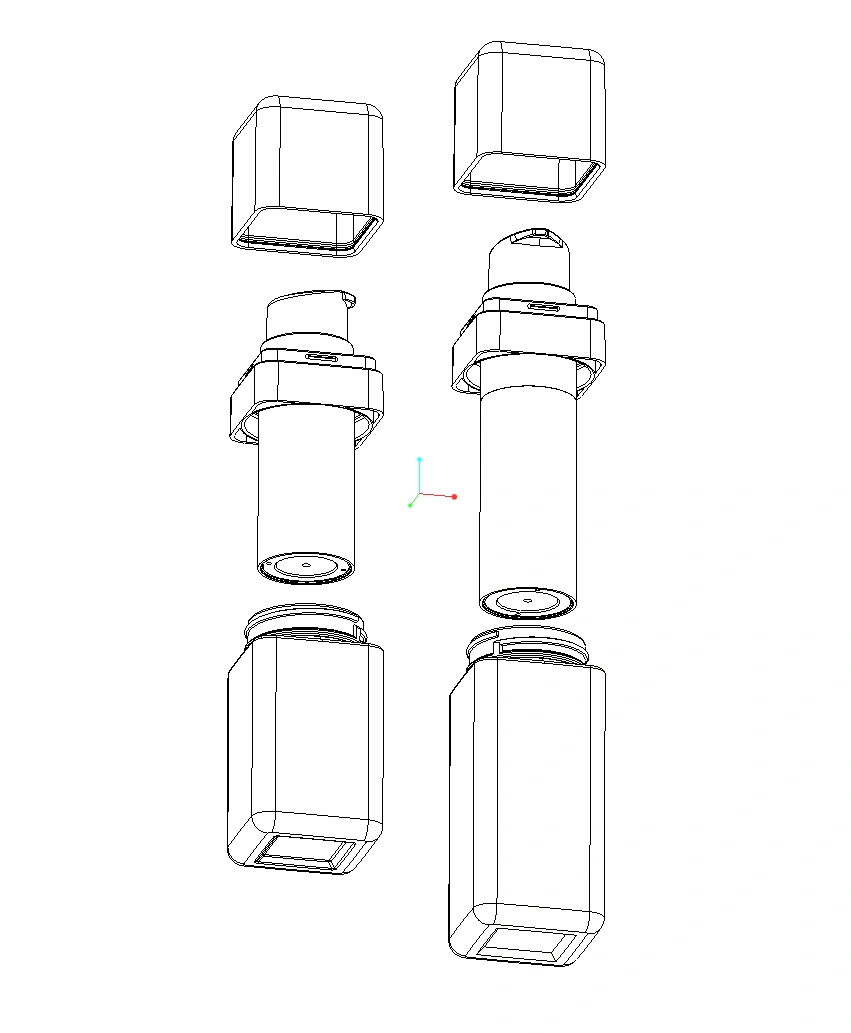
airless bottle technical sketch

01 — Component Compatibility:
The Fitment Problem

Every bottle neck and closure carries a code like 24/410. The first number is the neck diameter in millimetres. The second — the part almost everyone overlooks — defines the thread style: pitch, depth, and number of turns. These follow formal industry systems (GPI/GCMI in the US, SP in Europe). They are not interchangeable.

Potential Problem

A 24/410 pump will screw onto a 24/400 bottle. It will feel fine on the bench. It won't fully tighten and seal — and you find out when a full production batch leaks in transit. A matching diameter guarantees nothing. The thread style is what seals.

How We Prevent

When we make the bottle, pump, cap and collar, fitment is validated before production — neck-to-closure engagement, dip-tube length to bottle height, cap clearance, actuator alignment. Sourcing each part separately means reconciling spec sheets from vendors who never spoke to each other, and absorbing the loss when the numbers don't line up.

02 — Formula Compatibility:
Will the Empty Survive Your Formula?

We supply empties — but the wrong empty still fails against your formula. This is the risk brands discover months after approval, not at first sample.

How We Prevent

Compatibility testing sits with you — you hold the formula, and the industry rule is unambiguous: test the final formula, not a base, under both real-time and accelerated conditions.
What we do is make that test easy to pass. We advise on material selection up front — inert flint glass where chemistry demands it, PETG or PP where impact and cost matter — and supply samples of the assembled unit for your stability and compatibility programme.
You get a material recommendation and physical parts to test before tooling and volume are committed.

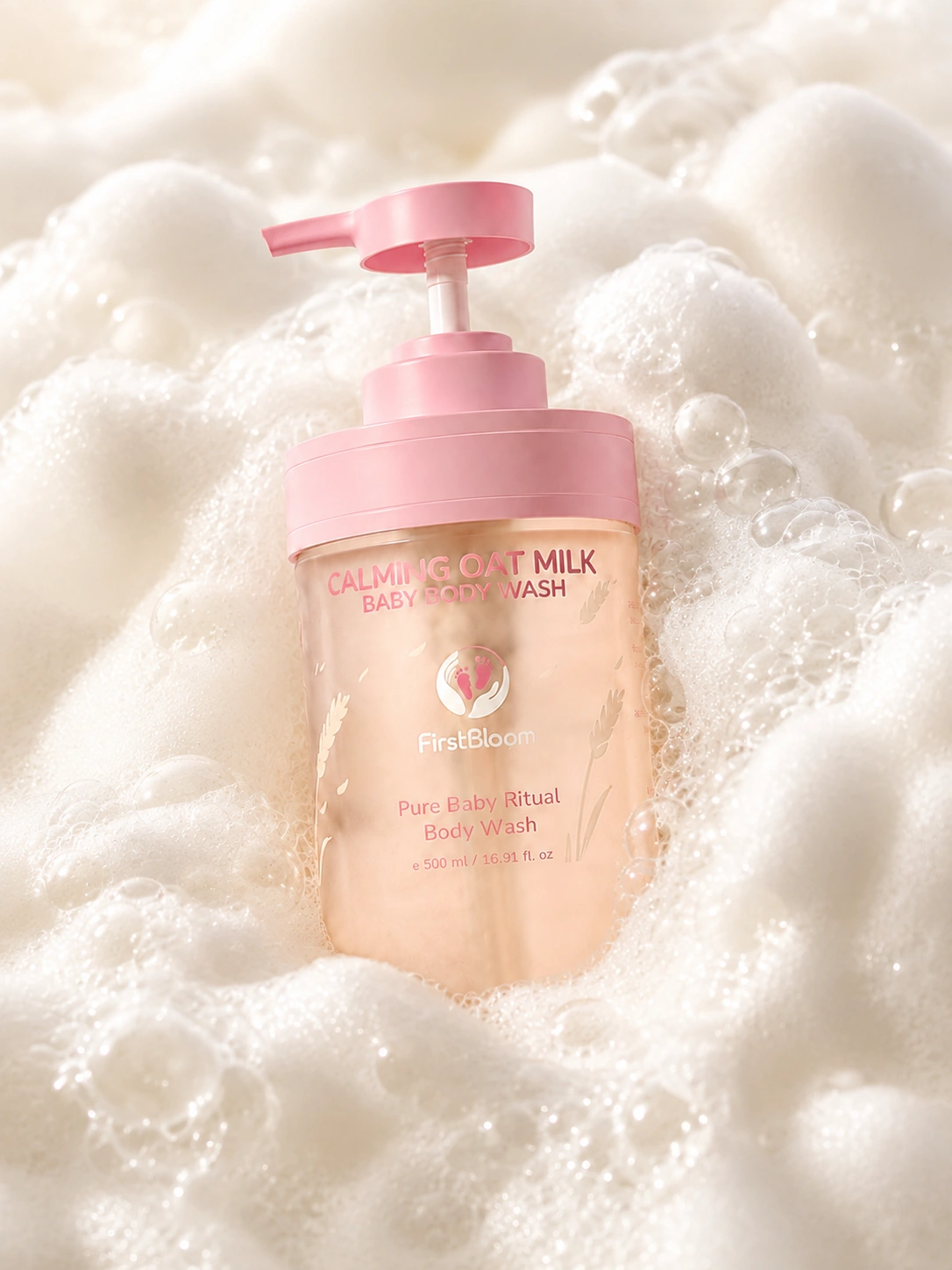
shampoo bottle

How Jarsking Runs Your Order as One Program

Turnkey isn’t a workshop tour — it’s the orchestration layer above production. Here’s what one Jarsking team owns so you don’t have to.

mono-material design

The most reliable route to a high recyclability grade is mono-material design — bottle, closure and pump from the same polymer family, so the whole unit recycles together instead of being pulled apart.

Constraints of a fragmented supply chain

A brand sourcing a PET bottle from one vendor and a mixed-resin pump from another has no way to guarantee mono-material construction. An integrator that makes every component can — engineering the full package as a mono-material system, specifying PCR content across parts, and documenting it.

value of an integrator

Integration doesn't just make your package easier to buy. It makes it easier to keep selling.

Built for What's Coming: PPWR and Mono-Material Compliance

Regulation is turning integration from a convenience into a compliance advantage. Under the EU Packaging and Packaging Waste Regulation (PPWR), packaging is graded for recyclability on an A–C scale. From 2030, packaging below the threshold cannot be placed on the EU market — alongside rising minimum recycled-content rules, such as 30% PCR in contact-sensitive PET by 2030.

LEAD TIME & MOQ

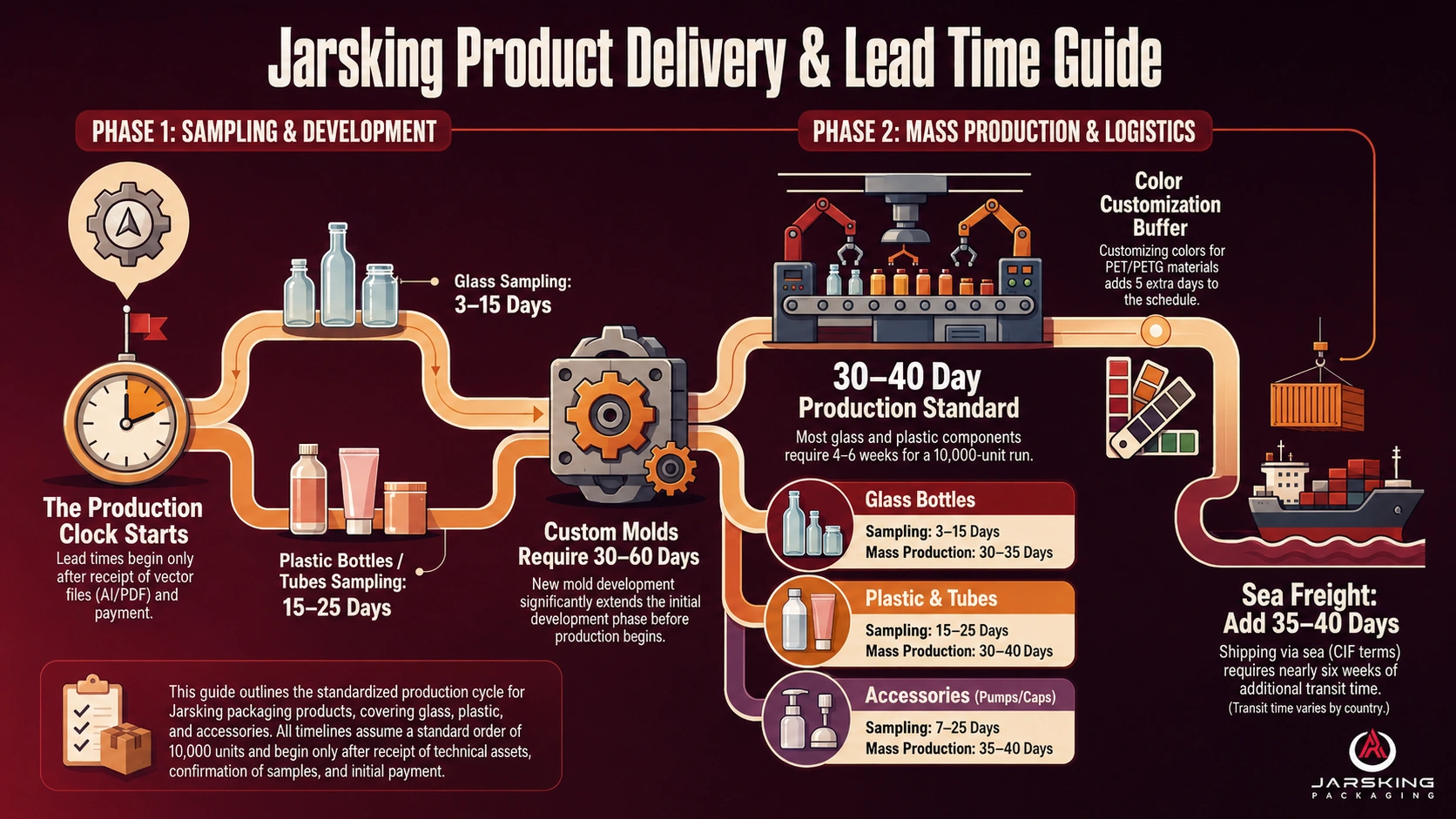
The turnkey advantage isn’t only that everything ships together. It’s that everything runs on one schedule instead of five competing ones.


PathIndicative production lead time
OEM — build to your specs33–65 days
ODM — customize an existing mould40–60 days
OBM — full custom co-development84–110 days (steel mould 35–40 days)
Mass production run30–40 days
Sea freight (add on)+35–40 days
Jarsking timeline

Perguntas frequentes

No. Our turnkey service covers empty packaging — engineered, decorated and assembled — delivered ready for your filling line. We do not fill or formulate. Many brands run our packaging straight into their own or a contract filler’s line.

Yes. A single Jarsking project manager owns your entire bill of materials — every component, spec and deadline — so you’re not brokering between separate bottle, pump, cap and carton suppliers.

Because we produce and schedule the components together and manage the critical path. Instead of tracking five delivery dates and hoping they converge, you get one reconciled production timeline for the assembled unit.

We are. When one company engineers, produces and assembles the whole package, one team is responsible for the outcome — and owns the fix. No cross-supplier finger-pointing.

In many cases, yes — starting with a compatibility review (fitment and formula) before we integrate third-party parts, so any thread, dimension or material mismatch is flagged before production.

ISO 9001, BSCI, REACH, RoHS, CE, MSDS and LFGB, with additional certifications available per target market. AQL (ISO 2859) sampling and lot-number traceability apply across production.

Yes. Because we make every component, we can engineer your package as a mono-material system and specify PCR content across parts to target a high recyclability grade — something a multi-vendor supply chain can’t reliably guarantee.

Solicitar Orçamento