로고

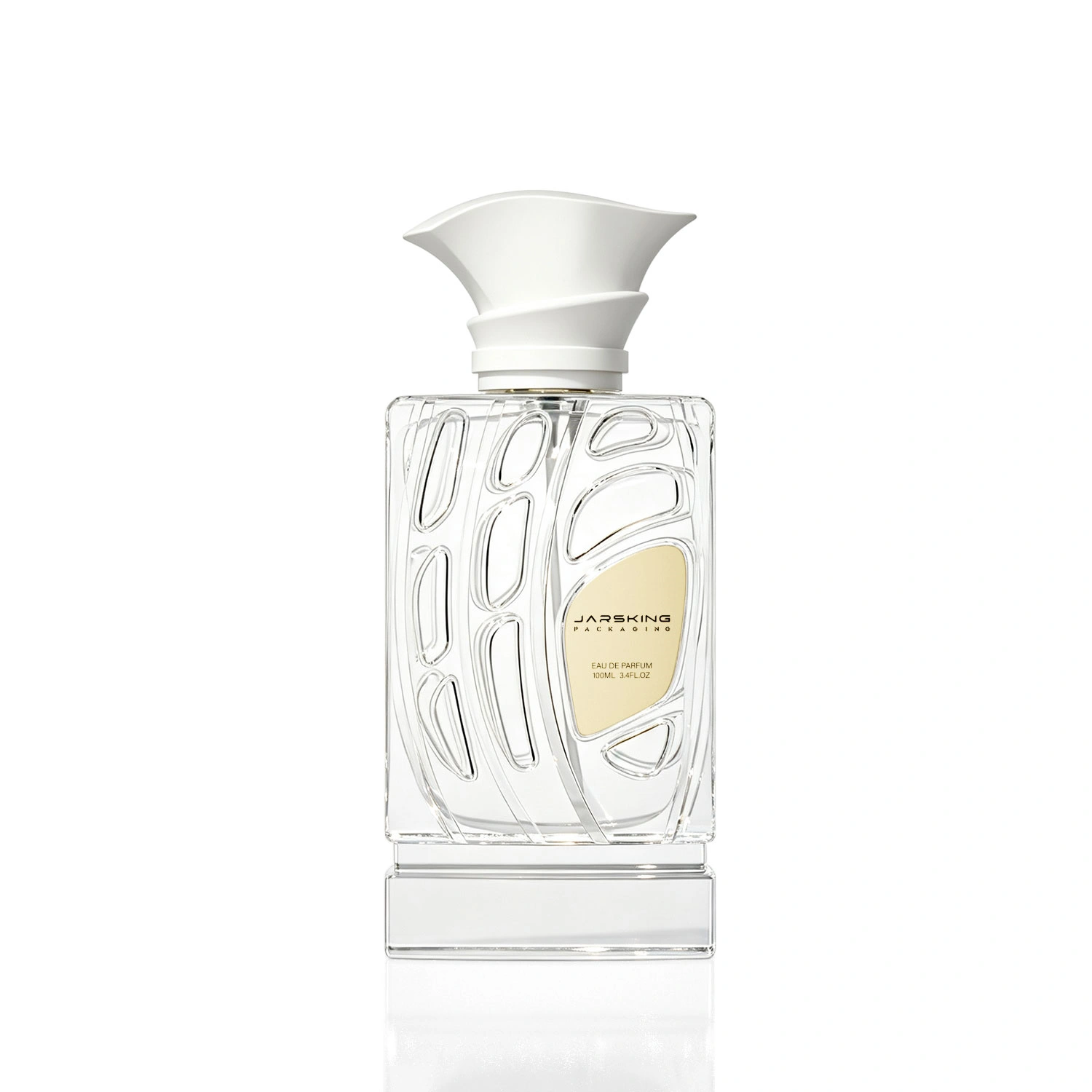
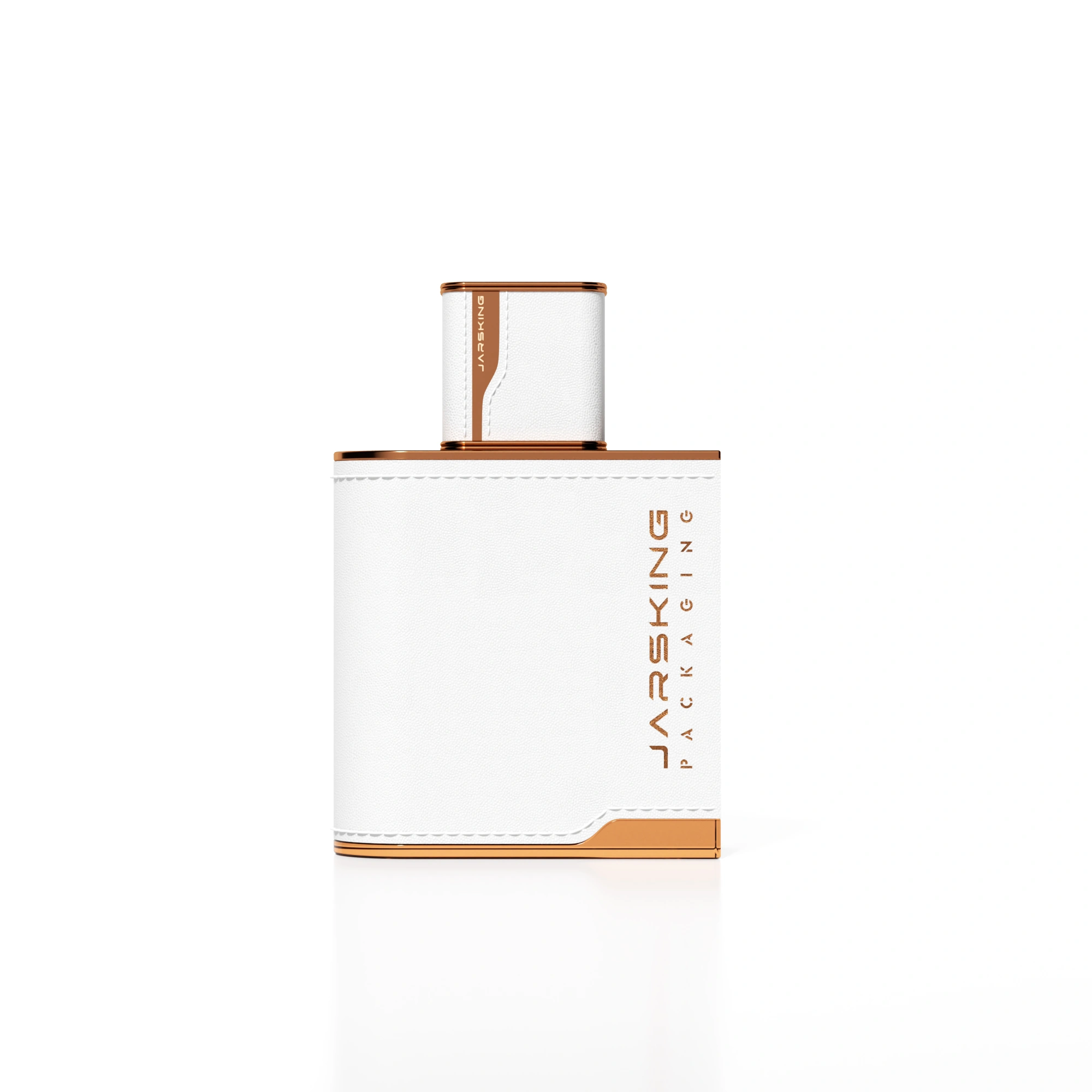
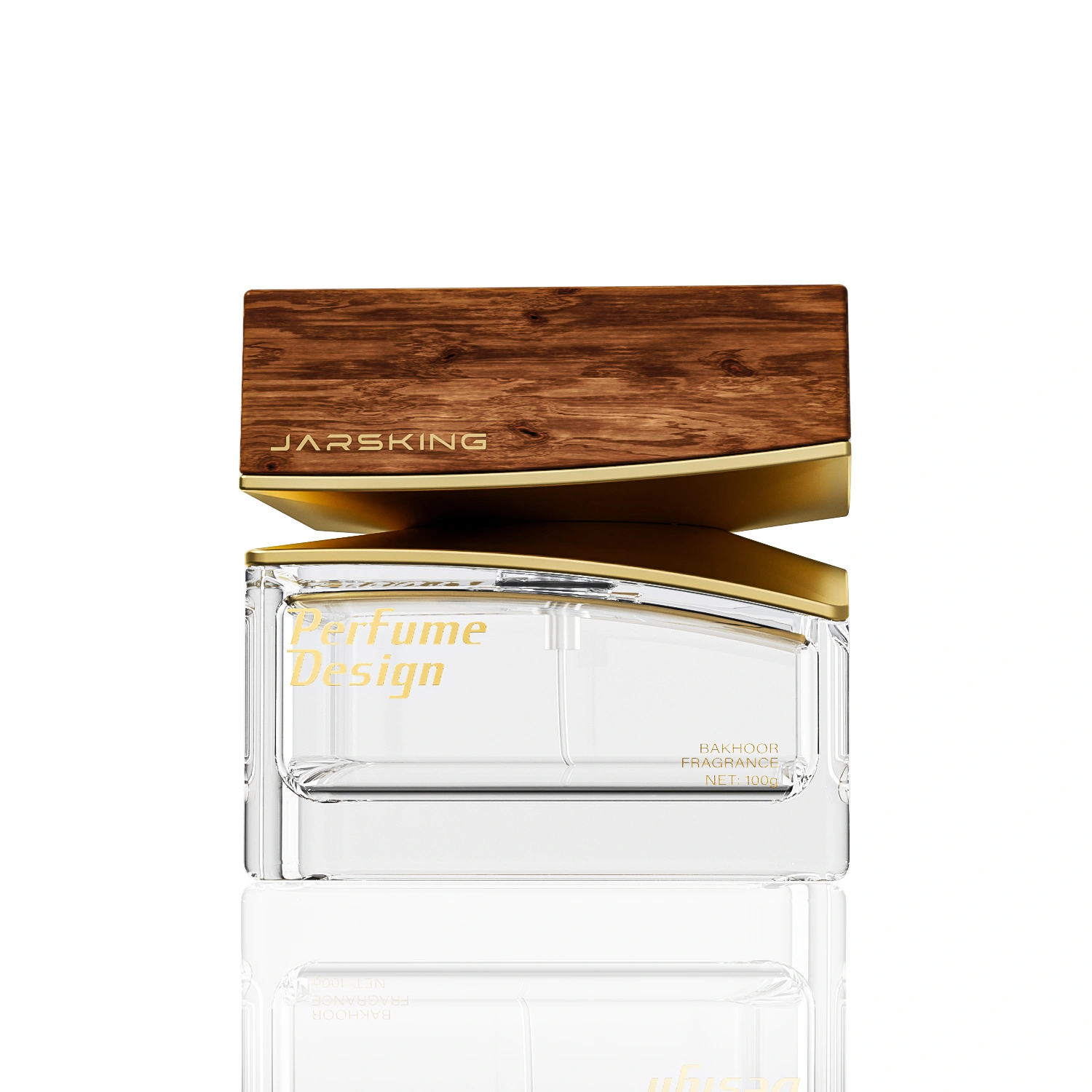
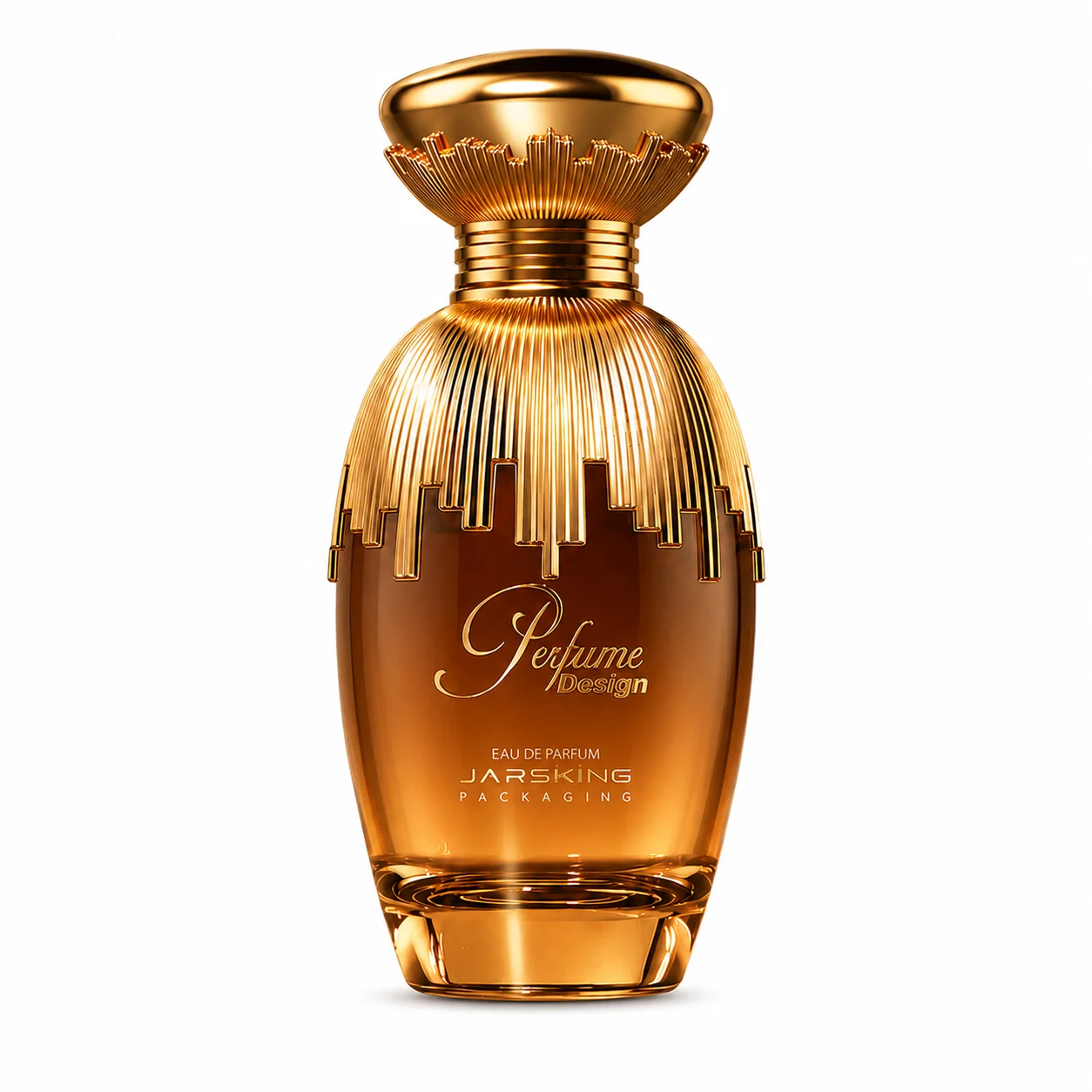
Custom Glass Perfume Bottle Manufacturer for Production-Ready Fragrance Packaging

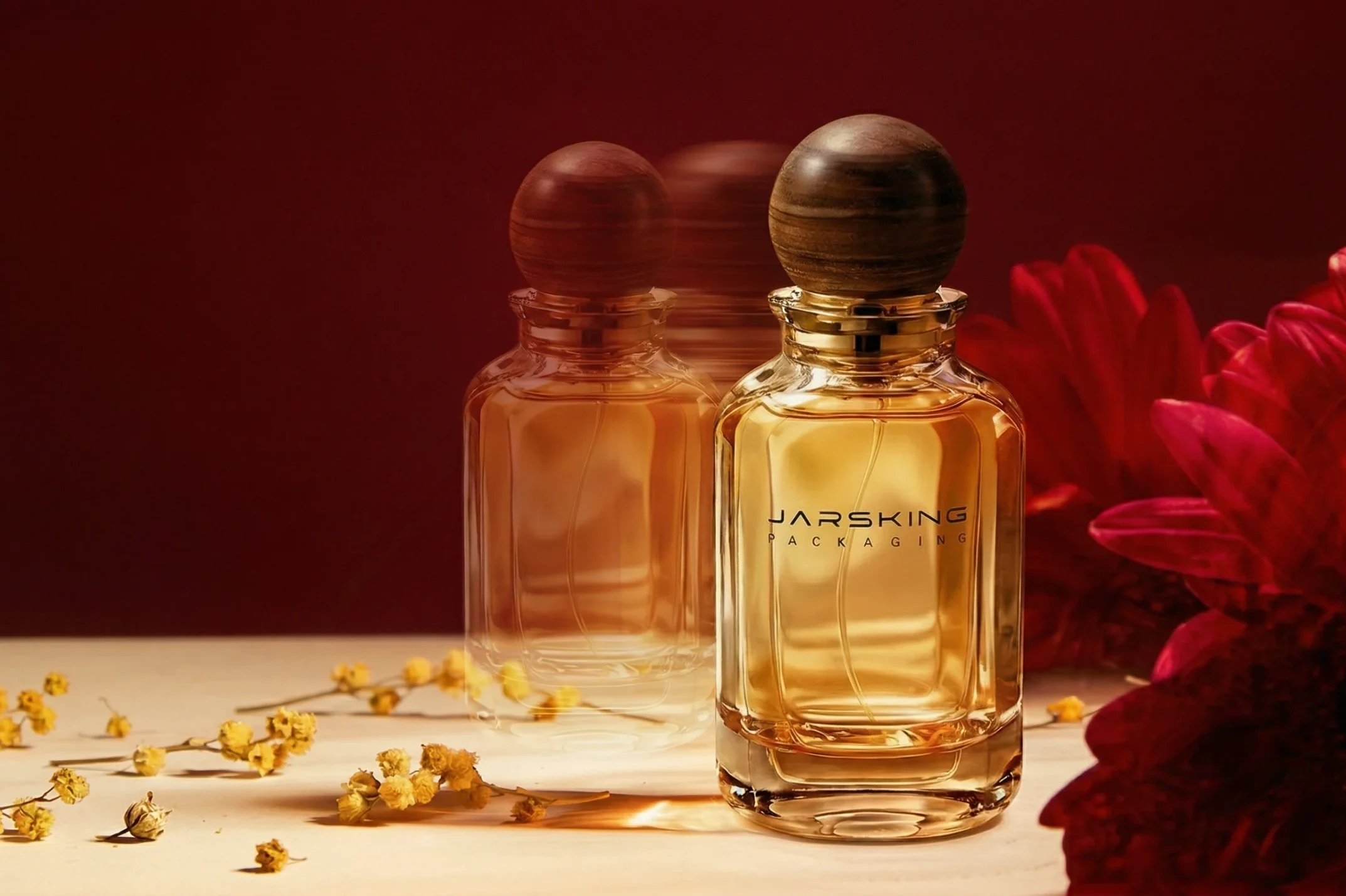
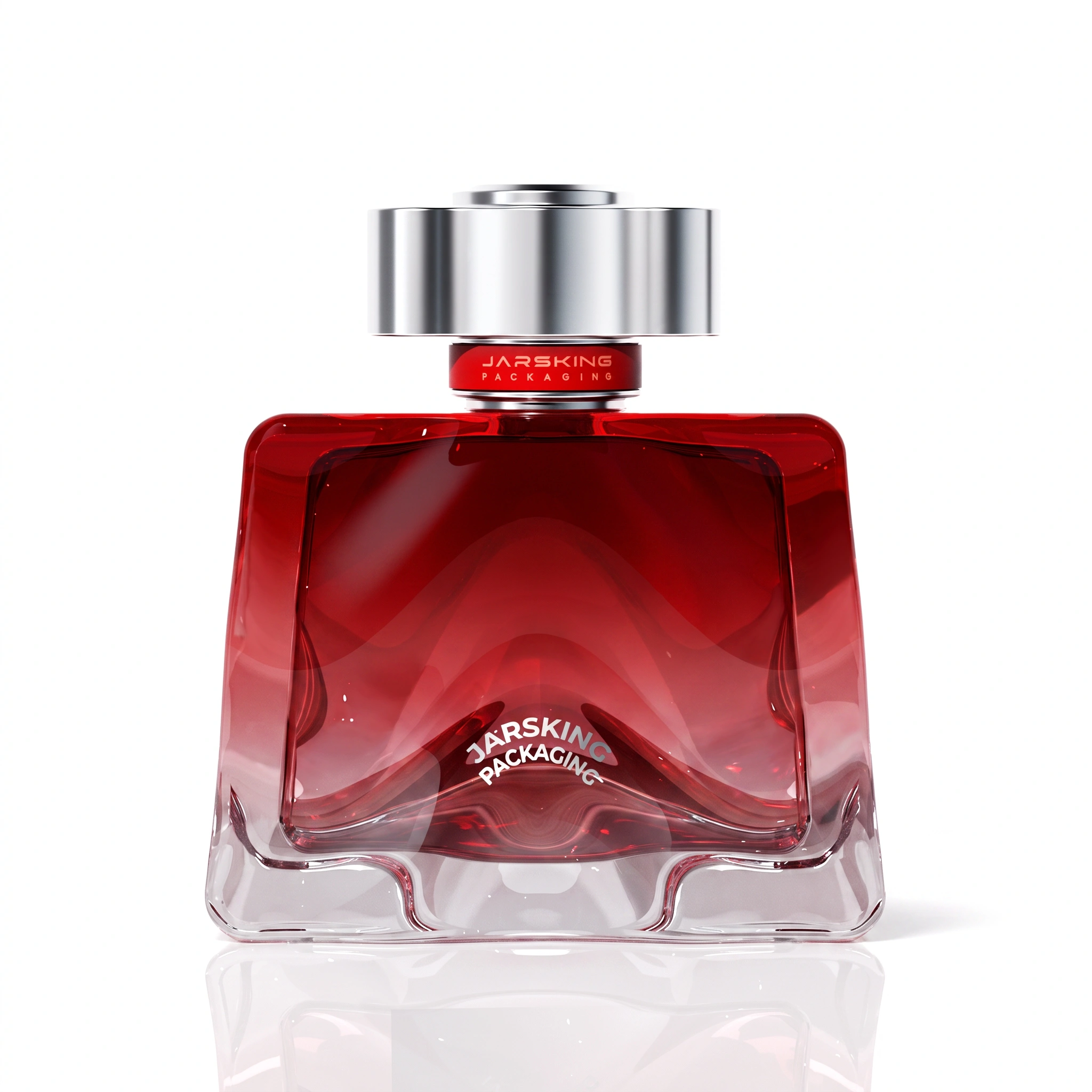
A perfume bottle is not production-ready simply because the glass looks attractive. The neck must work with the selected atomizer, the collar must sit at the correct height, the cap must align with the bottle, and every decoration must remain consistent across bulk production.
Jarsking coordinates these requirements as one perfume bottle program—from mold selection and component matching to decoration, sample approval, production and final inspection. Choose from 30,000+ existing molds or develop a project-specific bottle with our design, engineering and manufacturing teams in China.

A Perfume Bottle Is a System, Not a Collection of Separate Parts

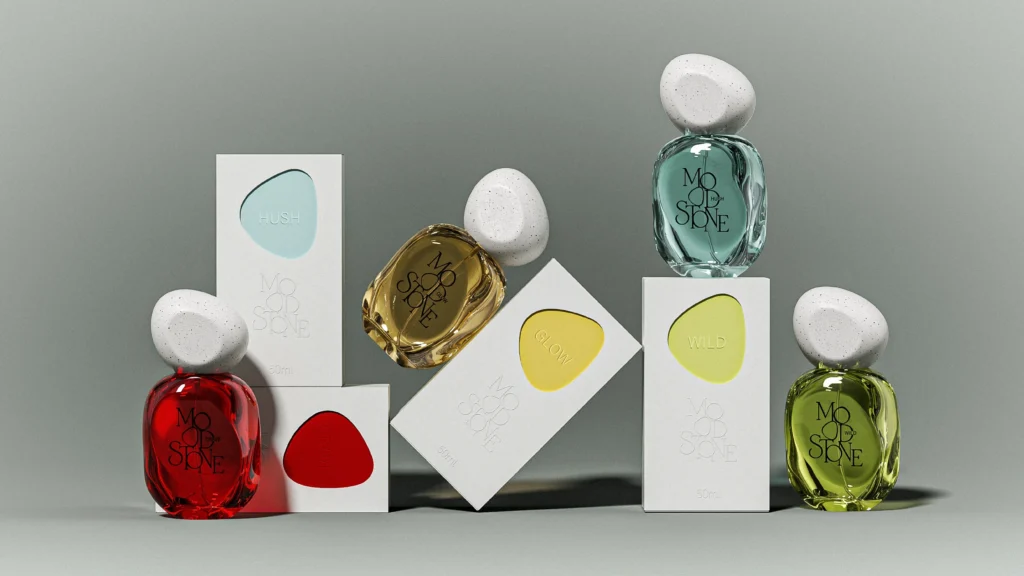
When the glass bottle, atomizer, collar, cap and box come from unrelated suppliers, problems usually appear at the interfaces between them.Jarsking approaches perfume packaging as one coordinated system.

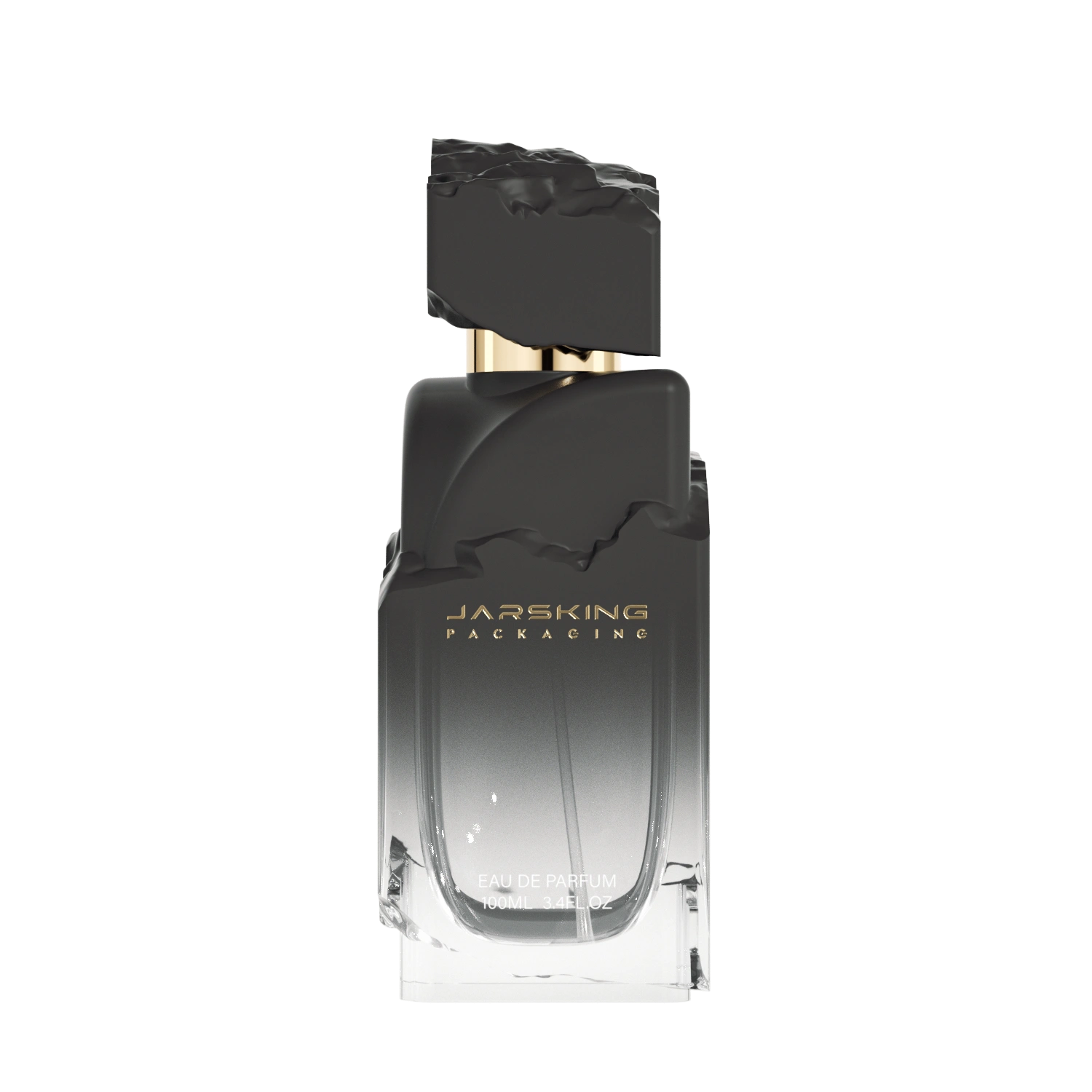
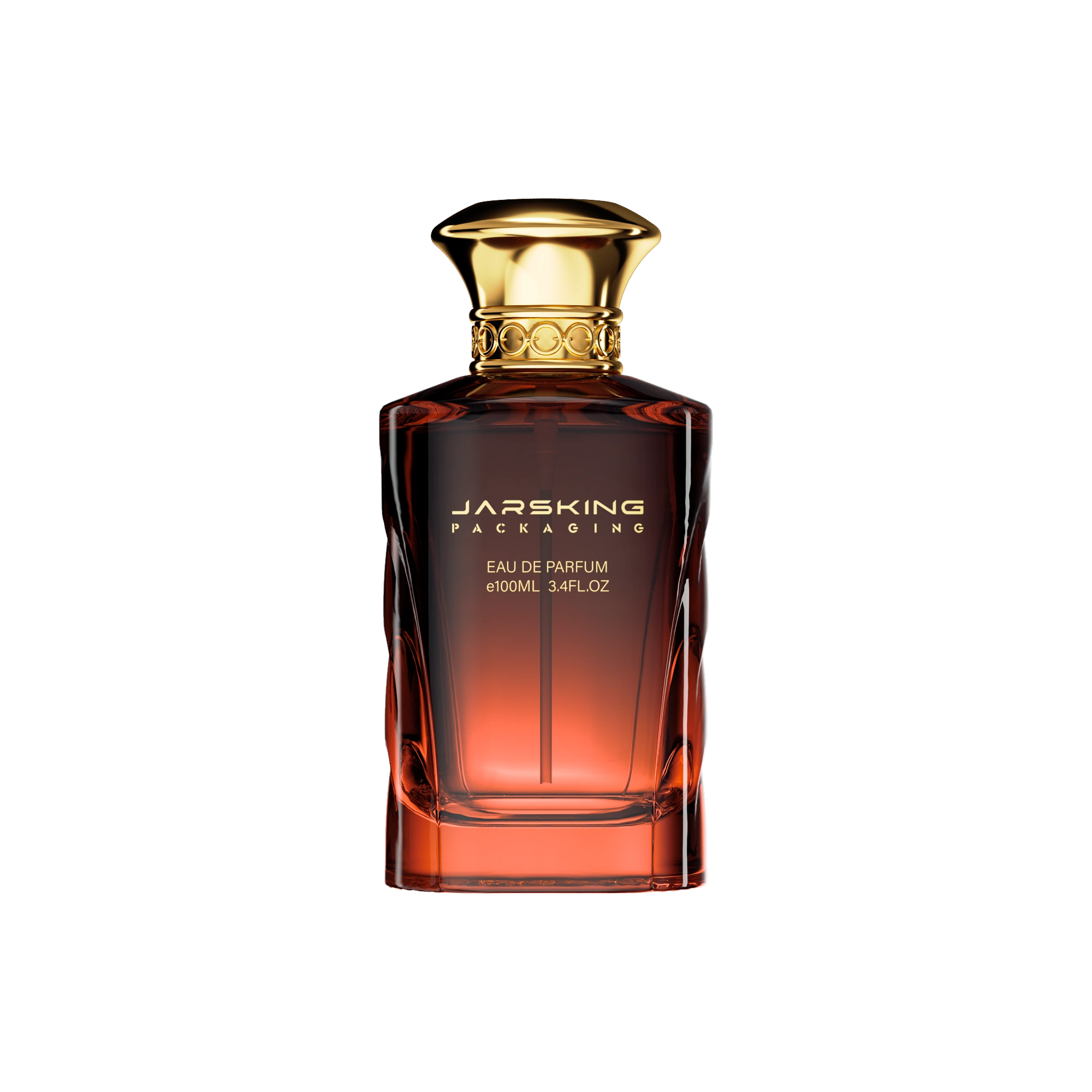
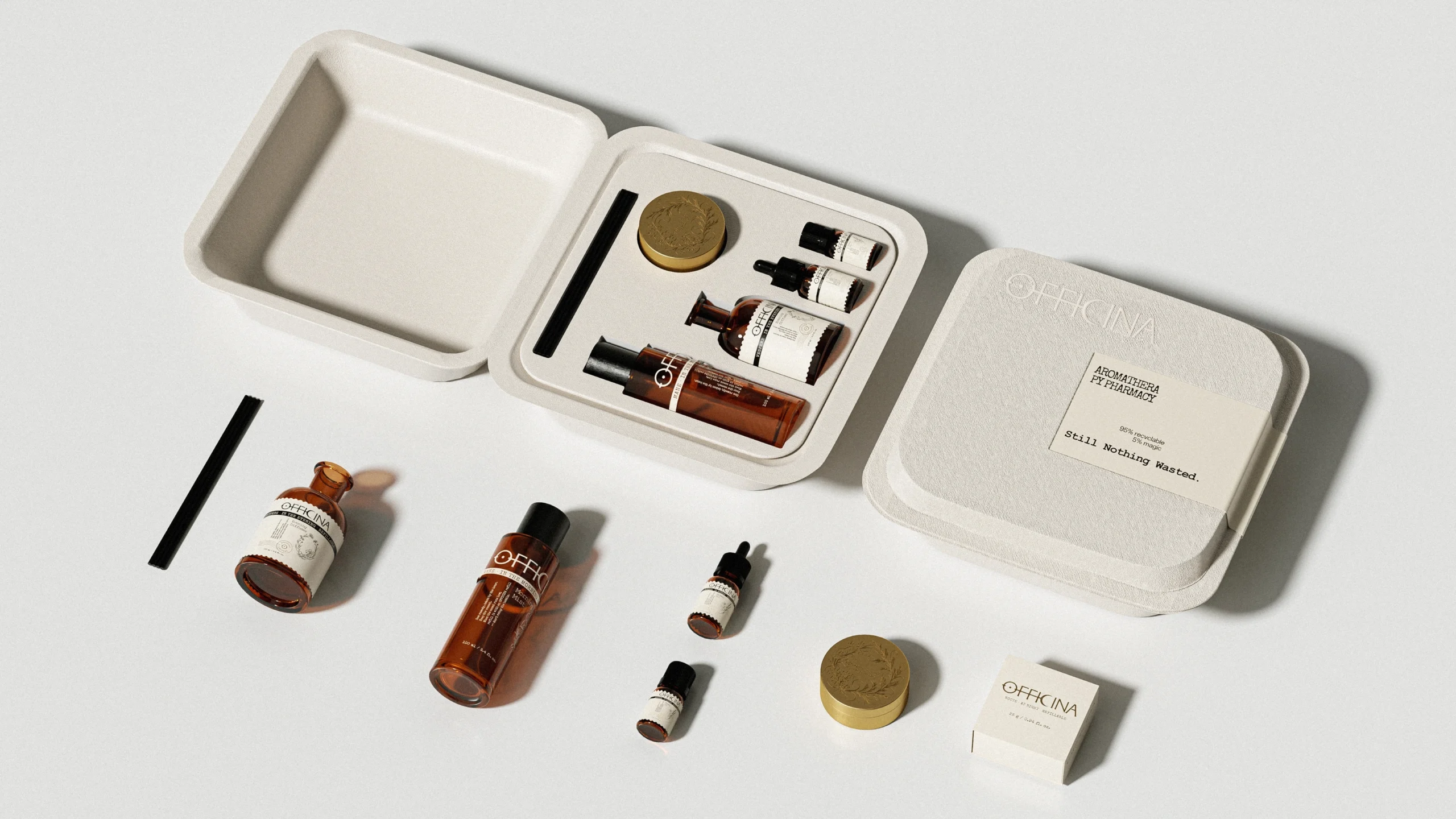
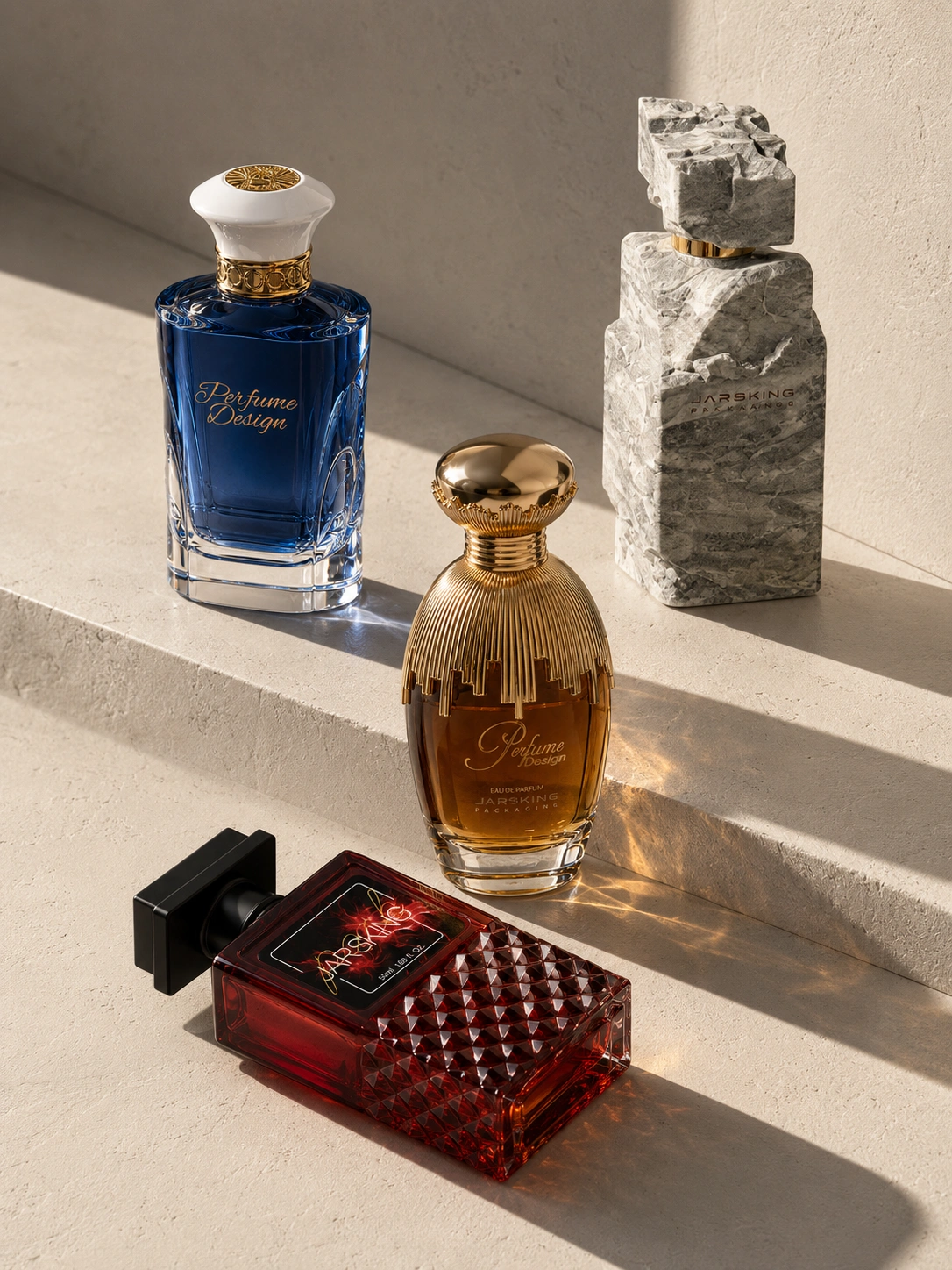
custom-perfume-packaging-collection-display
Packaging elementWhat must be controlled
Glass bottleCapacity, silhouette, glass distribution, base, neck finish and decoration area
AtomizerNeck compatibility, dip-tube specification, assembly method and required spray performance
CollarFit, height, finish and alignment with the bottle shoulder
CapProportion, retention, orientation and visual alignment
DecorationColor standard, printable area, registration, finish sequence and approval sample
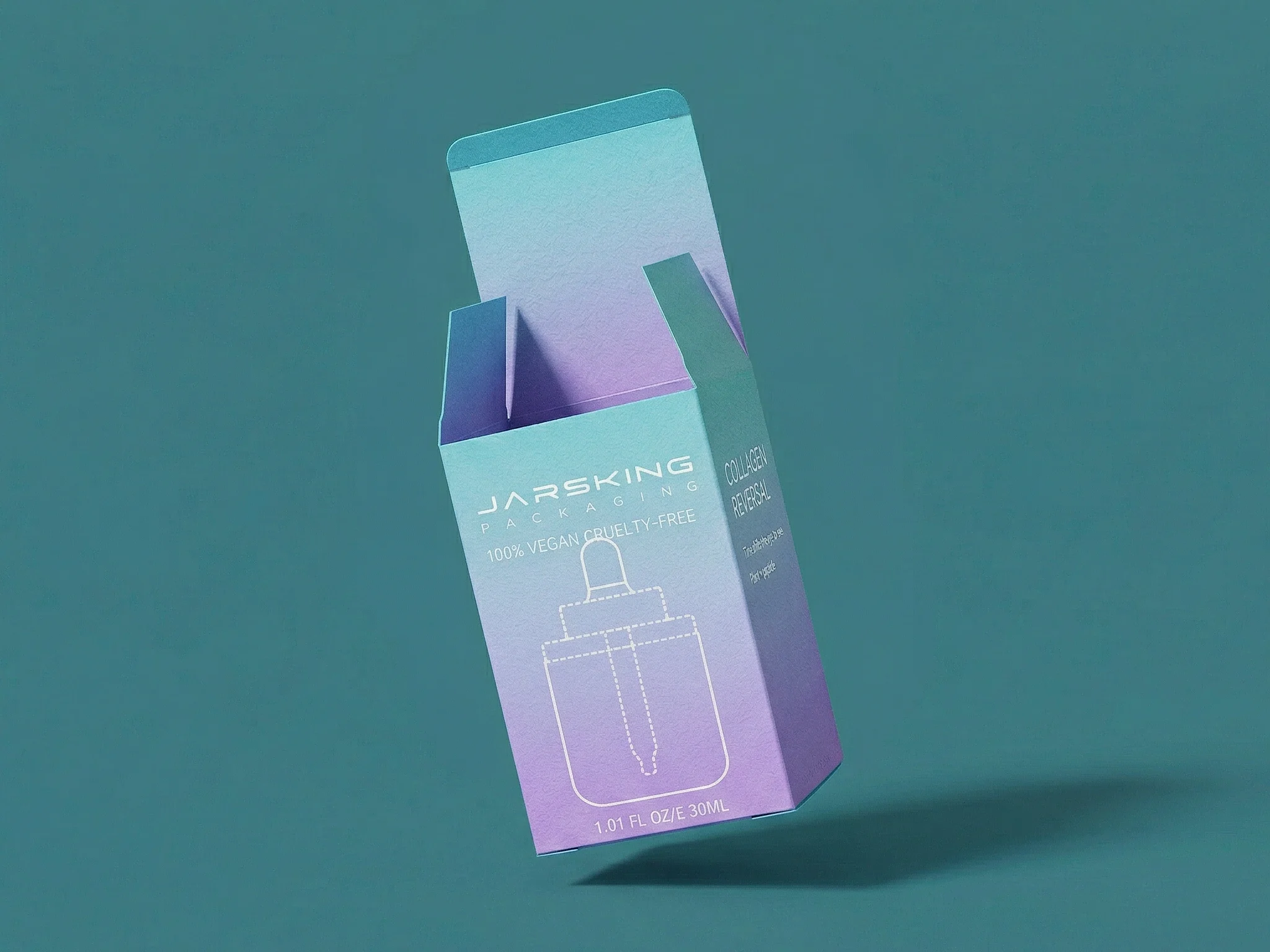
Secondary packagingBottle clearance, cap clearance, insert fit, presentation and export packing
Quality planApproved specifications, inspection points, AQL standard and lot traceability

One project contact coordinates these dependencies through design, development, production and logistics.

How to Order Custom Perfume Bottles

Your project moves through nine defined stages. At each stage, you know what information to provide, what Jarsking will prepare and what your team must approve before the order moves forward.

For timelines, validation tests, and design ownership in more detail, read our guide on how to develop a custom perfume bottle.

1. Share Your Brief

Share Your Perfume Bottle Brief

Every successful order starts with a clear commercial and creative brief.

What you provide

  • Target bottle capacity
  • Estimated quantity per SKU
  • Target market and retail channel
  • Expected launch date
  • Reference bottles, drawings or moodboards
  • Preferred glass appearance
  • Atomizer, collar and cap direction
  • Logo and decoration requirements
  • Box requirements
  • Target cost direction

If you have an existing bottle sample, drawing or physical cap, include it at this stage.

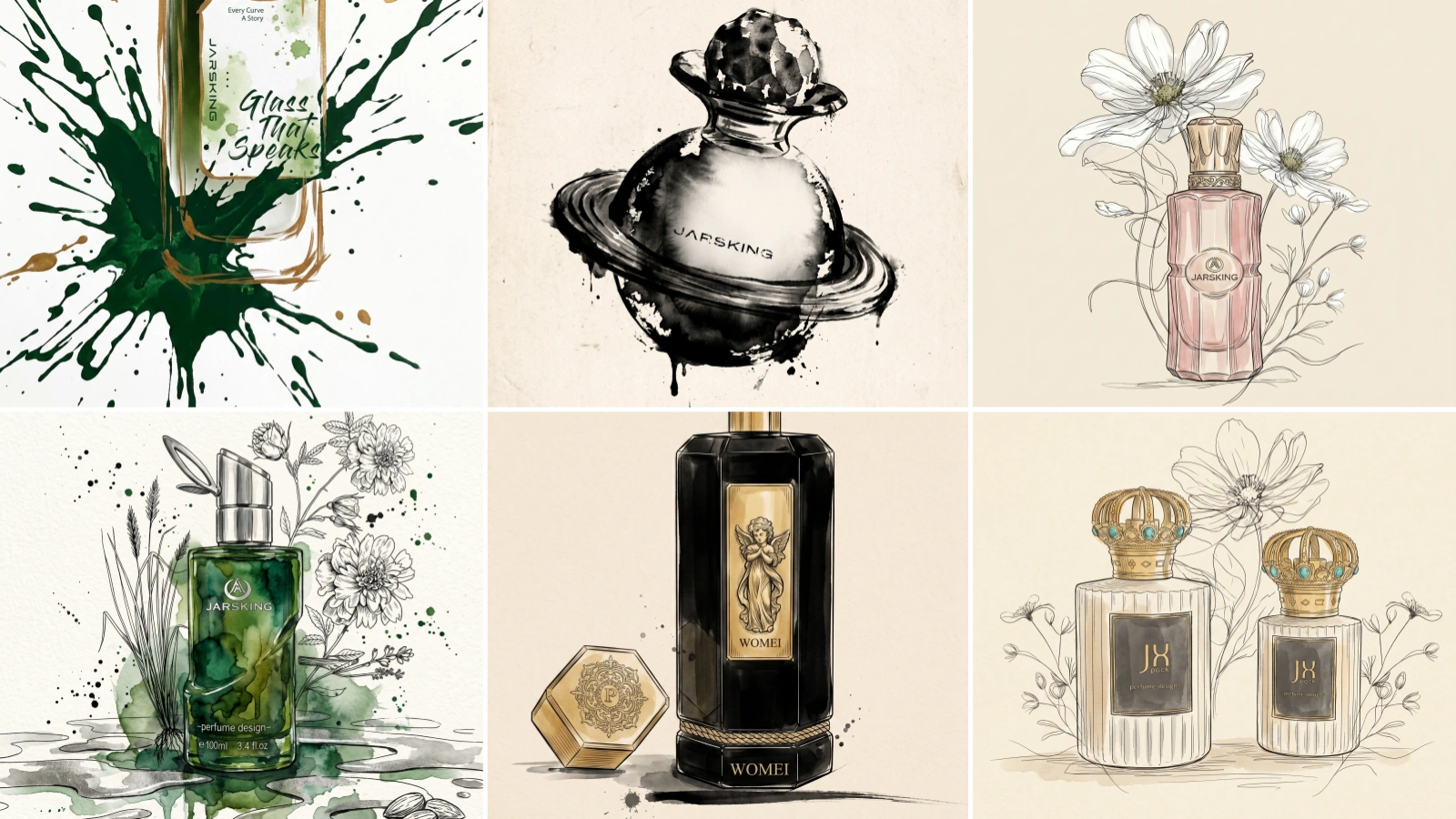
perfume bottle sketch collage
Watercolor_painting_illustration_featuring_cylindr1

What Jarsking does

We review your requirements and determine whether the project should use:

  • An existing Jarsking mold
  • An existing bottle with custom decoration
  • A client-supplied OEM design
  • A newly developed bottle structure
  • A broader OBM design program

We also identify missing specifications that must be resolved before an accurate quotation can be prepared.

What you approve

  • Initial project scope
  • Existing-mold or custom-development route
  • Required components and services
  • Information needed for the next stage
2. Develop the Design Direction

Select a Bottle or Develop the Design Direction

Once the project route is clear, we establish the bottle’s overall form.

Existing-mold projects

Jarsking shortlists suitable bottle structures from its mold library according to:

  • Required capacity
  • Desired proportions
  • Neck and atomizer requirements
  • Decoration area
  • Target positioning
  • Order quantity
  • Launch schedule

The bottle can then be differentiated through color, printing, hot stamping, metallization, cap design and secondary packaging.

sketch
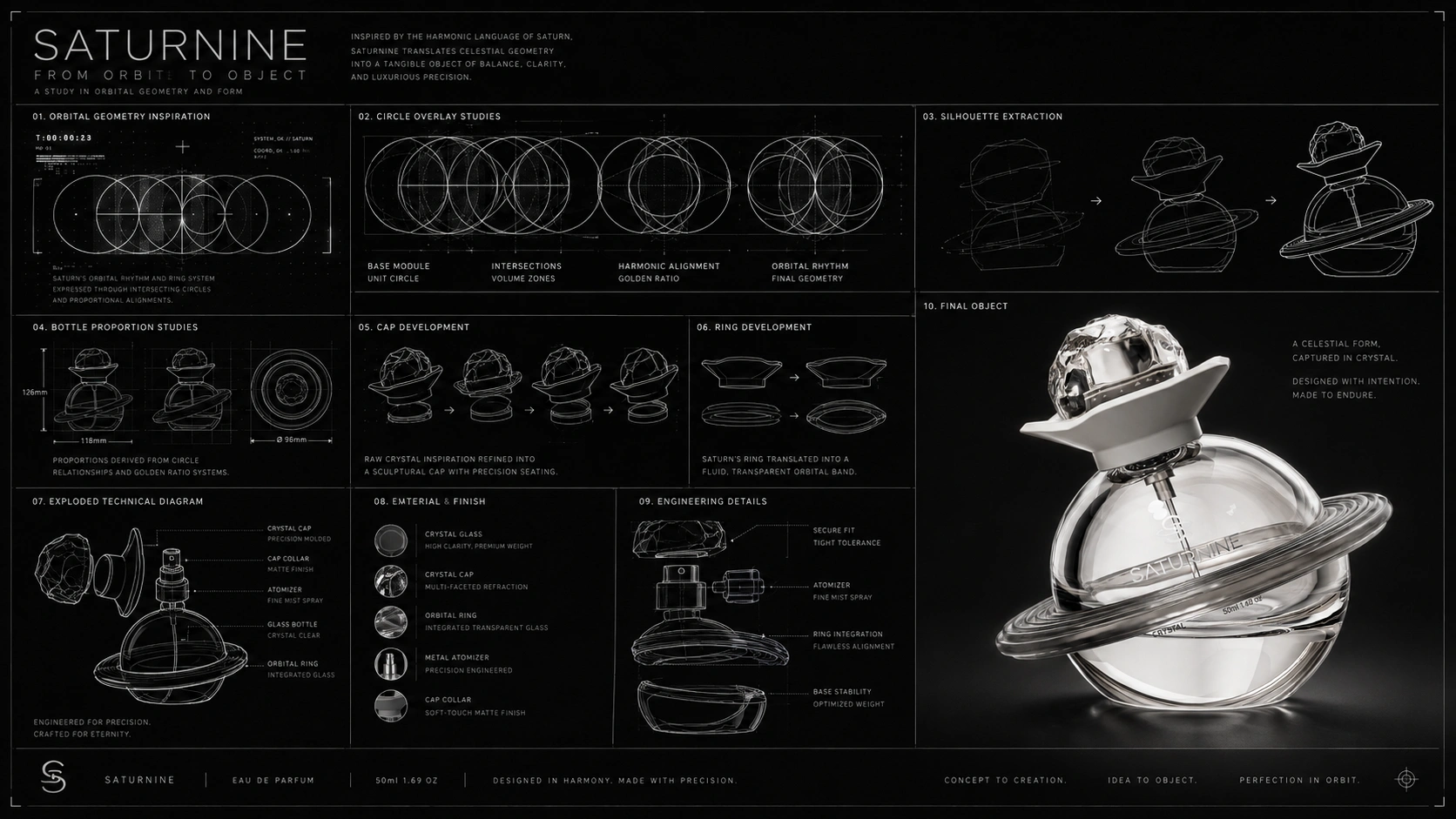
perfume-bottle-design-development-board
향수병_브루탈리스트

Custom bottle projects

Our designers develop the creative direction through:

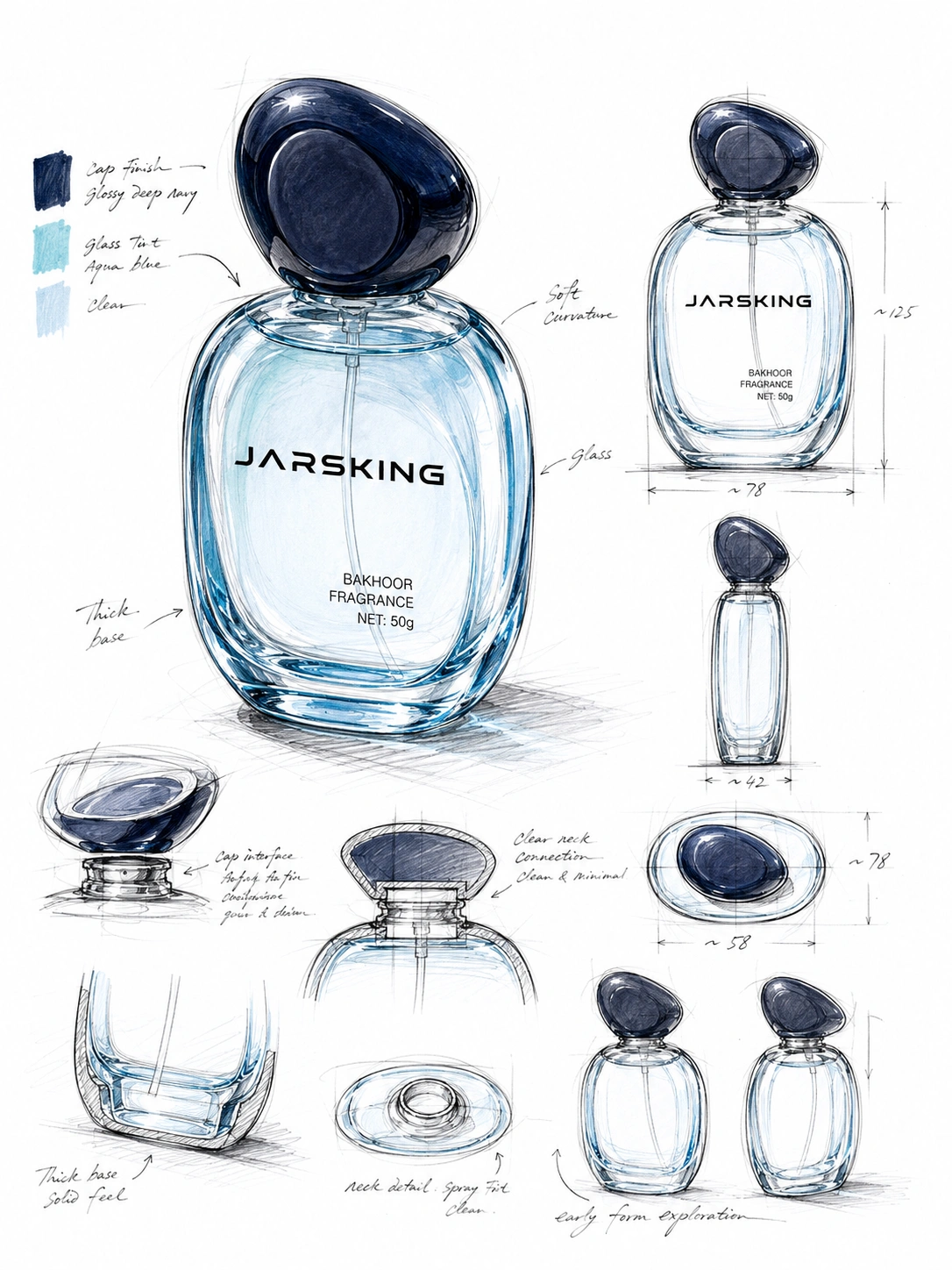
  • Initial sketches
  • Bottle silhouettes
  • Proportion studies
  • 무드보드
  • Cap and collar concepts
  • Decoration concepts
  • Packaging-family ideas

More than 30 packaging designers support Jarsking’s beauty and fragrance projects.

What you approve

  • Selected existing bottle or preferred design direction
  • Target capacity and proportions
  • General component direction
  • Required decoration and brand expression
3. Configure the Components

Configure the Bottle, Atomizer, Collar and Cap

The components must be selected before the final design is approved. Choosing them after the bottle has been developed can create problems with fit, height and overall proportions.

Glass bottle

We confirm the selected model, capacity, neck specification, decoration area and relevant dimensions.

Atomizer

The atomizer must correspond with the bottle neck and intended assembly method. Pump, dip-tube and project-specific spray requirements are confirmed according to the selected system.

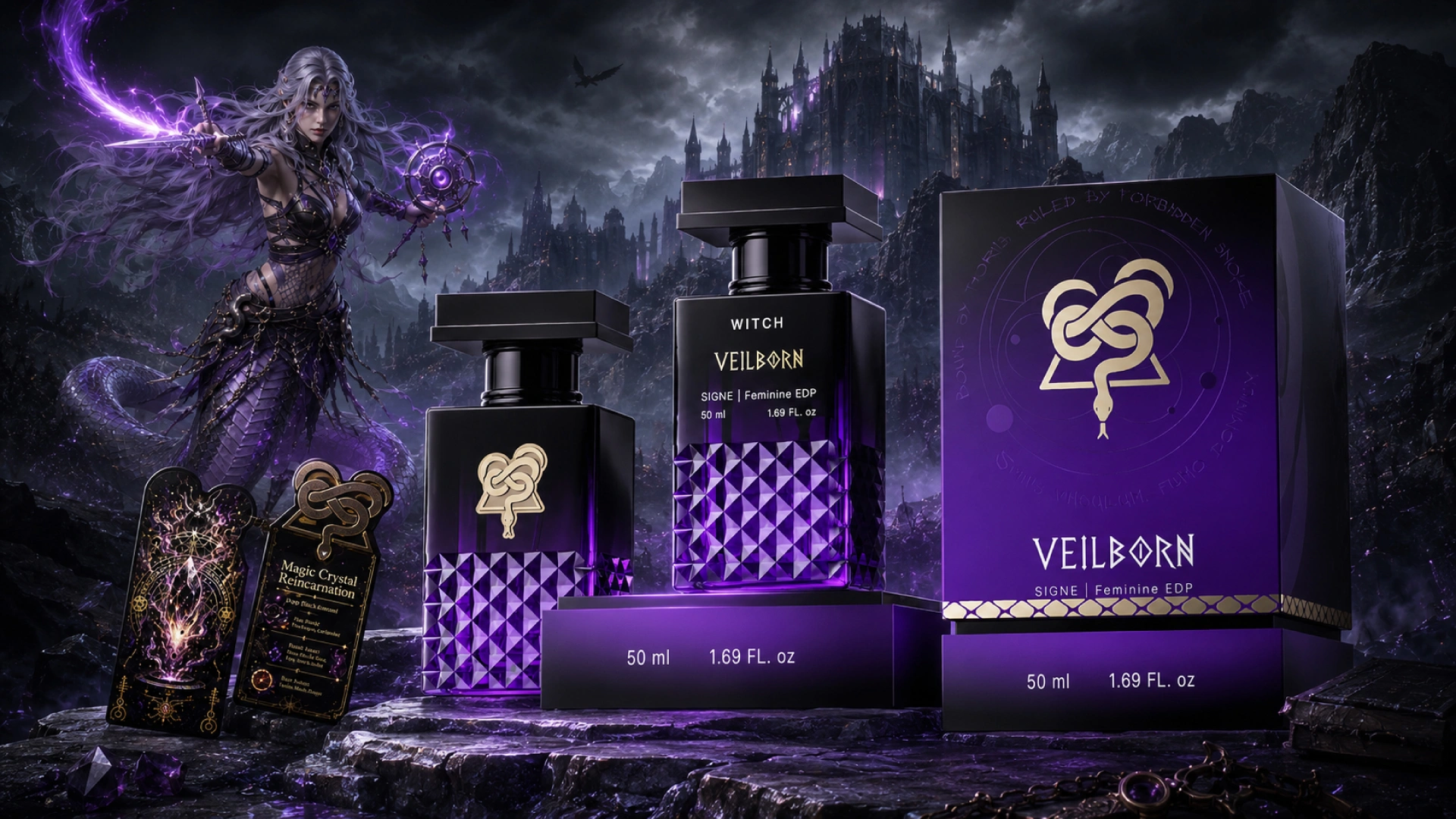
VEILBORN perfume packaging 12
100ml-perfume-bottle-feature-overview

Collar

The collar connects the atomizer visually to the bottle. Its height, diameter and finish must work with the bottle shoulder and cap.

Cap

The cap is evaluated according to:

  • Structure and material
  • Size and proportion
  • Fit with the collar
  • Color and finish
  • Logo or decorative requirements
  • Overall alignment with the bottle

What you approve

  • Complete component combination
  • Assembled proportions
  • Cap and collar direction
  • Required component finishes
4. Review the 3D Design

Review the 3D Design and Decoration Plan

The selected bottle and components are brought together in a complete visual proposal.

What Jarsking prepares

Depending on the project, this may include:

  • Multi-angle 3D bottle renderings
  • Bottle, collar and cap proportions
  • Glass color simulation
  • Logo placement
  • Screen-printing position
  • Hot-stamping position
  • Metallic finish direction
  • Box and bottle presentation
  • Several CMF alternatives

CMF refers to the package’s color, material and finish.

perfume-logo-visual-identity-design
gemstone-color-palette-cmf-proposal
custom-perfume-bottle-collection-overview

What you provide

Production artwork must be supplied as vector files in AI or PDF format. Color development requires Pantone references or physical samples; colors taken from screen captures are not reliable production standards.

What you approve

  • Bottle proportions
  • Component appearance
  • Artwork position and size
  • Color direction
  • Decoration combination
  • Box presentation, when included

Feedback should be consolidated into one marked-up document per revision round to avoid conflicting instructions.

5. Produce and Evaluate Samples

Produce and Evaluate Samples

Sampling converts the approved design into something your team can inspect physically.

Existing-mold samples

Existing-mold glass samples generally require 3–15 days. Pump and cap samples generally require 7–25 days.

Samples may include:

  • Undecorated glass bottle
  • Decorated bottle
  • Atomizer, collar and cap
  • Fully assembled bottle
  • Box or secondary-packaging sample

What you approve

The approved sample and confirmed specifications become the reference for tooling or mass production.

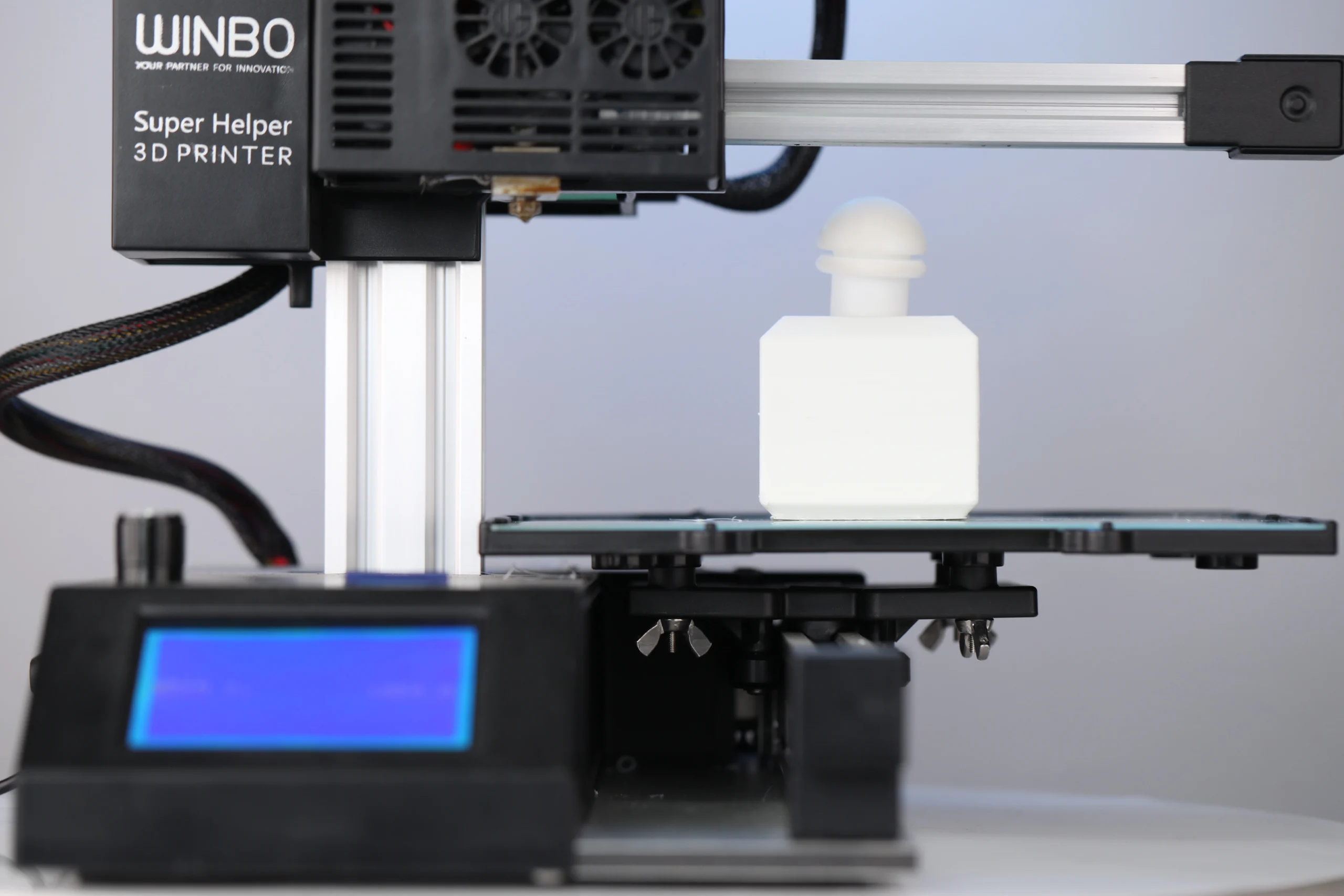
3D mold printing
plain perfume bottle
luxury perfume bottle

Custom bottle prototypes

For a newly developed structure, prototypes may be used to evaluate:

  • Bottle shape
  • Proportions
  • Grip and handling
  • Cap-to-bottle balance
  • Artwork area
  • Fit inside the proposed box

A prototype demonstrates the physical design but may not reproduce the final weight, clarity or surface quality of production glass.

What you evaluate

  • Bottle appearance
  • Component fit
  • Cap and collar alignment
  • Assembled height
  • Logo position
  • Color and decoration
  • Box clearance
  • Project-specific performance requirements

Any buyer-required fill or compatibility evaluation should use the actual fragrance formula and the appropriate production sample.

6. Develop the Production Mold

Develop the Production Mold When Required

This stage applies only when the approved project requires new tooling. Existing-mold orders move directly toward production preparation.

What Jarsking does

Our Mold Manufacturing Center translates the approved bottle design into a production tooling system.

The development process considers:

  • Bottle geometry
  • Neck formation
  • Base structure
  • Glass distribution
  • Parting-line position
  • Surface requirements
  • Production feasibility
  • Expected order volume

A steel mold generally requires 35–40 days.

custom-perfume-bottle-technical-overview
crystal-clear-cosmic-perfume-bottle
cosmic-perfume-bottle-color-collection

What you provide

  • Final structural approval
  • Confirmed order forecast
  • Vector artwork for structural embossing or related details
  • Agreed tooling payment
  • Final component requirements

What you approve

Production-molded trial samples must be reviewed before bulk production begins. Any structural changes should be resolved before the final production approval.

7. Manufacture and Decoration

Manufacture and Decorate the Bottles

Once all required samples and specifications are approved, the order enters production.

Decoration

The approved bottles move through the required decoration processes, which may include:

  • Spraying
  • Screen printing
  • Hot stamping
  • Chrome metallization
  • Gold metallization
  • Rose-gold metallization
  • Brushed metallic finishes

Jarsking operates 20 screen-printing lines, 10 hot-stamping lines and three spraying lines.

glassware factory
Color Coating Process
packing

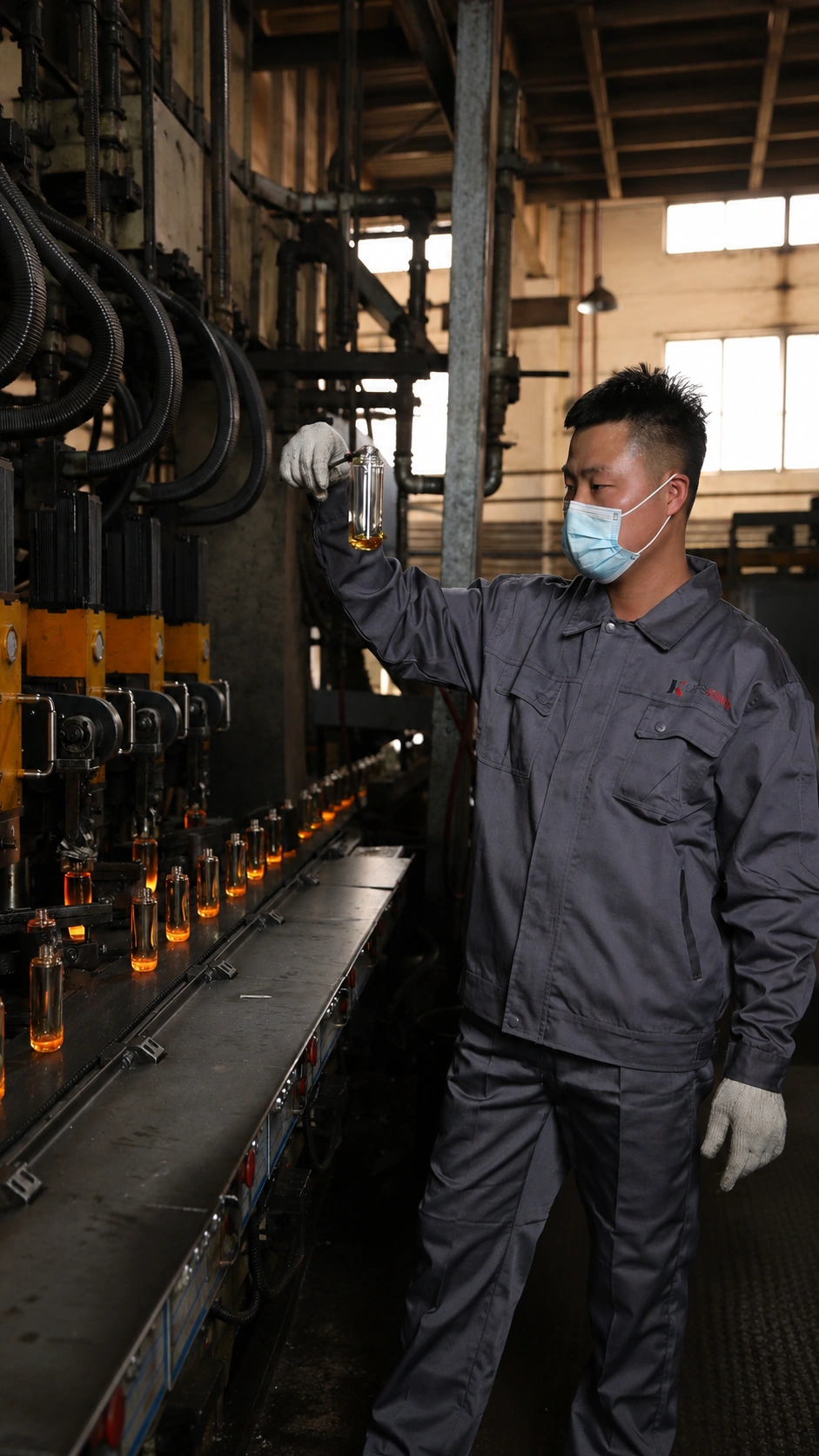
Glass production

Jarsking’s glass workshop operates:

  • Six glass production lines
  • 52 tons of daily melting capacity
  • A workforce of 170+ people
  • Premium high-clarity flint glass
  • Glass stress-testing capabilities

Production files

Bulk production follows the approved:

  • Bottle specification
  • Component list
  • Artwork files
  • Pantone or physical color reference
  • Decoration sample
  • Packing requirements

Mass production generally requires 30–40 days.

8. Assemble, Inspect and Pack

Assemble, Inspect and Pack the Complete Order

The glass bottle is only one part of the finished package. Components must be assembled and inspected according to the approved combination.

Assembly

This stage may include:

  • Atomizer installation
  • Collar installation
  • Cap fitting
  • Component alignment
  • Secondary-packaging assembly
  • Export-carton packing

What you receive before shipment

The required inspection records, packing information and applicable project documentation are confirmed according to the agreed order scope and destination market.

QC
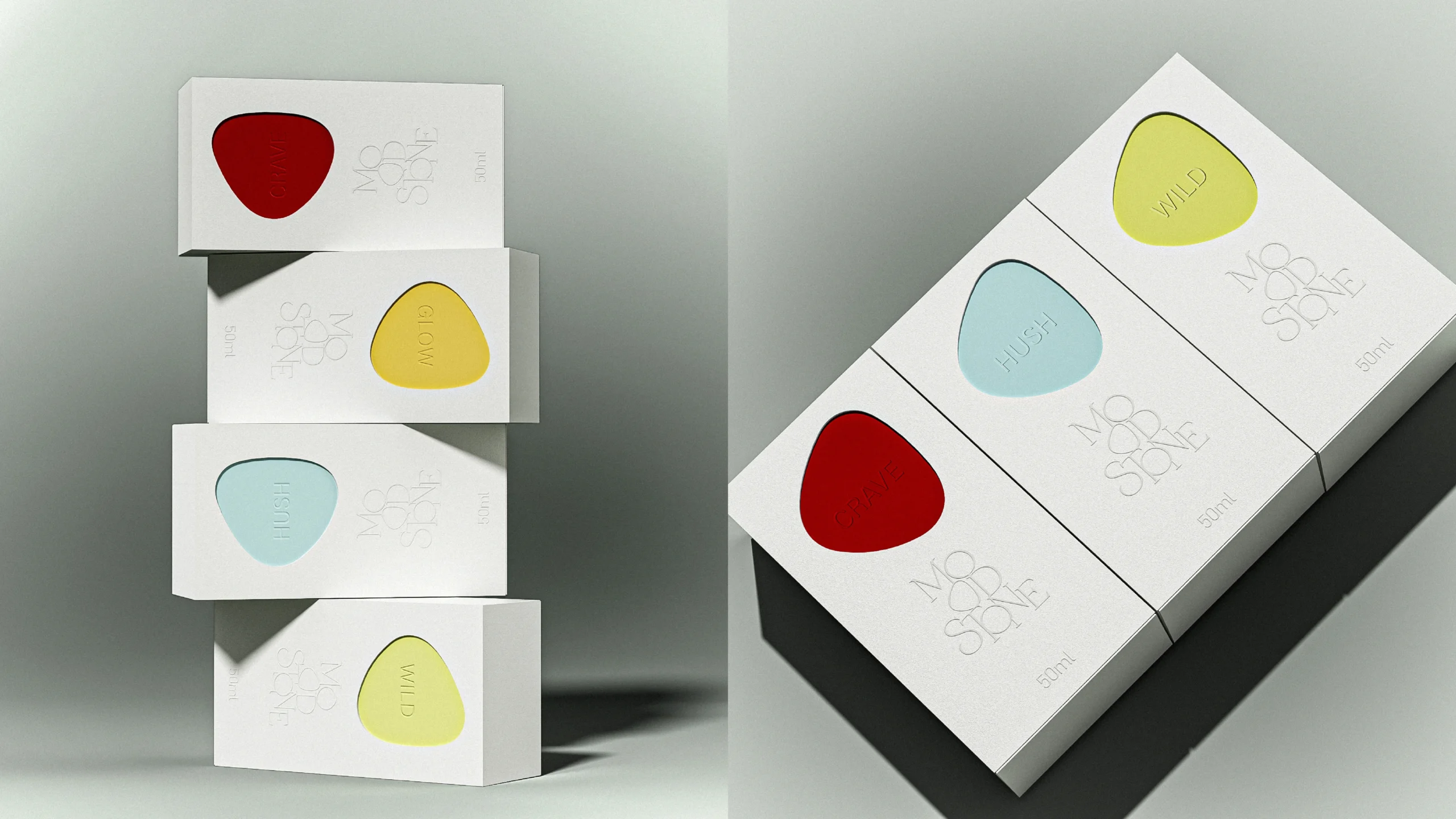
color-coded-perfume-box-design

Quality control

Jarsking’s quality framework includes:

  • Multi-stage QC
  • AQL ISO 2859 sampling
  • Lot-number traceability
  • Glass stress testing
  • Third-party audit support
  • Project-specific documentation support

Inspection requirements depend on the approved product. Relevant control points may include glass appearance, component fit, decoration position, color consistency and final assembly.

Packaging

Secondary-packaging capabilities include:

  • Folding cartons
  • Hinged-lid boxes
  • Sliding boxes
  • Slip-lid boxes

The bottle, cap and box specifications should be coordinated before box production begins.

9. Delivery and Future Reorders
shipping
perfume-bottle-gift-set-unboxing

Arrange Delivery and Prepare Future Reorders

After inspection and packing, the order moves to the agreed shipping stage.
Sea freight generally adds approximately 35–40 days. The actual shipping method, route, documentation and delivery schedule are confirmed for each order.

For future reorders

The approved bottle specification, artwork, color reference and production information help maintain continuity between production batches.

Before placing a repeat order, confirm whether any of the following have changed:

  • Order quantity
  • Artwork
  • Color
  • Decoration
  • Atomizer or cap
  • Box
  • Target market
  • Required documentation
  • Delivery destination

The same bottle architecture can also be extended into new fragrance SKUs, seasonal editions or coordinated collections through changes to color, decoration and secondary packaging.

Build Your Custom Perfume Bottle System in 3 Steps

A perfume bottle is built from three connected decisions: the glass bottle, the atomizer and collar, and the cap. Configure them in the correct order so the complete package can be sampled, decorated and approved as one system.

Step 1: Define Your Perfume Bottle

The bottle establishes your fragrance’s proportions, visual identity and decoration possibilities. Begin by selecting the bottle model that best supports your brand positioning and product range. Individual dimensions and technical specifications are available on each product page.

Choose the Right Capacity and Proportions
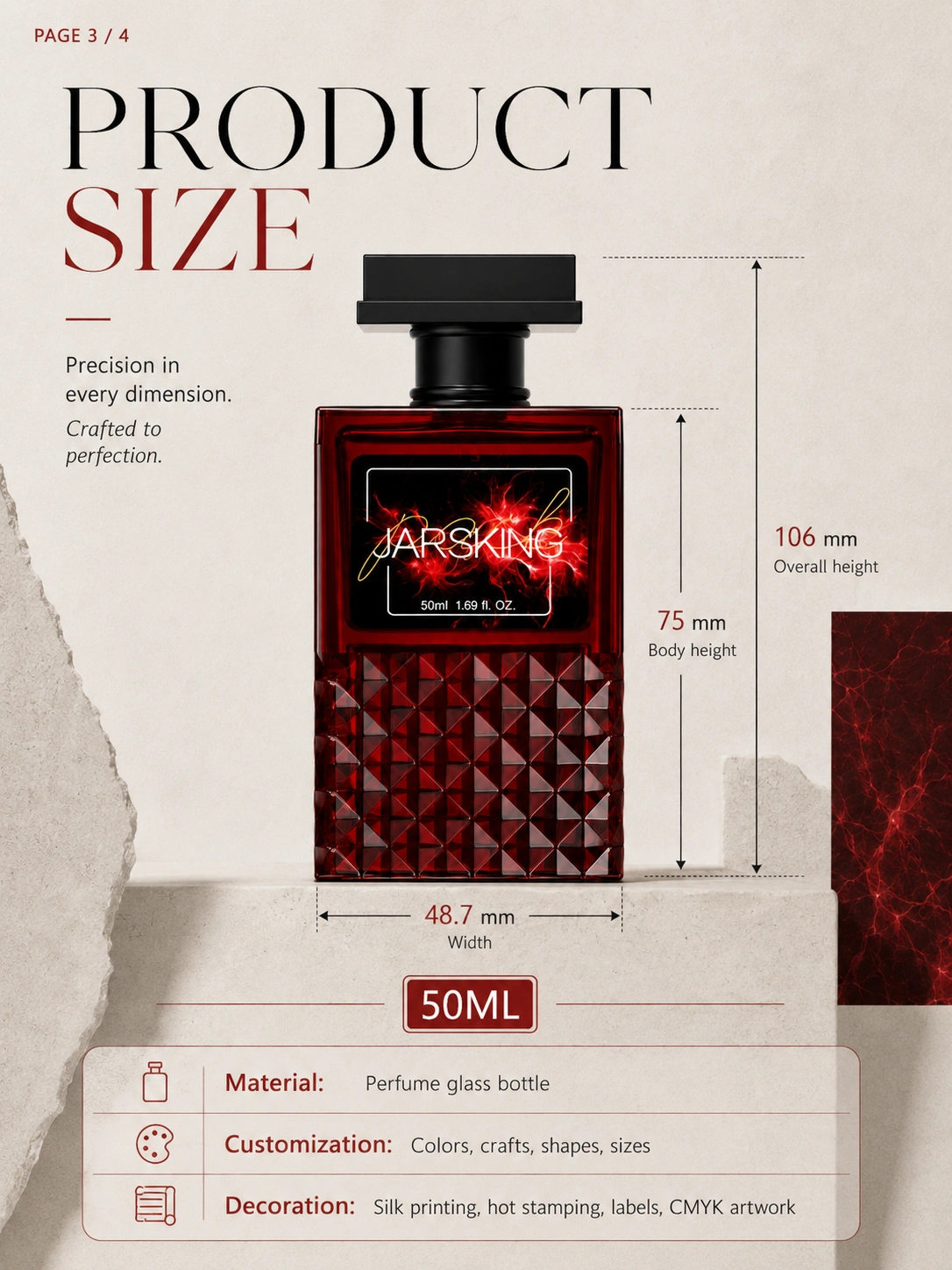
perfume-bottle-product-size

Choose the Right Capacity and Proportions

Consider how the bottle will fit into your fragrance collection rather than evaluating capacity alone. A compact bottle may suit discovery sets, travel-oriented products or secondary SKUs, while a larger format can become the collection’s principal retail presentation.


Review the bottle’s height, width, depth and overall proportions in relation to:

  • Your intended fill volume
  • The desired shelf presence
  • Secondary packaging dimensions
  • Label or printed artwork requirements
  • Other sizes planned for the same collection
Select a Silhouette That Expresses Your Brand
custom-perfume-bottle-website-hero
VEILBORN perfume packaging 11

Select a Silhouette That Expresses Your Brand

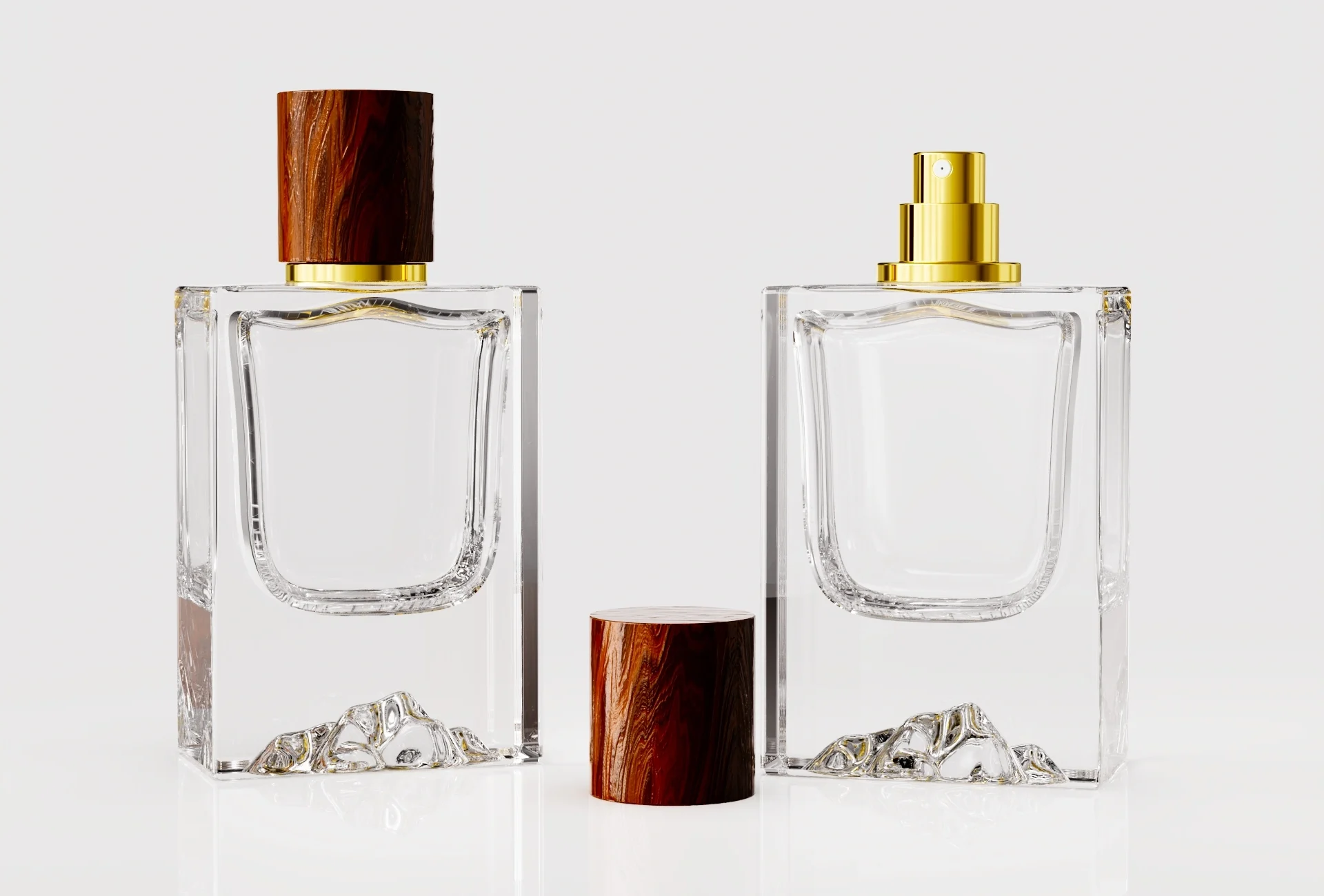
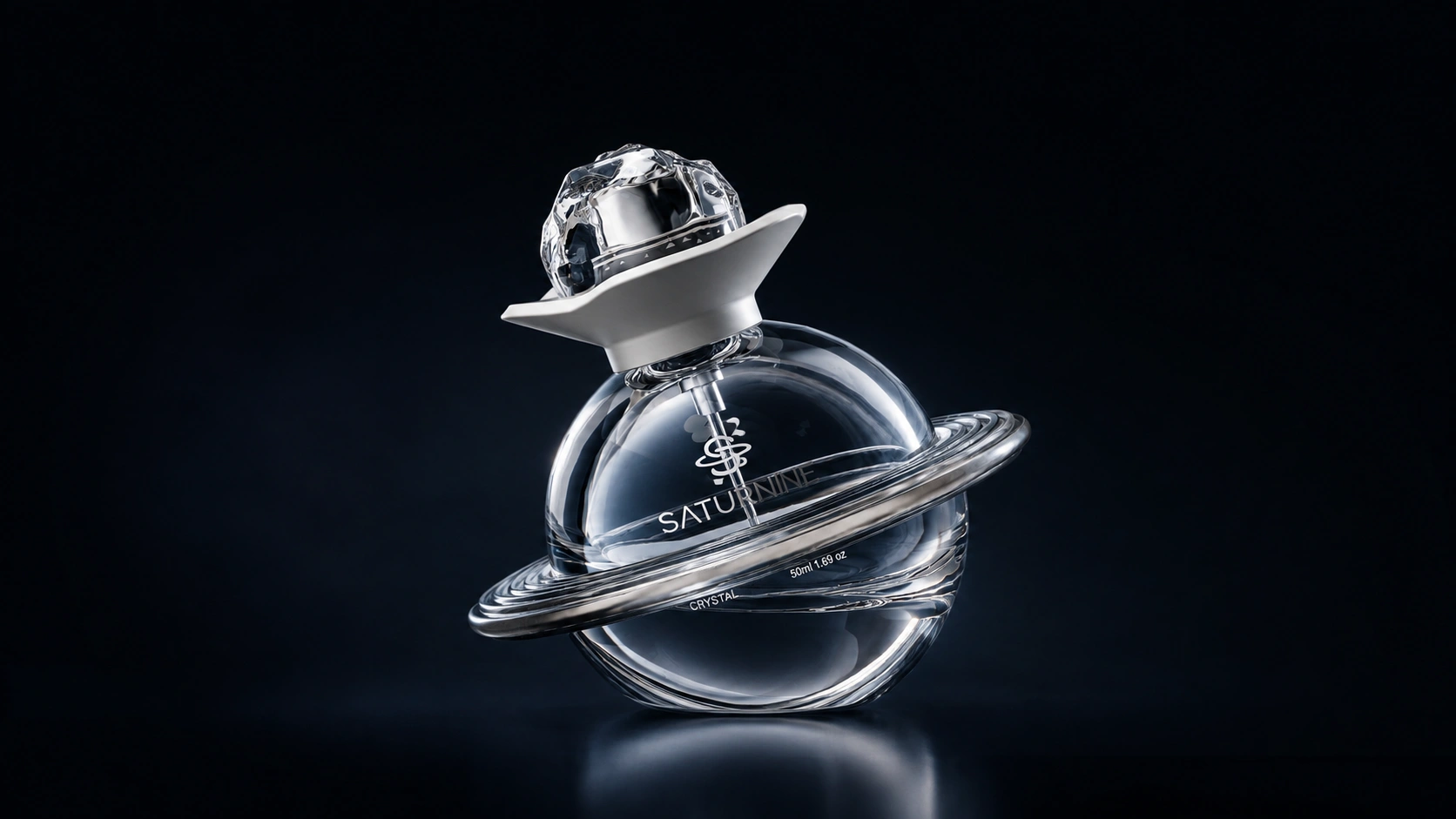
Bottle shape communicates positioning before the fragrance is experienced. Rounded forms can create a softer visual character, while rectangular, architectural or faceted forms provide a more structured presentation. The shoulder, base thickness, corners and glass distribution also influence how substantial the finished bottle appears.
Choose a silhouette that gives your collection a recognizable identity while leaving suitable space for decoration and branding.

Determine the Glass Appearance
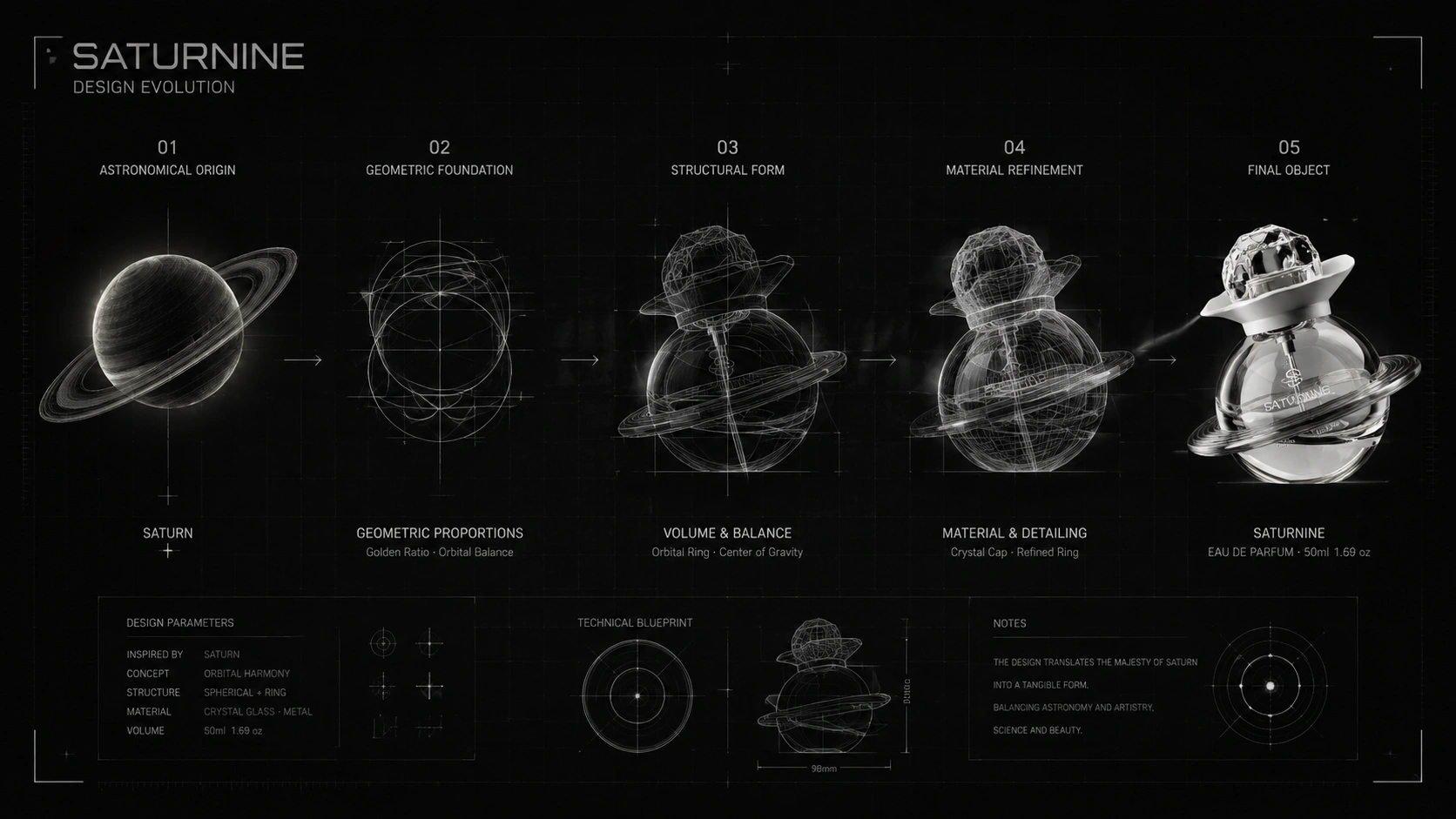
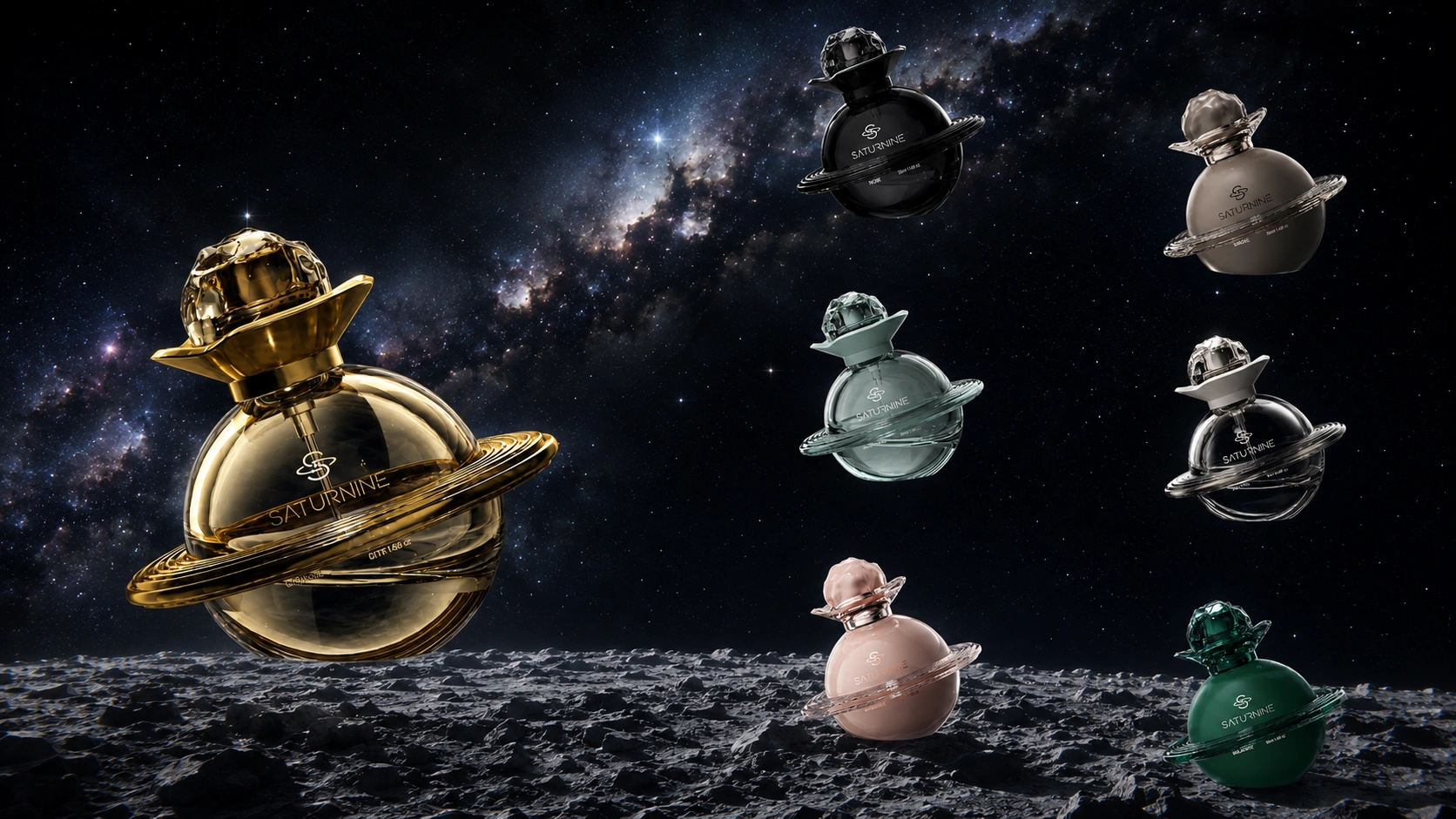
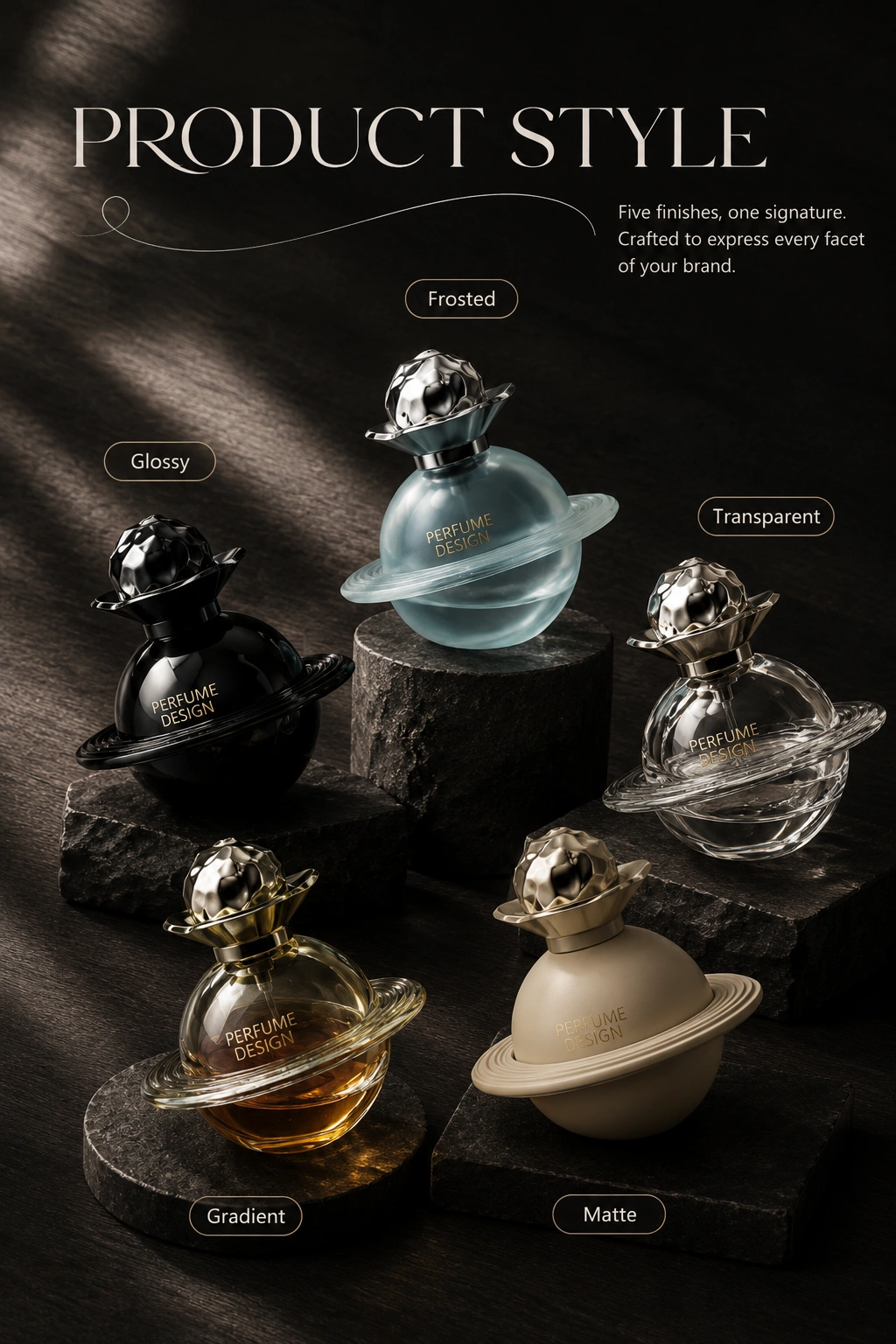
saturn-shaped-glass-perfume-bottle-finish-options

Determine the Glass Appearance

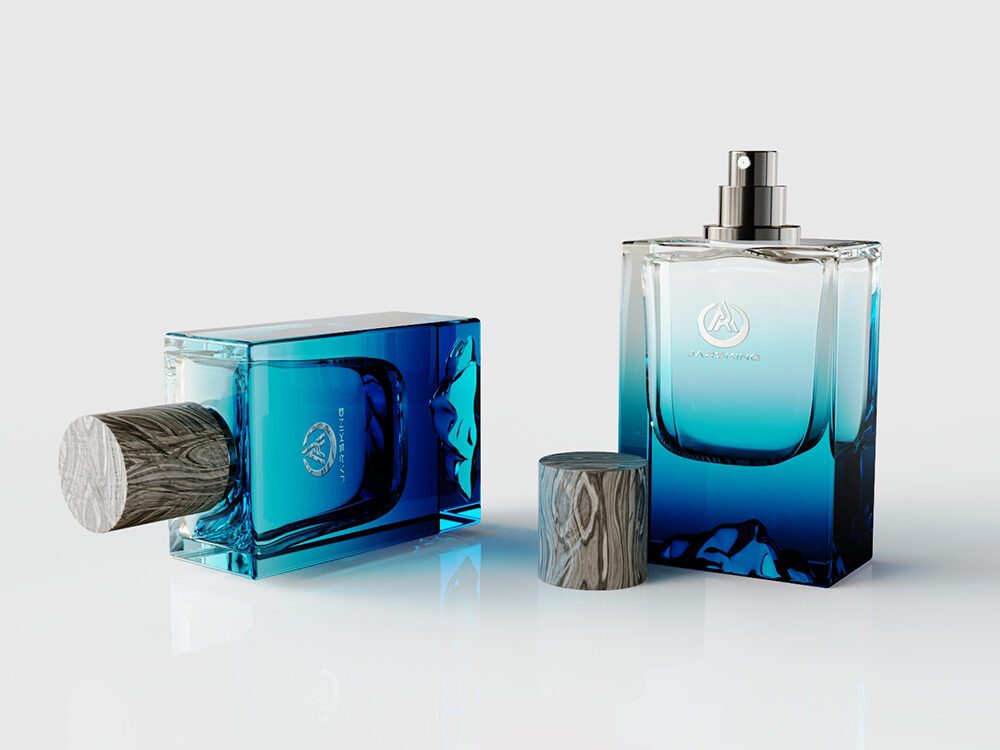
Jarsking manufactures perfume bottles in premium high-clarity flint glass, providing a clean foundation for transparent, colored and decorated designs.

Define how much of the fragrance and glass you want to reveal:

  • Clear glass for a clean, transparent presentation
  • Color spraying for controlled brand colors or gradients
  • Frosted or matte effects for a softer visual finish
  • Opaque finishes for stronger color coverage
  • Metallized effects for chrome, gold, rose-gold or brushed appearances

The selected finish should be evaluated together with the bottle geometry, fragrance color and overall packaging concept.

Plan the Decoration Around the Bottle
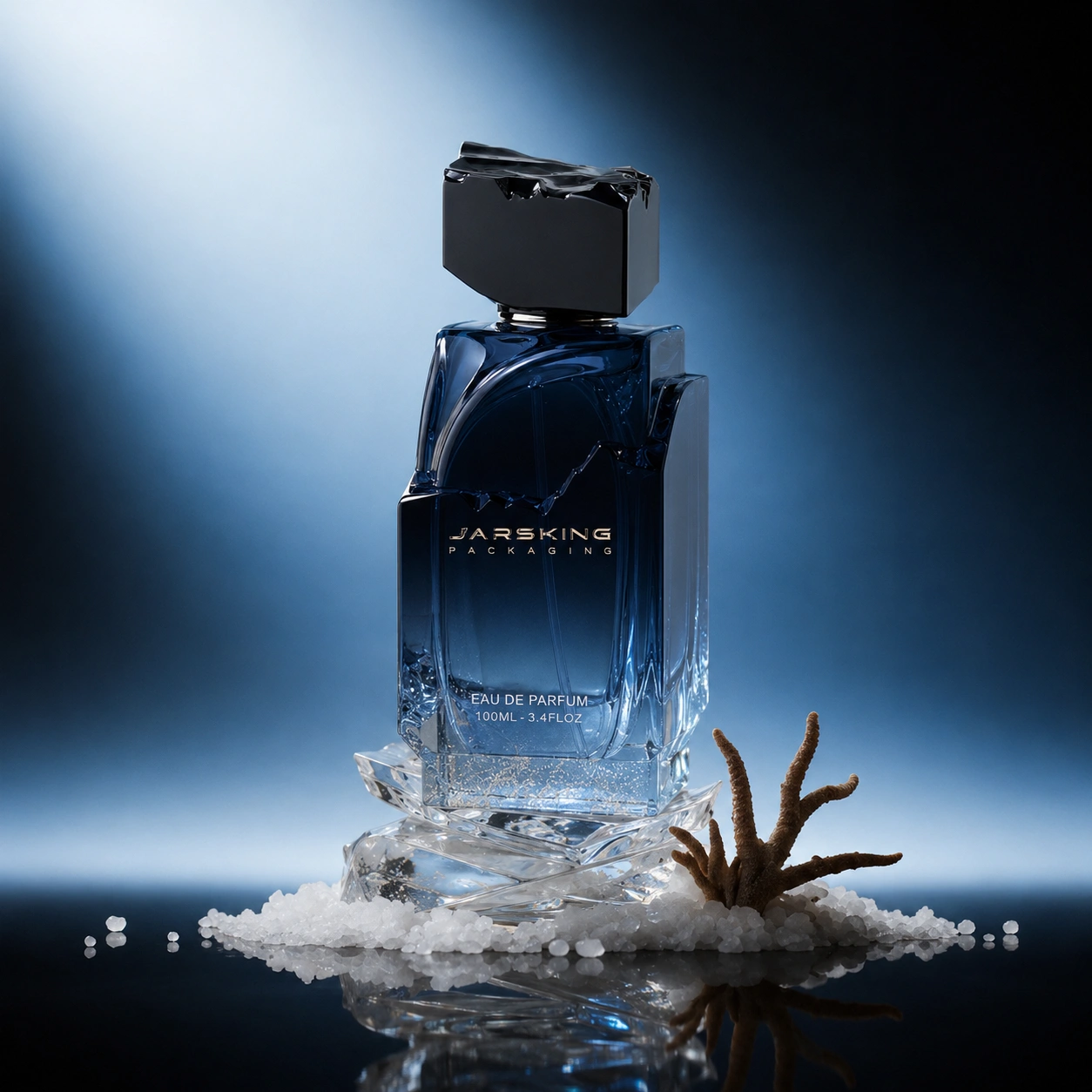
ocean-blue-glass-perfume-bottle
apothecary-fragrance-gift-set-packaging

Plan the Decoration Around the Bottle

Decoration should be developed for the actual printable surfaces of the selected bottle. Flat front panels can accommodate structured logos and product information, while curved or faceted surfaces may require adjusted artwork dimensions and placement.
Available decoration options include screen printing, hot stamping, spraying and metallization. Jarsking can combine processes to create contrast between color, texture and metallic details, subject to technical assessment of the chosen bottle.
For accurate artwork evaluation, supply vector files in AI or PDF format and specify colors with Pantone references or physical color samples.

Your Step 1 Selection
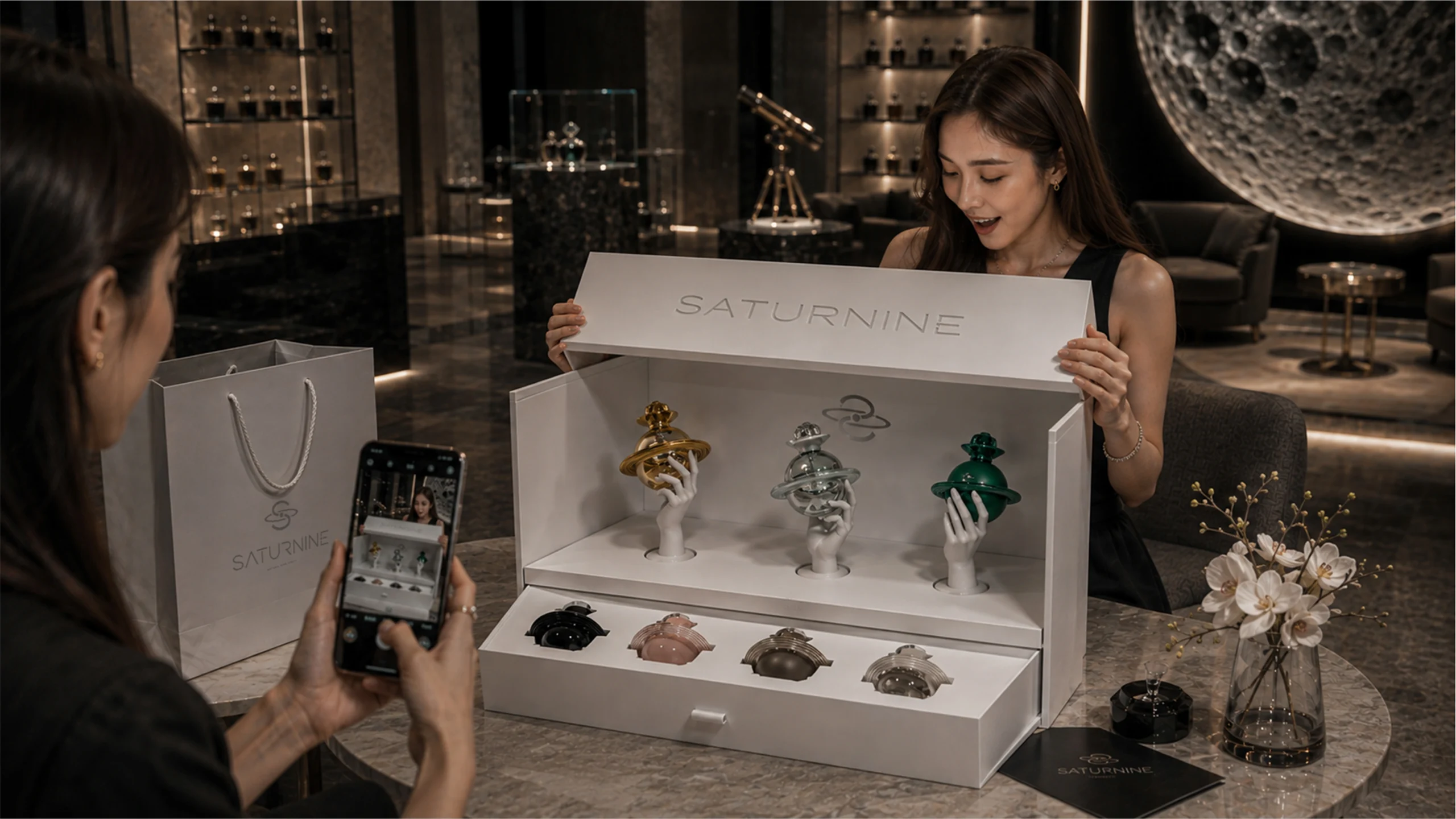
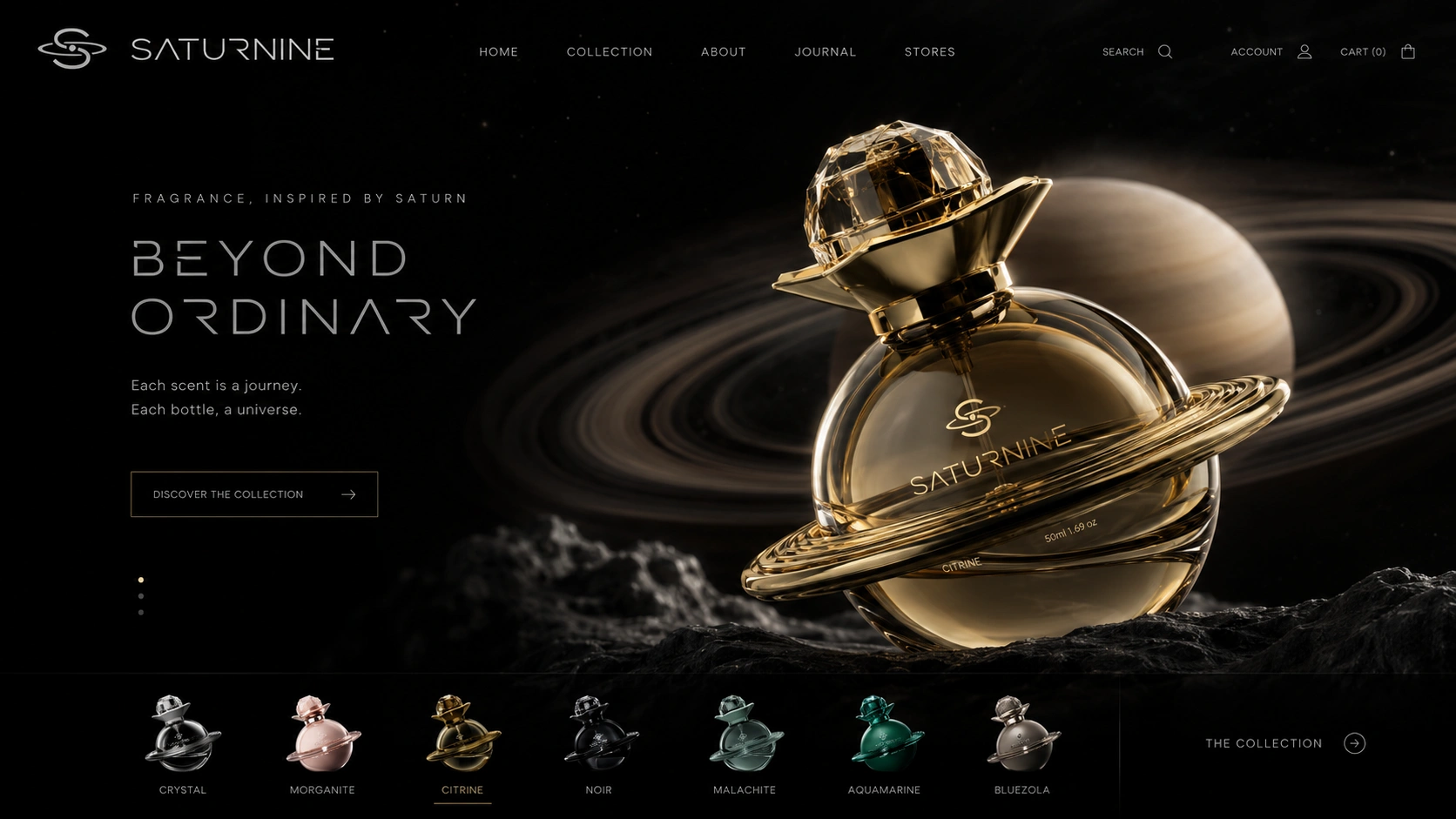
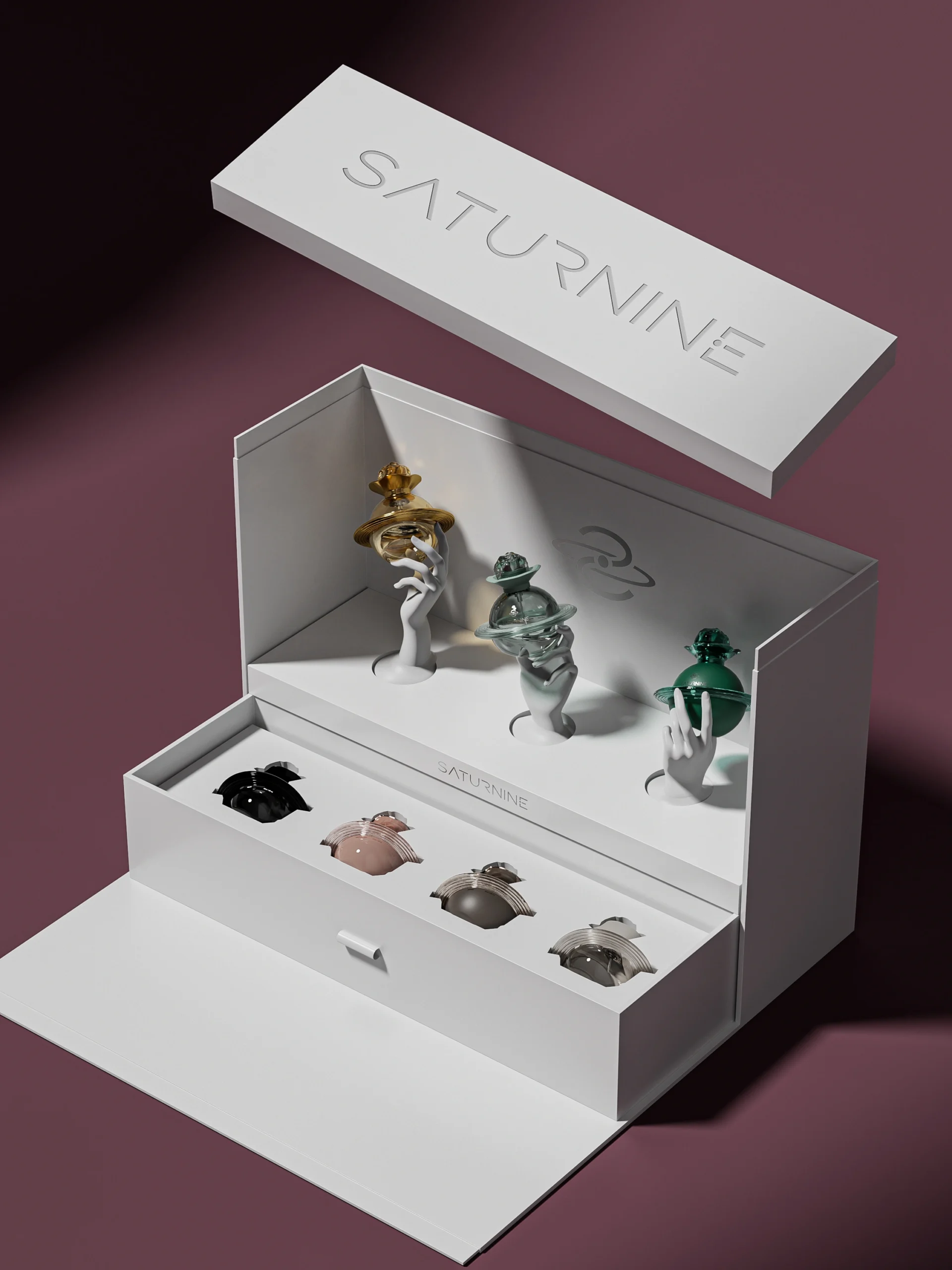
saturnine-seven-bottle-collector-gift-box

Your Step 1 Selection

By the end of this step, you should have defined:

  • The preferred bottle model
  • Target capacity and proportions
  • Glass color or surface appearance
  • Branding position and decoration direction
  • Any packaging-size constraints that may affect the bottle choice

This bottle selection becomes the foundation for coordinating the sprayer, collar and cap in the following steps.

Step 2: Choose Your Sprayer and Collar

The sprayer and collar determine how the fragrance is dispensed and how cleanly the bottle transitions into the cap. Both components must be selected for the neck specification of your chosen bottle and developed as part of one coordinated assembly.

Select the Sprayer
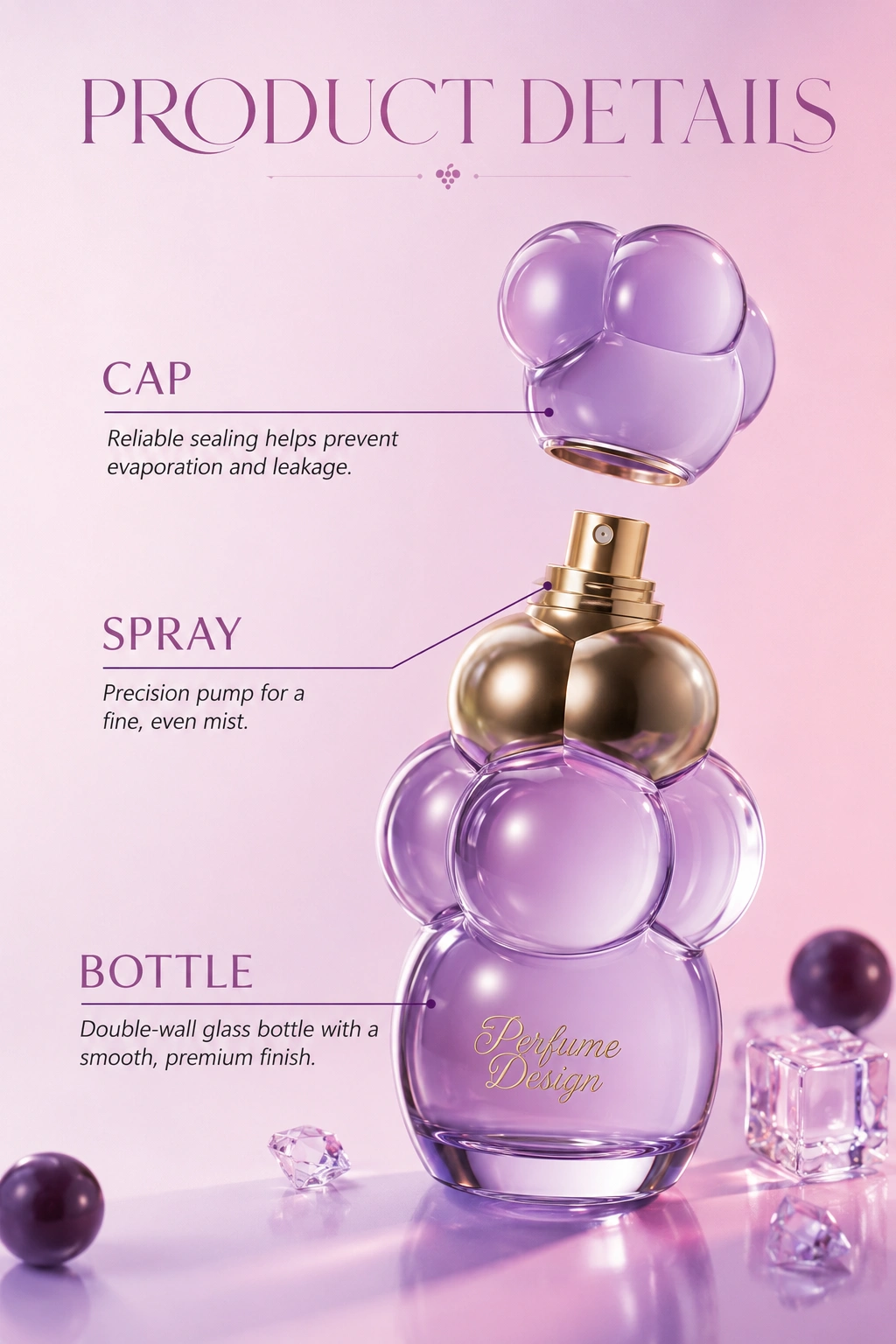
sprayer mechanism
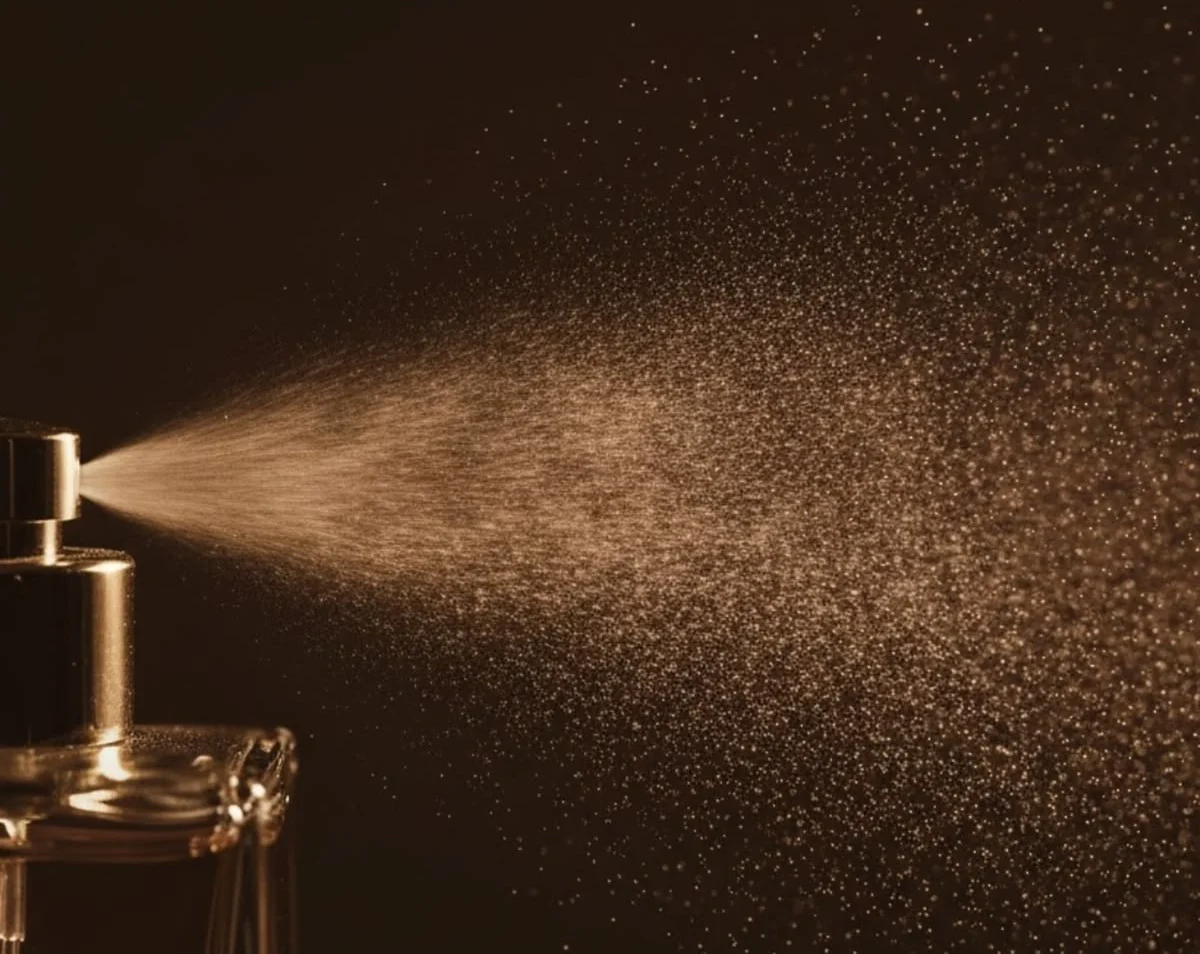
perfume spray

Select the Sprayer

A perfume sprayer should provide a controlled, comfortable application while complementing the bottle’s proportions. The available mounting system and dimensions depend on the selected bottle neck.

Consider the following when choosing a sprayer:

  • Desired mist character and output
  • Actuator diameter, height and profile
  • Finger comfort during actuation
  • Compatibility with the bottle neck
  • Compatibility with the collar and cap
  • Color and finish coordination

The actuator can remain visible as a design detail or sit more discreetly beneath the cap, depending on the intended packaging style.

Define the Collar Design
zinc and aluminum collar
plain perfume bottle

Define the Collar Design

The collar conceals the connection between the sprayer and bottle while creating a visual bridge to the cap. Its diameter, height and edge profile can make the complete pack feel minimal, technical, decorative or substantial.

Choose a collar that:

  • Fits the selected bottle and sprayer
  • Aligns with the bottle shoulder and cap
  • Maintains balanced proportions around the neck
  • Supports the intended cap dimensions
  • Matches or contrasts with the other components

A narrow collar can create a refined transition, while a wider or more prominent collar can become part of the bottle’s visual identity.

Coordinate Color and Finish
perfume bottles with different component coating

Coordinate Color and Finish

The collar and actuator should be considered together rather than treated as unrelated accessories. Their finishes can blend into one continuous component or create intentional contrast.

Possible appearance directions include:

  • Polished or brushed metallic effects
  • Gold, rose-gold, chrome or other project-matched colors
  • Matte or glossy surfaces
  • Solid brand colors
  • Two-tone combinations between the actuator and collar

Final finish availability depends on the selected component material, geometry and production requirements.

Evaluate the Complete Dispensing Assembly
100ml-perfume-bottle-feature-overview

Evaluate the Complete Dispensing Assembly

The sprayer should not be approved by appearance alone. Its relationship with the bottle, collar and future cap must also be evaluated.

Key considerations include:

  • Secure attachment to the bottle neck
  • Correct collar height and coverage
  • Smooth actuator movement
  • Consistent spray performance
  • Controlled component alignment
  • Suitable clearance beneath the cap
Your Step 2 Selection
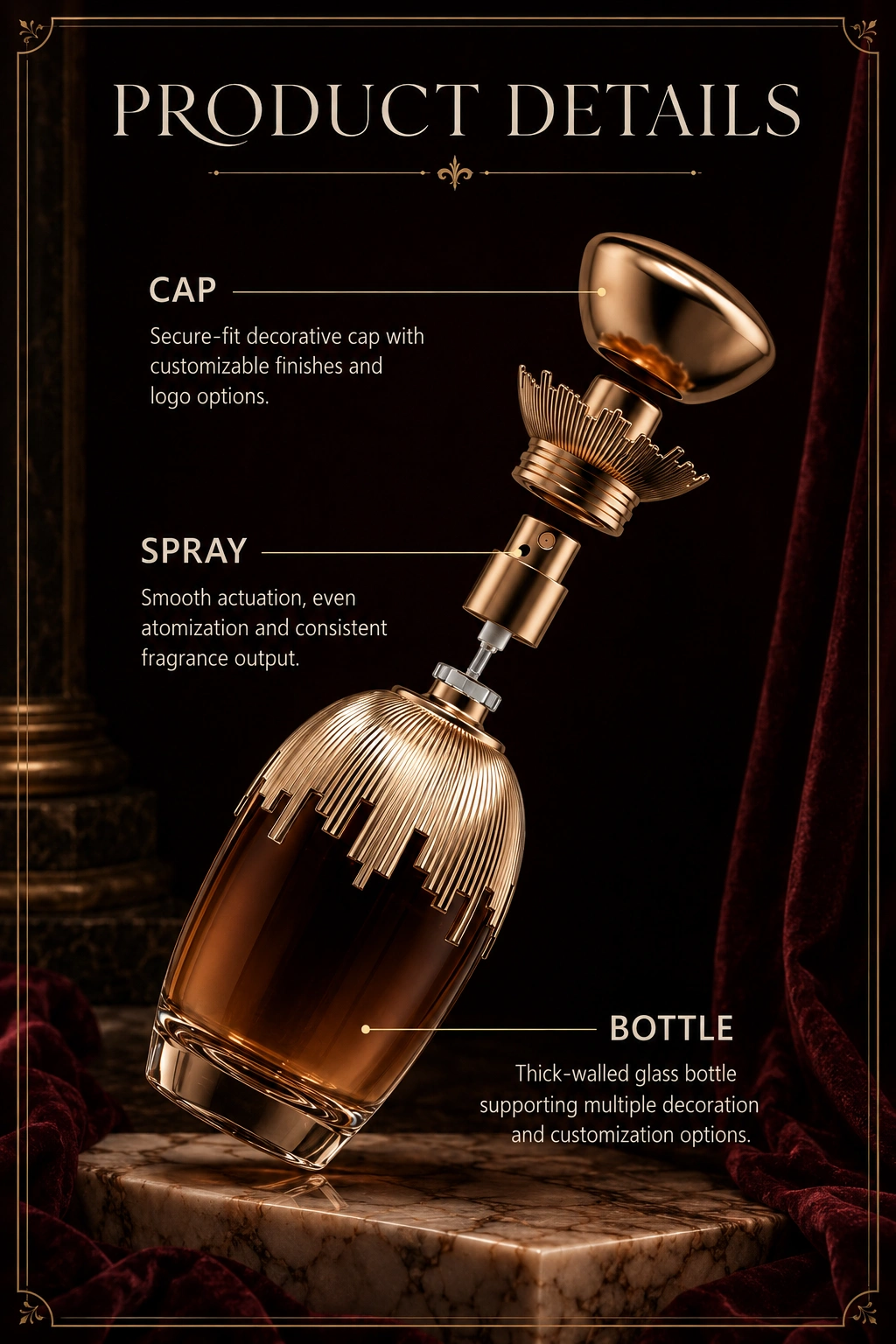
sculptural-perfume-bottle-cap-and-spray-details

Your Step 2 Selection

By the end of this step, you should have defined:

  • The preferred sprayer configuration
  • The required actuator profile
  • The collar shape and proportions
  • Component colors and finishes
  • The visual relationship between the bottle neck, collar and cap

These decisions establish the technical and visual foundation for the cap.

Step 3: Design Your Perfume Cap

The cap completes the perfume bottle’s silhouette and creates an important point of interaction with the customer. Its proportions, material, weight, finish and closing experience should reinforce the positioning established by the bottle.

Establish the Cap Proportions
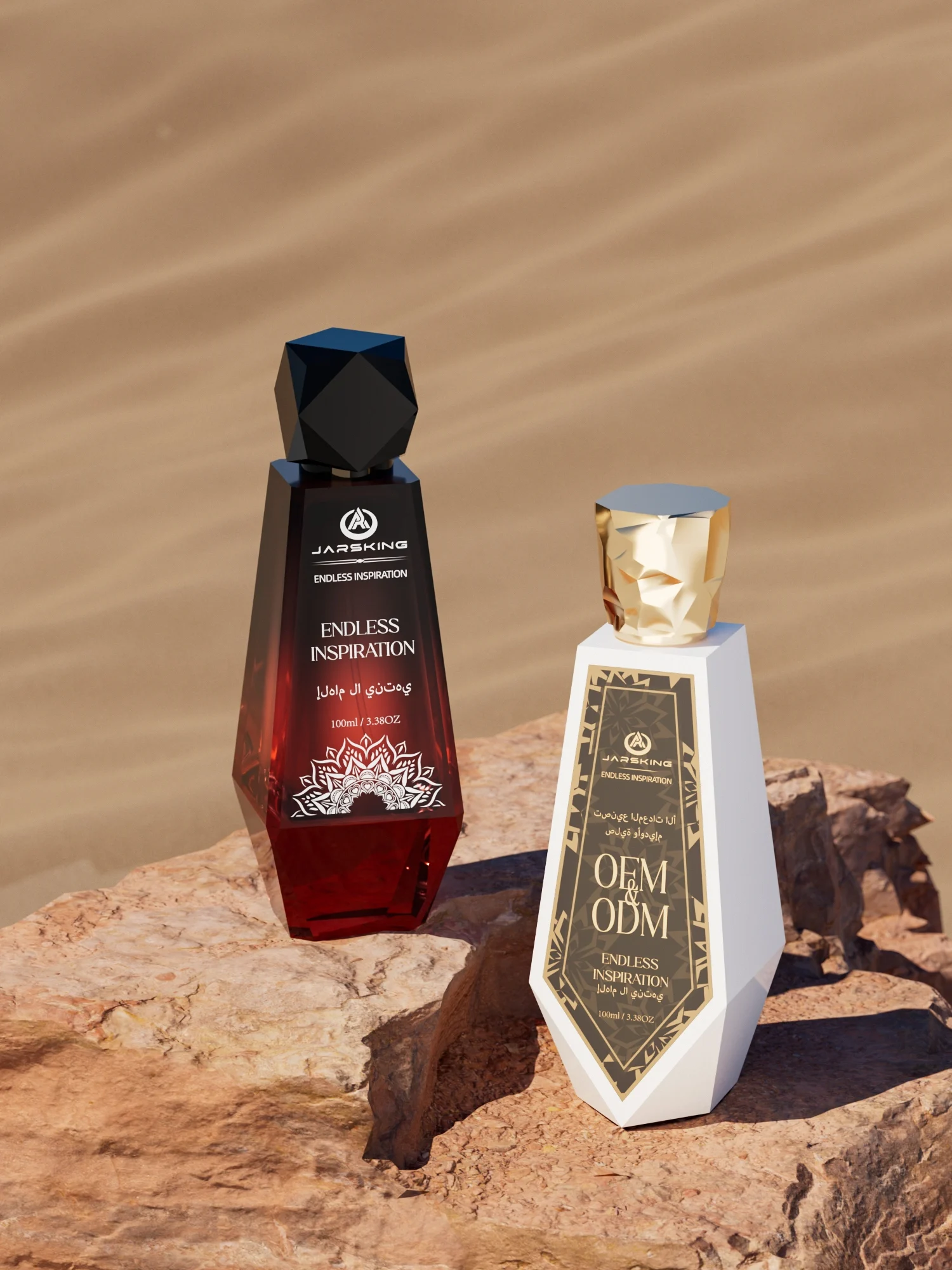
perfume bottle on the rock

Establish the Cap Proportions

The cap should appear intentionally designed for the bottle rather than added as a separate accessory. Its width, height and overall volume must be evaluated against the bottle shoulder, base and body proportions.

Consider whether the cap should:

  • Follow the bottle’s geometry
  • Contrast with the bottle through a different form
  • Sit flush with the collar
  • Extend beyond the neck as a stronger visual feature
  • Create a taller, slimmer silhouette
  • Add visual weight to the upper part of the pack

A well-proportioned cap gives the complete bottle a balanced and recognizable profile.

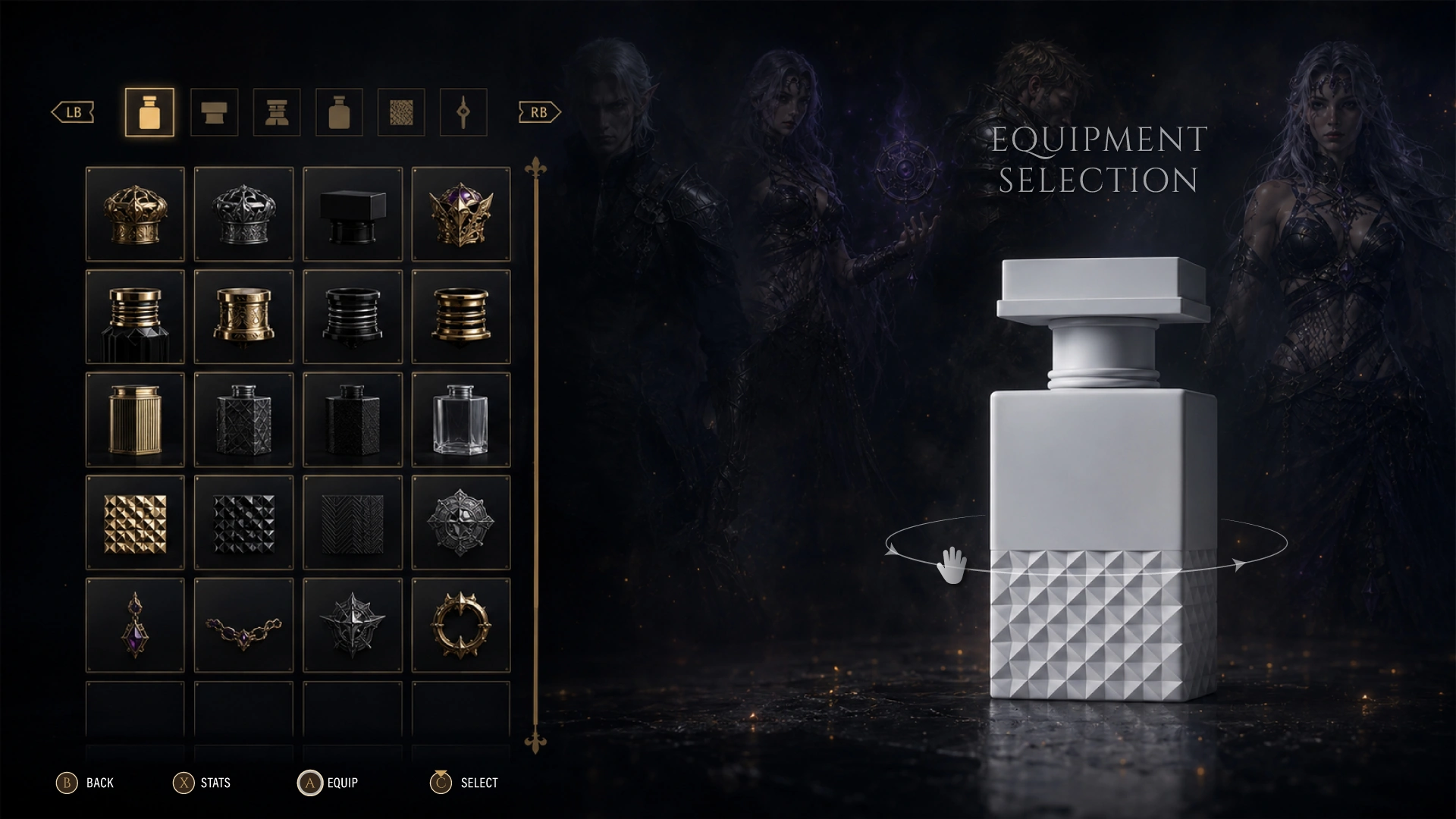
Choose the Cap Shape
향수병

Choose the Cap Shape

The cap can repeat design elements from the bottle or introduce a contrasting form. Cylindrical, rectangular, rounded and faceted directions each create a different brand impression.

Important structural details include:

  • Top-surface shape
  • Sidewall profile
  • Corners and edge definition
  • Alignment with the bottle faces
  • Transition from cap to collar
  • Space for a logo or decorative feature

For bottles with defined front and side faces, the cap should maintain consistent orientation when closed.

Select the Material and Construction
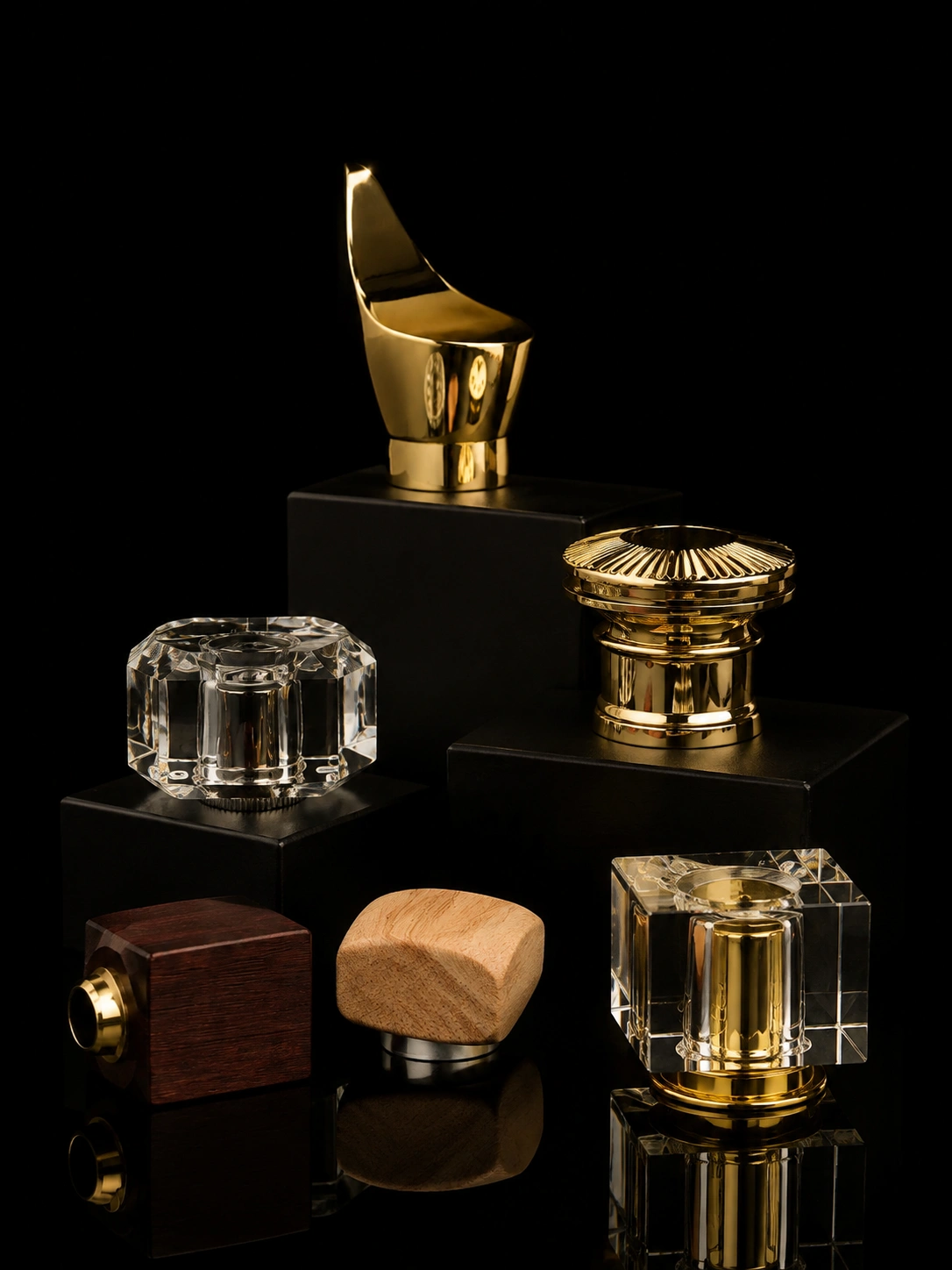
perfume bottle caps

Select the Material and Construction

Cap construction affects appearance, handling and the closing experience. Available solutions may use plastic or aluminum components, with the precise material combination confirmed according to the chosen design.

Material selection should consider:

  • Desired visual weight and tactile character
  • Cap dimensions and wall structure
  • Decoration and finishing requirements
  • Internal fit with the collar and sprayer
  • Target positioning and project budget
  • Requirements for repeatable bulk production

The internal cap structure is as important as its exterior. It must provide the required engagement while maintaining the intended external proportions.

Develop the Surface Finish
planet shaped perfume bottles

Develop the Surface Finish

Cap finishing can connect the component to the bottle decoration or create a deliberate contrast. Jarsking’s surface-treatment capabilities include spraying, screen printing, hot stamping and metallization in chrome, gold, rose-gold and brushed effects.

Possible design directions include:

  • A cap matched to the bottle color
  • A metallic cap paired with clear glass
  • Matte and glossy surfaces used together
  • A printed or hot-stamped logo
  • A contrasting top surface
  • A finish coordinated with the collar

The selected finish should be assessed on the actual cap material and geometry before production approval.

Define the Opening and Closing Experience

Define the Opening and Closing Experience

The cap should be easy to remove while remaining secure during handling and transportation. Its internal fit must work with the selected collar without creating unwanted looseness, excessive resistance or visible misalignment.

The complete cap assembly should be evaluated for:

  • Secure engagement
  • Appropriate removal force
  • Smooth placement
  • Stable positioning
  • Consistent orientation
  • Clearance around the actuator and collar
Your Step 3 Selection
sketch (2)

Your Step 3 Selection

By the end of this step, you should have defined:

  • The cap shape and dimensions
  • Its relationship with the bottle and collar
  • The preferred material and construction
  • Color, texture and decorative finish
  • Logo placement
  • The intended opening and closing experience

With the bottle, sprayer, collar and cap defined, the complete perfume packaging presents one coordinated visual and functional system.

How Jarsking Tests a Complete Perfume Bottle System

A perfume bottle can look correct as an empty sample but behave differently after it is decorated, assembled, filled and transported. Jarsking therefore evaluates the glass bottle together with its sprayer, collar, cap, decoration and secondary packaging.
The test plan is defined according to the bottle structure, component materials, fragrance formula, decoration and distribution conditions. Not every project requires every test; the relevant methods and acceptance criteria are agreed before mass production.

Glass Strength and Dimensional Accuracy
glassware test

Glass Strength and Dimensional Accuracy

The glass body and neck must remain within specification so that the atomizer, collar and cap can be assembled consistently.

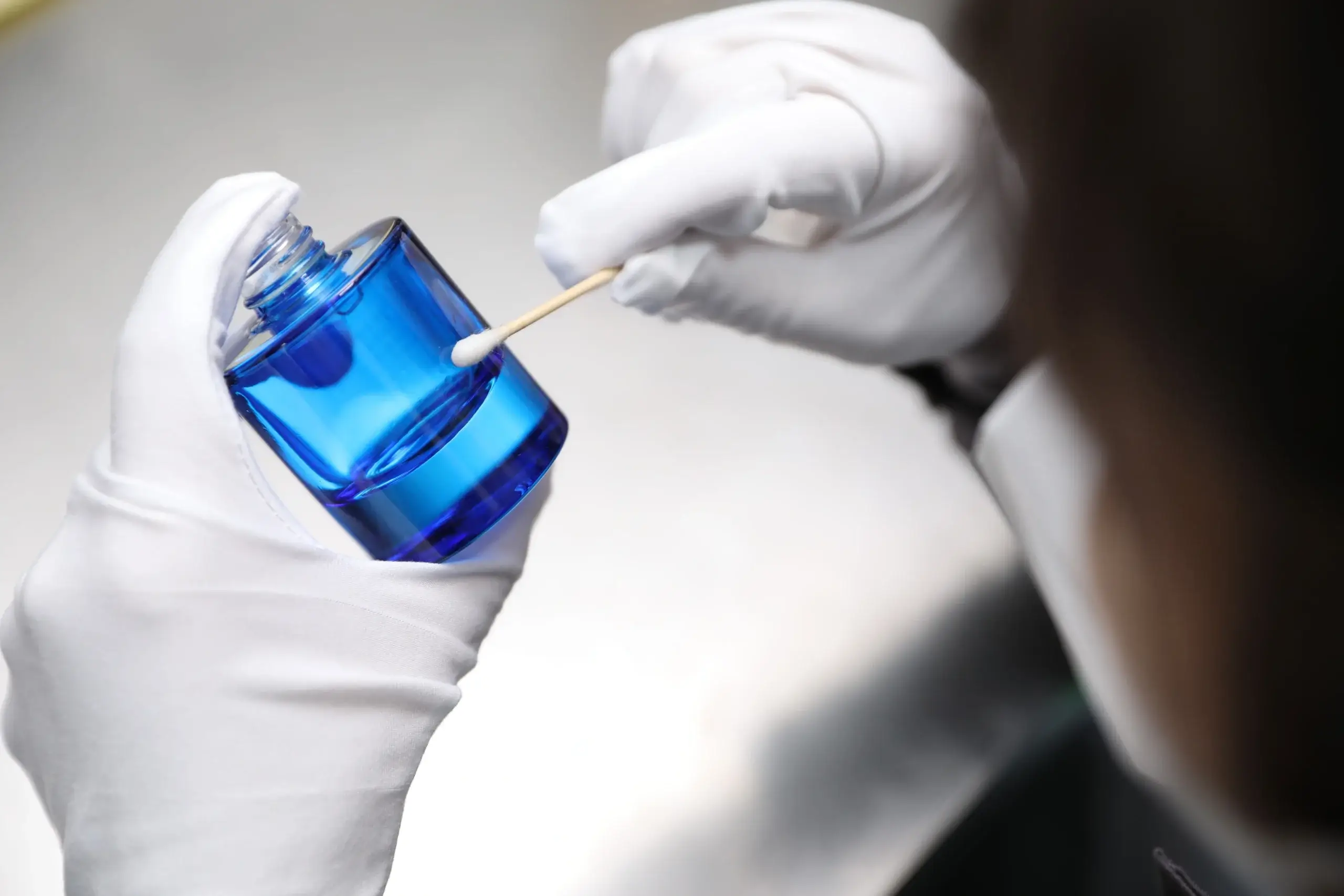
Glass stress testing

Checks for residual stress created during glass forming and cooling. Excessive internal stress can make a bottle more vulnerable to cracking during assembly, filling or temperature changes.

Dimensional specification measurement

Verifies critical dimensions such as bottle height, body width, neck diameter and neck height against the approved drawing. These measurements directly affect sprayer fit, collar position, cap alignment and compatibility with the box insert.

Thermal shock testing

Exposes the bottle to rapid temperature changes to assess how the glass responds. This is especially relevant when bottles may encounter changing temperatures during filling, storage or international transportation.

Drop testing

Evaluates how the bottle or packed product responds to specified handling impacts. The test can reveal glass breakage, cap separation, sprayer damage or insufficient protection from the insert and box.

Sprayer, Collar and Cap Performance
pump testing
perfume spray

Sprayer, Collar and Cap Performance

Perfume packaging must operate as one assembly. Mechanical testing helps confirm that the components remain secure and functional throughout repeated use.

Pressure testing

Applies controlled pressure to relevant components to assess structural stability and identify deformation, loosening or assembly weakness.

Tensile-force testing

Measures the force required to pull an assembled component from its position. It can be used to evaluate the retention of collars, caps and applicable sprayer components.

Torque testing

Used where a component has a threaded or rotational connection. It helps determine whether the closure can be operated properly without being too loose or excessively tight.

Compression-fatigue testing

Repeatedly actuates the sprayer to evaluate whether its performance changes with continued use. The test can identify problems such as inconsistent actuation, slow recovery or component fatigue.

Decoration and Component Durability
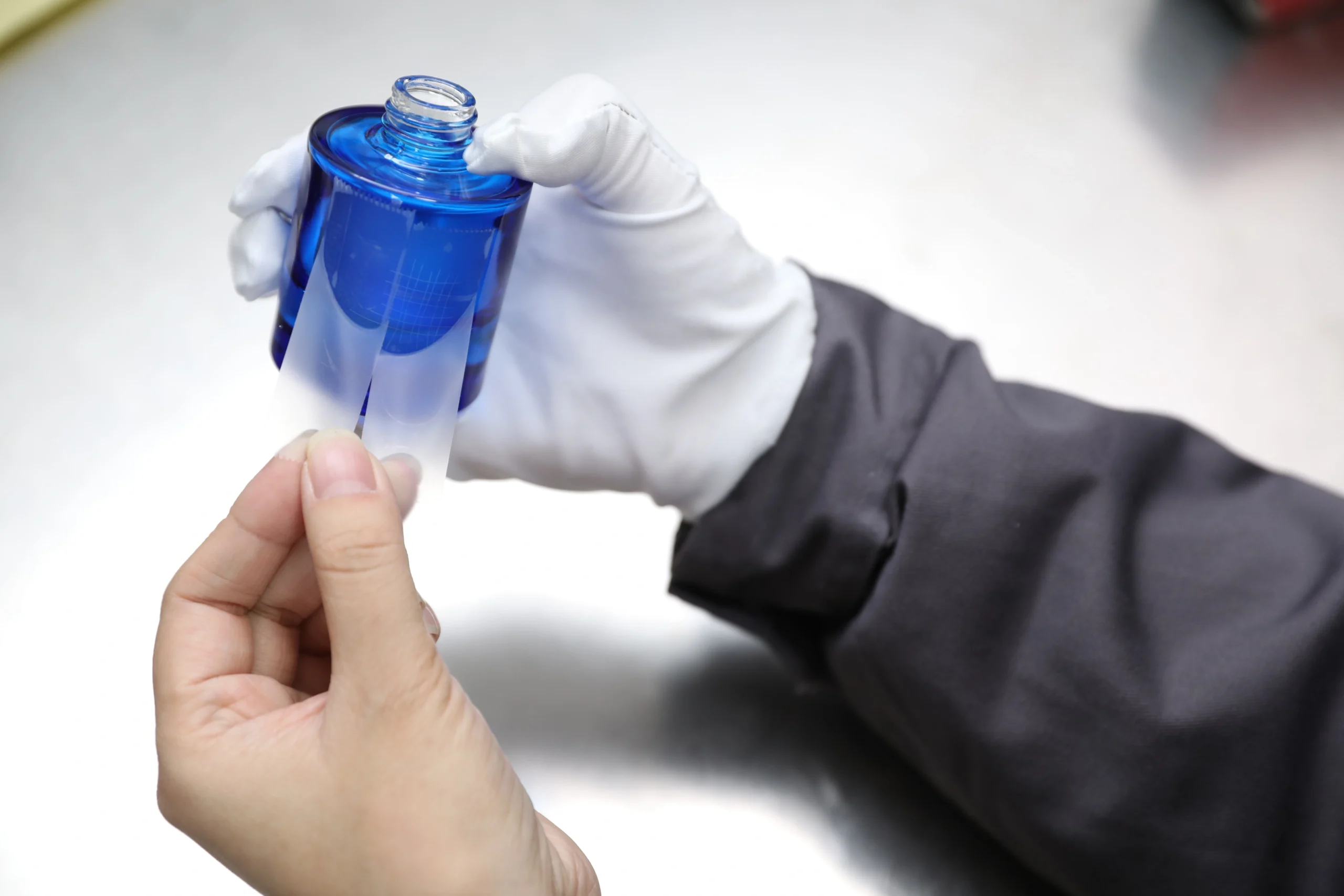
100 grid test
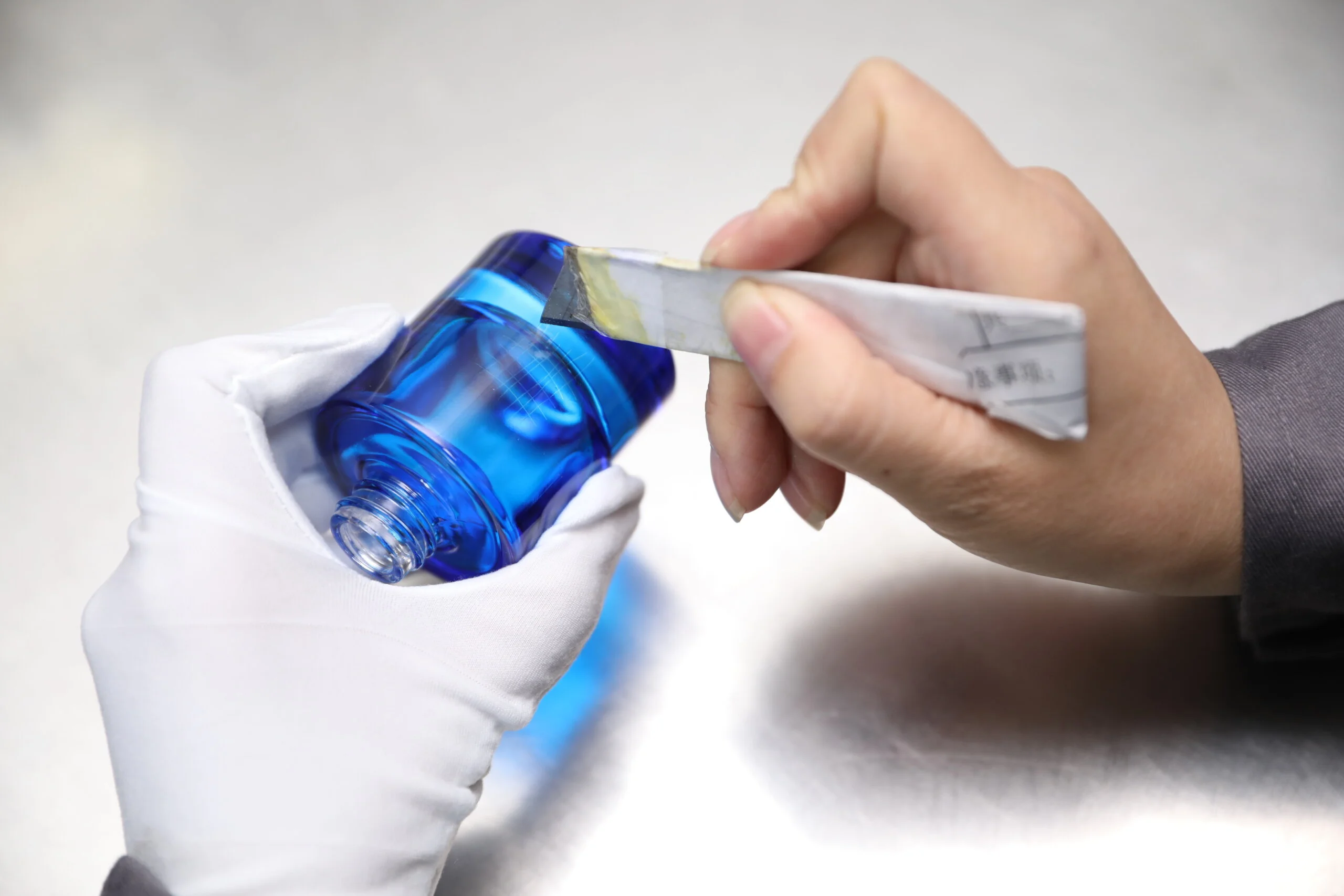
Tape Testing
humidity test

Decoration and Component Durability

Spraying, screen printing, hot stamping and metallized finishes must maintain an acceptable appearance through assembly, handling and expected storage conditions.

Friction-resistance testing

Checks whether printed, sprayed or metallized surfaces show unacceptable wear when exposed to controlled rubbing. This is particularly important around frequently handled areas of the bottle and cap.

Ultraviolet-aging testing

Assesses whether prolonged light exposure causes unacceptable changes in color, printed graphics or surface finishes.

Constant-temperature and humidity testing

Places assembled samples under controlled temperature and humidity conditions to observe possible changes in coating, decoration, component fit or appearance.

Low-temperature testing

Evaluates how plastic, metal and decorated components behave under cold conditions. The inspection focuses on issues such as brittleness, loosening, deformation or finish changes.

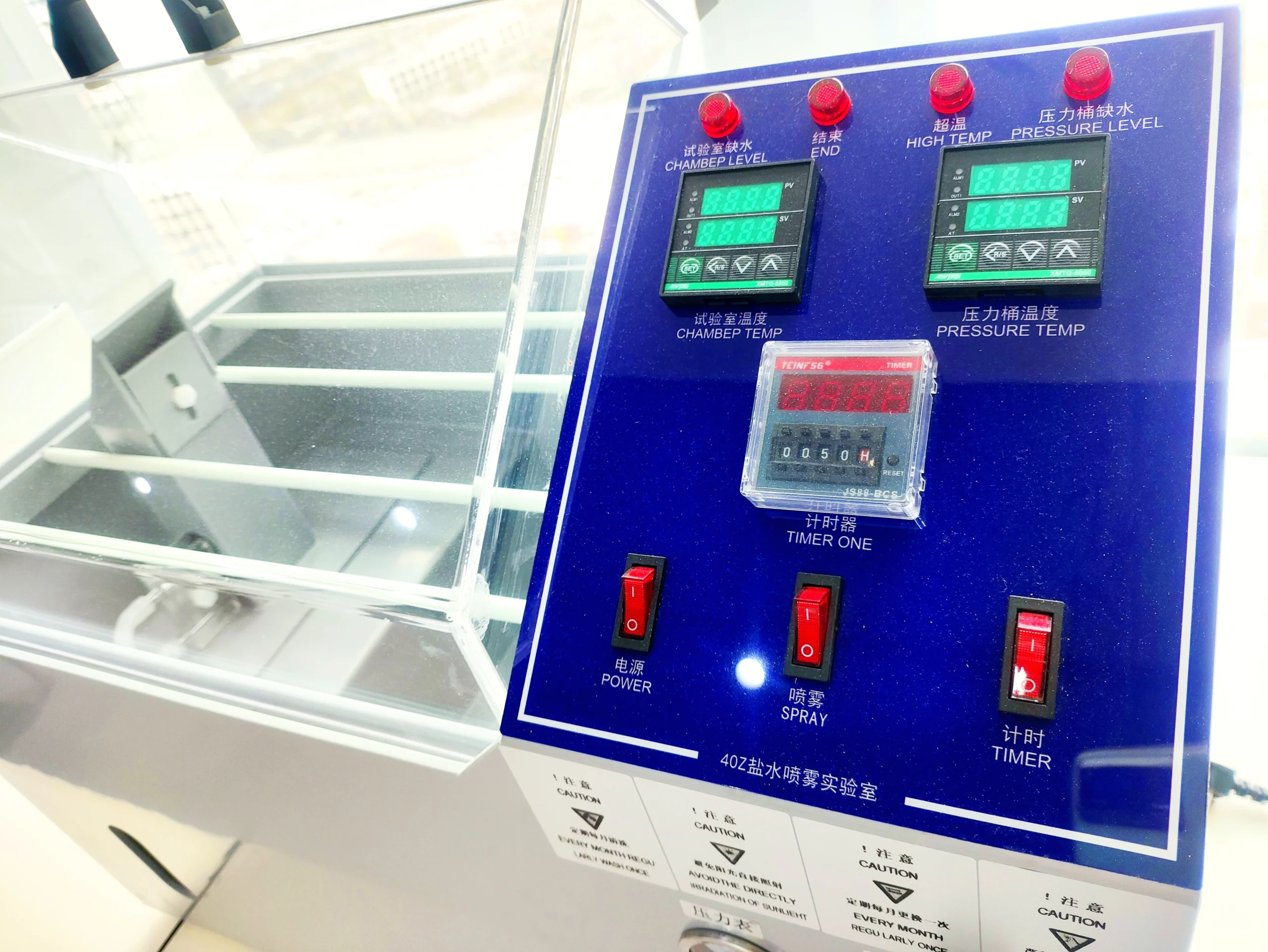
Salt-spray aging testing

Used when the perfume package includes relevant metallic or metallized components. It evaluates their resistance to visible corrosion under the agreed test conditions.

Formula Exposure and Distribution Reliability
spray test
bottle test
transportation test

Formula Exposure and Distribution Reliability

The approved perfume formula and the complete packaging system should be evaluated together whenever compatibility or logistics risks need to be addressed.

Compatibility testing

Filled samples are observed under agreed conditions to identify possible changes involving the fragrance, internal components, decoration or assembled package. Testing conditions and acceptance criteria must be defined for the specific formula and packaging combination.

Constant-temperature water-bath testing

Keeps filled samples at a controlled temperature to accelerate observation of issues such as leakage, discoloration, coating changes or component deformation.

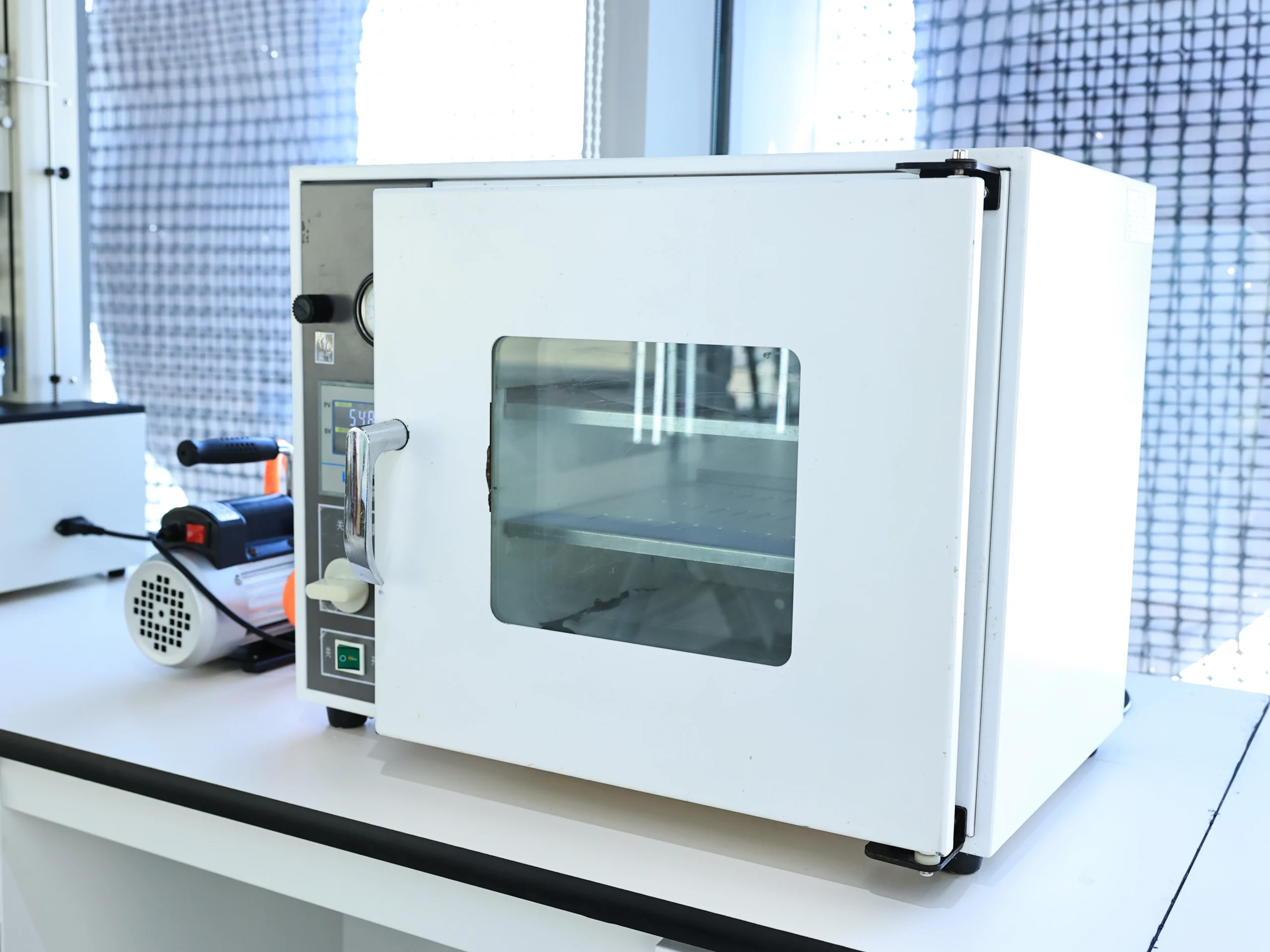
Vacuum-drying or reduced-pressure testing

Used when relevant to determine whether reduced pressure reveals leakage or weakness in the assembled package.

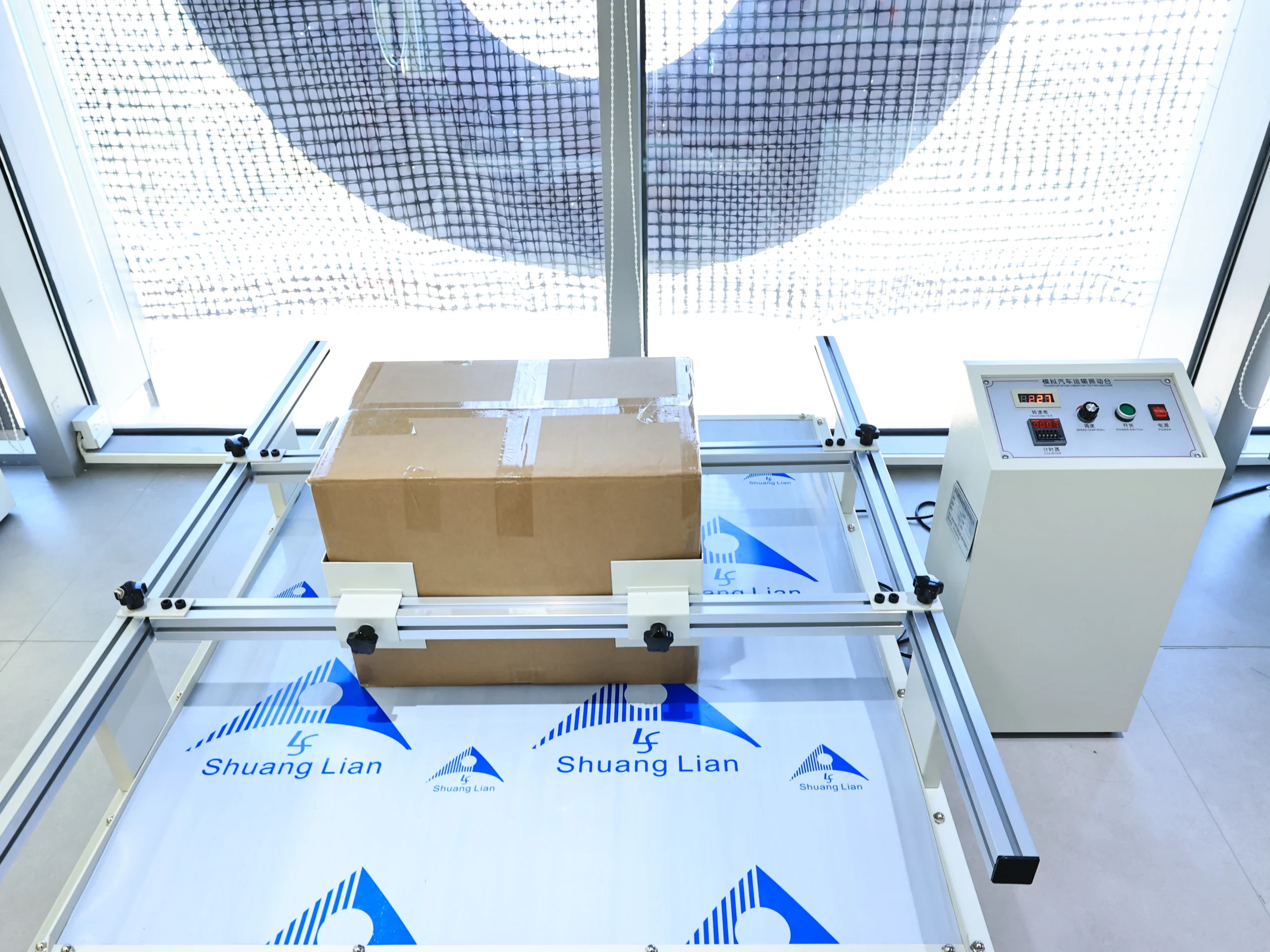
Simulated-transportation testing

Subjects the packed product to controlled vibration that represents transportation conditions. After testing, the bottle, sprayer, collar, cap, decoration, insert and box are checked for breakage, loosening, abrasion and movement inside the pack.

Start with a Complete Perfume Bottle Brief

Do not begin with separate requests for a glass bottle, pump, cap and box. Begin with the package your customer is expected to see and use.

Send Jarsking:

  • Target capacity
  • Quantity per SKU
  • Desired bottle silhouette
  • Existing mold or original design preference
  • Atomizer, collar and cap direction
  • Decoration references
  • Secondary-packaging requirements
  • Target market
  • Launch date
  • Drawing, moodboard or physical reference

Jarsking will assess the suitable development route and identify the specifications that must be confirmed before sampling and quotation.

FAQs

Jarsking is a manufacturer-led packaging integrator. Its self-owned manufacturing capabilities include glass, plastic, mold, carton and decoration operations, supported by qualified partner factories for additional packaging requirements. One project contact coordinates design, development, production and logistics.

The MOQ is 10,000 units per SKU for an existing mold. A new bottle mold, original component or complex custom system is quoted and confirmed per project.

Choose an existing mold when launch speed, controlled investment and decoration-led differentiation are the priorities. Consider a custom bottle when the silhouette is intended to become a long-term brand asset and forecast volume supports the additional tooling and development time.

Yes. Jarsking can coordinate these elements within one perfume bottle project. The exact component combination, neck compatibility, materials, finishes and performance requirements must be confirmed for the selected bottle.

Production uses approved artwork and color references. Vector AI or PDF files are required, together with Pantone references or physical samples for color development. Decoration is managed through the agreed sampling, production and multi-stage QC process.

Send the required quantity per SKU, target capacity, bottle reference or drawing, target market, launch date, atomizer and cap requirements, decoration direction, box requirements and shipping destination. The more complete the brief, the more accurately the development route and commercial scope can be evaluated.

견적 요청