










If you run a fast-growing beauty or personal-care brand, your packaging supplier isn't just making bottles — they're standing between your product and an empty shelf. The moment you land a national retailer, delivery dates stop being flexible and color stops being "close enough." This is the story of how Jarsking, a cosmetic packaging manufacturer, turned one difficult first sample into a two-year, seven-figure partnership with a DTC brand scaling across European retail — and the practical lessons in it for any brand sourcing packaging under real deadline pressure.
The client is anonymized here under NDA. We've kept every operational detail that's useful to you and removed anything that identifies them.
It took two years to reach the first bulk order — then the relationship compounded fast.
The client: a fast-growing DTC brand entering retail
Our client is a Berlin-based, direct-to-consumer brand in the intimate-wellness category — period care, intimate washes, lubricants, and gift and storage sets. Founded around 2020 and backed by angel and VC investors, it grew the way modern brands do: influencer-led, heavy on TikTok and Instagram UGC, mid-tier positioning, and a loyal subscription base on its own site.
Then it crossed into physical retail across the DACH region (Germany, Austria, Switzerland) — most importantly into DM, the national drugstore chain, with pilots in Rossmann and Müller. That transition is where packaging pressure really begins. A brand can iterate freely on its own webshop; on a supermarket shelf, it's locked into someone else's calendar.
The challenge: what stood between the brand and a clean retail launch
Tight delivery windows were the operational make-or-break. Supermarket chains buy on signed supply agreements: fixed volumes, delivered by fixed on-shelf dates. Miss the window and you don't just ship late — you risk forfeiting the slot. Because the brand was growing quickly, demand kept accelerating and the schedule kept tightening. Reliable, plannable delivery wasn't a nice-to-have; it was the whole game.
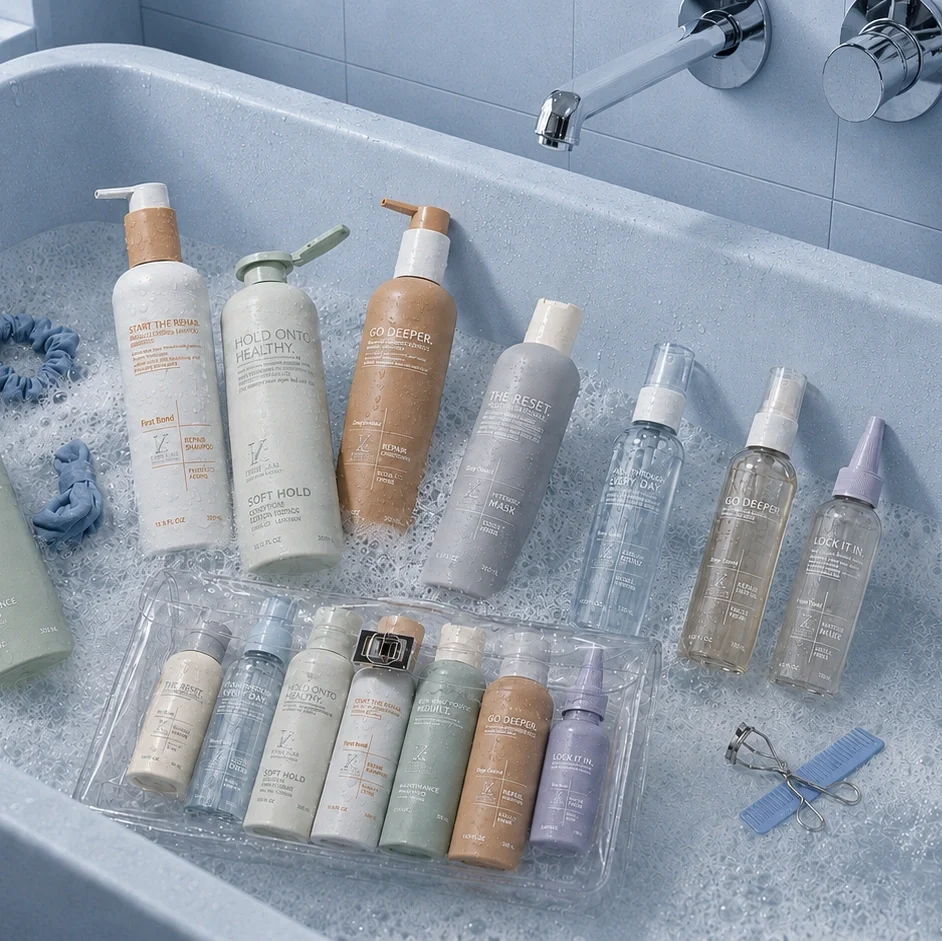
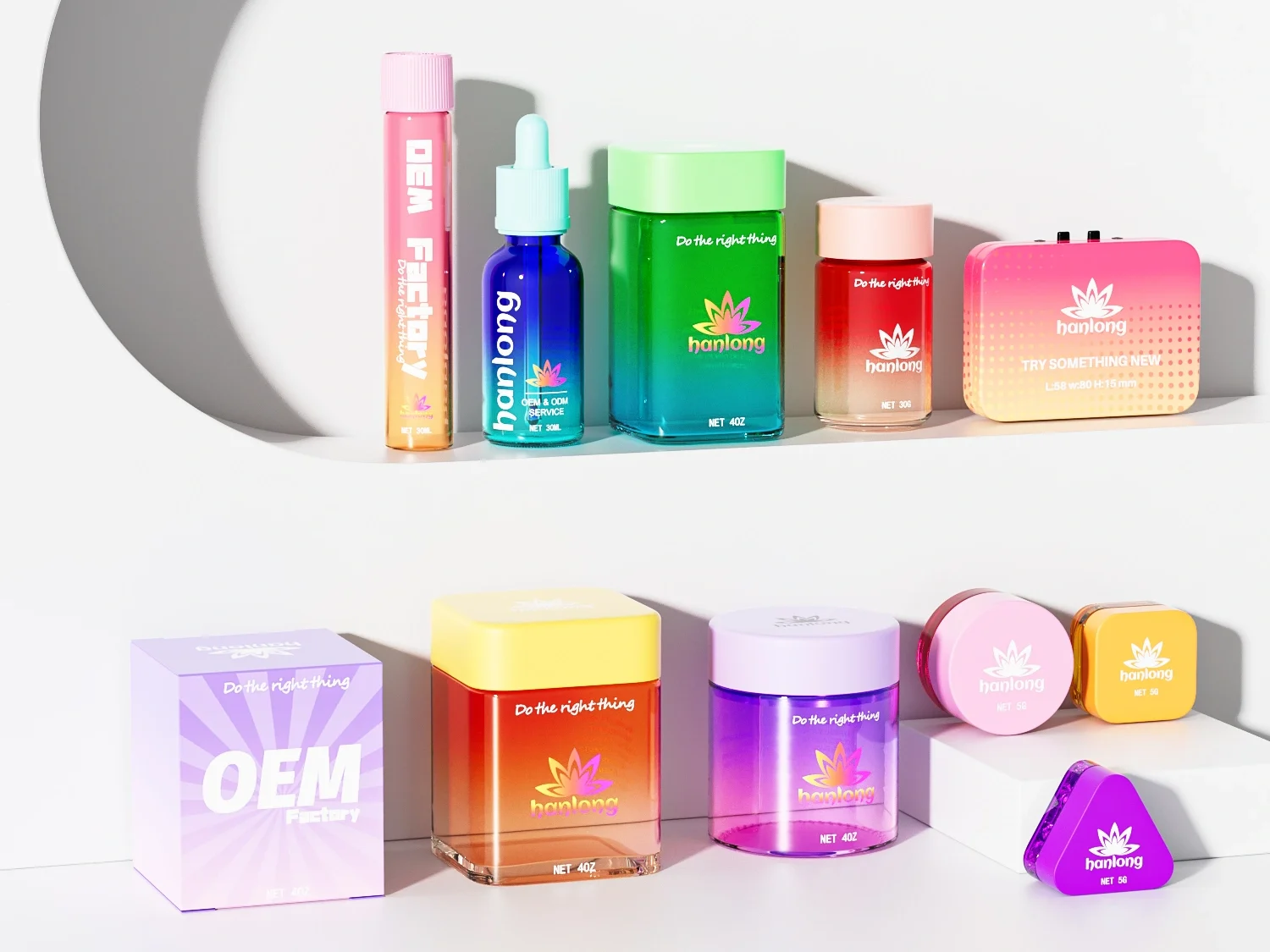
Color consistency was the make-or-break on quality. The brand's identity is a high-saturation, macaron color-block system where the bottle and its cap and components must read as a single, continuous color. On the very first sample, they didn't — there was a visible difference between the bottle and its components. On a palette that bold, a slight mismatch isn't subtle; it's the first thing a shopper sees.
Two more realities shaped the early relationship: an early-stage brand watching cash flow and comparing quotes, and a young team still deciding which formats and structures fit each formula and each shelf.
Why on-shelf timing is non-negotiable when you supply supermarkets
Here's the reality every brand learns the moment it moves from its own webshop into a chain like DM or Rossmann: a retail listing is a promise with a date on it. Supermarkets don't "receive stock whenever it's ready." They plan shelves months ahead through planograms and promotional calendars, and a listing comes with a fixed delivery window and a committed volume. Hit the date and everything downstream works. Miss it and the consequences stack up fast:
- You can lose the slot. Shelf space is finite and contested. If your product isn't in the distribution center on time, the retailer doesn't hold the space empty — it gets filled, often by a competitor, and winning it back can take a full range-review cycle.
- You get penalized. Major grocers enforce OTIF (on-time, in-full) delivery targets and charge back suppliers who miss them — deductions taken straight off the invoice, on top of the lost sales.
- You miss the window you planned around. End-caps, seasonal sets, and launch promotions are booked to specific weeks. Arrive late and you don't just slip — you forfeit the visibility spike the whole launch was built on.
- You damage sell-through and the buyer relationship. An empty facing produces a stockout, stockouts drag the sell-through data the buyer judges you on, and weak data is exactly what gets a young brand cut at the next review. Reliability is what earns the next listing.
For a fast-growing brand, the stakes are even higher, because retail is the growth engine — a stalled shelf doesn't just cost one order, it stalls momentum at the exact moment the brand is trying to scale.
And packaging sits upstream of all of it. A brand can't fill, label, and ship finished goods until the bottles, caps, and components arrive — correct and on-spec. If packaging lands late, or shows up with a color mismatch and gets rejected at incoming QC, the whole finished-goods line waits, and the retailer's date doesn't move to accommodate it. In practical terms, your packaging supplier's timeline is your retail timeline. That's why choosing a manufacturer that treats the on-shelf date as its own deadline isn't a procurement detail — it's a commercial safeguard.
Because packaging sits upstream of filling and shipping, your packaging schedule effectively sets your retail date — so smart brands plan backward from the shelf.
The solution: how we earned the order and kept the shelves stocked
There was no single fix. What earned the business was disciplined partnership sustained over two years — from the first inquiry in early 2023 to the first bulk order in early 2025. Five things made the difference, and each holds a lesson you can apply to your own sourcing.
1. We manage the delivery schedule with the brand, not just for it
The lesson: plan backward from the on-shelf date, not forward from the PO. A retail timeline has more moving parts than most brands price in — production, QC, and sea freight (which alone adds roughly 35–40 days) all sit between "order placed" and "product on shelf." Work backward from the retailer's date and every one of those stages gets a real deadline instead of a hope.
We build to lead times the brand can plan around (confirmed per project), and because we track each SKU's reorder rhythm, we flag a fast-selling line for reorder before it becomes urgent — the manufacturing equivalent of safety stock, applied to the reorder decision itself. That turns a reactive scramble into a predictable cadence, which is the single most valuable thing you can give a brand tied to supermarket dates. The practical takeaway for any brand: ask a prospective supplier not just "what's your lead time?" but "will you help me plan reorders around my sell-through?"
2. We made color-matching a repeatable process, not a hope
The lesson: a bottle and its cap almost never take color the same way, so you match to the part — not to a swatch. This is the insight that trips up most first-time brands. Glass, PP, ABS, and coated or sprayed surfaces each render the same Pantone differently: translucency, gloss, wall thickness, and the substrate under a coating all shift how the eye reads the color. A flat Pantone chip under office light is not the same as a curved, glossy bottle under a store's cool-white shelf lighting — which is exactly why the brand's first sample showed a visible bottle-vs-component gap.
Our method removes the guesswork: sample and lock one reference first — the bottle — then match every component to that physical master, caps first, then bottles, and re-verify on each production batch (pigment lots drift, so color is checked, never assumed). Critically, we approve color in-house at the workshop rather than shipping samples back and forth to Europe every round, which removes about ten days from a typical cycle — often the margin between hitting an on-shelf date and missing it. This is backed by our surface-treatment lines (20 screen-printing and 10 hot-stamping stations, plus spraying and metallization). Buyer takeaway: always supply a physical master plus Pantone references, and name which part is the color reference.
Our repeatable color-control sequence — matching to the physical part, not a flat swatch.
3. We recommended the right formats — existing molds first (ODM), custom only where it counts
The lesson: starting from a proven mold (ODM) is faster, cheaper, and lower-risk than tooling from scratch — save custom tooling for genuine differentiation. A validated mold has no tooling lead time and no first-article surprises; a new steel mold typically adds 35–40 days before you even sample. The smart path for a scaling brand is to launch on proven formats and graduate to custom tooling only where the shelf actually rewards it.
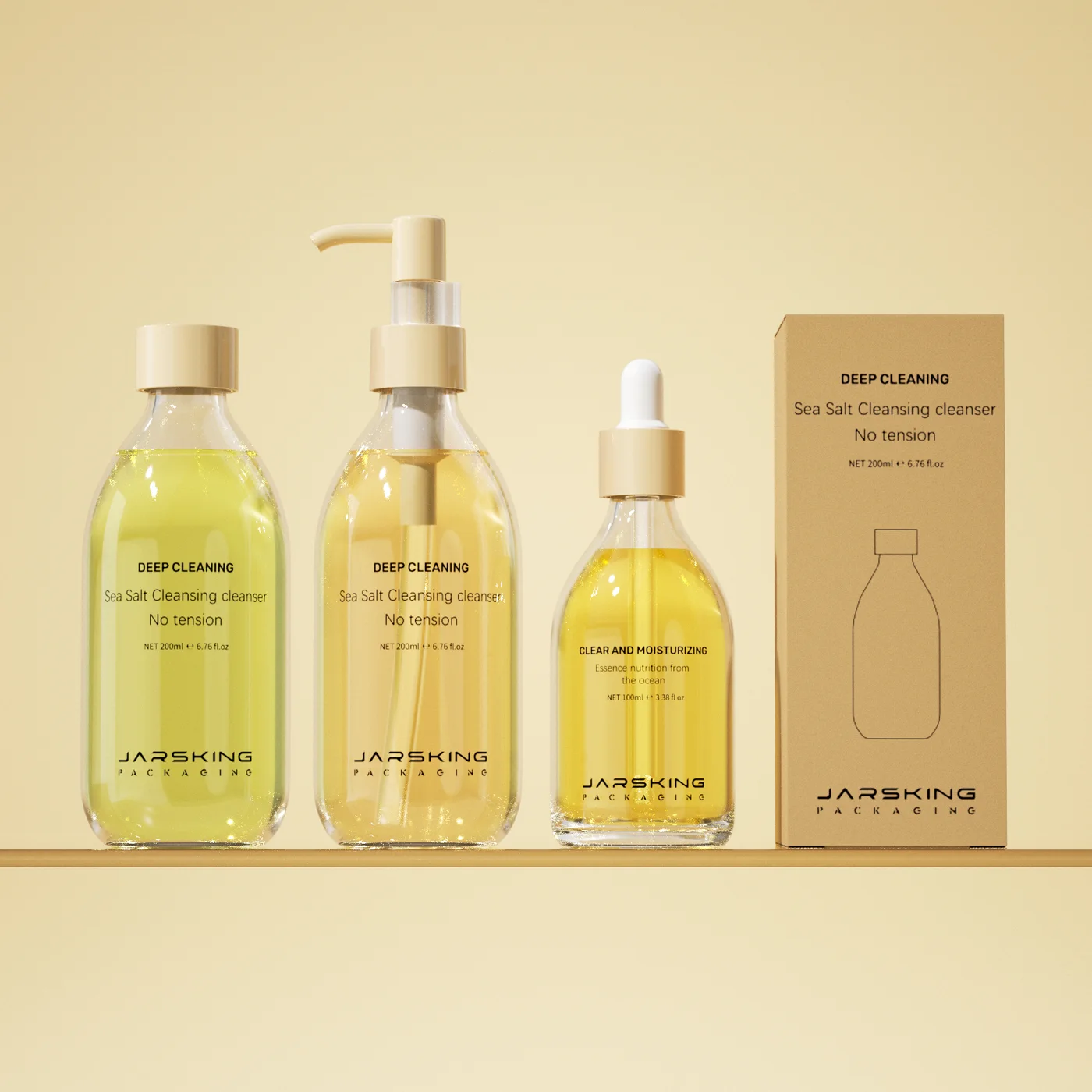
Drawing on 30,000+ ready-to-use molds, we guided the brand toward the formats it truly needed — straight-round glass bottles, straight-round plastic bottles, foam-pump bottles, and dropper bottles — keeping development fast, on-budget, and on-brand (single custom color plus one-color silkscreen). Today the partnership spans roughly eight active products, built the low-risk way.
4. We engineered custom tooling — with manufacturability and reliability designed in
The lesson: a custom part is only as good as its design for manufacturing (DfM) and design for reliability (DfR). A new component isn't just a shape — it needs a mold that produces it consistently at volume (DfM) and a design that actually performs in the hand and in transit (DfR). Skip either and you get parts that look right in a render but fail on the line or in the field.
When the brand wanted a portable, on-the-go format, we designed and tooled a custom silicone sleeve for a 50 ml foam-pump bottle in our own mold manufacturing center — turning their idea into a real, moldable component. And when an early dropper component needed a better seal, our engineers reworked it and closed the issue as part of continuous support: proof that reliability is something you engineer and stand behind, not a spec you hope holds.
5. We built trust the way durable partnerships are actually built
The lesson: for a brand betting its retail future on you, credibility is verified, not claimed. The brand visited and toured our factory (seeing capability and working conditions first-hand), we signed an NDA to protect its roadmap, and we agreed commercial terms as a long-term partner. That's what lets a young brand commit its retail launch to an overseas manufacturer with confidence — one partner, one point of contact, end to end. Buyer takeaway: before you scale with a supplier, audit or visit, put an NDA in place, and align on terms early.
Transactional vendor vs. partnership approach
| What a brand needs | Transactional supplier | Jarsking partnership approach |
|---|---|---|
| Retail delivery dates | Quotes a lead time, waits for POs | Learns each SKU's rhythm and flags reorders early to protect on-shelf dates |
| Color consistency | "Should be fine" | Bottle-first, then component color-matched in-house every batch (~10 days saved per cycle) |
| Format selection | Makes what you ask | Recommends proven-mold formats that fit the formula and shelf |
| Custom parts | Off-the-shelf only | In-house mold center tools custom components (e.g., silicone sleeve) |
| Growth | Order-by-order | Scales capacity and cadence with you |
The results
The trajectory speaks for itself:
- First bulk order: a dropper bottle, roughly US$9,700 (early 2025).
- 2025 full-year: approximately US$208,000.
- First half of 2026: approximately US$486,000 — and climbing.
- Cadence: reorders every two to three months per SKU, with at least one order every month across ~8 active products.
The growth arc — ~US$9.7K → ~US$208K → ~US$486K in about eighteen months — came from a brand that reordered before its first shipment had even reached shelves. The relationship is ongoing.
From a ~US$9,700 first order to roughly US$486,000 in a single half-year.
Why this matters if you're sourcing packaging as a growing brand
Three takeaways translate directly to your own sourcing decisions:
Schedule reliability is the product. Retail rollouts (DM, Rossmann, and the like) punish lateness more than almost anything else. Jarsking already produces packaging for brands sold through Sephora, Walmart, Rossmann, DM, Mercadona, Douglas, and Watsons — retail rigor is built into how we run production.
Color consistency is a process, not a promise. Before you commit, ask a supplier how they hold color batch to batch — do they lock the bottle first and match components to it, and do they approve color in-house or ship samples back and forth for every round? The answer predicts both your quality and your lead time.
A partner who learns your rhythm beats the cheapest quote. The supplier who warns you "reorder this one now" protects revenue a lower unit price can't recover once a shelf sits empty.
Preguntas frecuentes
How do you help brands hit strict supermarket on-shelf deadlines?
By managing the schedule proactively. We build to confirmed lead times and, once we know a brand's reorder pattern, we flag fast-moving SKUs for reorder before they become urgent. We also approve color in-house rather than shipping samples abroad each round, which removes about ten days of avoidable delay from a typical cycle.
What happens if packaging misses a supermarket's on-shelf date?
It's costly and often hard to reverse. Retailers plan shelves by planogram and enforce on-time, in-full (OTIF) delivery, so a miss can trigger chargebacks, a forfeited promotional window, and — worst case — losing the shelf slot to a competitor until the next range review. Because finished goods can't ship until packaging arrives correct and on-spec, packaging delays flow straight through to the retail date. That's why on-time, first-time-right packaging is a commercial safeguard, not just a logistics line item.
How do manufacturers keep bottle and cap colors consistent?
The reliable method is to lock one reference first — usually the bottle — then match every other component to that reference, and to physically check color at the workshop on each batch rather than trusting a spec sheet. High-saturation palettes are the least forgiving, so consistency has to be verified, not assumed. Provide Pantone references or physical color samples to anchor the standard.
Can you start from existing molds and customize later?
Yes. With 30,000+ ready-to-use molds, most brands begin with a proven format (ODM) — customizing color, material, finish, and branding — which keeps development fast and low-risk. When a project needs something that doesn't exist yet, our in-house mold center tools fully custom components.
What lead times should a brand plan for a retail launch?
Plan backward from your on-shelf date and confirm specifics per project. As a general reference, existing-mold sampling is fast, and mass production typically runs about 30–40 days before shipping (sea freight adds roughly 35–40 days). If a run requires new sampling, add time — which is exactly why reordering early matters for retail.
Do you handle custom components like sleeves or applicators?
Yes. Beyond bottles and caps, we design and tool custom parts — for this client we created a custom silicone sleeve for a 50 ml foam-pump bottle. Custom tooling is handled in our own mold manufacturing center.
Which packaging formats suit intimate-wellness and personal-care products?
It depends on the formula, but common choices include dropper bottles for serums and oils, foam-pump bottles for washes, and airless or straight-wall bottles and jars for creams and lotions. We match format to formula compatibility, dosing, and shelf presentation — confirm material suitability per formulation.
Conclusión
Great packaging partnerships aren't won on a single quote. This brand chose Jarsking because we solved the two things that actually threatened its retail launch — unforgiving delivery windows and exacting color consistency — and then kept solving them, batch after batch, as the brand scaled from a ~US$9,700 first order to roughly US$486,000 in a single half-year. That's what a manufacturer that manages the schedule with you, controls color in-house, and tools custom parts under one roof can do.
Scaling into retail and can’t afford a late or off-color delivery? Put a factory-direct partner behind your on-shelf dates.
Request a free quote or sample →External reference: EU Cosmetic Products Regulation (EC) No 1223/2009.