



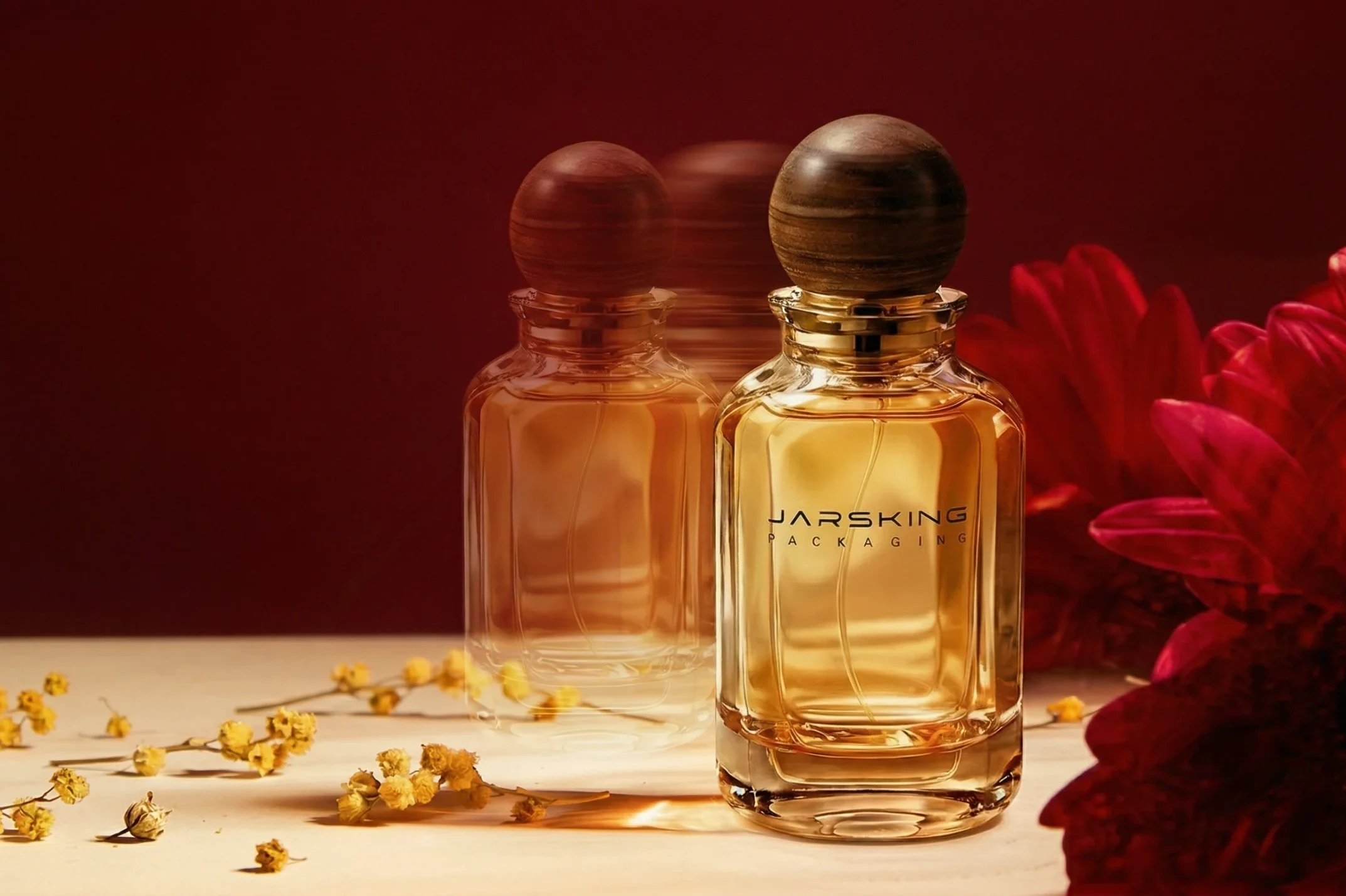





To develop a custom perfume bottle, you move through seven stages: a written brief, concept and design refinement, engineering translation, prototyping, mold tooling, sampling and validation, and mass production. When the bottle needs its own private mold, plan on roughly 84–110 days from approved concept to finished goods at the factory, plus 35–40 days if the bottles travel by sea.
- Choose your route first. Customizing an existing bottle, producing your own design, or co-developing a new one decides timeline, MOQ, and design ownership.
- Brief with your formula in mind. Alcohol and oil content drive component choices and prevent the most expensive late changes.
- Engineer before you decorate. Neck finish, glass distribution, and cap fit are built into the mold.
- Validate with the real fragrance. Compatibility, spray, anneal, and transit tests belong before mass production, not after.
The decision that shapes everything else comes first: do you need a fully custom shape, a customized version of an existing bottle, or production of a design you already own? That choice sets your timeline, your minimum order, and who owns the design. It is also where most launch delays begin, because the answer is often made late or by default.
The stakes are rising. Circana data reported by Retail Dive show US prestige fragrance sales grew 6% in the first half of 2026, driven by shoppers trading up to eau de parfum and parfum concentrations, both of which grew by double digits. When customers pay for concentration, the bottle has to look and feel like it is worth it.
This guide explains each stage from the factory side: what you decide, what we engineer, what gets tested, and where time is won or lost.
Choose Your Development Route First
There are three ways to arrive at a perfume bottle that is yours, and each trades speed for distinctiveness differently. Pick the route before design work starts so that the schedule and budget are built on the right assumptions.
Customize an existing bottle
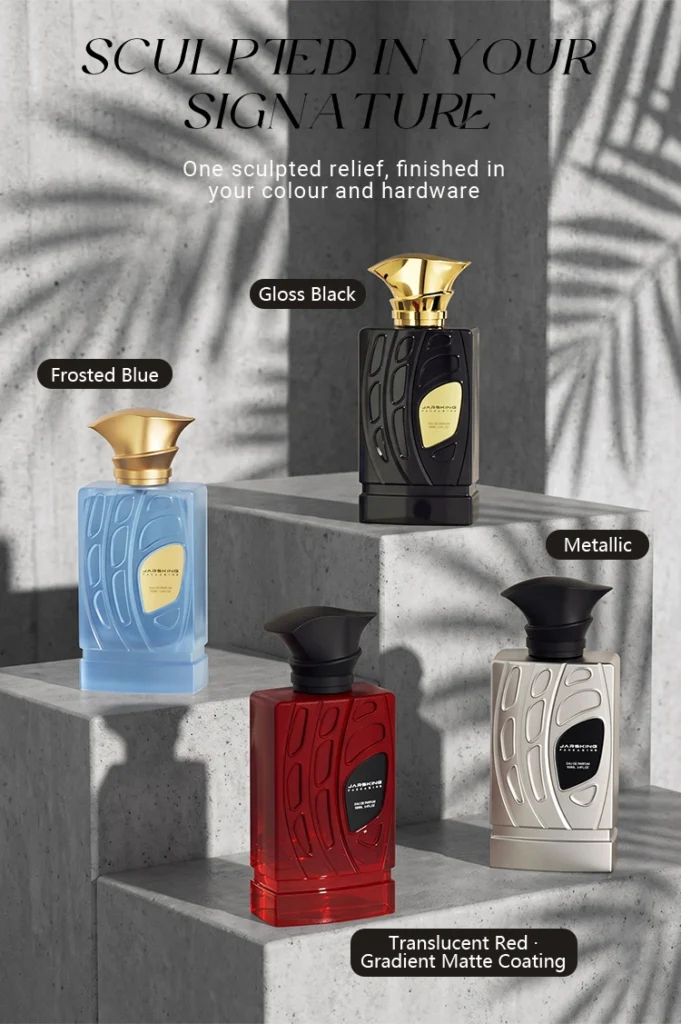
Choose a proven shape from an existing mold library and make it yours through color, finish, decoration, cap, and branding.
- Lead time
- 40–60 days ex-works
- Minimum order
- 10,000 units per SKU
- Najlepsze dla
- First launches, line extensions, tight launch dates
Produce your own design
We manufacture to your drawings and specifications. You retain your design and intellectual property.
- Lead time
- 33–65 days ex-works, plus tooling when a new mold is required
- Minimum order
- Confirm per project
- Najlepsze dla
- Brands with a finished, engineered design
Co-develop a fully custom bottle
Strategy, industrial design, structure, and color/material/finish developed together, then built on a private mold.
- Lead time
- 84–110 days ex-works
- Minimum order
- 30,000–50,000 units per SKU, confirmed per project
- Najlepsze dla
- Signature launches and a recognizable silhouette
A useful rule: if the bottle's shape is the brand asset, you need a private mold. If the brand lives in the color, decoration, and cap, a customized existing bottle often reaches shelf faster with the same visual impact.
Write a Brief a Factory Can Build From
A strong brief answers the questions that otherwise surface during sampling, when changes cost the most. Before the first sketch, give your packaging partner:
- Fill volume. The nominal volume (for example, 50 ml) and whether the bottle should look generous or compact at that volume. Our perfume bottle size chart is a useful starting point.
- Formula profile. Concentration (eau de toilette, eau de parfum, parfum, oil-based attar), alcohol content, and notable ingredients. This drives component materials and compatibility testing.
- Delivery format. Fine-mist spray, splash, or roll-on, and whether the pump should be permanently crimped or removable for refilling.
- Positioning and price point. Retail price and channel tell us how much glass weight, decoration, and cap complexity the unit cost can carry.
- Target markets. Destination markets determine labeling space, documentation, and any market-specific requirements to plan for.
- Volumes and timing. First-order quantity, expected reorder rhythm, and the launch date you are working back from.
- References. Mood images, bottles you admire, and, just as useful, bottles you do nie want to resemble.
The formula profile. A bottle can pass every visual review and still fail when a high-concentration fragrance meets the wrong gasket material.
The Seven Stages of Custom Perfume Bottle Development
Custom perfume bottle development follows a predictable sequence, and each stage has a clear output you approve before the next one starts. One dedicated project manager across all seven stages is what keeps decisions from getting lost between design, tooling, and production teams.
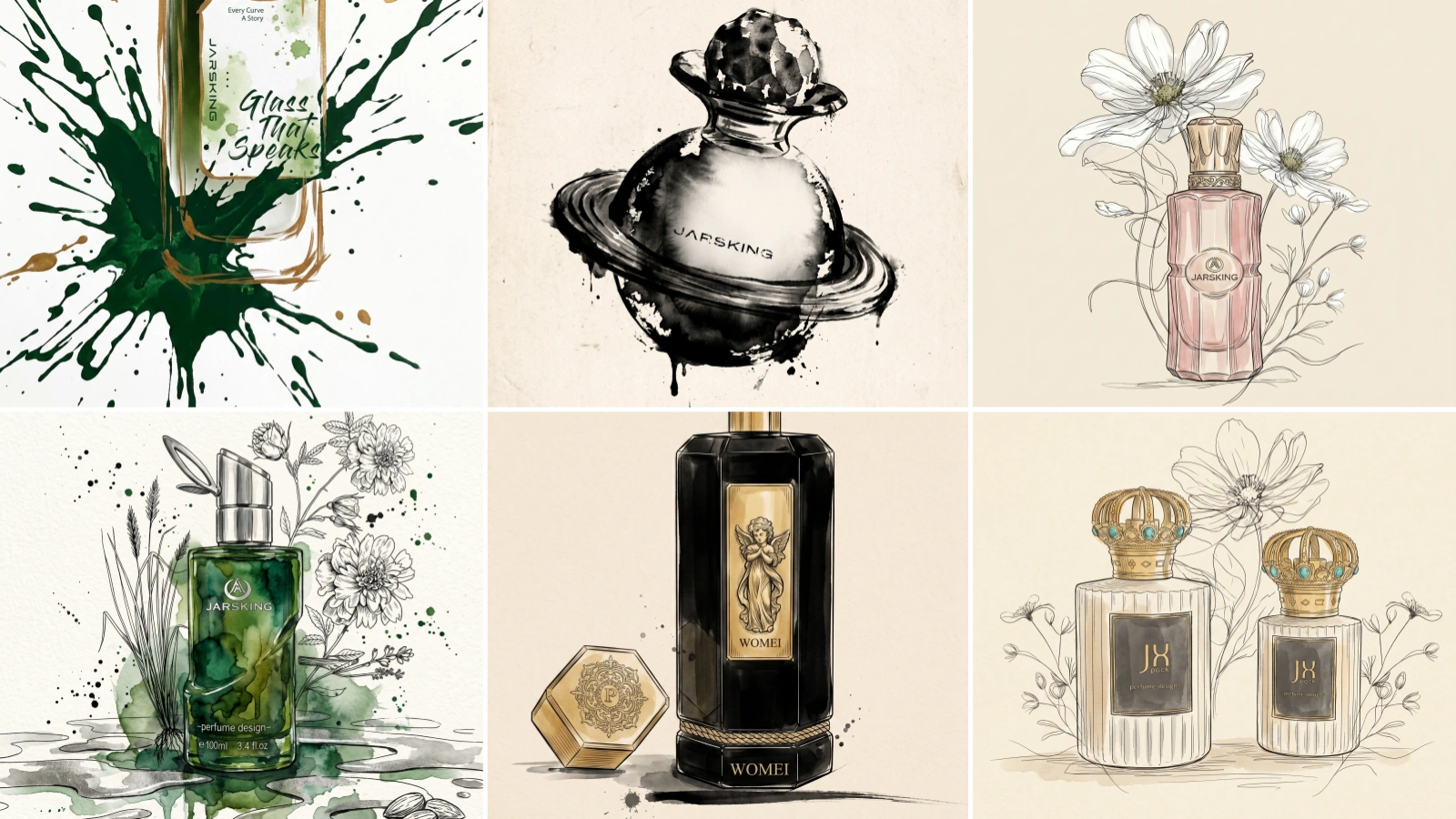
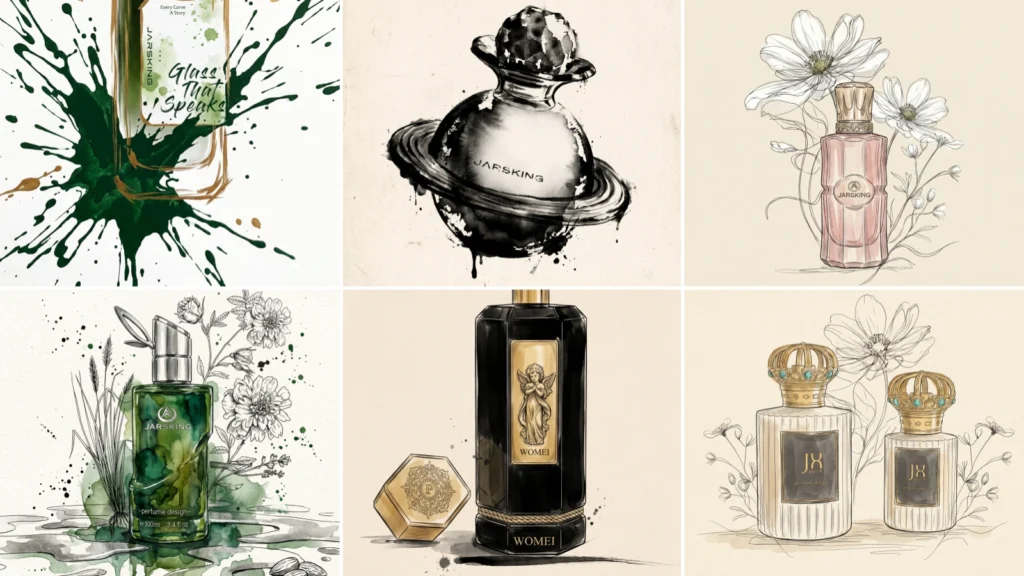
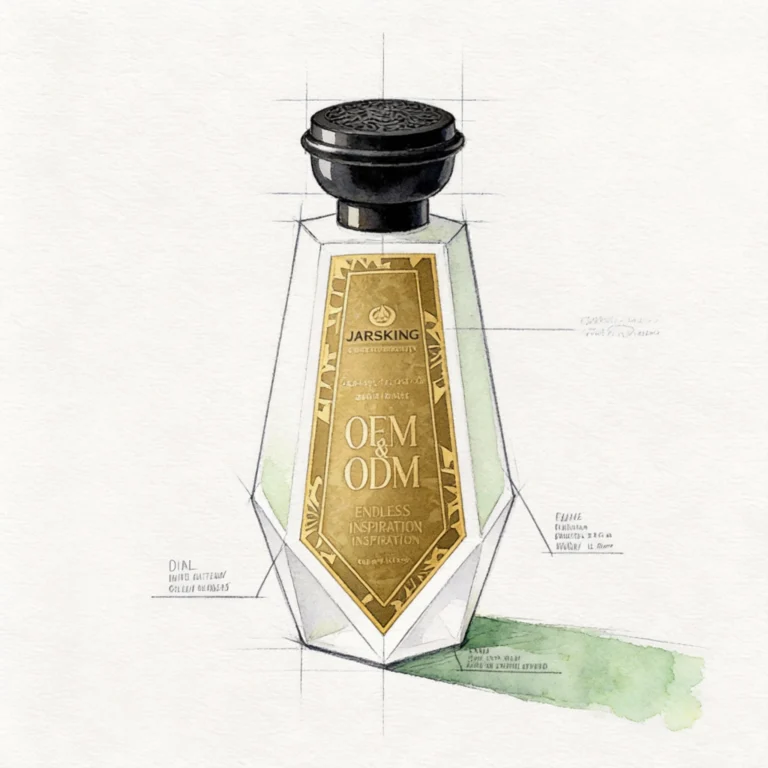
- Concept. Designers translate the brief into directions: silhouette, proportion, cap language, and color/material/finish (CMF). At Jarsking, strategy and design typically take one to two weeks. Our guide to packaging design from moodboard to manufacture shows how a direction is chosen.
- Design refinement. One direction is developed into accurate renders and dimensioned views, with the cap, pump, and secondary box considered as one set.
- Engineering translation. The design becomes a manufacturable bottle through design for manufacturing (DfM): wall thickness, glass distribution, draft angles, base stability, neck finish, and cap-fit tolerances.
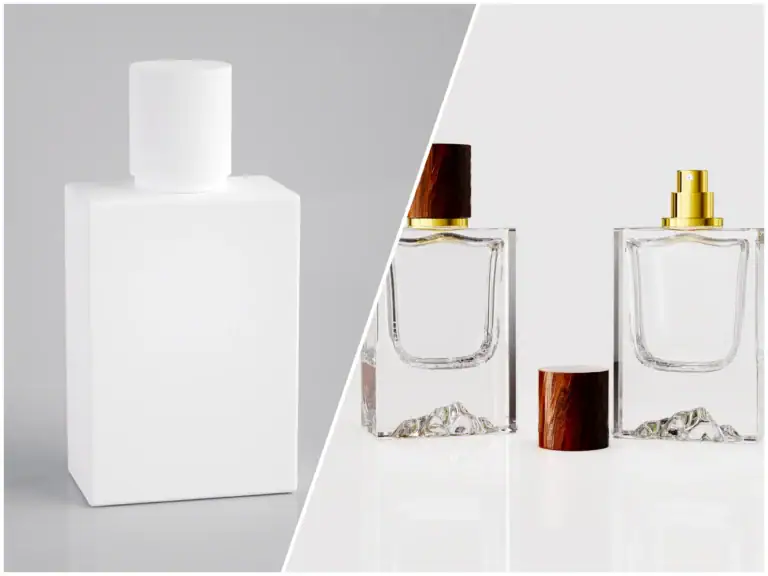
- Prototyp. Rapid prototypes let you judge size in the hand, cap proportion, and shelf presence before steel is cut. Expect more than one round; good packaging is rarely right on the first sample.
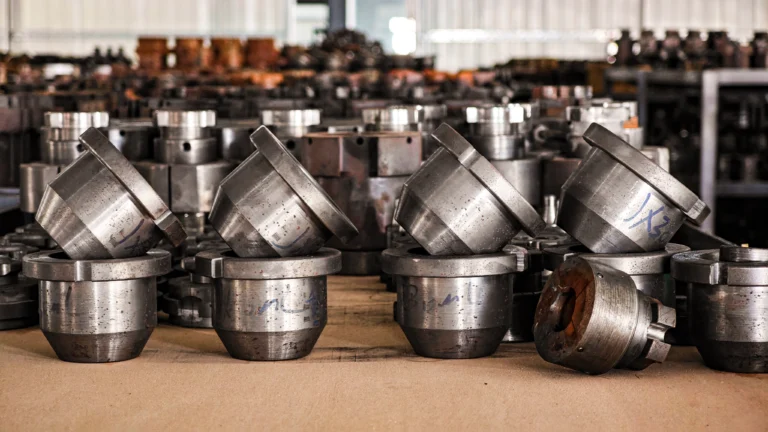
- Tooling. Production molds are machined. New molds take 30–60 days depending on complexity, which is why tooling usually sits on the critical path.
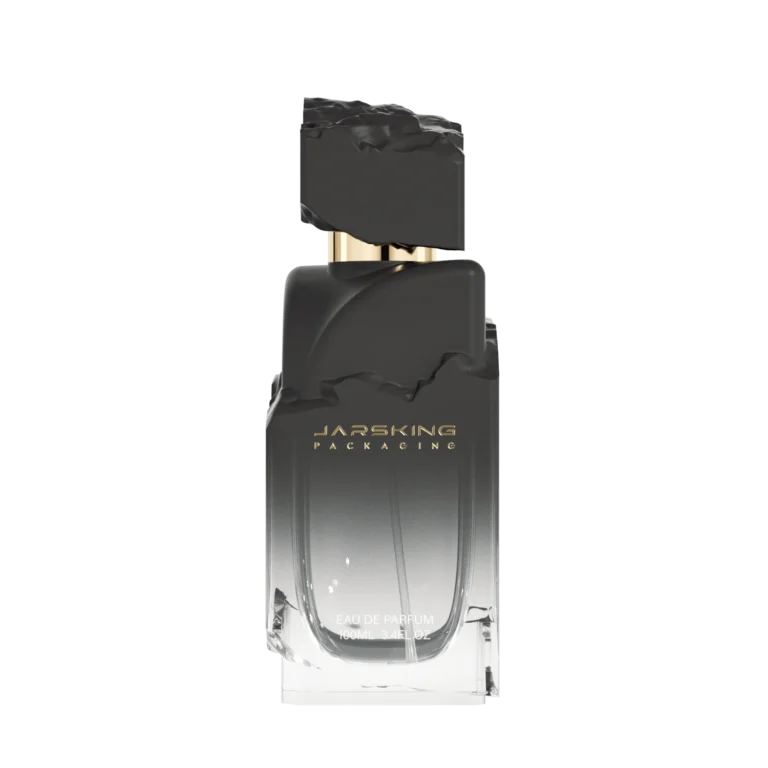
- Sampling and validation. First-off samples come from the new mold, decorated, assembled with real components, and tested with your formula.
- Mass production. After sample approval, production typically runs 30–40 days, followed by final inspection and packing for shipment.
Our broader six-step program (brief, strategy and design, sampling and testing, purchase order and pilot run, mass production, and continuous support) wraps around these stages. A pilot run of 3,000–5,000 units verifies the line before full volume; it is a validation step, not a minimum order.
Engineering Decisions That Shape the Bottle
The choices below look like styling details, but each one changes tooling, testing, or cost. Settle them during engineering translation rather than at sampling.
Glass Weight and Wall Distribution
Heavy bases and thick walls signal luxury, but glass must be distributed evenly enough to cool without trapping stress. Very uneven sections, such as a thick base under a thin shoulder, cool at different rates and need careful process control. DfM review balances the premium weight you want with a bottle that anneals properly and runs consistently on the line.
Neck Finish: Crimp or Screw
The neck finish decides how the pump attaches, and it is difficult to change after the mold is made. Decide it alongside the silhouette, not after.
A metal ferrule is crimped permanently onto the neck; the 15 mm crimp finish (often called FEA 15) is the most widely used. It gives a minimal collar and built-in tamper evidence, but it is not designed for refill.
The pump threads onto the neck with a sealing gasket, so the bottle can be refilled or the pump replaced. The thread has to be concealed by the cap or collar design.
For a deeper comparison, see our buyer guide to crimp neck vs. screw neck perfume bottles.
Cap Fit and Closure Feel
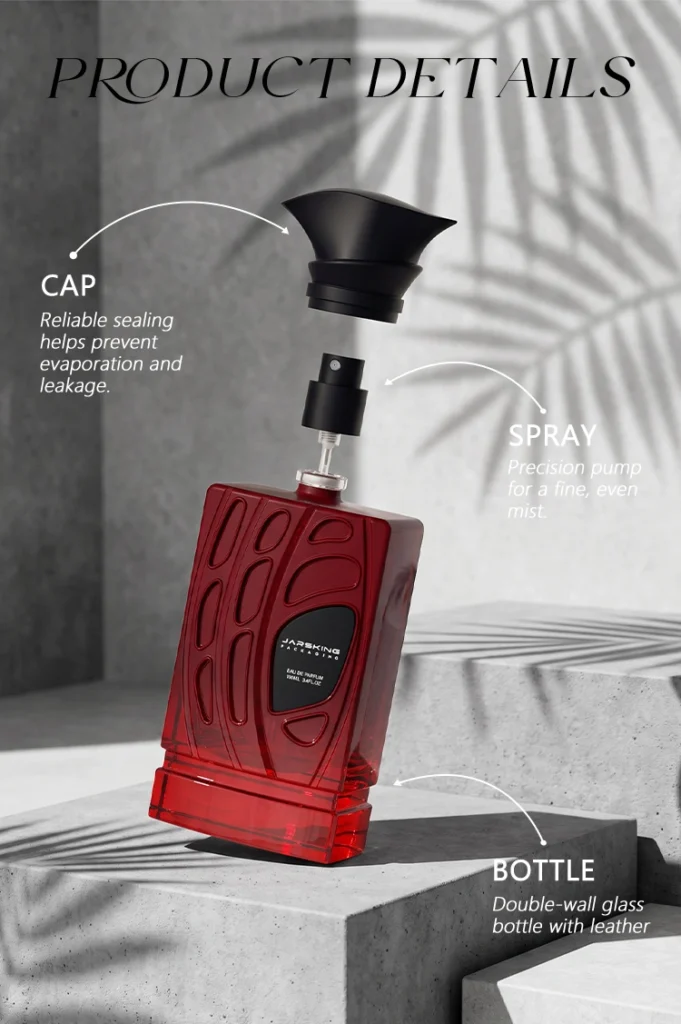
A perfume cap is judged by touch: the weight in the hand, the sound it makes, how firmly it seats. Fit depends on the tolerance between the cap's inner liner or insert and the bottle's collar, so the cap is engineered alongside the bottle rather than chosen afterward.
Cap materials such as ABS, PP, and aluminum each change the weight, finish options, and feel. A cap that is designed with the bottle also lets the pump, collar, and cap read as one object instead of three parts. Our guide to the parts of a perfume bottle names every component in the assembly.
Decoration and Finish
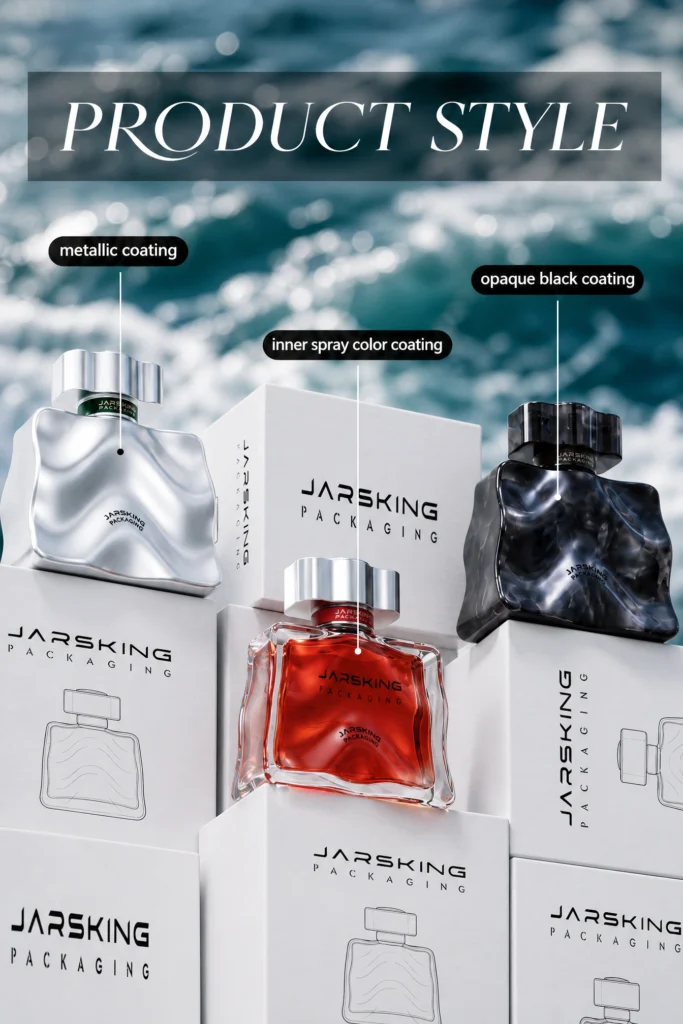
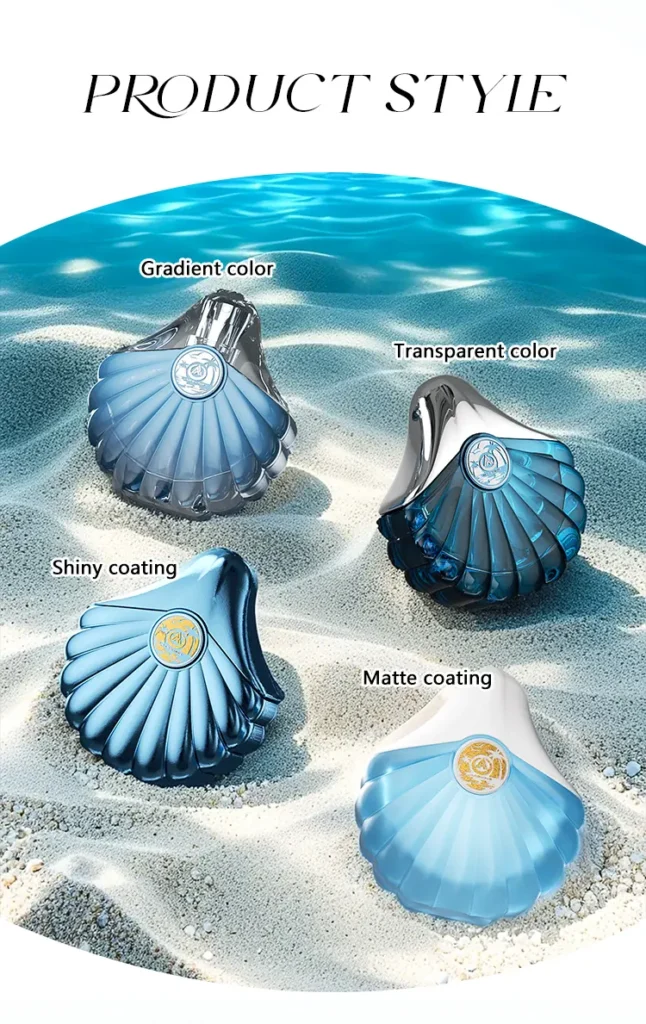
Decoration is where a customized bottle becomes unmistakably yours. Common routes include color spraying, screen printing, hot stamping, and metallization in chrome, gold, rose gold, and brushed effects. Each additional decoration pass adds handling, inspection, and time, so the most efficient designs achieve their look in as few passes as the concept allows. Specialty effects such as engraving or embossed logos are design-dependent; confirm per project. Our decoration techniques buyer's guide compares each method.
Validation: The Tests That Protect Your Launch
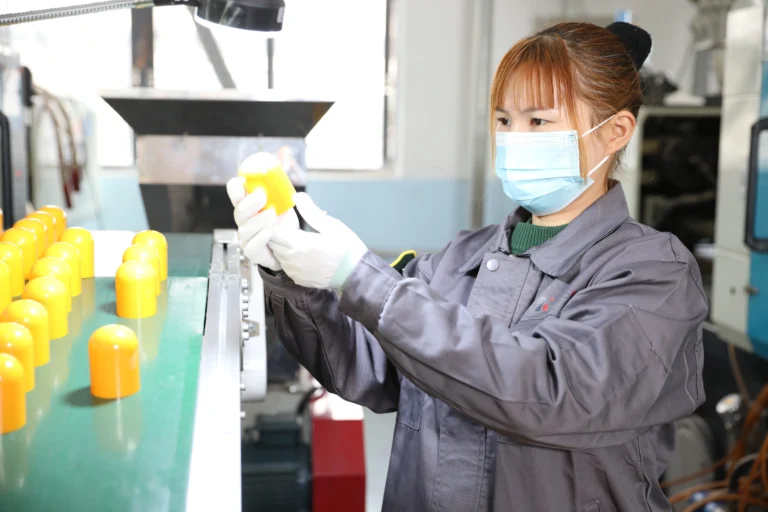
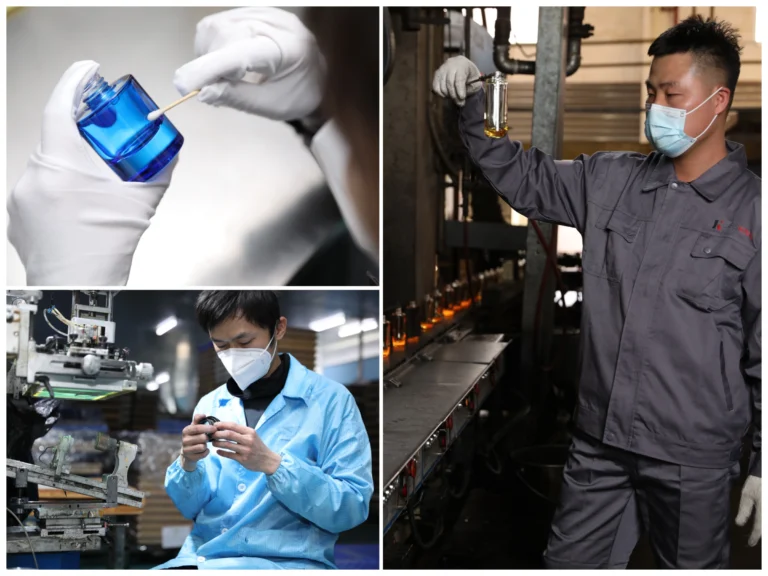
Testing turns a beautiful sample into a bottle you can ship with confidence. Run these checks on decorated, fully assembled samples filled with your actual formula, not with water or a placeholder fragrance.
| Test | What it checks | Why it matters |
|---|---|---|
| Formula compatibility | Swelling, discoloration, leaking, and fragrance change over time with your formula | Alcohol and fragrance oils can attack some plastics, gaskets, dip tubes, and decorations |
| Spray performance | Dose, spray pattern, and priming strokes against the brief | A pump that will not prime or spits usually traces back to dip-tube length, pump-to-neck fit, or sealing |
| Crimp and seal integrity | Leaks and consistent crimp height | Pumps must sit level and seal reliably on every bottle |
| Glass anneal | Internal stress, viewed under polarized light | Properly annealed glass is far less likely to crack during filling, transport, or temperature swings |
| Decoration durability | Adhesion, rub, and alcohol resistance | Printing and metallization must survive handling and fragrance on the outside of the bottle |
| Transit durability | The full set: bottle, cap, pump, insert, and carton | Packaging has to survive the actual shipping route it will take |
| Production sampling | AQL (acceptable quality limit) sampling under ISO 2859, with lot-number traceability | Any issue can be traced to its batch |
Swipe to see the full table →
ASTM C148 describes polariscopic test methods for the state of anneal in glass containers. For the failure points that testing is designed to catch, see why perfume packaging fails, how to fix a perfume bottle that won't spray, and our guide to designing perfume packaging backward from shipping requirements.
A Realistic Timeline for a Custom Perfume Bottle
For a fully custom bottle on a private mold, the overall window is 84–110 days from approved concept to finished goods at the factory. Customizing an existing bottle is faster, at 40–60 days, because there is no new mold on the critical path.
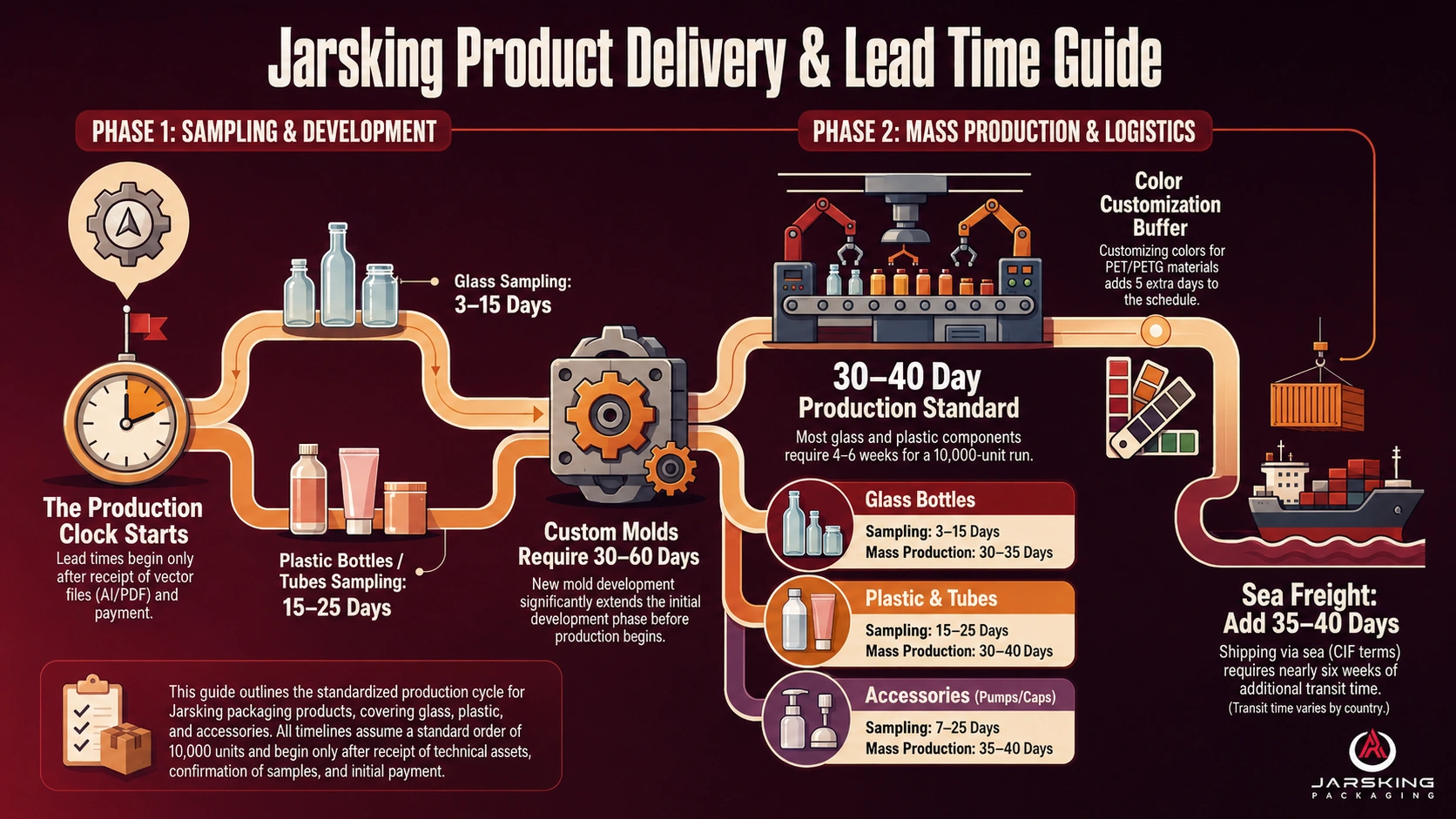
| Stage | Typical duration | What you approve |
|---|---|---|
| Brief and strategy | Starts on receipt of a complete brief | Scope, route, volumes, target date |
| Concept and design refinement | 1–2 weeks | Design direction, renders, CMF |
| Engineering and prototype | Confirm per project | Technical drawings, prototype in hand |
| Tooling (new molds) | 30–60 days | Tooling release |
| Sampling and validation | Confirm per project | Decorated, tested samples |
| Mass production | 30–40 days | Pre-shipment inspection |
| Concept to finished goods (ex-works) | 84–110 days | |
| Sea freight | Adds 35–40 days |
Swipe to see the full table →
Three habits keep projects at the short end of the range: send artwork as vector AI or PDF files with Pantone references or physical color samples; consolidate feedback into one set of comments per review round; and decide on the neck finish and cap concept before tooling release.
What Drives Cost and Minimum Order
Unit cost and minimum order quantity (MOQ) for a custom perfume bottle depend on a handful of variables, and knowing them helps you spend where shoppers will notice.
New mold vs. existing mold
A private mold is a one-time investment that unlocks a unique silhouette. For customized existing bottles, our MOQ is 10,000 units per SKU; for fully custom bottles on a private mold, it is typically 30,000–50,000 units per SKU, confirmed per project.
Glass weight
More glass means more material, longer cooling, and higher freight weight.
Decoration passes
Each spray, print, or stamping step adds processing and inspection.
Component customization
A custom-colored pump collar or a bespoke cap adds development alongside the bottle.
Sourcing the bottle, pump, cap, and box from separate suppliers adds handoffs, tolerance risk, and schedule risk. Developing the set together removes most of them.
We quote per project because these variables interact. A heavier bottle with a simple cap can cost less than a lighter bottle with a multi-part metal closure.
How to Protect Your Bottle Design
Settle design ownership in writing before development starts. On OEM projects, you retain your design and intellectual property. On OBM co-development projects with Jarsking Studio, ownership of the client's specific design is discussed and confirmed in signed legal documents at the start of the project. Registering your final design in your key markets is a sensible next step once the shape is frozen.
How Jarsking Develops Custom Perfume Bottles
Fragrance is one of the categories we know best. Since 2003, Jarsking has developed packaging for beauty, fragrance, personal care, and wellness brands from our headquarters in Guangzhou, with offices in Dubai and Los Angeles.
- Design that is built to be made. Our designers work alongside our engineers, so concepts are shaped by manufacturing reality from the first sketch, not corrected after it.
- Glass made in-house. Our glass workshop runs a 52-ton furnace and six production lines producing high-clarity flint glass, with glass stress testing as part of quality control.
- Molds under our own roof. An in-house mold manufacturing center builds private tooling, and our existing mold library gives faster routes when a customized bottle fits the brief.
- The full set from one partner. Decoration, caps, pumps, and cartons are coordinated under one project manager, so the bottle, closure, and box are developed as one system.
- Proven at retail. We have produced packaging for brands sold through Sephora, Walmart, Watsons, and Douglas.
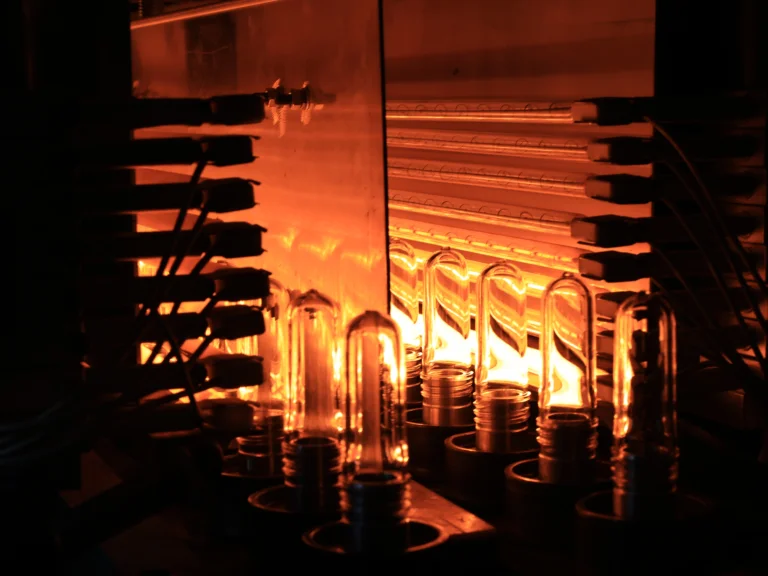
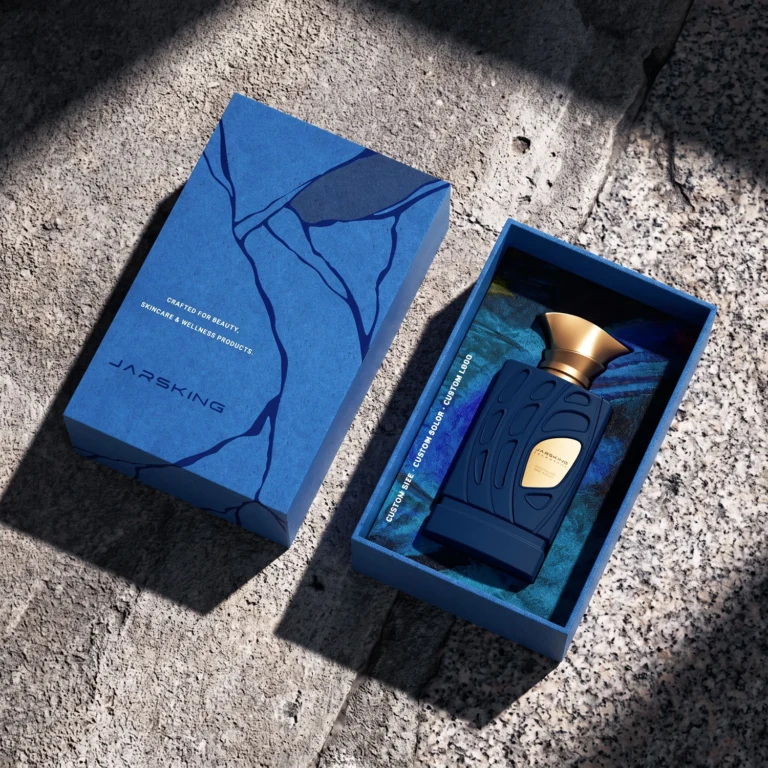
Explore our custom perfume bottles, see how our in-house bottle molding works, or browse the wider perfume packaging range.
Frequently Asked Questions
How long does it take to develop a custom perfume bottle?
A fully custom perfume bottle on a new private mold typically takes 84–110 days from approved concept to finished goods at the factory, with new molds alone taking 30–60 days depending on complexity. Sea freight adds 35–40 days. Customizing an existing bottle with your own color, decoration, and cap is faster, at around 40–60 days before shipping.
What is the minimum order for a custom perfume bottle?
Minimum order depends on whether a new mold is required. For a customized version of an existing bottle, Jarsking's MOQ is 10,000 units per SKU. A fully custom bottle on a private mold typically requires 30,000–50,000 units per SKU, with the final figure confirmed per project.
Can I customize an existing perfume bottle instead of making a new mold?
Yes. You can choose a proven shape from an existing mold library and make it yours through color, finish, decoration, cap, and branding. This route avoids tooling, so it is faster and has a lower minimum order. A private mold is worth it when the bottle's silhouette itself is the brand asset.
What should a custom perfume bottle brief include?
A useful brief covers fill volume, fragrance concentration and alcohol content, spray or splash format, crimp or refillable neck, retail price and channel, target markets, first-order quantity, launch date, and visual references. The formula details matter most, because they determine which component materials will pass compatibility testing.
What tests should a perfume bottle pass before mass production?
Test fully assembled, decorated samples filled with your actual formula for compatibility, spray performance, leaks and crimp integrity, decoration durability against alcohol and handling, and transit durability. Glass should also be checked for proper annealing using polarized light, which reveals internal stress that could lead to cracking.
Who owns the design of a custom perfume bottle?
Ownership depends on the development route. When a manufacturer produces your existing design, you keep the design and intellectual property. When a bottle is co-developed, ownership should be agreed in signed legal documents before work begins. At Jarsking, OBM clients confirm ownership of their project design with Jarsking Studio in writing at the start.