












The bottle gets the design review. The dispenser gets picked from a catalogue in ten minutes, near the end of the project, usually on price. That order of operations is backwards — because in a lotion pump vs airless decision, the dispenser is what actually determines whether your actives survive twelve months, how much of the formula the customer can physically reach, how consistent each dose feels, and whether the finished pack can be recycled at all. Here is how the four systems really work, and how to pick between them.
This is the second guide in our lotion packaging series. The first covered how to choose the best material for lotion bottles — glass, PET, PETG, HDPE, PP, acrylic and PCR. You have chosen what the bottle is made of. Now for the harder half: what goes on top.
What a dispenser actually has to do
Strip away the finishes and the actuator shape, and every dispensing system is judged on four jobs. Score your candidates against these before you compare prices, because a cheap dispenser that fails job one will cost you a reformulation.
Job one is where most of the money is. A formula that oxidises, separates or grows microbially in month eight generates returns, bad reviews and, in the worst case, a recall. Job four is where most of the future risk sits, as recycled-content and recyclability rules tighten across the EU and North America.
The four systems at a glance
More filled circles mean a stronger score. Read this as a shortlist generator; the mechanics below explain why each system earns its rating.
| System | Air exclusion | Dose control | Evacuation | Viscosity range | Low unit cost | Recyclability | Best for |
|---|---|---|---|---|---|---|---|
| Lotion pump | Everyday body lotion | ||||||
| Airless pump | Actives, clean beauty, prestige | ||||||
| Disc-top cap | Shower & value body care | ||||||
| Treatment pump | Serums & high-value formulas |
More filled circles = stronger score. Ratings are directional, based on typical cosmetic-grade components and Jarsking production experience. Confirm against your own formula and bottle geometry.
How each system works
The standard lotion pump
Press the actuator and you compress a chamber, forcing product out through the nozzle. Release it, and a spring pushes the piston back up. That return stroke creates suction, pulling the next dose up a dip tube that reaches the bottom of the bottle. So far, so elegant.
Here is the part that matters, and it is the crux of this entire article: as the formula leaves the bottle, something has to replace its volume. In a standard pump, that something is air, drawn back in through a vent. Every dose you dispense pulls a fresh charge of oxygen into the headspace, where it sits against your formula until the next use. Over a bottle’s life the formula is exposed to air hundreds of times.
For a robustly preserved, water-based body lotion, this is entirely fine — which is why the standard pump remains the workhorse of the category. It is inexpensive, handles a wide viscosity band, and works on almost any standard neck finish. Its weaknesses are exactly what you would predict: headspace oxidation, and the ring of product stranded around the base and shoulders that the dip tube cannot reach.
The airless pump
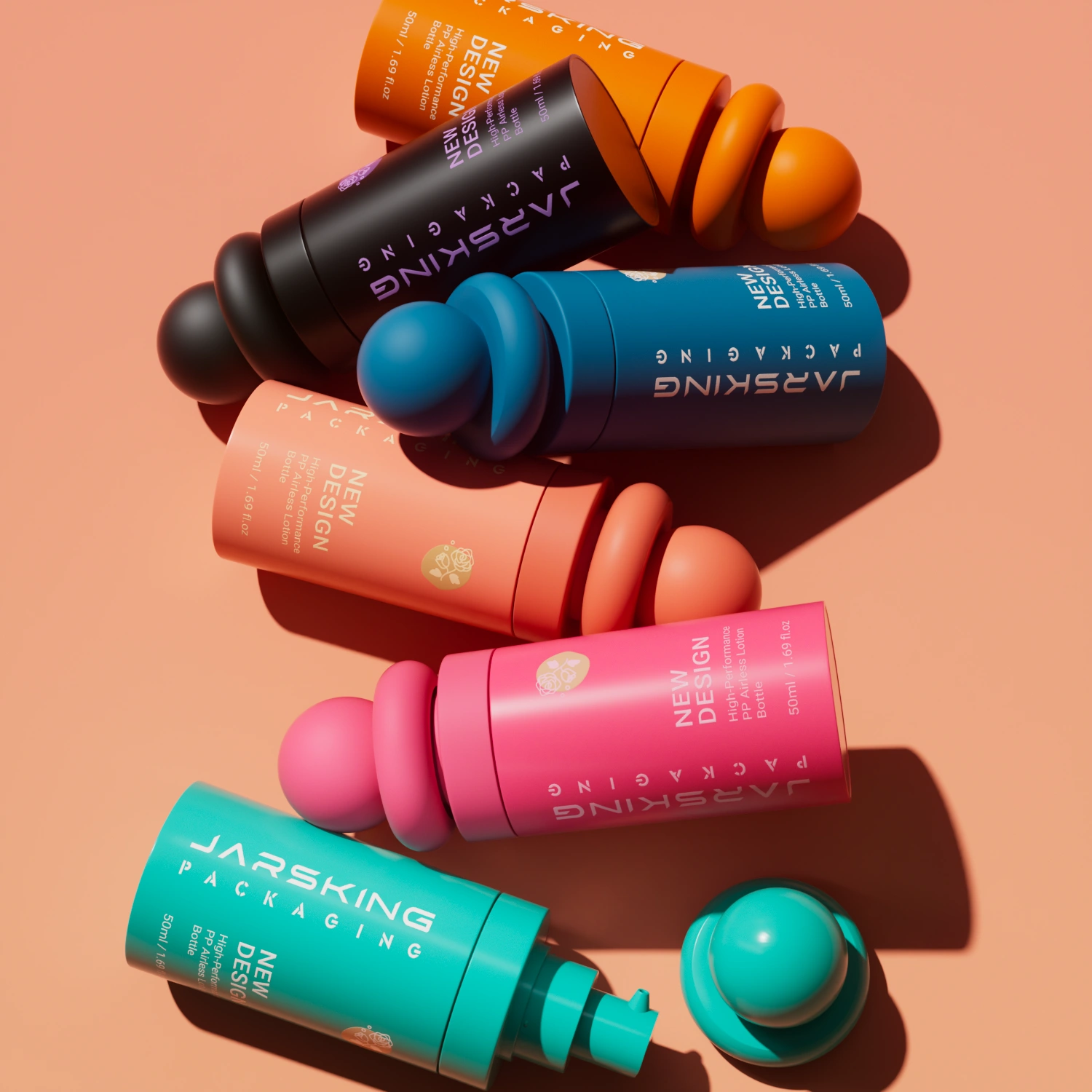
An airless bottle deletes the dip tube entirely. Instead, a piston sits beneath the product and rises as the formula is drawn out, or a collapsible pouch shrinks around it. The volume is replaced not by air, but by the piston itself travelling upward. Nothing enters the bottle. Ever.
That single change cascades into every one of the four jobs. Oxidation slows dramatically because there is no oxygen to react with. Microbial ingress drops because the formula never meets air or fingertips, which is why brands formulating with minimal or no synthetic preservatives lean on airless systems. Because the piston sweeps the bottle wall, evacuation is high — typically in the region of 90–95% of the fill, against a dip-tube pump that routinely strands more. And dosing stays consistent from the first stroke to the last, because the mechanism does not depend on suction through a tube.
The honest trade-offs: airless components cost more, they impose a viscosity ceiling (a very thick balm will not flow around the piston reliably), and an opaque outer wall means the customer cannot see how much is left — which is a real complaint driver unless you design a window or a translucent shell. You can see the mechanism and format options on our airless bottles page.

The disc-top (and flip-top) cap
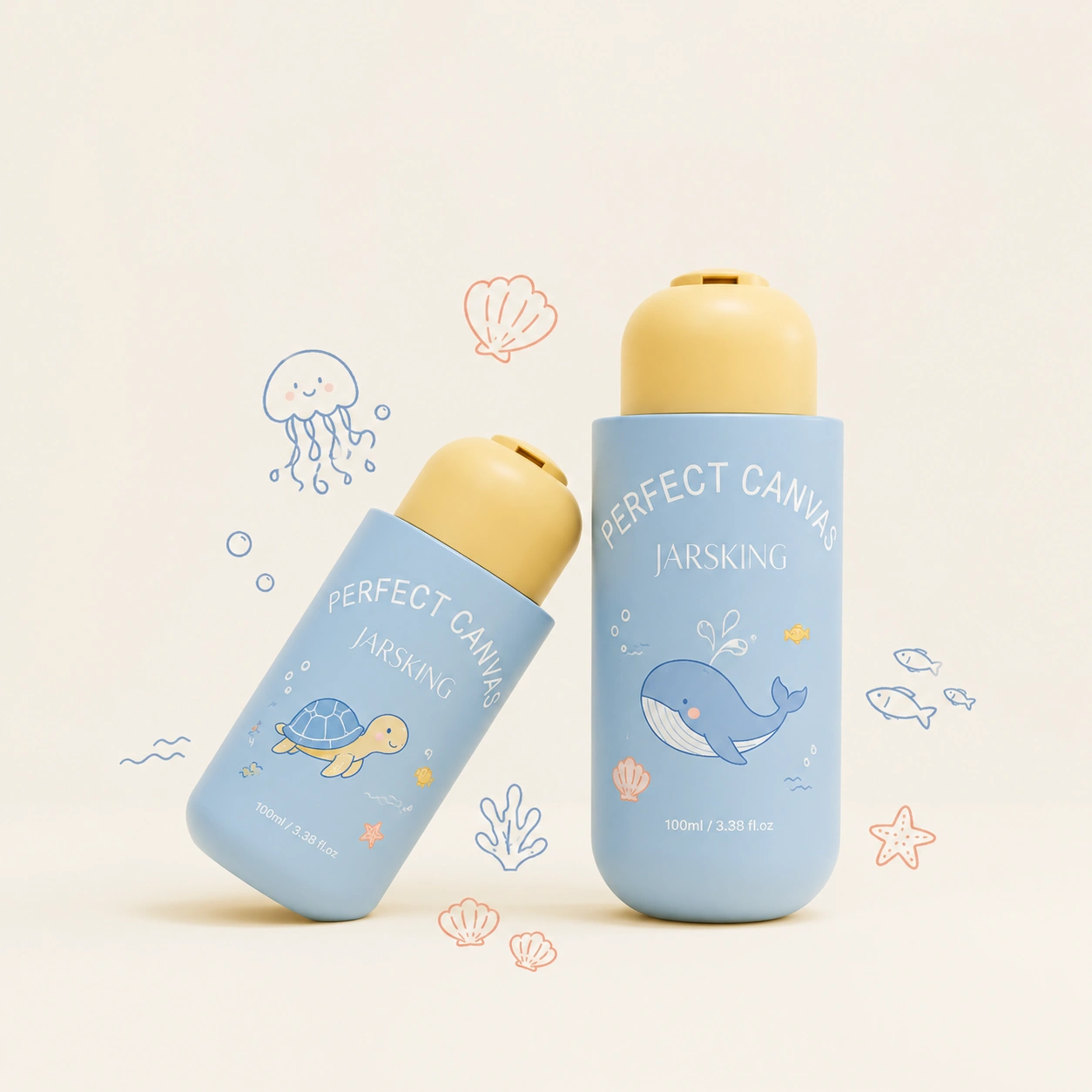
A disc-top is not a pump at all. It is a closure with a hinged disc that you press to open an orifice; the product comes out because you squeeze the bottle. That distinction explains everything about it. There is no spring, no dip tube, no metering chamber — so it is the cheapest, most robust and most shower-friendly option on this list, and it happily handles thick, fast-flowing body creams.
What you give up is dose control and air exclusion. Every squeeze that expels product is followed by a relaxation that pulls air straight back in. And the “dose” is whatever the user’s grip strength decides. For a well-preserved body lotion in an HDPE squeeze bottle — the classic drugstore format from our materials guide — that is a perfectly rational engineering choice, not a compromise.
The treatment (serum) pump
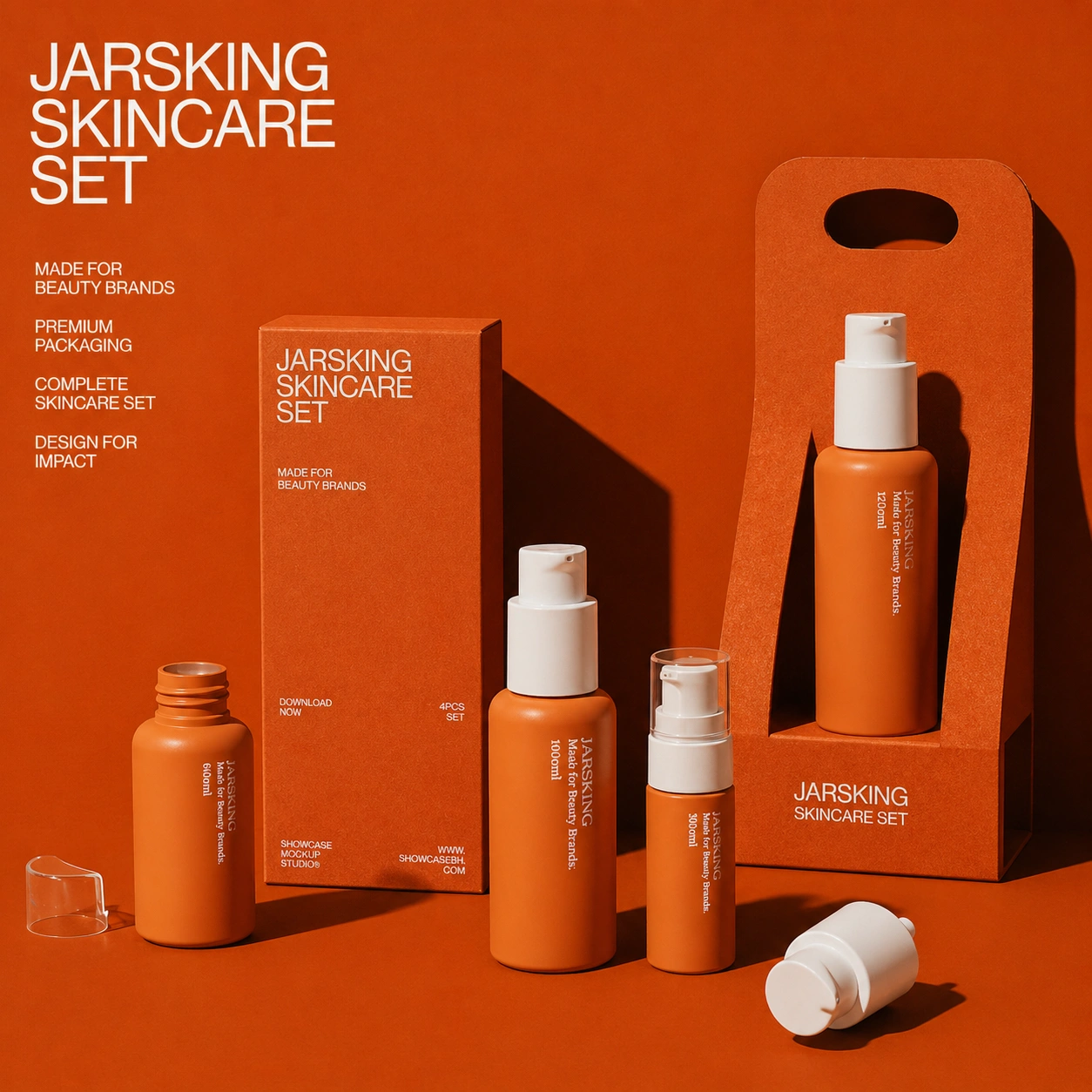
Mechanically a treatment pump is a small lotion pump, tuned for precision rather than volume. Its job is to deliver a tiny, exact dose of an expensive formula without waste. Where a body-lotion pump might deliver 0.5–3.0 ml per stroke, a treatment pump typically sits in the 0.1–0.4 ml band, with a finer orifice and a lighter actuation.
The economics are the point. On a 30 ml serum, over-specifying the stroke by 0.5 ml does not cost you a rounding error — it silently removes roughly seventeen doses from the bottle. Customers experience that as a product that “runs out too fast,” which is a pricing problem disguised as a packaging spec.
Dosage and viscosity: the two specs buyers under-specify
Almost every dispensing failure we are asked to diagnose traces back to one of two numbers that nobody wrote on the brief.
Dose per stroke should be derived from the product’s usage occasion and price, not inherited from whatever the supplier had in stock. A body lotion applied to arms and legs wants volume. A face cream wants a pea. A serum wants a few drops. Match the stroke to the gesture.
Viscosity decides whether the mechanism works at all. A standard dip-tube pump is comfortable through the low-to-mid thousands of centipoise — thin milks up to conventional lotions. Push it into rich cream territory and the pump starves: the dose becomes erratic, actuation stiffens, and users complain the bottle is “broken.” Airless pistons tolerate thicker formulas than a dip tube but still have a ceiling. Above that, a wide-orifice disc-top, a tube, or a jar is the honest answer.
Three brands, three different dispensing bets
Vaseline (Unilever)
Design the spring out, not the pump
Unilever redesigned the pump on Vaseline's North American lotion bottles to remove the internal metal spring that had made it hard to recycle. The company reports the replacement is widely recyclable across more than half of recycling facilities in the US and Canada, and that packaging changes to Vaseline since 2018 have avoided virgin plastic equivalent to roughly 11 million lotion bottles. Notably, the brand did not abandon the pump format that customers know — it re-engineered the part that failed job four.
Steal this: the steel spring is the single biggest recyclability bottleneck in a conventional pump. Before you redesign the whole pack, ask whether a spring-free or mono-material engine gets you most of the way there.
Nuori
When the packaging is the preservative
The Danish skincare brand's launch of "The One" carried no synthetic preservatives, stabilisers or shelf-life additives. That is an enormous formulation constraint, and it forced the dispensing decision: the brand chose an airless system so the container itself would shield the fresh ingredients from air and contamination. Reported by trade publication Beauty Packaging, it is a clean illustration of dispensing driven entirely by chemistry.
Steal this: airless is a formulation decision, not an aesthetic one. If your clean-beauty claim depends on omitting preservatives, the dispenser has to do that work — and a jar or standard pump cannot.
Dermalogica
Protect the mechanism, not just the molecule
For Porescreen Mineral Sunscreen SPF40, a multitasking product built on microencapsulated actives, Dermalogica specified an airless pump tube. The requirement was unusual: the encapsulation itself is physical, and it has to arrive at the skin intact. An airless system delivers the formula without the shear, air exposure and contamination that would compromise it in transit through an open pack.
Steal this: when a formula's performance depends on physical structure — encapsulation, emulsion, suspension — the dispenser stops being packaging and becomes part of the formula's delivery system.
The recyclability problem nobody raises at sampling
A conventional pump is one of the most material-diverse objects in your entire pack. Inside a single dispenser you will typically find two or three different plastics, a steel spring, and often a metal or glass ball acting as a one-way valve. Recycling lines cannot separate that assembly economically, so pumps are routinely pulled off the line and sent to landfill or incineration — even when the bottle beneath them is perfectly recyclable rPET or HDPE.
This is the same mono-material principle that ran through our materials guide, applied to the component people forget. Three routes out:
- Mono-material pumps. Every component moulded from one family (all PP, or all PE), including a moulded plastic spring. These now exist at production quality and standard neck finishes.
- Spring-free designs. Replace the steel coil with an engineered plastic return element — the route Vaseline took.
- Refill architecture. Keep the dispenser, replace only an inner cartridge or pouch. This is where airless systems have a structural advantage, since the piston cartridge is already a discrete part.
One honest caveat worth building into your roadmap: sorting at most facilities is still done visually or by density, so a mono-material pump can be rejected simply because it looks like a conventional pump. The material fix is necessary but not yet sufficient — which is why credible brands pair it with refill programmes rather than a recyclability claim alone. For context on why design, not disposal, does the heavy lifting here, the Ellen MacArthur Foundation sets out the circular framework this follows; Unilever’s own account of the Vaseline pump redesign shows what it looks like on a mass-market lotion.
A decision path you can actually use
Run your product through this in order. The first match is usually the right shortlist.
- Preservative-free, high-value actives, or encapsulated systems? → Airless. The packaging is doing chemistry work.
- Serum, eye product, or anything above roughly $1/ml? → Treatment pump, dose specified deliberately.
- Used in the shower or with wet hands? → Disc-top on a squeezable bottle. Robustness beats metering.
- Mass body lotion, cost-led, well preserved? → Standard lotion pump. Specify a spring-free engine if you have a recyclability target.
- Rich cream or balm above the pump viscosity ceiling? → Jar, tube, or wide-orifice disc-top. Do not force a pump.
Whatever the answer, test it. A dispenser that performs beautifully with water in a lab will behave differently with your emulsion at 5 °C in a warehouse. We build pump-and-bottle samples for exactly this reason: actuation force, dose repeatability, evacuation and leak performance are measured on the real formula before tooling is committed.
Specify the dispenser first, not last
Lotion pump, airless, disc-top or treatment pump — the right answer falls out of the four jobs. Decide how much protection the formula genuinely needs, how precise the dose has to be, how much product the customer must be able to reach, and what has to happen to the pack at end of life. A standard pump is not a lesser choice; it is the correct choice for a well-preserved body lotion. Airless is not a luxury signal; it is chemistry infrastructure. Get the order of reasoning right, and the dispenser stops being the thing you regret.
FAQs
Do airless pumps really dispense 90–95% of the product?
A well-engineered airless piston system typically evacuates in the region of 90–95% of the fill, because the piston sweeps the bottle wall as it rises. A dip-tube pump commonly strands product around the base and shoulders. The exact figure depends on bottle geometry, formula viscosity and piston fit — measure it on your own pack rather than assuming the headline number.
Can I put a thick cream in a standard lotion pump?
Only up to a point. Standard dip-tube pumps are comfortable through the low-to-mid thousands of centipoise. Above that the pump starves, the dose becomes inconsistent, and actuation feels stiff. Thick creams and balms are better served by an airless piston system, a wide-orifice disc-top, a tube, or a jar.
Are lotion pumps recyclable?
Conventional pumps usually are not, because they combine several plastics with a steel spring and often a metal or glass ball. Recycling lines cannot separate these economically. Spring-free and mono-material pumps solve the material problem, though facilities may still reject them on visual sorting. Refill architecture is the other route.
What dose per stroke should I specify?
Derive it from the usage gesture and the price per ml. Body lotions typically run 0.5–3.0 ml per stroke; face creams around 0.2–0.5 ml; serums and treatment products 0.1–0.4 ml. Over-specifying the stroke on an expensive formula quietly removes doses from the bottle and reads to customers as poor value.
Airless or a jar for a preservative-free cream?
Airless. An open jar exposes the formula to air and fingers at every single use, which is the main contamination route. An airless system keeps the formula sealed from filling through to the final dose — which is precisely why brands formulating without synthetic preservatives choose it.
What is the MOQ for a custom lotion bottle and pump set?
Jarsking typically requires a 10,000-unit minimum per SKU on existing molds. Some stock components run lower and custom tooling runs higher, so MOQ is confirmed per project once the bottle, dispenser, dose and decoration are defined. Explore our lotion bottle range to start that conversation.