logo

Jarsking's Manufacturing Facilities & Quality Certifications

Jarsking operates 100,000㎡ of self-owned manufacturing facilities across China and maintains strategic partnerships with 10+ specialised cooperated factories. Our production is certified to ISO 9001:2015, our glass packaging is certified to EU RoHS, and we are registered for German packaging EPR. Certificate numbers, issuing bodies and expiry dates are published so your compliance team can verify them directly.

Our Self-Owned Manufacturing Facilities

Jarsking’s vertically integrated facilities combine precision engineering, automation, and craftsmanship. From glass to decoration workshops, every process is executed in-house under global standards for speed, quality, and innovation.

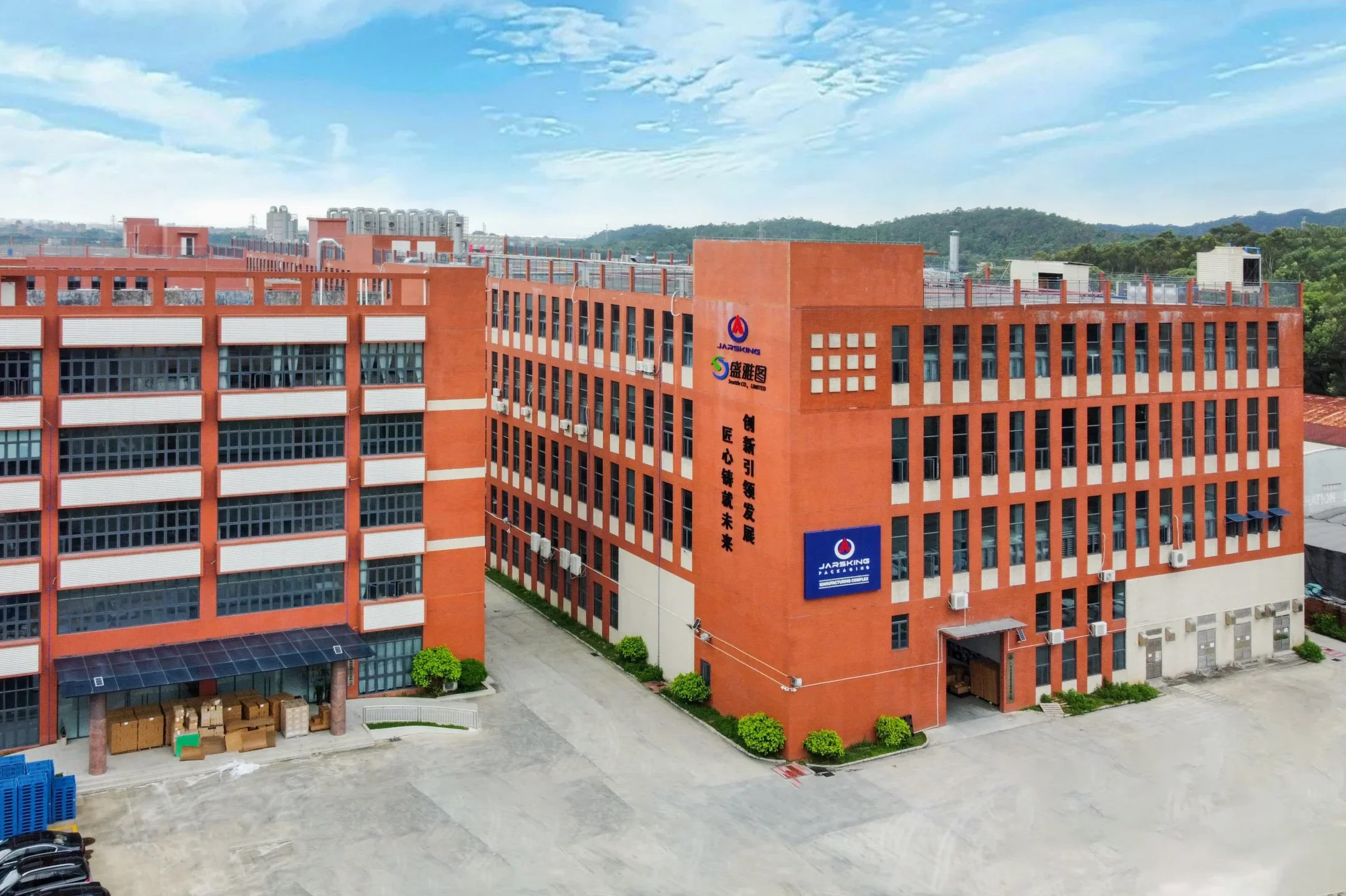
Cosmetic Packaging Factory 01
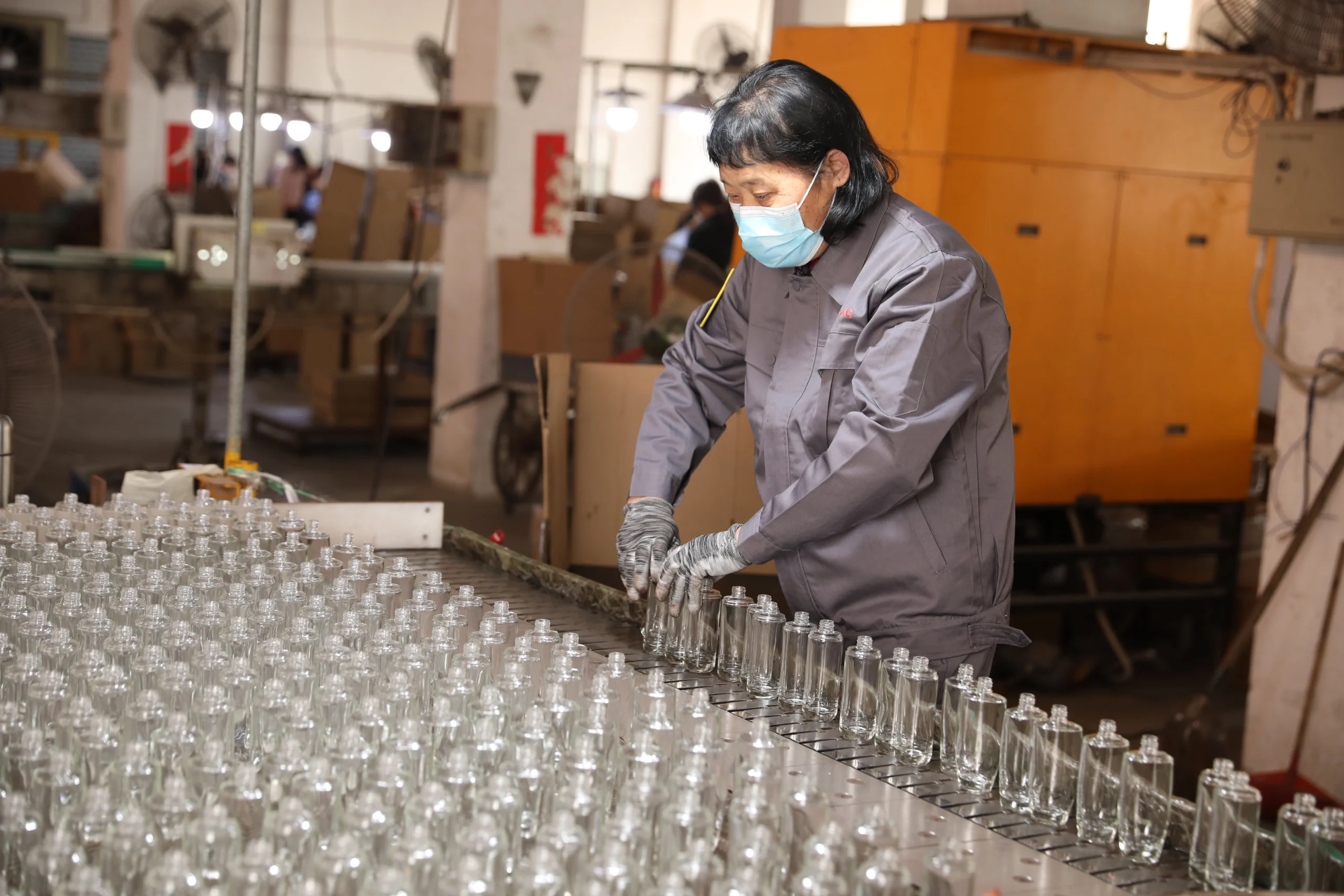
glassware factory
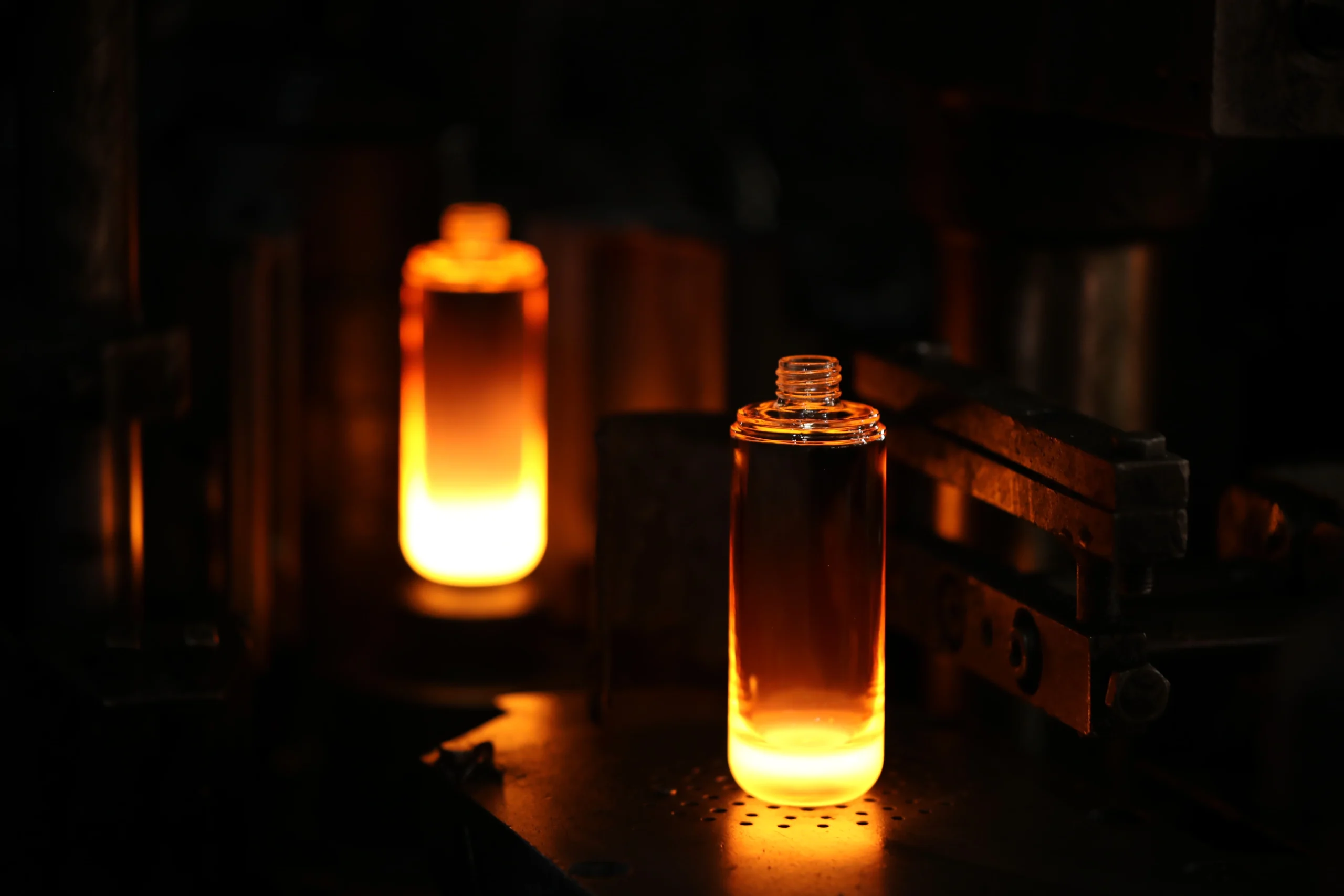
glass forming blowing
glassware factory
quality control

Glass Manufacturing Workshop

Facility Overview

Facility size: 60,000㎡ glass production facility
Production capacity: 500,000 glass bottles daily
Workforce: 170 specialized workers
Furnace capacity: 52-ton furnace

Production Infrastructure

6 advanced production lines operating continuously
1 DG line for specialized glass production
4 SG lines for standard glass manufacturing
1 8S line for enhanced production efficiency

Quality & Delivery

State-of-the-art technology ensures precision-crafted glass packaging
Consistent quality control throughout production process
Rapid turnaround times for both custom and standard orders

Plastic Production Workshop

Facility Specifications

Workshop size: 4,000㎡ dedicated plastic manufacturing space
Daily output: 500,000 plastic bottles
Team size: 50 skilled workers

Equipment & Capabilities

20 injection machines for precision molding
8 blowing machines for hollow plastic production
3 dedicated hose production lines
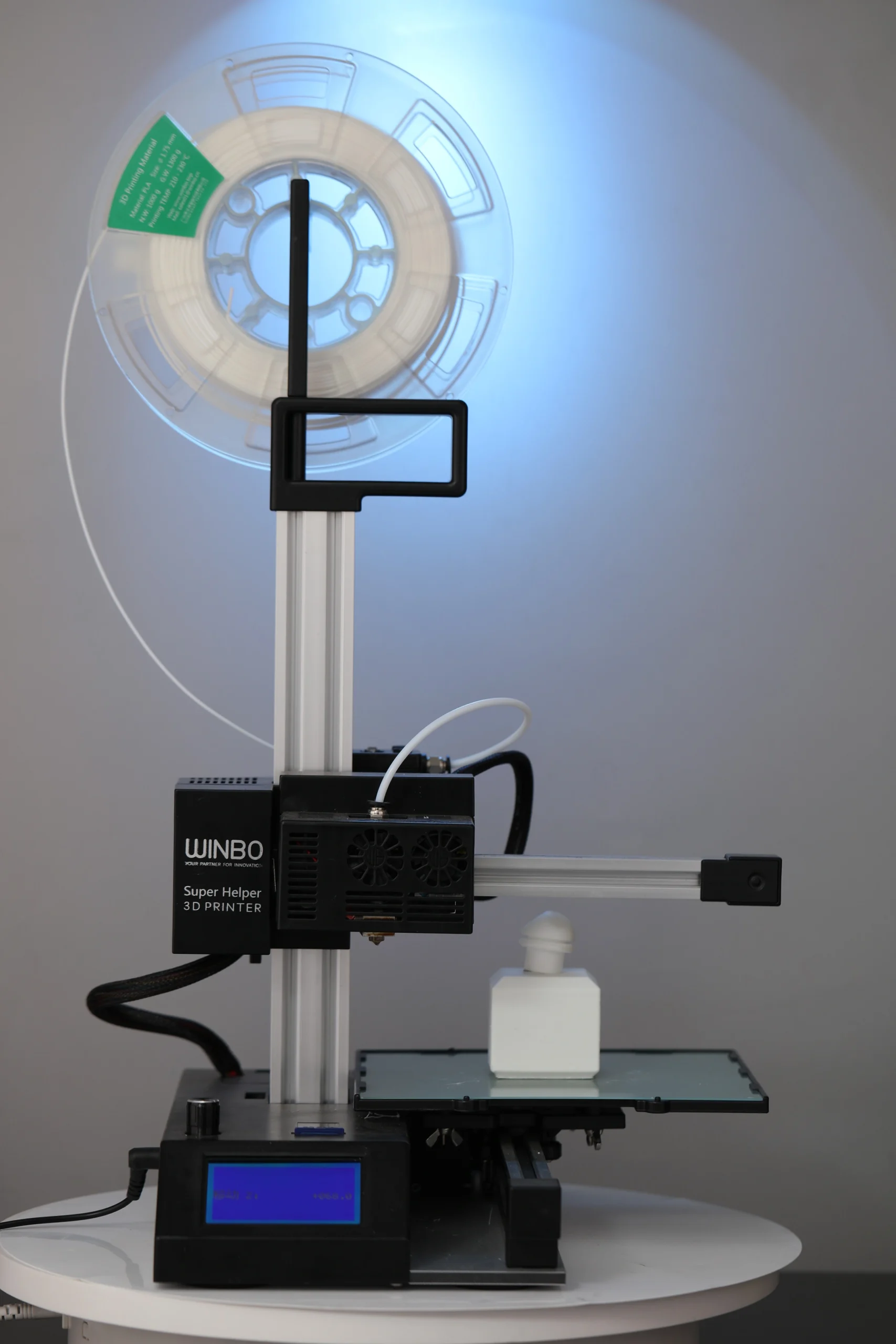
5 printing machines for in-house custom branding

Material Expertise

Specialized in PET (Polyethylene Terephthalate) packaging
HDPE (High-Density Polyethylene) production capabilities
PP (Polypropylene) packaging solutions
PCR (Post-Consumer Recycled) to support circular economy goals

plastic source
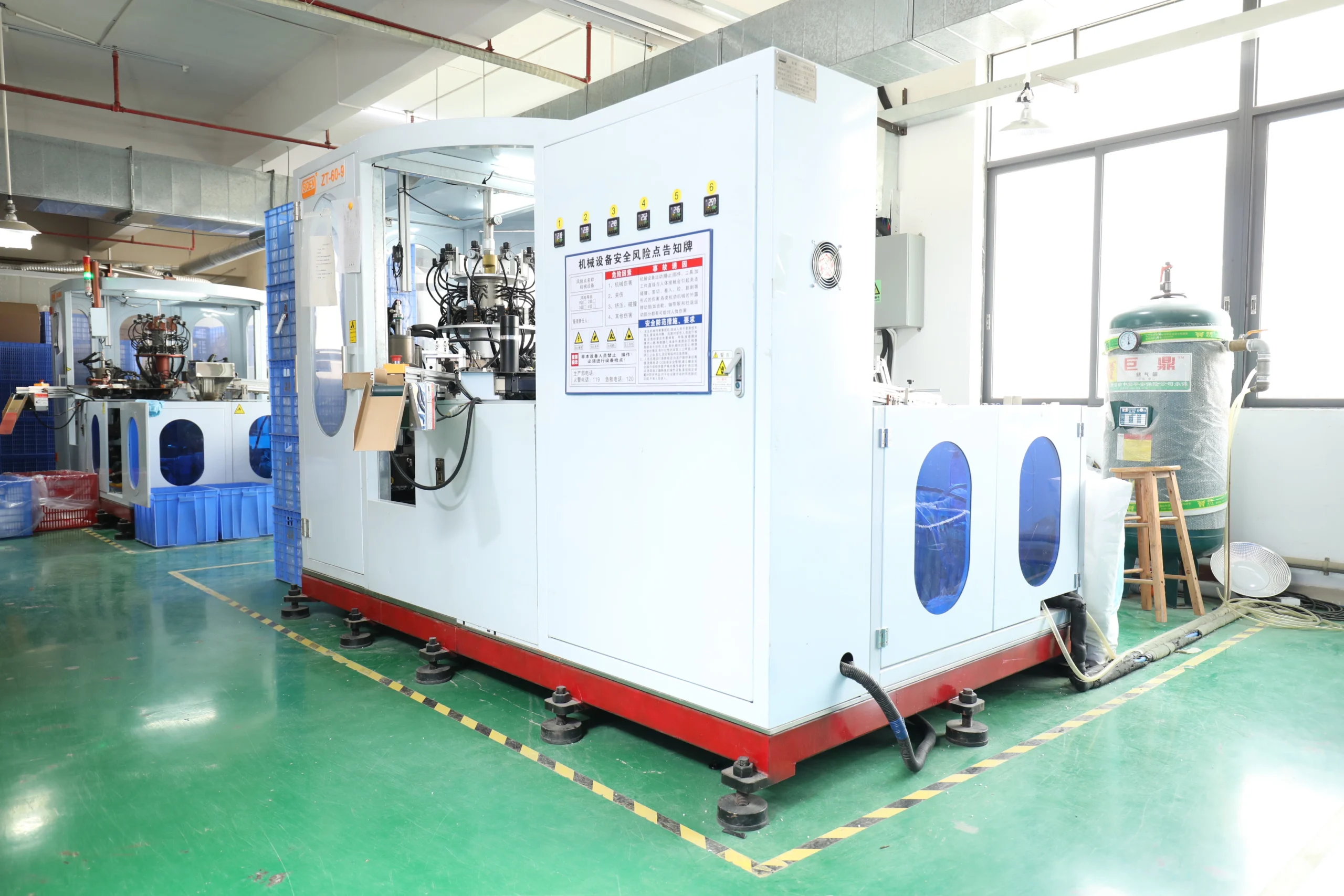
fully automated injection molding production line
mandrel section of a tube-forming machine
plastic bottle stack
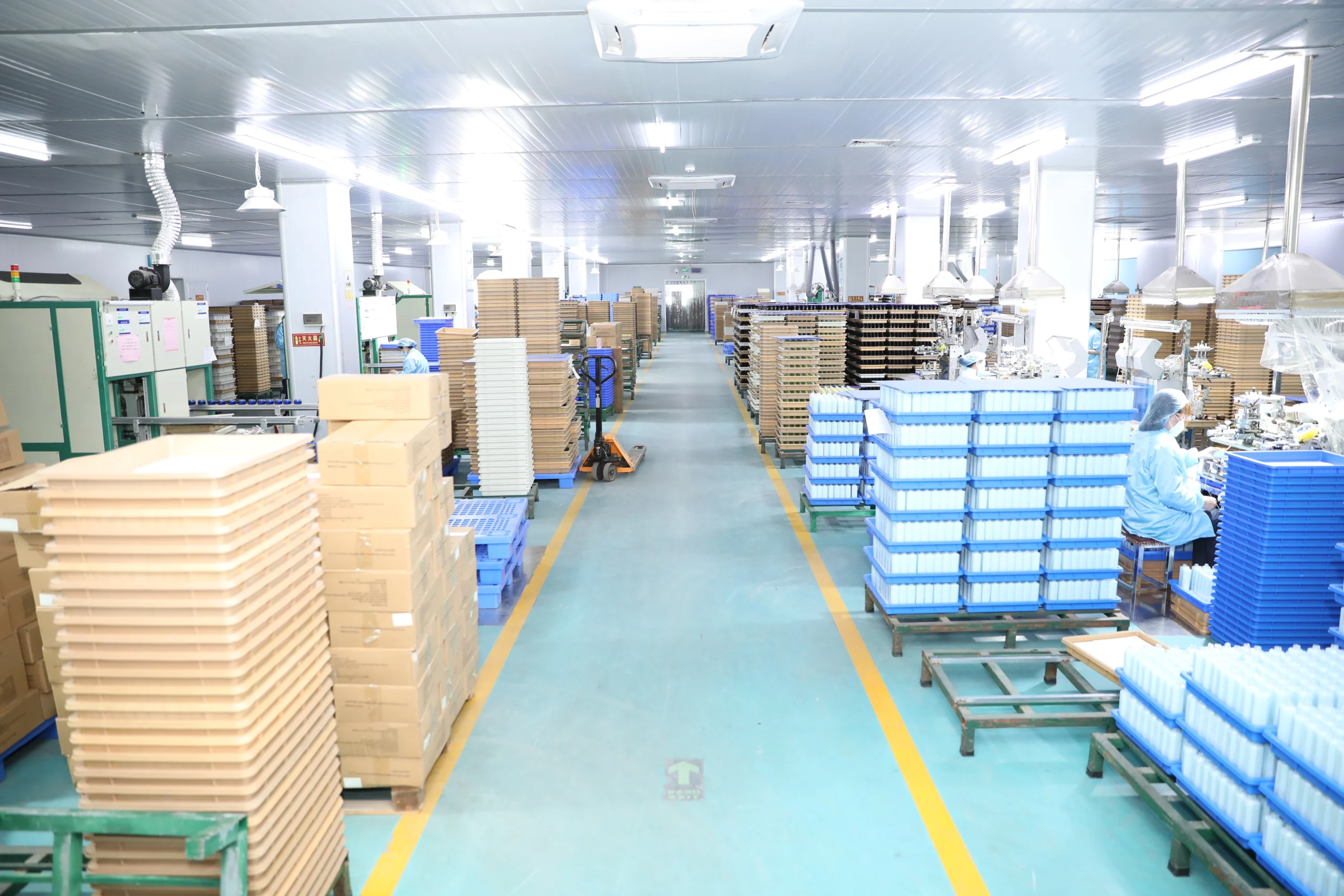
factory inside
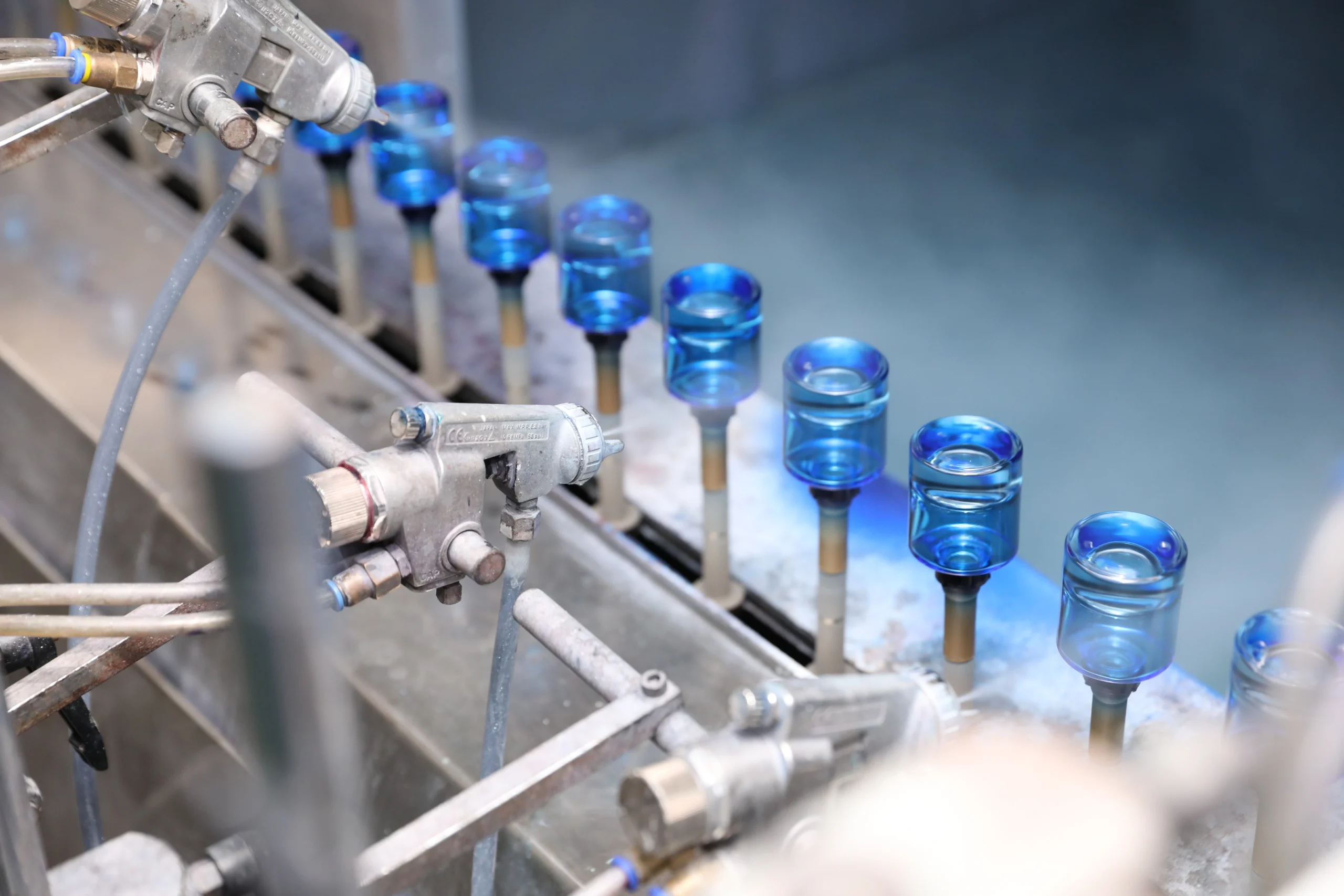
color coating
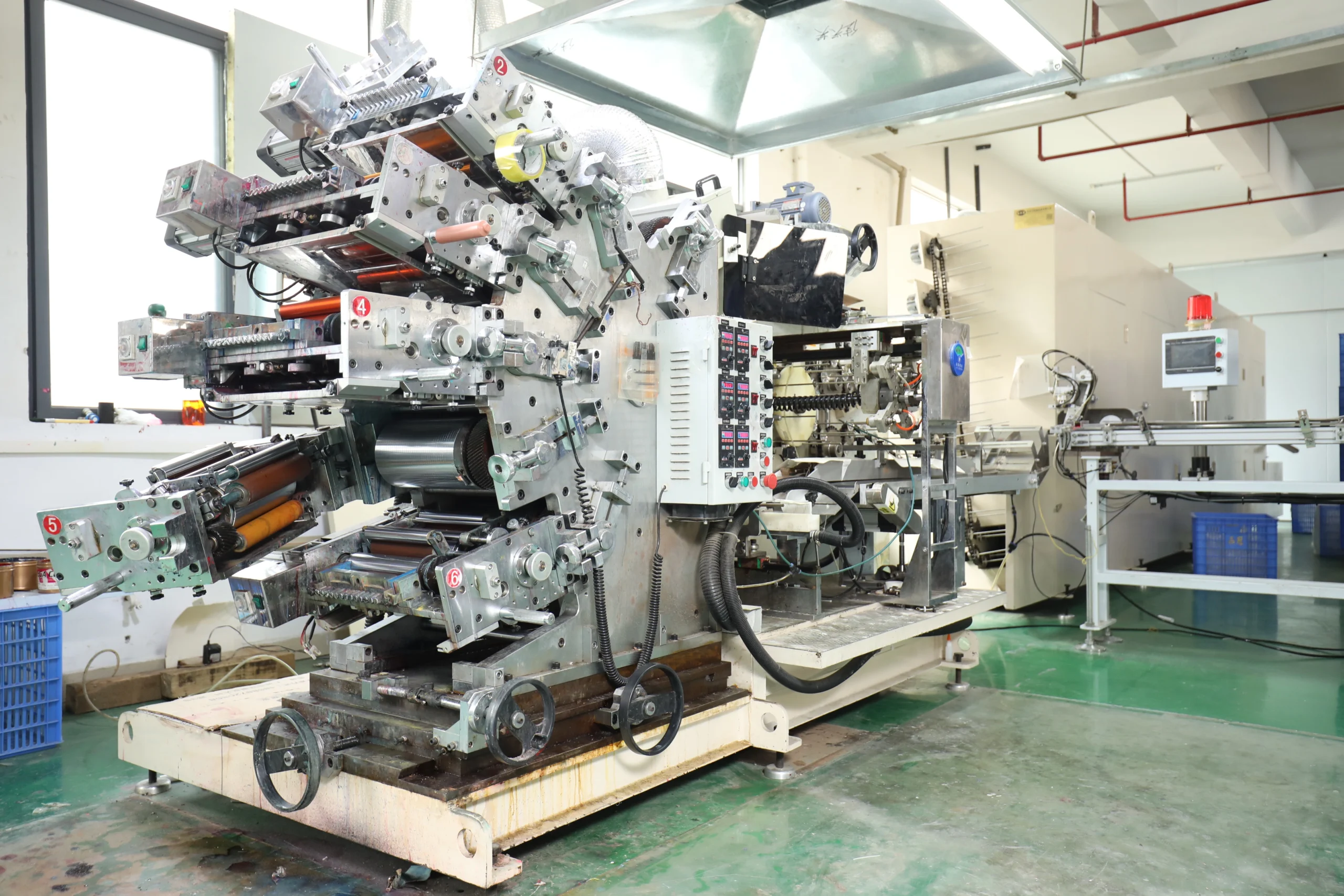
multi-color automatic printing press for cylindrical objects
automated spray-coating and curing line for bottles
Automatic screen printing machinery on the Jarsking factory floor
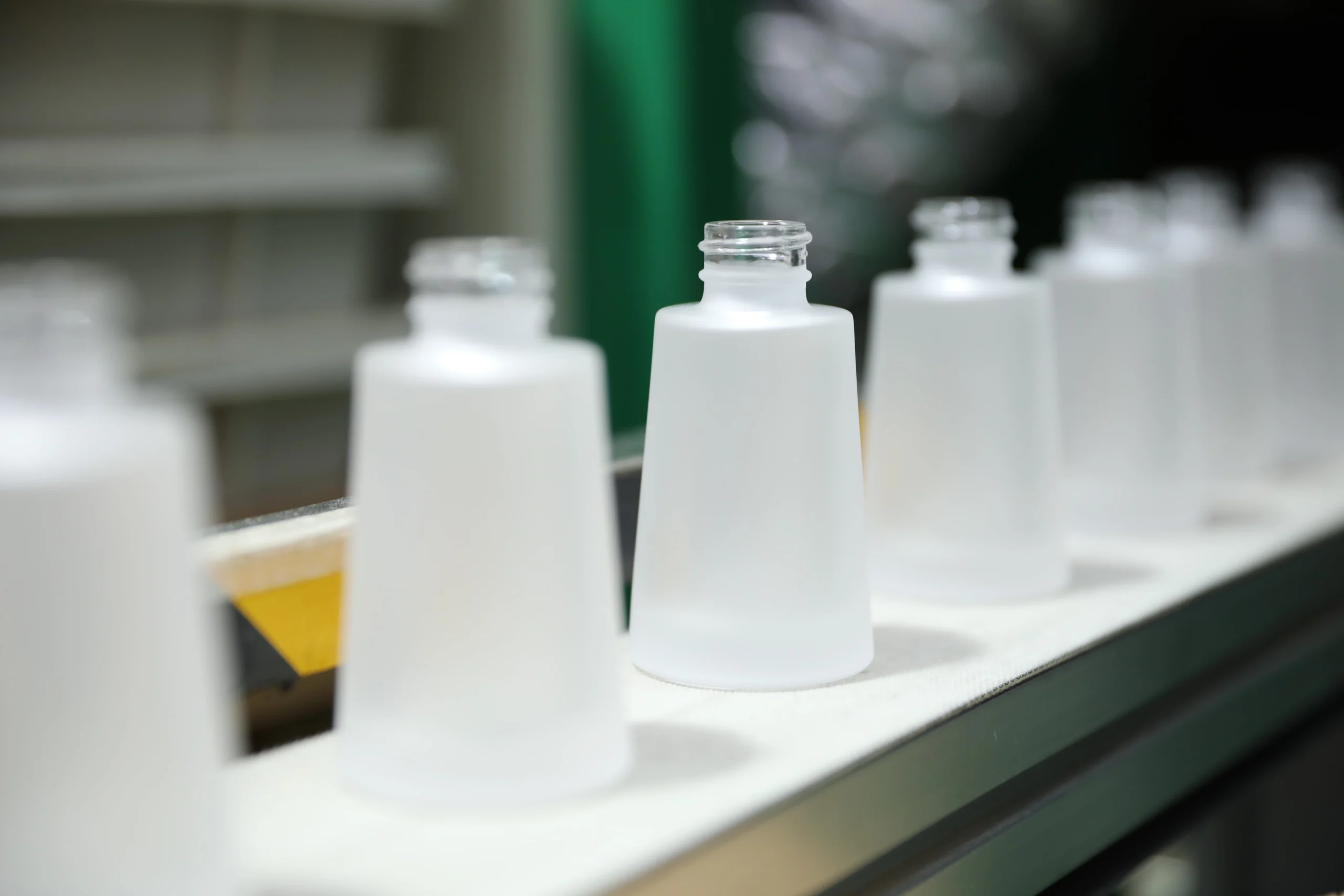
Frosted white cosmetic bottles moving along a production line at the Jarsking factory

Decoration & Finishing Workshop

Facility Highlights

Workshop size: 6,500㎡ main decoration facility
Additional space: 3,000㎡ metallization facility
Staff: Over 200 specialized decoration technicians
Industry position: Largest finishing center in Southern China

Decoration Equipment

20 silk screen printing units for precise graphics
10 hot stamping machines for metallic effects
3 complete spraying lines for coating applications
Dedicated metallization facility for premium finishes

Available Decoration Techniques

Embossing and debossing for textured effects
UV coating for high-gloss finishes
Electroplating for metallic appearances
Gradient spraying for multi-color effects
All decoration services available under one roof

Centre de Fabrication de Moules

Industry Leadership

Market position: Biggest mold factory in Guangzhou
Trial mold completion: 30-45 days from design to samples
Mass production molds: 30-35 days turnaround time

Engineering Services

Experienced mold designers and engineers on staff
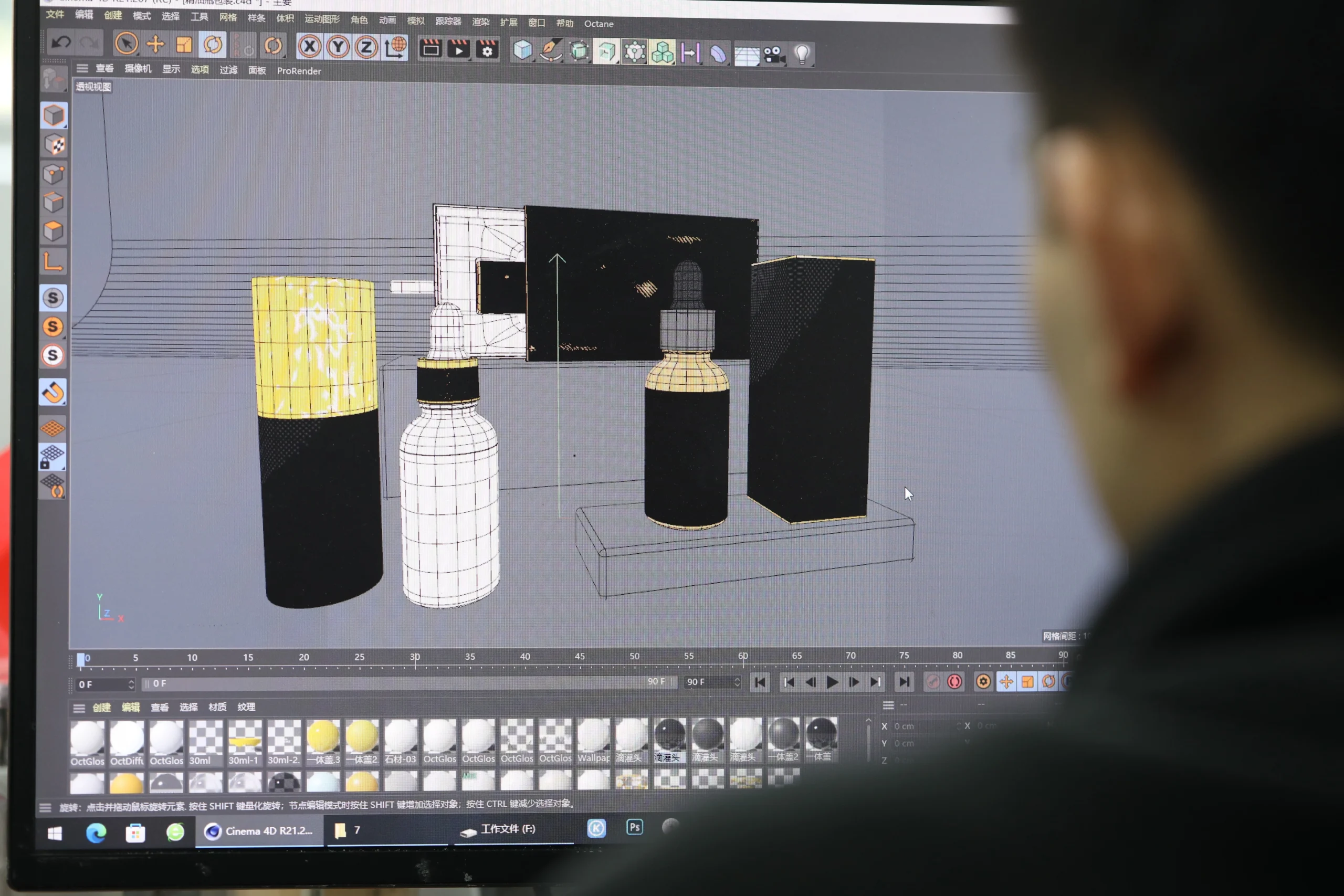
3D modeling for design visualization and approval
Prototyping services for testing and refinement
Feasibility analysis for custom packaging concepts

Production Advantages

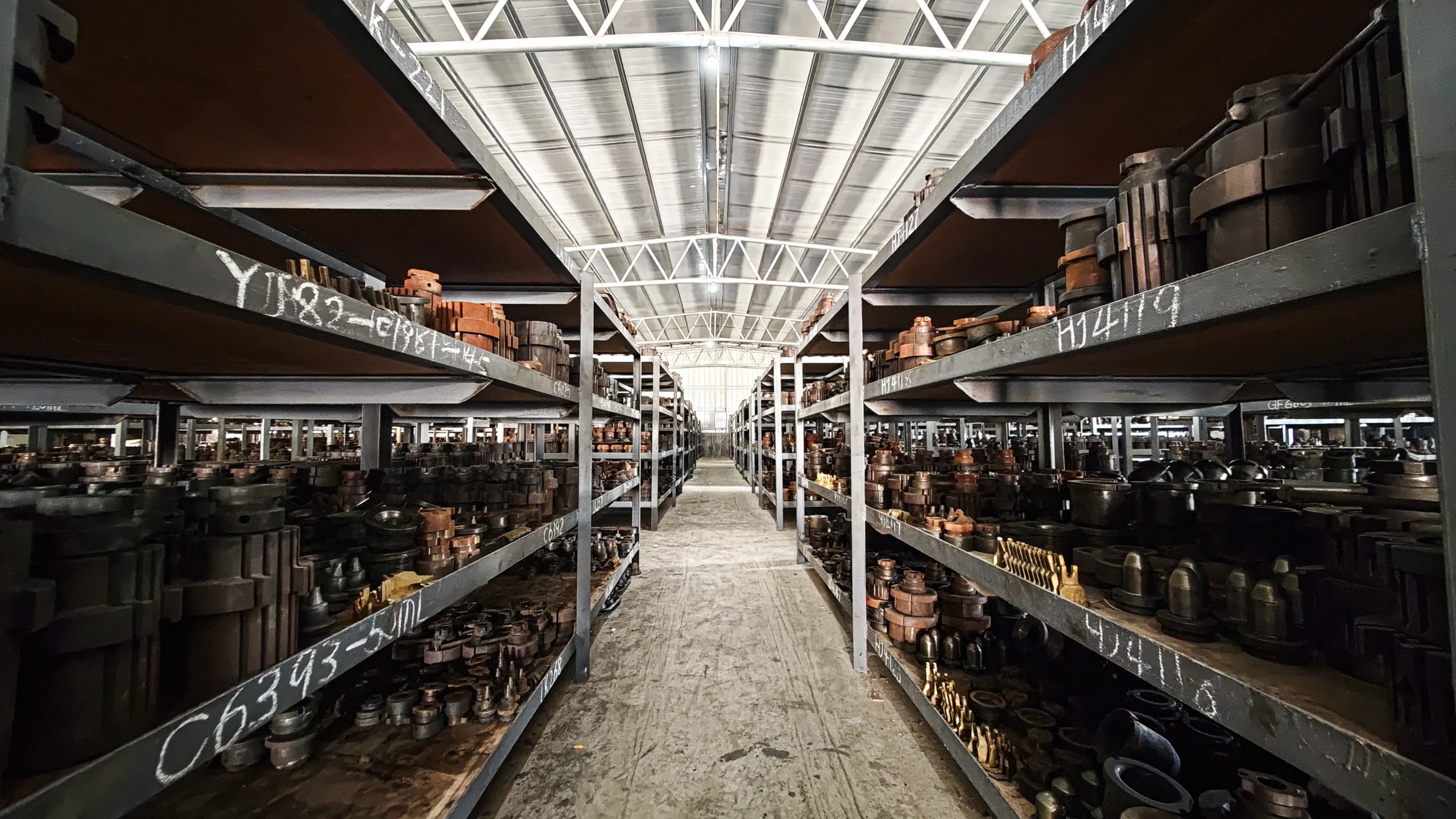
Thousands of ready-made molds available for immediate use
Fast-track production for standard designs
Flexibility to create fully custom tooling for unique projects
Shortened time-to-market for new product launches

glassware molds
mold factory
C4D design
3D molding
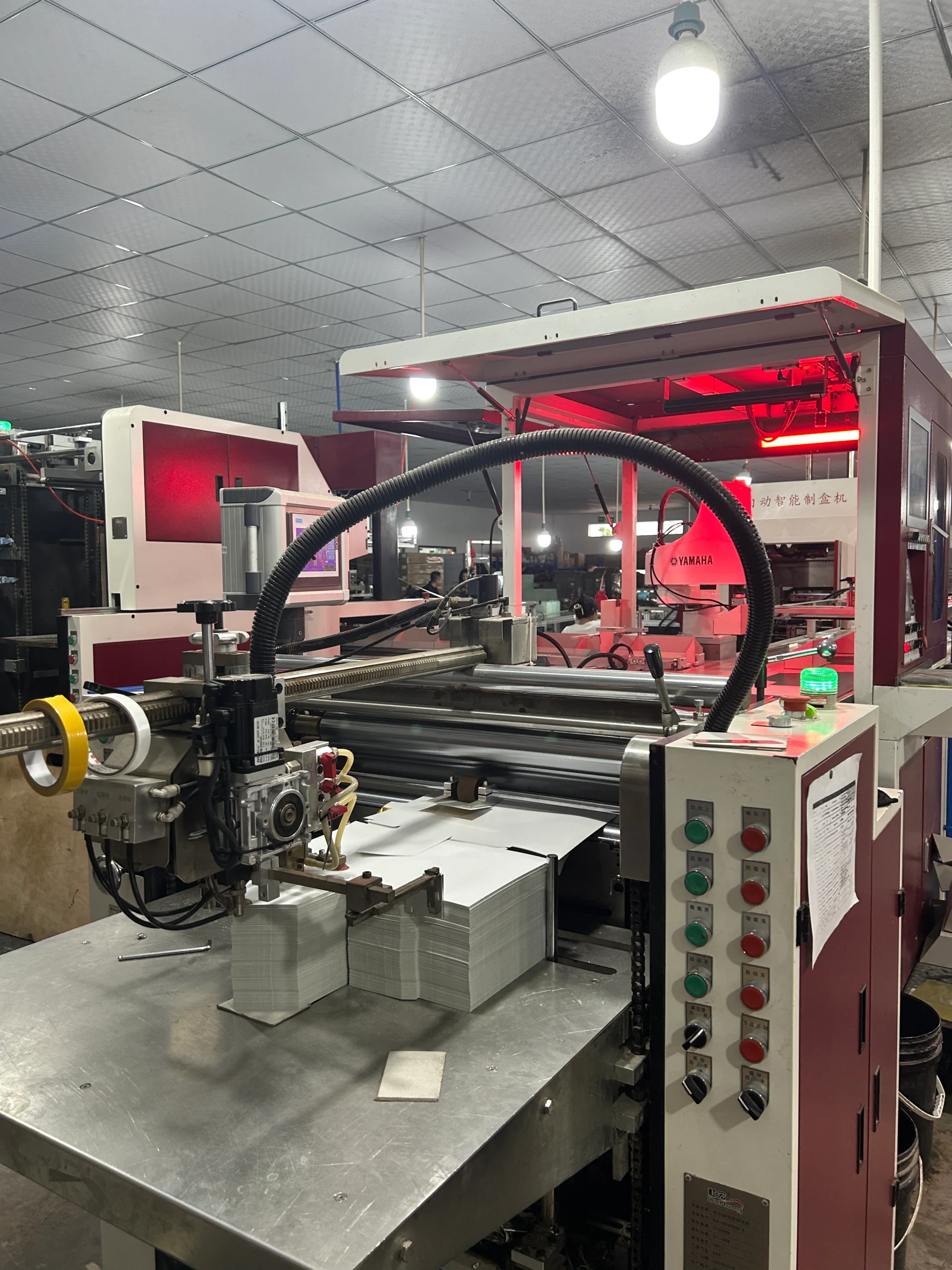
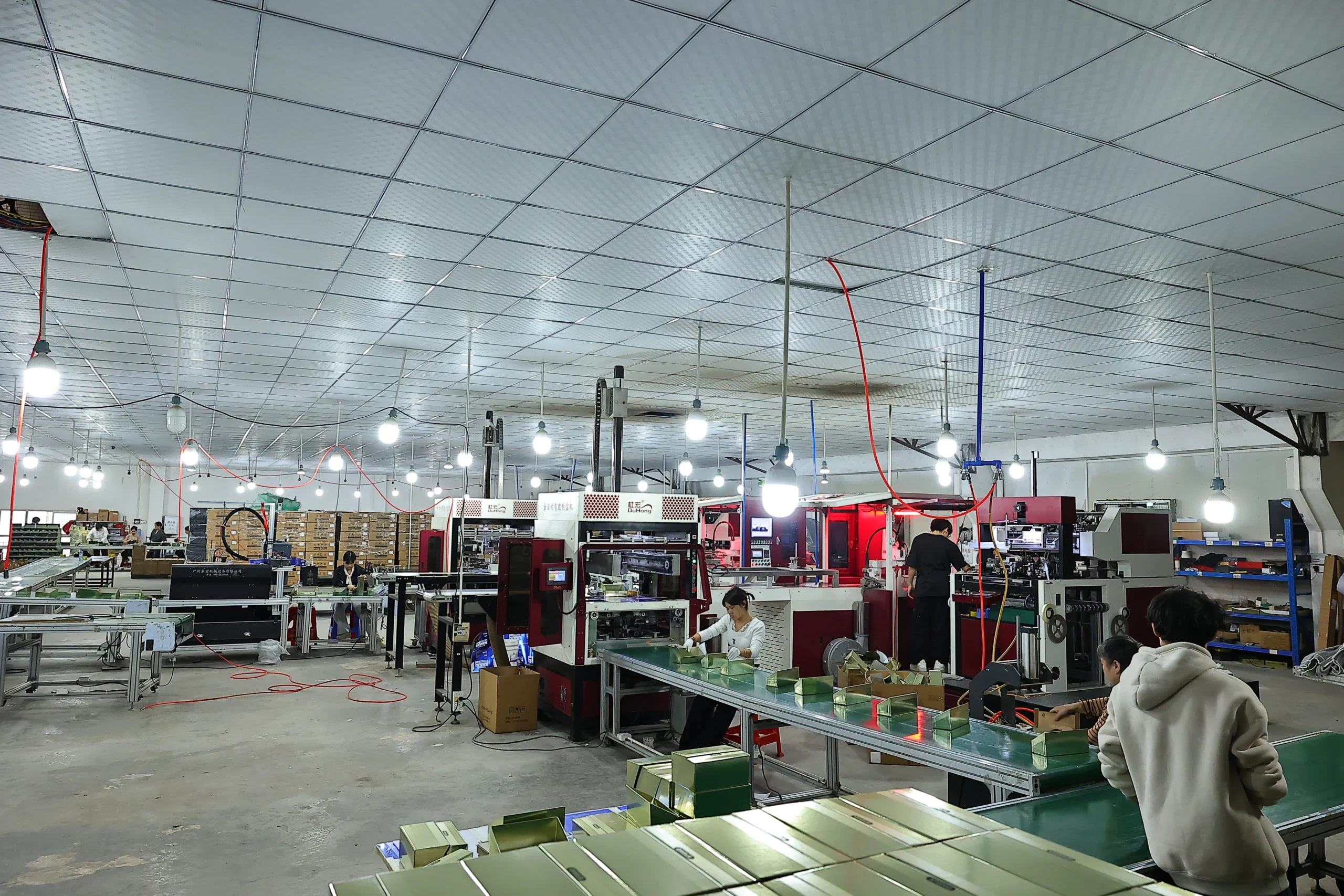
paper carton machine (2)
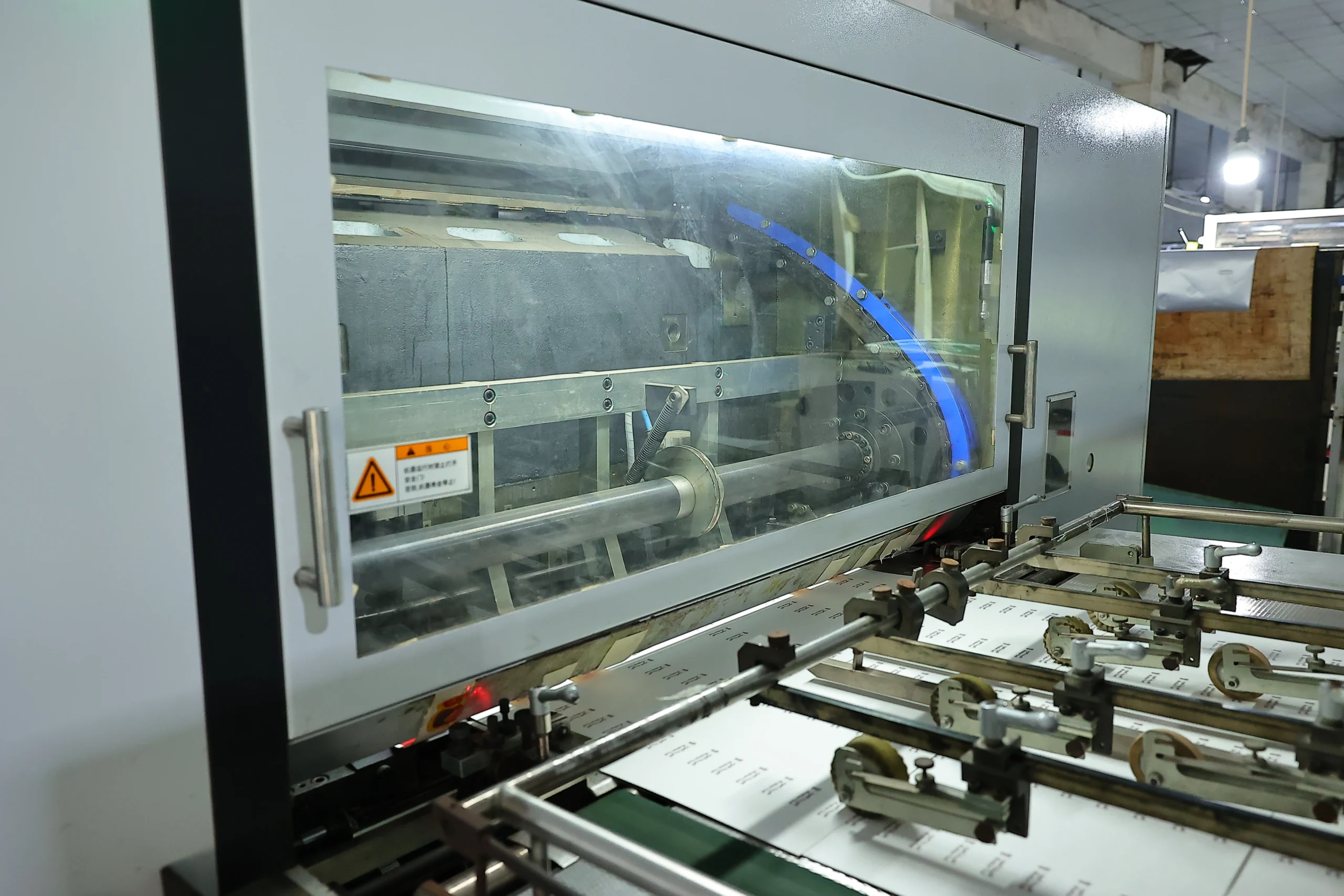
carton production line
machine à fabriquer des boîtes en carton
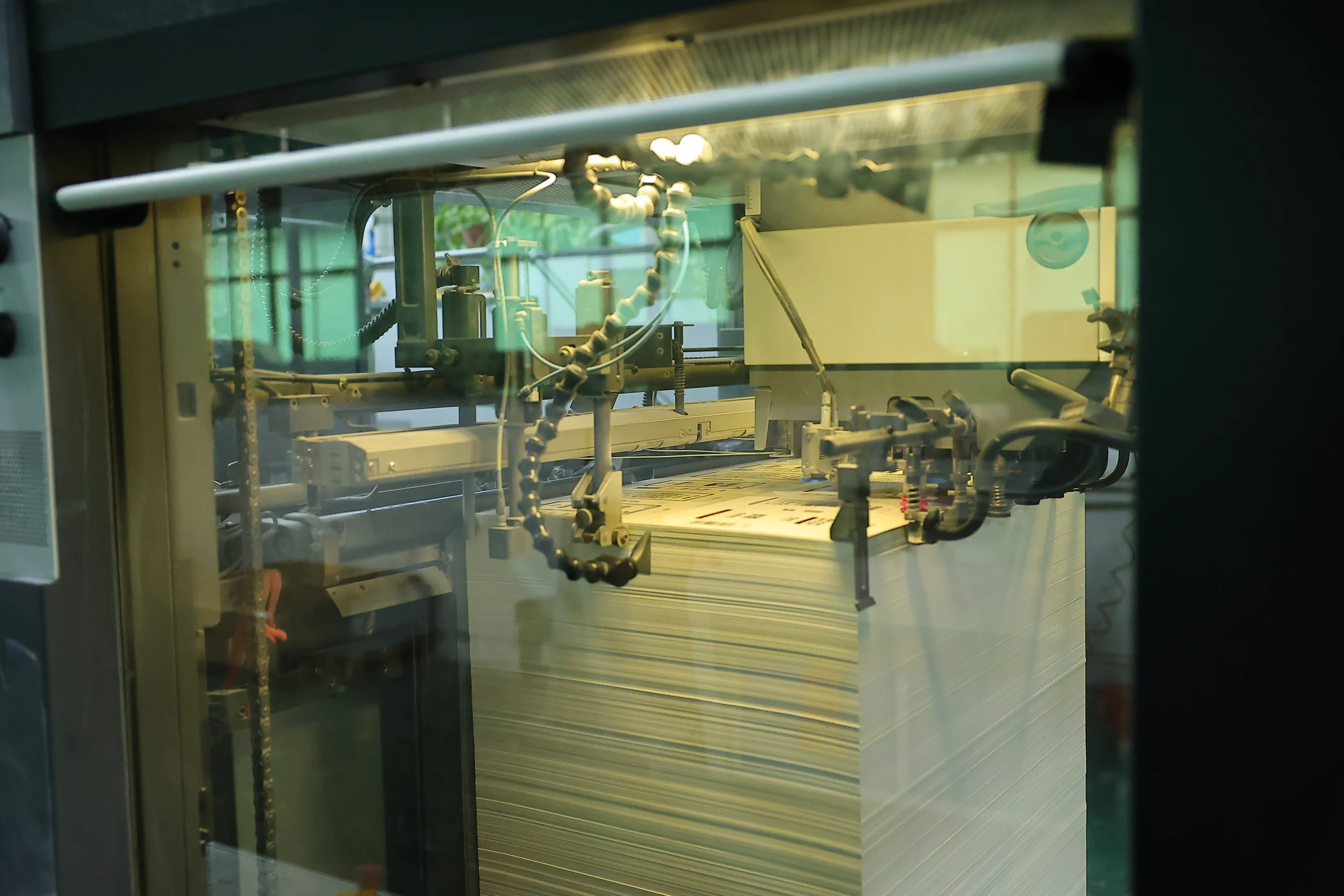
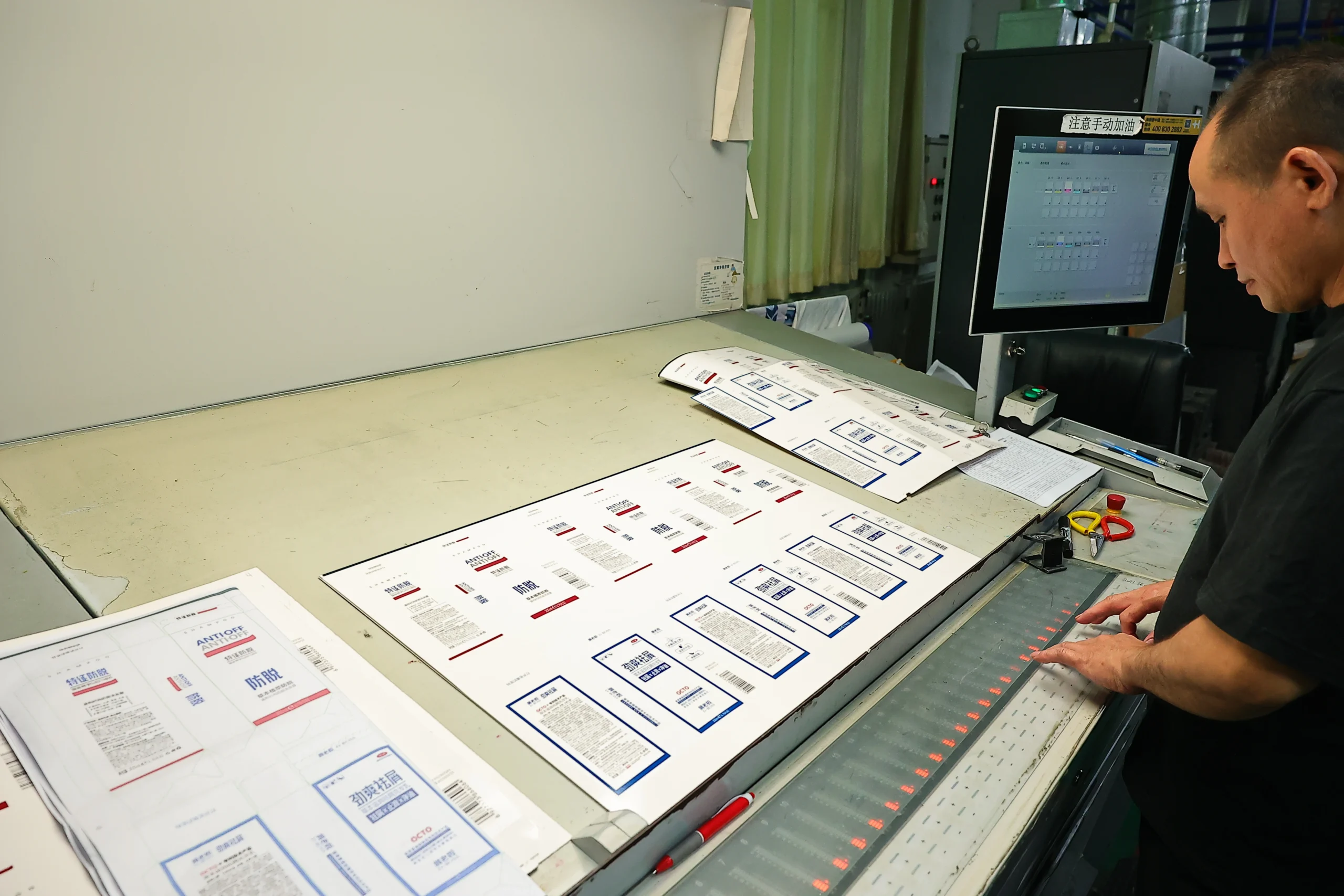
printing
paper carton factory

Carton Production Workshop

Facility Highlights

Workshop size: 10,000m² integrated manufacturing facility in China
Staff: Over 100 dedicated carton production workers
System integration: End-to-end paper carton manufacturing system

Production Equipment

5 printing units for high-quality graphic reproduction
4 folder gluer machines for efficient and secure box assembly
2 high-end carton forming machines for precise structural shaping

Available Manufacturing Capabilities

Structural design for tailored packaging solutions
Precision die-cutting for accurate carton dimensions
Advanced printing for vibrant brand representation
Automated folding and gluing for seamless final assembly
All carton manufacturing steps available under one roof

Glassware Industrial Park

Glassware Production Workshop

Melting Furnace Workshop

Injection Moulding Workshop

Post-processing Workshop

Cooperated
Factory Network

Beyond our self-owned facilities, Jarsking maintains strategic partnerships with 10+ specialized cooperated factories throughout China. These partnerships extend our production capacity for caps, accessories, specialty materials, and niche packaging formats. Each cooperated factory undergoes rigorous vetting and quality audits to ensure they meet our manufacturing standards and compliance requirements.

Caps & accessories

Caps & accessories production partners specializing in multi-functional closures, pumps, and droppers

Specialty Materials

Suppliers of specialty materials like PLA and calcium carbonate for sustainable packaging solutions

Specialized Partners

Network of specialized partner factories across China ensuring scalable production and consistent quality control

Quality Assurance

All cooperated factories maintain ISO certifications and comply with our quality control protocols

Certifications & Test Reports

We publish certificate numbers, issuing bodies and validity dates so your compliance team can verify them directly, without asking us first.

CredentialNumberIssued byValid
ISO 9001:2015 — GB/T 19001-2016, quality management Guangzhou Jarsking Packaging Co., Ltd HIC241772 HIC Certification — IAS accredited, MSCB-250 1 August 2024 – 31 July 2027
German packaging EPR — Verpackungsgesetz (VerpackG) Guangzhou Jiaxing Glass Products Co., Ltd DE5146464768838 Stiftung Zentrale Stelle Verpackungsregister (LUCID) Registered since 21 July 2022
Child-resistant closure — US 16 CFR § 1700.20 Guangzhou Jiaxing Glass Products Co., Ltd B-R181220669 Beide Compliance Laboratory, Shenzhen Model J652 — certified per closure design
Heavy-metal screening — Pb, Hg, Cd, Cr(VI), PBB, PBDE, tested to IEC 62321 Guangzhou Jiaxing Glass Products Co., Ltd CDT24022806SRE Shenzhen CDT Testing Technology Co., Ltd Issued 28 February 2024 — 24 models

Meeting EU packaging limits

Since 12 August 2026, packaging sold in the EU must stay under 100 mg/kg combined for lead, cadmium, mercury and hexavalent chromium. We screen for these substances and issue a test report for your product.

Testing we run, per product and per material

  • REACH SVHC screening — against the current Candidate List, 253 substances as of February 2026
  • EU packaging heavy metals — lead, cadmium, mercury, hexavalent chromium
  • Total fluorine — PFAS screening
  • California Proposition 65 — bisphenol A
  • TPCH heavy metals — US state packaging limits

All testing is carried out by accredited third-party laboratories. Ask for the report covering the item you are quoting and we send it unedited.

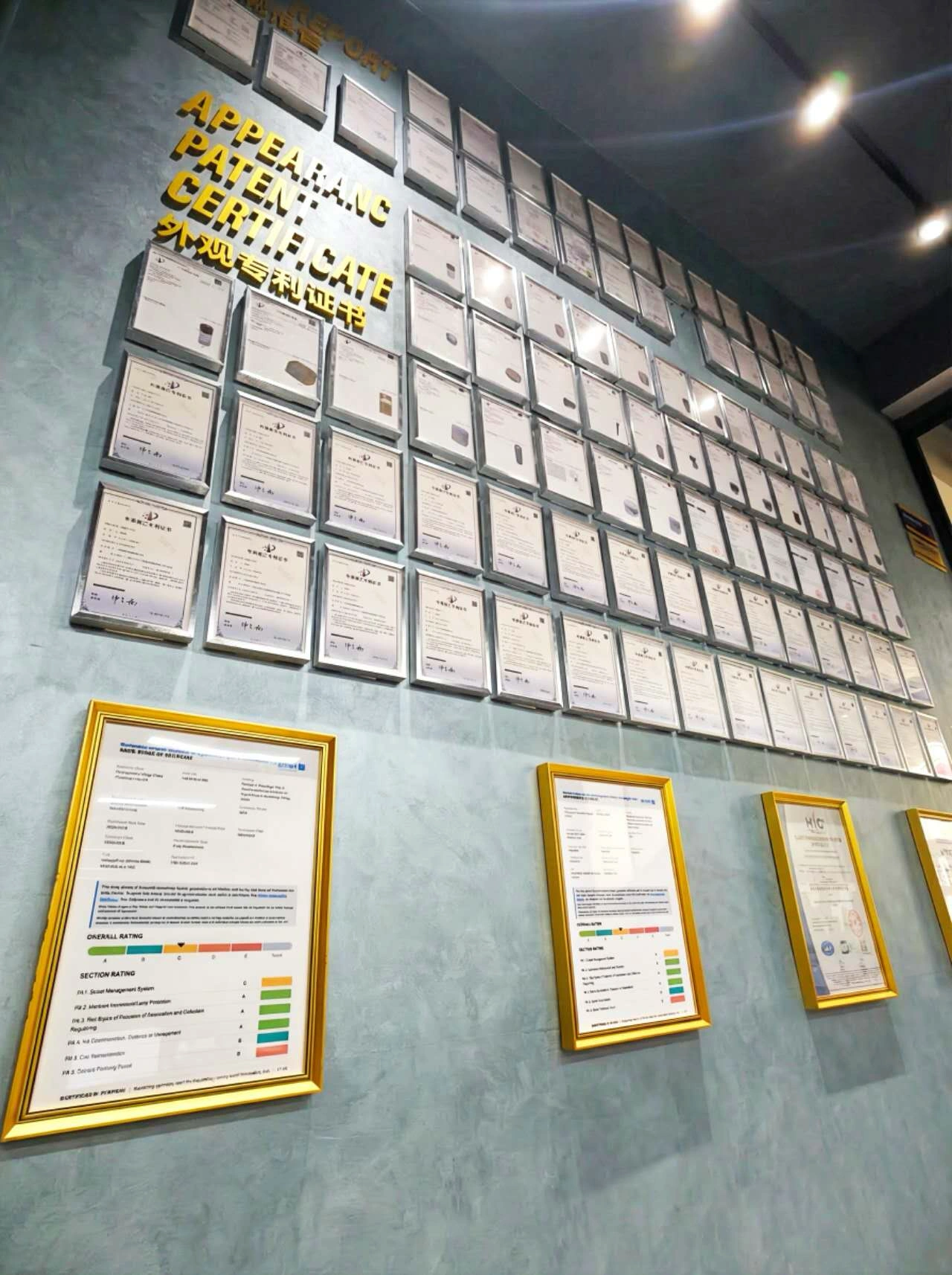
Un mur de certificats impressionnant

Need a certificate we don't already hold?

Most packaging compliance is certified per product, not per factory — so the certificate that matters is the one for your item, not ours.
Tell us your destination market and product category at enquiry stage and we will arrange the testing or registration your project needs: EU or UK food contact, child-resistant closure testing, recycled content, or a market-specific packaging registration. You get confirmation of what's required, what it costs, and how many weeks it adds — before you commit.

Previous slide
Next slide

International
Quality Certifications

We publish certificate numbers, issuing bodies and validity dates so your compliance team can verify them directly. Where your market needs additional certification, we arrange the testing as part of your project.

ISO 9001:2015 / GB/T 19001-2016 — certificate HIC241772, issued by HIC Certification (IAS accredited, MSCB-250) and held by Guangzhou Jarsking Packaging Co., Ltd. Valid 1 August 2024 to 31 July 2027, covering the manufacturing of plastic packaging containers for cosmetics.

Our quality system runs incoming (IQC), in-process (IPQC) and final (FQC) inspection, with sampling to GB/T 2828.1 at AQL 2.5 major / 4.0 minor. Non-conformities close through 8D corrective action and every batch is traceable in our ERP.

EU packaging heavy metals. Since 12 August 2026, packaging sold in the EU must stay under 100 mg/kg combined for lead, cadmium, mercury and hexavalent chromium. We screen for these substances and issue a test report for your product. Current report: CDT24022806SRE, Shenzhen CDT Testing Technology, tested to IEC 62321, covering 24 models of cosmetic glass packaging.

Ongoing testing, per product and per material:

  • REACH SVHC screening — against the current Candidate List, 253 substances as of February 2026
  • Total fluorine — PFAS screening
  • California Proposition 65 — bisphenol A
  • TPCH heavy metals — US state packaging limits

All testing is carried out by accredited third-party laboratories. Ask for the report covering the item you are quoting and we send it unedited.

Our Guangzhou facilities are audited under amfori BSCI by SGS. Audit reports are shared with customers on request, under amfori’s normal disclosure terms.

Child-resistant closures. We manufacture and supply child-resistant closures tested to US 16 CFR § 1700.20 at accredited laboratories. Testing certifies a specific closure design, so tell us at enquiry stage if your project needs one — we will quote a tested design or arrange testing for a new one, and the report is issued for your item.

Food-contact testing. Where a project requires Regulation (EC) 1935/2004 or German LFGB testing, we arrange it per product with an accredited laboratory and issue the report for your item.

Registered design patents on original bottle and perfume-bottle structures, including a registered Canadian industrial design. Designs we develop for your project remain yours.

German packaging EPR — registered producer DE5146464768838 with the Stiftung Zentrale Stelle Verpackungsregister (LUCID), registered since 21 July 2022. Publicly searchable at verpackungsregister.org, so your compliance team can confirm it without contacting us.

For other EU member states we arrange packaging registration as part of the project. Tell us your destination markets at enquiry stage.

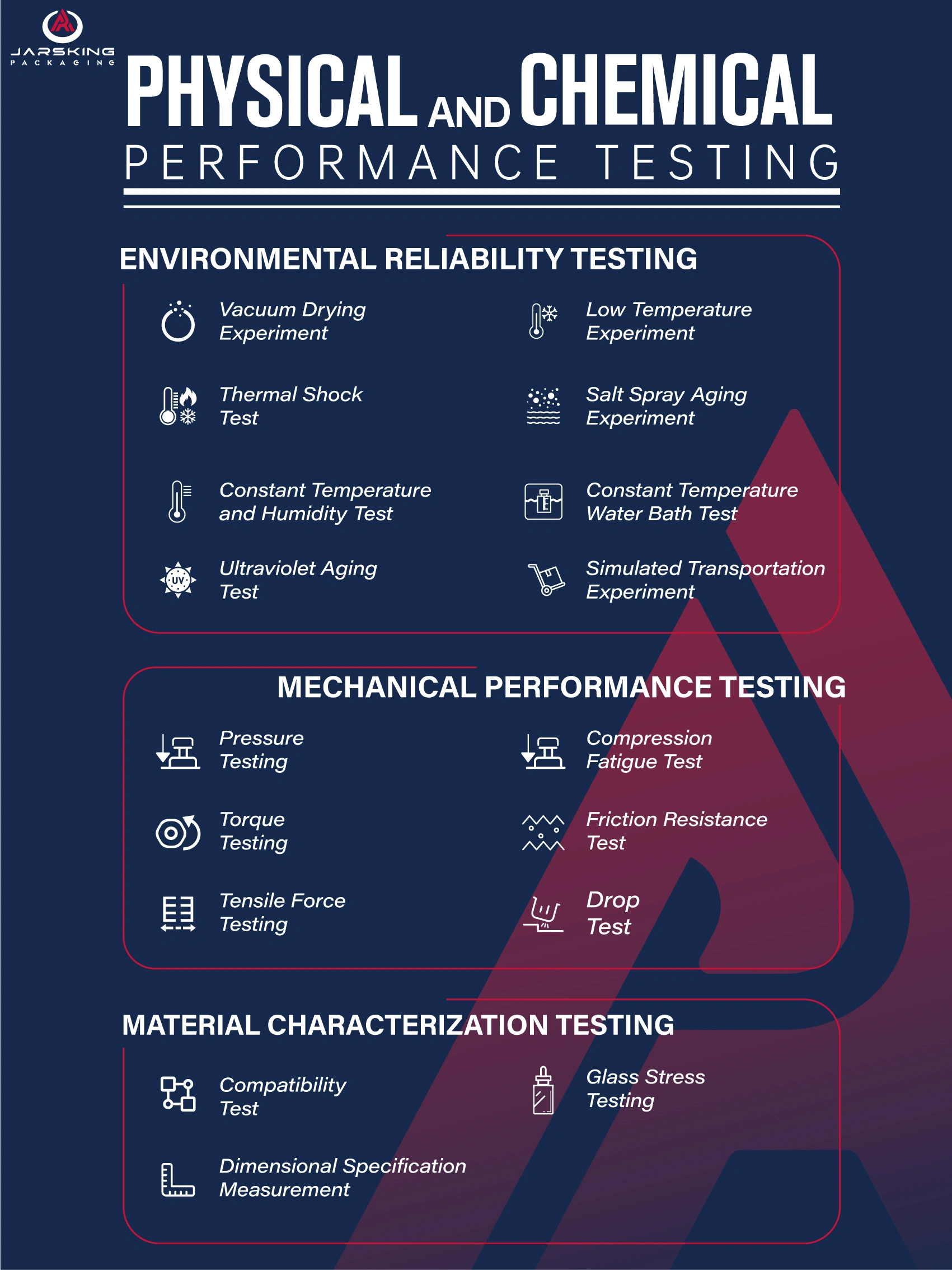
Physical and Chemical Performance Testing

Jarsking’s rigorous physical and chemical performance testing ensures all packaging solutions meet exacting standards for durability, safety, and product integrity. Each test simulates real-world conditions to validate quality, longevity, and compatibility across diverse applications and industries.

This test removes moisture from a sample in a vacuum environment, lowering the boiling point and facilitating efficient drying without exposing materials to high heat. It’s essential for moisture-sensitive products, ensuring stability and preventing degradation or spoilage. This method helps maintain product integrity and is especially useful in preparing packaging components before further testing or storage.

Products are rapidly cycled between extreme high and low temperatures to simulate real-world temperature fluctuations. This test evaluates the material’s resistance to cracking, warping, or failure due to sudden thermal stress. It’s vital for packaging exposed to shipping environments with drastic temperature changes, helping ensure package reliability and performance.

Packaging samples are subjected to prolonged exposure under controlled temperature and humidity to evaluate their durability and stability. This test simulates aging and environmental variations, identifying weaknesses such as material deformation, adhesive failure, or barrier property loss. It assures long-term packaging performance in storage, transit, or retail environments.

This accelerated aging process exposes materials to UV light, mimicking sunlight. It assesses how quickly packaging components fade, degrade, or lose mechanical properties when exposed to sunlight over time. The results forecast the product’s outdoor shelf life and visual appeal, crucial for packaging stored or displayed in sunlit environments.

This test measures the surface friction between packaging materials, ensuring that films, labels, and wrapping don’t slip, misalign, or jam during processing and transport. Accurate coefficient of friction testing helps prevent material mishandling; a well-balanced friction level ensures safer stacking, sealing, and customer handling.​

Compatibility testing verifies that the packaging is chemically and physically stable with the contained product. It ensures there are no adverse reactions, leakage, or barrier failures, and checks for preservation of taste, smell, color, and physical integrity. This is critical to product safety, especially for food, cosmetics, and pharmaceuticals.

Precise measurements of packaging components are taken to verify adherence to design specifications, ensuring a perfect fit for assembly and use. This step reduces the risk of leaks, deformation, or transport failures. Accurate dimensional control is crucial for automated filling lines and stacking stability during shipping and storage.​

Torque testing evaluates the rotational force needed to apply or remove caps, lids, or closures. It ensures closures are neither too loose nor too tight—preventing leaks and ensuring user-friendliness. Maintaining optimal torque helps avoid consumer complaints due to spillage or opening difficulties, and assures compliance with safety regulations.

physical and chemical performance testing

Packaging is exposed to controlled internal or external pressure to determine its resistance to bursting, collapsing, or deformation. This test measures the maximum pressure the packaging can withstand, ensuring durability during processing, filling, or transport. It is especially relevant for liquid-filled or vacuum-sealed products.​

This procedure mimics the mechanical stresses encountered during shipping, such as vibrations, shocks, drops, and compressive forces. It evaluates the packaging’s ability to protect products through the logistics chain. This simulation helps manufacturers anticipate and minimize transit-related damages, maintaining product integrity upon delivery.​

Packaging materials and products are exposed to subzero temperatures to assess how they withstand cold environments. This test checks for brittleness, cracking, sealing failure, or loss of barrier properties, ensuring reliability for products requiring refrigerated or frozen storage during transport and sale.​

Samples are exposed to a salt-laden mist in a controlled environment to simulate and accelerate the effects of coastal or salty environments. This test evaluates corrosion resistance and visual degradation of packaging components, particularly metal or coated surfaces, ensuring longevity and aesthetic appeal in harsh conditions.

This test repeatedly applies compressive force to packaging materials to assess their resistance to crushing or structural failure over time. It predicts the packaging’s performance during stacking or long-term storage, ensuring that it maintains its shape and protects the contents under load.

Samples are immersed in water maintained at a constant temperature to observe material stability, swelling, or leaching effects. This test is crucial for packaging meant to withstand moisture and thermal exposure, certifying water resistance and compatibility in humid or hot, moist environments.

Packaging is dropped from specified heights or orientations to simulate accidental knocks and falls during handling and shipping. The test assesses the packaging’s durability, impact resistance, and ability to protect contents, highlighting weaknesses or improvements needed for real-world distribution.

A specialized evaluation where glass packaging is analyzed for internal stresses that could lead to cracking or breaking under load or during temperature changes. Glass stress testing assures safety and structural integrity, especially for bottles and jars subject to transportation, filling, or extreme conditions.

This test measures the maximum tensile (pulling) strength of packaging films, seals, or closures. It ensures the materials can withstand stretching and pulling during filling, handling, or opening without tearing or failing. Tensile testing is essential for validating the mechanical strength and durability of flexible packaging components.

Partner with a certified, world-class packaging manufacturer.

Contact our team today to discuss your custom packaging requirements, request facility tours, or obtain copies of our certification documents. Experience the Jarsking difference—where manufacturing expertise meets uncompromising quality standards.

More about Jarsking

Demande de devis